

Smart Items Picking, Vision Depalletizing & Warehouse Automation
- Posted by TofSensor
How Do Smart Items Picking Systems and Vision Guided Depalletizing Work in Modern Warehouses?
In modern smart logistics and industrial automation, items picking (material picking systems) has become a key technology for improving warehouse efficiency and reducing labor costs. With the rapid growth of e-commerce logistics, flexible manufacturing, and intelligent warehousing, companies are increasingly focusing on automated depalletizing, robotic sorting, and vision-based systems in real-world operations.
This article focuses on the core technologies behind intelligent picking systems, with special emphasis on vision guided depalletizing applications in modern warehouses, as well as industrial scenarios such as storeroom palletizers stacking frames california.
1. What Is Items Picking (Intelligent Material Picking System)?
items picking (material picking) refers to the process of accurately identifying and retrieving specific items from inventory in warehouse or production environments using either manual labor or automated systems.
In traditional warehouses, picking relies heavily on manual work, often resulting in low efficiency, high error rates, and heavy labor intensity. In modern smart warehouse systems, however, this process has evolved into a highly automated and intelligent workflow, becoming a core component of supply chain optimization.
Intelligent Evolution of Picking Methods
With the development of robotics and artificial intelligence, items picking has evolved from manual operations into a combination of advanced automation systems:
-
Robotic Picking
Uses robotic arms or mobile robots to automatically grasp, move, and place items, ideal for repetitive and high-precision tasks. -
AI Vision Picking
Uses industrial cameras and AI algorithms to identify item position, shape, and barcode data, enabling intelligent selection and path planning with reduced human error. -
Automated Sorting Systems
Conveyor belts, sorting machines, and automated control systems rapidly classify and route orders to designated zones, improving overall logistics efficiency. -
Goods-to-Person Systems
Goods are automatically delivered to operators or robots, reducing walking distance and improving picking speed and ergonomics.

Core Value of Smart Picking Systems
These technologies together form the backbone of modern smart warehousing, delivering significant operational improvements:
- Significantly faster order fulfillment speed
- Reduced picking errors and improved accuracy
- Lower labor costs and reduced manual workload
- Higher throughput capacity during peak demand
- Better warehouse space utilization and efficiency
Transition from Traditional to Smart Warehousing
In modern logistics, items picking is no longer a simple 'pick-and-take' task. Instead, it is a complex system driven by AI, big data, and robotics.
Typical warehouse systems integrate picking with:
- Warehouse Management Systems (WMS)
- Order Management Systems (OMS)
- Conveyor Systems
- Robot Fleet Management Systems
This enables a fully automated workflow from order intake to sorting, picking, and outbound shipping.
2. Vision Guided Depalletizing
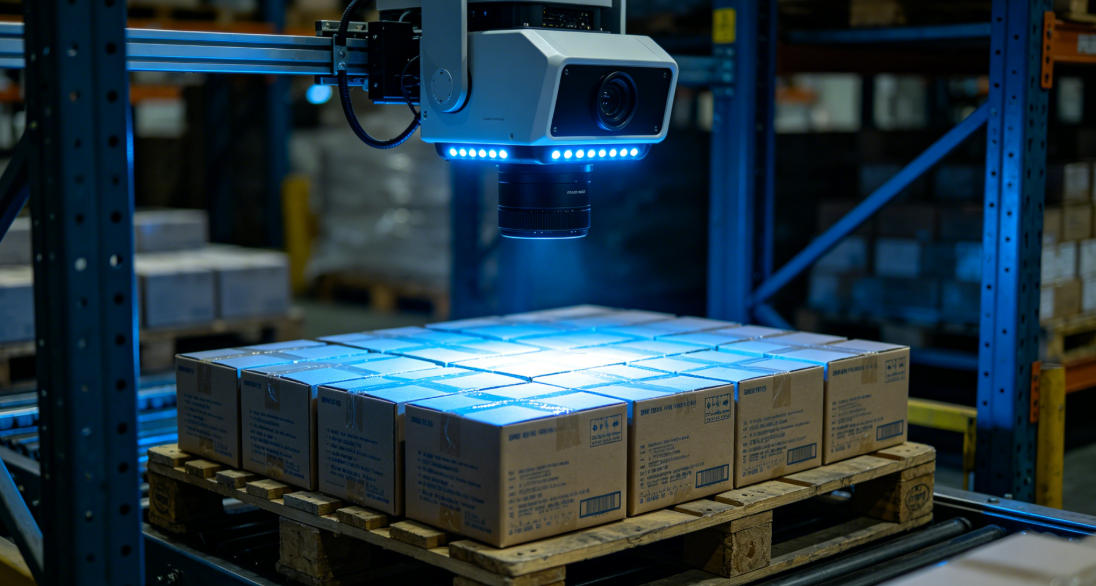
In automated warehousing and manufacturing systems, vision guided depalletizing is a critical technology for improving inbound logistics and sorting efficiency.
This system uses industrial cameras and AI vision algorithms to automatically identify and dismantle palletized goods.
Key Workflow:
- Industrial cameras scan pallet loads
- AI identifies box positions, shapes, and stacking patterns
- Optimal grasping paths are calculated
- Robots execute depalletizing operations
- Goods are transferred to conveyors or sorting systems
Core Advantages:
- Eliminates manual depalletizing and improves safety
- Handles irregular and mixed-SKU pallet stacks
- Supports high-throughput warehouse environments
- Reduces labor dependency significantly
This technology is widely used in e-commerce warehouses, food logistics centers, and manufacturing inbound systems.
3. Storeroom Palletizers & Stacking Frames
In modern large-scale warehouse and industrial logistics systems, storeroom palletizers stacking frames california represents a key infrastructure for high-density storage, automated handling, and space optimization.
As e-commerce expands and supply chains become more flexible, traditional forklift-based stacking methods can no longer meet high efficiency and high throughput requirements. As a result, automated palletizing and stacking frame systems have become essential components of smart warehouse upgrades.
Main Application Scenarios
These systems are typically deployed in:
- Automated pallet stacking and standardized storage management
- Warehouse space optimization and vertical utilization
- Automated inbound and outbound logistics systems
- Coordination with robotic depalletizing systems
- High-density distribution and fulfillment centers
In these environments, stacking frames act not only as storage structures but also as integration nodes within automated logistics systems.
Core System Features
Modern storeroom palletizers stacking frames systems typically include:
-
High-strength steel structure design
Supports heavy-duty pallet stacking with long-term stability and safety. -
Modular design architecture
Flexible expansion based on warehouse layout and operational needs. -
Strong system integration capability
Compatible with AGVs, conveyor systems, and vision systems for full automation. -
WMS/WCS compatibility
Enables real-time inventory tracking and automated task scheduling. -
High-density storage support
Ideal for high-SKU and fast-moving inventory environments.
Role in Smart Logistics Systems
In smart warehousing, stacking frames are not just physical structures but key connection points between automation systems.
For example:
- Integration with AGV systems for pallet transport
- Coordination with vision depalletizing systems for automated unloading
- Connection with conveyor systems for material flow automation
- Linkage with warehouse software for dynamic optimization
This makes stacking frames a critical infrastructure component in modern logistics networks.

4. Modern Intelligent Picking System Architecture
Modern items picking systems have evolved into end-to-end intelligent logistics architectures driven by multiple interconnected subsystems.
1. Vision Recognition System
The perception layer of the system, responsible for detecting:
- Item location and arrangement
- SKU classification and features
- Barcode, QR code, or RFID data
- Graspable regions and stacking structures
Advanced systems integrate AI vision models to maintain accuracy even under poor lighting or occlusion.
2. Robotic Execution System
The action core of the system, including:
- Industrial robotic arms
- AMRs/AGVs
- Multi-joint grippers
Functions include:
- Item grasping and handling
- Precise transportation
- Sorting, packaging, and depalletizing
Modern systems often enable 'see-and-act' automation through tight integration with vision systems.
3. Material Handling & Conveyor System
This system enables efficient movement of goods between workstations, including:
- Conveyor belts
- Sorting systems
- Automated storage and retrieval systems (AS/RS)
- Buffer zones
It ensures continuous material flow and reduces manual intervention.
4. Warehouse Management System (WMS)
The central brain of the warehouse, responsible for:
- Order processing and task allocation
- Real-time inventory monitoring
- Space optimization
- Equipment coordination
Integrated with robotics and vision systems, WMS enables global-level intelligent scheduling.
5. AI Path Optimization System
A key intelligence module that optimizes:
- Shortest picking routes
- Task prioritization
- Robot trajectory planning
- Dynamic obstacle avoidance
This significantly reduces unnecessary movement and improves throughput efficiency.
System Synergy Value
These subsystems work together through data and control integration:
- Vision systems provide perception
- Robots execute actions
- Conveyors handle material flow
- WMS manages global coordination
- AI optimizes decision-making
This transforms traditional automation into a fully intelligent logistics system.
5. Applications of Smart Picking Systems
- E-commerce fulfillment centers
- Manufacturing material supply systems
- Cold chain logistics
- Automated high-bay warehouses
6. Industry Trends
- Deep integration of AI vision and robotics
- Widespread adoption of vision guided depalletizing
- Upgraded high-density warehouse systems
- Collaboration of AGV/AMR fleets
- Fully autonomous logistics centers
Warehousing is evolving from automation to autonomy.
7. Conclusion
items picking and vision guided depalletizing are reshaping modern warehousing and logistics industries.
Combined with infrastructure such as storeroom palletizers stacking frames california, companies can build highly efficient, low-cost, and scalable smart warehouse systems that significantly enhance supply chain competitiveness.
Synexens Industrial Outdoor 4m TOF Sensor Depth 3D Camera Rangefinder_CS40p

After-sales Support:
Our professional technical team specializing in 3D camera ranging is ready to assist you at any time. Whether you encounter any issues with your TOF camera after purchase or need clarification on TOF technology, feel free to contact us anytime. We are committed to providing high-quality technical after-sales service and user experience, ensuring your peace of mind in both shopping and using our products.
