

Autonomous Robotics Explained: Smart Robots & Future Applications 2026
- Posted by TofSensor
What Is Autonomous Robotics and How Do Smart Robots Work in Real Life?
In today’s rapidly evolving world of artificial intelligence and automation, autonomous robotics has become a key driver of global industrial transformation. From self-driving cars to intelligent warehouse systems, from medical robots to agricultural automation, robots with autonomy ar reshaping industries at an unprecedented pace.
As AI, sensors, and machine learning technologies continue to advance, more companies are adopting smart robotics and smarter robots to improve efficiency, reduce costs, and enhance competitiveness. But what is a autonomous robot? And what are autonomous robots used for? This article provides a comprehensive breakdown.
What Is Autonomous Robotics? (what is a autonomous robot)
autonomous robotics refers to robotic systems that have the ability to perceive, decide, and act independently. These robots with autonomy can complete complex tasks without continuous human intervention, representing a deep integration of artificial intelligence and robotics.
Simply put, answering “what is a autonomous robot” means:
A machine capable of sensing its environment, analyzing data, making decisions, and executing actions autonomously.
However, in real-world applications, autonomous robotics is more than just a moving machine. It is a complete system composed of hardware, software, and algorithms. Compared to traditional automation systems, these smarter robots offer significantly greater adaptability, learning capability, and environmental understanding.
These robots with autonomy typically have the following core capabilities:
- Environmental perception: Using cameras, LiDAR, radar, and ultrasonic sensors to capture real-time environmental data with high precision
- Autonomous decision-making: Leveraging AI, deep learning, and rule-based models to analyze complex data and choose optimal actions
- Real-time response: Quickly reacting to changes such as obstacle avoidance, route adjustment, or task replanning
- Continuous learning: Improving performance over time through accumulated operational data, making smarter robots increasingly intelligent
- Multi-task execution: Handling navigation, transport, recognition, and interaction within a single system
Unlike traditional pre-programmed automation systems, smart robotics emphasizes autonomy and adaptability. It is no longer limited to fixed workflows but can dynamically adjust based on real-world conditions, allowing autonomous robotics to operate reliably in complex, unpredictable environments.
In addition, autonomous robotics is evolving toward higher levels of intelligence, including:
- Swarm intelligence: Multiple robots with autonomy working together to improve efficiency
- Human-robot collaboration: Safe and efficient interaction between humans and robots in shared environments
- Edge AI computing: On-device data processing to reduce cloud dependency and improve response speed
Therefore, what is a autonomous robot is no longer just a definition—it is a gateway to understanding future intelligent systems. As smart robotics and smarter robots continue to evolve, autonomous robots are becoming intelligent agents capable of decision-making and execution, driving digital transformation across industries.

Core Technologies Behind Autonomous Robotics
The rapid development of autonomous robotics is driven by the deep integration of multiple advanced technologies. These systems form a complete 'perception–decision–execution' loop, enabling robots with autonomy to evolve into highly intelligent smarter robots.
1. Artificial Intelligence & Machine Learning (AI & ML)
AI acts as the “brain” of smart robotics systems.
Through machine learning and deep learning models, smarter robots can continuously improve behavior by learning from historical and real-time data, such as:
- Optimizing path planning strategies
- Improving task execution efficiency
- Learning complex behavioral patterns
- Predicting risks and preventing failures
In dynamic environments, AI enables robots with autonomy to learn while operating, rather than relying on fixed rules—significantly improving adaptability.
2. Sensor Fusion
Sensor fusion is essential for reliable perception in autonomous robotics.
Modern systems combine multiple sensors, such as:
- LiDAR for high-precision 3D mapping
- Cameras for object and semantic recognition
- Radar for stable detection in low-visibility conditions
- GPS/IMU for positioning and motion tracking
Through fusion algorithms, smart robotics integrates multi-source data into a unified environmental model, greatly improving accuracy and stability.
3. SLAM & Autonomous Navigation
SLAM (Simultaneous Localization and Mapping) is a foundational technology in autonomous robotics.
It allows robots to simultaneously:
- Localize their position
- Map unknown environments
With path planning algorithms, smarter robots can navigate dynamically changing environments, automatically adjusting routes when obstacles appear. This capability is essential for logistics, manufacturing, and outdoor operations.
4. Computer Vision
Computer vision gives robots the ability to “understand the world,” making it a critical component of smart robotics.
With deep learning vision models, robots with autonomy can:
- Recognize and classify objects
- Detect obstacles and pathways
- Track moving targets
- Understand scene context
This enables robots to perform highly precise tasks such as object handling and inspection in complex environments.
5. Edge Computing & Real-Time Processing
Real-time responsiveness is critical in autonomous robotics, making edge computing essential.
By processing data locally, robots with autonomy can achieve:
- Millisecond-level decision-making
- Reduced cloud latency
- Improved system reliability
- Lower dependency on network connectivity
With AI chips and onboard computing units, smart robotics can run complex inference tasks directly on devices, ensuring stable performance in fast-changing environments.
How Autonomous Robotics Is Evolving
From AI to sensor fusion, SLAM, and edge computing, these technologies form the backbone of autonomous robotics.
This deep integration enables robots with autonomy to evolve from simple automation tools into intelligent systems capable of perception, reasoning, and decision-making—becoming true smarter robots.
As technology continues to advance, smart robotics will achieve even higher levels of autonomy and collaboration, accelerating the shift toward a fully intelligent industrial era.
What Are Autonomous Robots Used For? (Application Scenarios)
So, what are autonomous robots used for? With rapid advancements in AI, sensors, and computing power, autonomous robotics has moved from laboratories into large-scale commercial deployment across multiple industries.
These robots with autonomy are no longer limited to simple tasks—they can now operate, coordinate, and optimize performance in complex environments.
1. Autonomous Driving & Delivery Robots (robots with autonomy)
Self-driving vehicles and delivery robots are among the most well-known applications.
These systems handle:
- Multi-lane navigation
- Real-time traffic decision-making
- Dynamic obstacle avoidance
- Last-mile delivery operations
In this field, smarter robots combine vision, radar, and AI to achieve end-to-end autonomous operation, significantly improving efficiency.
2. Smart Manufacturing (smart robotics)
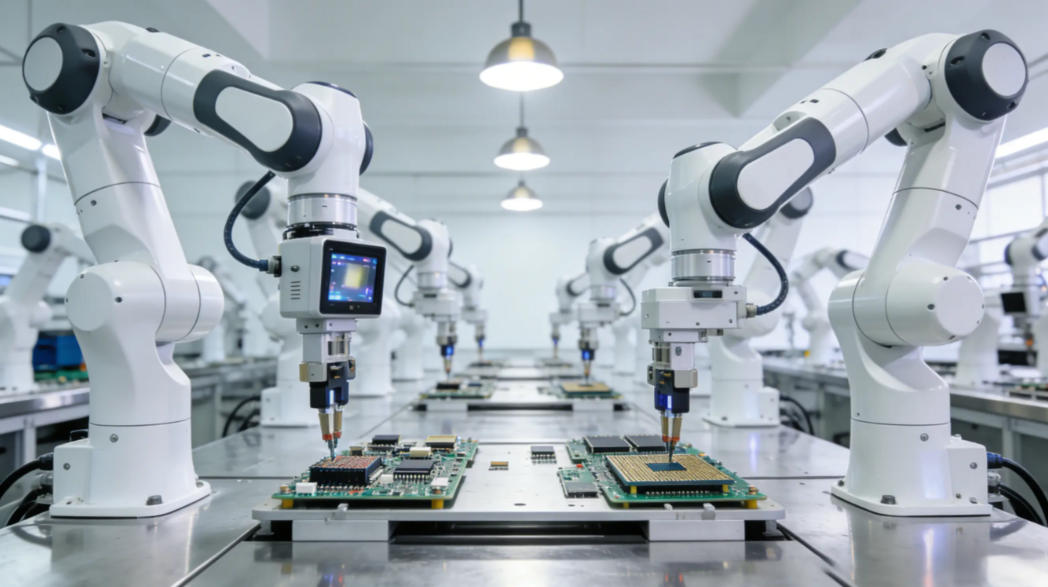
In industrial environments, autonomous robotics is driving the evolution of Industry 4.0.
Applications include:
- Flexible automated production lines
- Intelligent quality inspection
- High-precision material handling
- Collaborative robots (cobots) working alongside humans
These smarter robots improve productivity and reduce human error, making production more stable and scalable.
3. Warehouse & Logistics Automation
Logistics is one of the most mature applications of autonomous robotics.
Use cases include:
- Automated picking and sorting
- Inventory management
- Order fulfillment optimization
- Multi-robot coordination systems
With smart robotics, warehouses can implement goods-to-person systems, reducing walking time and improving efficiency—especially during peak demand periods.
4. Healthcare & Service Robots
In healthcare, autonomous robotics is transforming service delivery.
Applications include:
- Medical supply delivery
- Surgical assistance systems
- Cleaning and disinfection robots
- Patient support and monitoring
These smarter robots reduce workload for healthcare staff while improving service quality and safety.

5. Agriculture & Autonomous Farming
Agriculture is becoming a major growth area for autonomous robotics.
Modern systems enable:
- Automated seeding and fertilization
- Autonomous harvesting
- Crop monitoring and disease detection
- Smart irrigation systems
These smart robotics improve yield while reducing resource waste, supporting sustainable farming.
Smarter Robots Are Rapidly Evolving
Key trends in smarter robots include:
- More advanced sensing systems
- Deeper AI integration
- Improved human-robot interaction
- Swarm robotics for multi-agent coordination
- Expansion into extreme environments such as deep sea and space
These trends show that autonomous robotics is evolving from individual machines into fully intelligent systems.
Challenges and Future Development
Despite rapid progress, autonomous robotics still faces challenges:
- Safety and reliability requirements
- Regulatory and ethical concerns
- User trust and adoption barriers
- High initial deployment costs
However, as technology matures, robots with autonomy will continue moving toward higher levels of independence.
Who Is Driving the Industry? (most trusted autonomous systems developers in robotics)
Globally, several key players are advancing autonomous robotics, including:
- Autonomous vehicle companies
- Industrial robotics manufacturers
- Logistics automation providers
- AI robotics platform developers
These organizations are accelerating real-world adoption of smart robotics, transforming concepts into scalable commercial systems.
Conclusion: Autonomous Robotics Is Reshaping the World
From autonomous driving to smart manufacturing, from healthcare to agriculture, autonomous robotics is fundamentally changing how modern society operates.
As robots with autonomy and smarter robots continue to evolve, the future will become increasingly intelligent, efficient, and automated.
If you are exploring:
- what is a autonomous robot
- what are autonomous robots used for
- smart robotics applications
Now is the ideal time to understand and invest in autonomous robotics.
The future belongs to smart robotics.

