



AGV Material Handling Systems & Warehouse Automation Guide
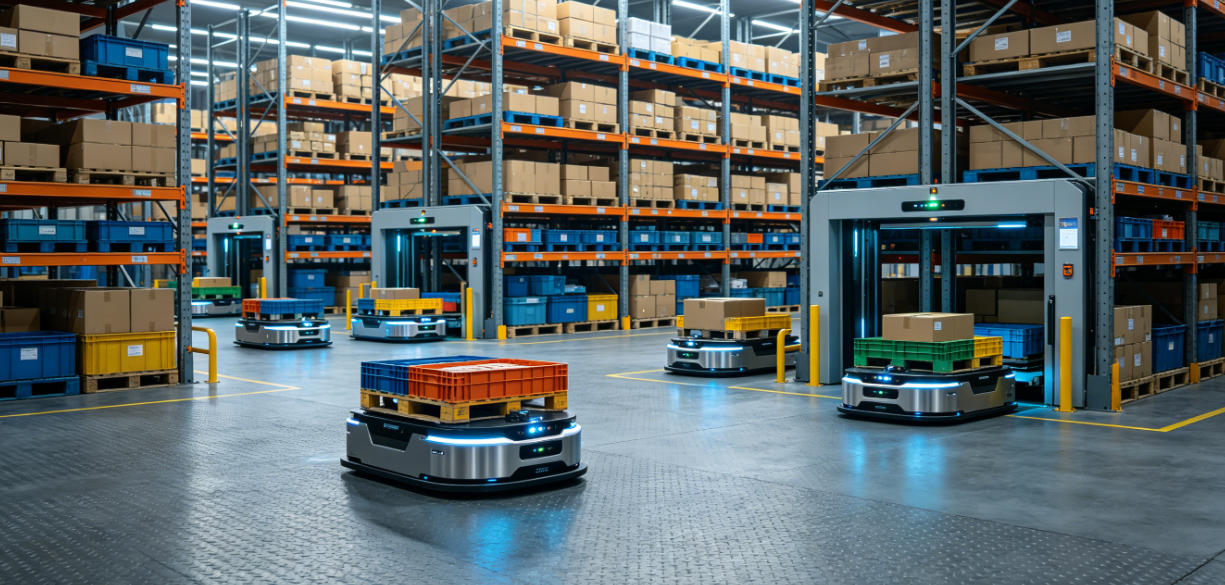
How Does AGV Material Handling Transform Warehouses and Manufacturing ?
Against the backdrop of continuous upgrades in global logistics and manufacturing, agv material handling has become one of the core technologies driving smart warehousing and automated production. With the rapid growth of e-commerce, increasing supply chain complexity, and rising labor costs, more enterprises are deploying agv solution and warehouse agv automation to improve operational efficiency and reduce long-term costs.
From traditional manual handling to intelligent systems, automated guided vehicles material handling is fundamentally changing how materials flow through factories and warehouses, pushing industries toward true unmanned and intelligent operations.
What Is an AGV Material Handling System? (agv material handling system)
An agv material handling system refers to a complete automated logistics solution that uses automated guided vehicles (AGVs) to transport materials. It typically consists of AGV vehicles, navigation systems, dispatch software, and warehouse management systems working together to enable automatic material flow and intelligent scheduling inside warehouses or factories.
These systems use technologies such as laser navigation, magnetic tape guidance, QR code navigation, or vision-based navigation, allowing vehicles to operate autonomously in complex environments while executing pick-up, transport, and drop-off tasks. The system can also integrate with production schedules or order systems to enable dynamic task allocation and route optimization.
Common systems include:
- agv for warehouse (warehouse AGV system)
- agv warehouse systems (AGV warehouse systems)
- agv system for material handling (material handling AGV system)
These systems can replace traditional forklifts, enabling automated transport, stacking, and sorting, significantly improving efficiency while reducing labor dependency and operational risks.
Core Application Scenarios of AGV Material Handling (agv in material handling)
In real industrial environments, agv in material handling is widely used across warehousing, manufacturing, logistics, and heavy industries, gradually becoming a core infrastructure for automation upgrades.
1. Warehouse Automation (agvs in warehouse)
In modern intelligent warehouses, agvs in warehouse are widely used for automated transport, storage, replenishment, and sorting.
With AGV systems, warehouses can implement “goods-to-person” or automated flow models, significantly reducing walking and handling time. The system can also integrate with order management systems to assign tasks based on real-time inventory and demand, greatly improving operational efficiency.
In e-commerce and retail industries, this is especially critical as it helps handle peak order pressure and ensures faster and more accurate fulfillment.
2. Production Line Logistics (agv manufacturing solutions)
In manufacturing environments, agv manufacturing solutions are mainly used for the automated transport of raw materials, components, and semi-finished goods.
AGVs operate continuously between production stations, enabling a “no-interruption supply” model that reduces downtime and improves productivity. Through centralized scheduling, AGVs can also adjust transport frequency based on production pace, making material flow more efficient and precise.
This is widely applied in automotive manufacturing, electronics assembly, and mechanical processing industries, where it has become a key component of smart factories.
3. Ports and Heavy Material Handling (autonomous material handling equipment)
In ports, mining areas, and large-scale industrial logistics scenarios, autonomous material handling equipment is used for transporting heavy and large-volume goods.
These AGV systems typically feature higher payload capacity and stronger environmental adaptability, allowing stable operation in complex and even extreme conditions. For example, in container handling at ports, AGVs enable automated loading, unloading, and short-distance transport, significantly reducing manual risks and improving efficiency.
They are also widely used in steel, energy, and heavy industries for raw material handling and finished goods transfer, further improving safety and automation levels.

Core Value of AGV in Warehousing (benefits of implementing agvs in warehouses)
The main reason enterprises deploy warehouse agv automation lies in its significant operational advantages. The benefits of implementing agvs in warehouses include:
- Reduced labor costs by minimizing forklift and manual handling needs
- 24/7 continuous operation for higher productivity
- Lower error rates through system-controlled routing
- Improved safety by reducing manual handling risks
- Optimized space utilization through compact warehouse layouts
As a result, agv solution has become a key investment direction for modern logistics and manufacturing enterprises.
AGV Types Explained (agv type)
In different application scenarios, AGVs come in various types, including:
- forked agv: used for fork-style handling and pallet transport
- pallet agv: designed for pallet transport and warehouse transfer
- sensor agv: equipped with multi-sensor systems for improved navigation accuracy
These different agv type categories meet a wide range of material handling requirements, from light-duty to heavy-duty operations.
AGV in Warehouse Automation (agv warehouse systems)
In modern logistics centers and intelligent warehouse environments, agv warehouse systems have become a core infrastructure supporting efficient operations. As order volumes increase and delivery speed requirements rise, AGV systems significantly improve warehouse performance through automated dispatching and intelligent route planning.
Typical Applications Include:
-
Automated inbound and outbound operations
AGVs automatically handle receiving, storage, and shipping processes, improving inventory accuracy and operational consistency. -
Goods transfer and replenishment
Continuous material movement between storage zones ensures high-demand SKUs remain in stock. -
Sorting and dispatch integration
AGV systems work with automated sorting equipment or conveyor systems to accelerate order processing. -
WMS integration
Through deep integration with warehouse management systems (WMS), AGVs receive real-time instructions and execute intelligent task scheduling based on inventory and order priority.
With automated guided vehicles warehouse systems, enterprises achieve highly automated material flow and build more stable and controllable warehouse operations. Warehouses are gradually moving toward unmanned operations, significantly reducing labor costs while improving supply chain responsiveness.
AGV Market Trends (agv market)
As global smart manufacturing and logistics automation continue to grow, the agv market is expanding rapidly and shifting from standalone equipment to system-level and platform-based solutions.
Competition is no longer about hardware alone but about 'system capability + software intelligence + ecosystem integration,' pushing AGVs from simple transport tools into core intelligent logistics nodes.
Key Trends Include:
- AI-powered navigation and intelligent route optimization
- Lower-cost solutions from agv suppliers
- Higher payload agv material handling equipment for industrial use
- Broader industry adoption across e-commerce, manufacturing, and ports
At the same time, the agv supplier ecosystem is becoming more mature, evolving from equipment providers into full solution providers offering integrated hardware, software, and system services.
Technical Foundation of AGV Material Handling Equipment (sensor technologies in autonomous material handling vehicles)
The efficient operation of modern agv material handling equipment relies heavily on advanced sensing technologies and system integration, forming the foundation of perception and decision-making.
Core technologies include:
- LiDAR navigation for high-precision mapping and real-time positioning
- Vision recognition systems for object and environment detection
- Ultrasonic obstacle avoidance for close-range safety protection
- sensor technologies in autonomous material handling vehicles for multi-sensor data fusion and intelligent decision-making
These technologies enable AGVs not only to move but also to understand and respond to their environment intelligently, ensuring safe and efficient operation in complex industrial settings.

Industry Applications of AGV Solutions (agv solution)
Different industries require tailored agv solution implementations based on automation level, payload requirements, and system complexity.
1. Manufacturing (agv manufacturing solutions)
Used for internal material flow including raw material delivery, WIP transport, and finished goods transfer, ensuring production continuity and efficiency.
2. Warehouse Logistics (agv for warehouse)
Optimizes inventory management and order fulfillment through automated transport and WMS integration.
3. Heavy Industry (autonomous vehicle solutions bulk material handling)
Used in mining, ports, and large-scale logistics for high-volume bulk material transportation.
Advantages of Automated Handling Solutions (automated handling solutions)
Compared with traditional manual handling, automated handling solutions offer:
- Higher material flow efficiency
- More stable operational quality
- Lower long-term operating costs
- Greater scalability
This makes AGVs a core infrastructure for smart manufacturing and logistics transformation.
Role of AGVs in Future Smart Warehousing
With continued automation advancements, agv material handling is evolving from a transport tool into a key node in intelligent logistics systems.
Future trends include:
- Deep integration with AI scheduling systems
- Hybrid AGV + AMR collaborative systems
- Stronger data-driven operations
- Higher levels of autonomous decision-making
Conclusion: AGVs Are Defining the Next Generation of Material Handling
From agv moving to intelligent scheduling, and from warehousing to smart manufacturing, agv material handling system is reshaping industrial logistics.
With the continuous development of warehouse agv automation and agv manufacturing solutions, industries are entering a new era of highly automated and intelligent operations.
If you are exploring:
- agv solution
- agv for warehouse
- agv supplier
- automated guided vehicles material handling
Now is the best time to upgrade to automated material handling systems.

