

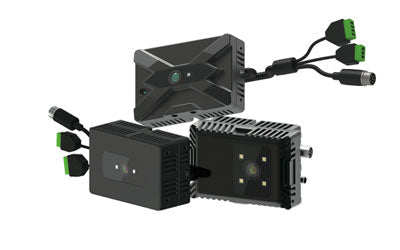
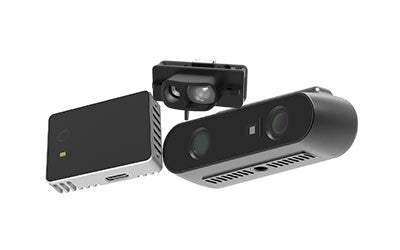
ToF 3D Vision Powers ACR Robots for High-Efficiency Smart Warehousing
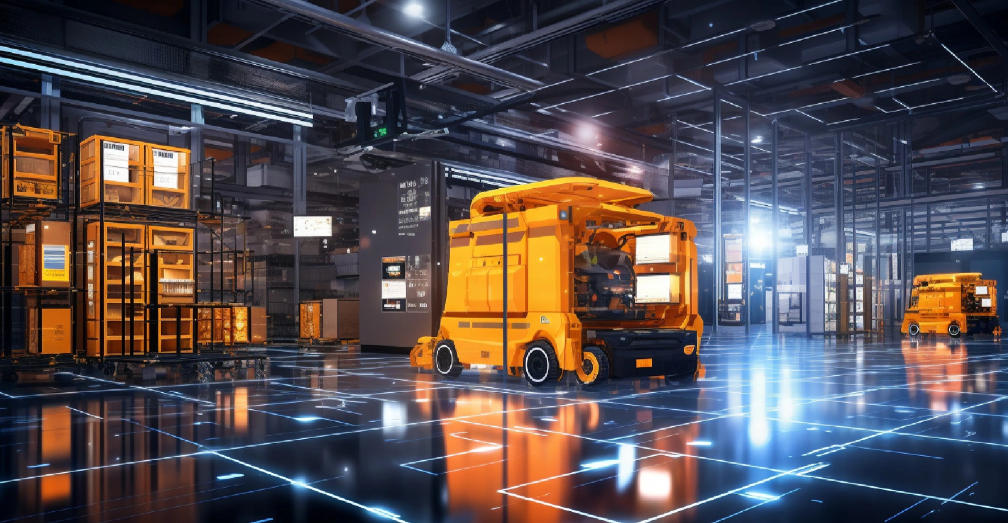
Why Are ToF 3D Vision and ACR Robots Revolutionizing Warehouse Automation?
As the warehousing and logistics industry rapidly transitions toward automation and intelligence, Autonomous Case-handling Robots (ACRs) are becoming core equipment for high-density storage and intelligent sorting systems. In the Chinese market, ACRs are not only experiencing explosive growth, but are also achieving a qualitative leap—from traditional rule-driven operations to high -precision, dynamic, and fully automated warehousing—thanks to the adoption of TOF (Time-of-Flight) 3D vision technology.
Rapid Growth and Global Leadership of China’s ACR Market
According to data from GGII, ACR sales in China surged from 100 units in 2017 to 3,454 units in 2022, with a compound annual growth rate exceeding 100%. Benefiting from a complete industrial supply chain and strong policy support, China is emerging as a global innovation hub for smart warehouse automation.
-
2021: Data from the China Mobile Robot (AGV/AMR) Industry Alliance shows that approximately 2,800 ACR units were deployed, representing a year-on-year increase of 245.7%, with sales revenue reaching RMB 810 million, up 376.5% year on year.
-
2023: ACR sales in China are expected to exceed 6,000 units, accounting for 6.68% of total industrial mobile robot sales, indicating significant market potential.
-
2024 and beyond: Annual sales are projected to surpass 10,000 units, and by 2030 China is expected to account for more than 35% of the global ACR market, firmly securing its leading position worldwide.

What Is Time-of-Flight (ToF)?
ToF (Time-of-Flight) is a sensing principle used to measure distance and acquire three-dimensional spatial information. It works by emitting modulated light—typically near-infrared—and measuring the time it takes for the light to travel to an object and reflect back. Based on the speed of light, the system calculates the object’s true distance.
Systems based on the ToF principle can directly generate depth maps and 3D point cloud data, enabling accurate perception of an object’s spatial position, height, and volume. As an active ranging technology, ToF does not rely on environmental texture and performs reliably under strong light, low light, and complex lighting conditions. With advantages such as high real-time performance, low latency, and a short processing pipeline, ToF is widely used in markerless robot navigation, smart warehousing, autonomous driving, industrial automation, and 3D vision systems, and is a key technology for high-precision 3D spatial perception.
ToF 3D Vision: The Core Technology Enabling Efficient ACR Operations
In modern smart warehouses characterized by high density, diverse box sizes, and multi-layer stacking, traditional solutions such as barcode scanning, QR code recognition, or 2D vision systems are showing clear limitations:
-
Sensitive to lighting conditions: Recognition accuracy drops under strong light, low light, or shadows, often requiring additional illumination at night or in dim environments.
-
Inability to obtain true height and volume: Only planar information is available, making it difficult to accurately measure box height, stacking layers, and occupied space.
-
Strict placement requirements: Poor adaptability to box rotation, tilting, occlusion, and mixed stacking.
-
Limited automation level: Most traditional approaches follow a simple 'recognize + execute' workflow, lacking intelligent error correction and spatial decision-making capabilities.
ToF (Time-of-Flight) 3D vision technology overcomes these challenges by emitting modulated infrared light and precisely measuring the return time to directly obtain real-time, true-scale 3D depth information. This enables spatial perception close to human stereo vision and provides ACRs with multi-dimensional sensing capabilities, significantly improving warehousing and logistics efficiency. Key advantages include:
-
Accurate box recognition and positioning
Using markerless 3D recognition, ACRs can identify boxes of different sizes, materials, and placement orientations without relying on barcodes or QR codes, achieving centimeter-level positioning accuracy and ensuring reliable handling and stacking operations. -
Dynamic inventory and storage location management
ToF systems monitor storage occupancy, box orientation, and stacking height in real time, synchronizing data with Warehouse Management Systems (WMS) to enable intelligent dynamic scheduling, optimized inventory layout, and high-density storage. -
Automated storage, retrieval, and handling
With high-density point cloud data, ACRs can precisely calculate box dimensions, positions, and tilt angles, automatically correct placement deviations, ensure stable multi-layer stacking, maximize space utilization, and reduce handling errors. -
Compatibility with multiple box sizes and SKUs
In complex e-commerce and retail warehouses with numerous SKUs and diverse packaging, ToF technology enables rapid recognition of different box specifications, supporting efficient sorting, inbound/outbound operations, and mixed stacking management. -
Stable 24/7 operation
Thanks to its robustness under strong light, low light, and partial occlusion, ToF technology ensures stable performance at night, in low-illumination environments, and in dynamic or cluttered scenes, enabling continuous, high-efficiency ACR operation around the clock.
By leveraging ToF 3D vision technology, ACRs achieve precise, fast, and stable box recognition and handling, laying a solid foundation for the automation upgrade of smart warehousing. This shift enables warehouse operations to evolve from two-dimensional processing to true three-dimensional spatial intelligence, significantly improving logistics efficiency and operational safety.

Typical Application Scenarios of ACR
Smart Automated Warehouses
In modern high-bay automated warehouses, the combination of ACR (Autonomous Case-handling Robots) and ToF 3D vision technology enables high-density, multi-layer case storage, significantly improving space utilization. The system supports automated storage and retrieval operations, real-time inventory monitoring, and dynamic slotting optimization. Through intelligent path planning, ACRs reduce handling conflicts and waiting time, ensuring safe and efficient warehouse operations. Even in multi-layer stacking and complex layouts, ACRs can autonomously perform precise pick-and-place tasks, increasing overall warehouse throughput.
E-commerce and Retail Logistics
In logistics environments with high SKU diversity and multiple case sizes, ACRs equipped with ToF 3D vision achieve fast recognition, precise positioning, and dynamic sorting. The system automatically evaluates case dimensions, stacking height, and orientation to enable efficient inbound and outbound operations, shortening order fulfillment cycles and improving overall warehouse efficiency. Even during peak seasons or in complex environments, ACRs maintain stable performance, reduce manual intervention, and significantly enhance automation levels in logistics centers.
Intralogistics in Manufacturing Facilities
In production environments such as 3C electronics, pharmaceuticals, and automotive parts manufacturing, ACRs enable flexible material feeding and intralogistics management. With ToF 3D perception, robots can efficiently identify materials of varying specifications and accurately perform loading and unloading tasks, reducing manual handling costs while maintaining production line stability. Combined with intelligent scheduling and multi-robot coordination, ACRs optimize material flow paths, minimize production waiting time, and improve overall operational efficiency.
Intelligent Logistics Centers
Large-scale intelligent logistics centers are characterized by complex environments, dense storage layouts, and multi-robot collaboration. ACRs equipped with ToF 3D vision and AI algorithms support 24/7 unmanned operation, safely and efficiently handling diverse and dynamic scenarios through multi-robot path optimization and real-time scheduling. The system continuously detects obstacles, adjusts handling routes, and adapts to changing warehouse layouts, achieving high reliability and high throughput in smart warehouse management—providing core technological support for modern logistics hubs.

Industry Leaders and Innovation Trends in the Chinese Market
China’s ACR market includes more than ten active companies. Among them, Hai Robotics stands out as a global leader, focusing exclusively on ACR research and manufacturing and holding over 90% market share. Other players typically offer ACRs as part of a broader product portfolio.
Key future technology trends include:
-
Deep integration of ToF + AI + SLAM for autonomous localization, path planning, and intelligent decision-making
-
Multi-sensor fusion, combining ToF, LiDAR, and RGB cameras for full-scene environmental perception
-
Vertical Goods-to-Person systems to maximize space utilization and operational efficiency
-
High-precision 3D positioning and intelligent error correction for dynamic task optimization and reduced error rates
-
Flexible mechanical designs to ensure stable and reliable handling of cases with diverse specifications
-
Large-scale fleet management and multi-robot collaboration to optimize warehouse workflows and enable intelligent operations
Conclusion
In China, the ACR market is developing at an extraordinary pace, with ToF 3D vision technology emerging as a core driver of smart warehousing and logistics automation. By providing high-precision, real-time, and robust 3D spatial perception, ACRs significantly improve case recognition and positioning while enabling a shift from traditional planar operations to true three-dimensional intelligent warehousing. As the technology continues to mature and costs decline, ACR + ToF 3D vision + AI + SLAM solutions are set to become a global standard for intelligent warehouse systems—delivering highly efficient, scalable, and future-ready solutions for logistics, retail, and manufacturing industries.
Synexens 3D Of RGBD ToF Depth Sensor_CS30

Our professional technical team specializing in 3D camera ranging is ready to assist you at any time. Whether you encounter any issues with your TOF camera after purchase or need clarification on TOF technology, feel free to contact us anytime. We are committed to providing high-quality technical after-sales service and user experience, ensuring your peace of mind in both shopping and using our products.
