

RGBD Cameras in Industrial Robots for Smart Manufacturing Applications
- 投稿者LidarSensor
How can electronic industry automation improve manufacturing efficiency, quality, and smart factory operations?
With the rapid development of the electronic industry, smart manufacturing, and Industry 4.0, enterprises face multiple challenges in improving production efficiency, ensuring product quality, and achieving flexible manufacturing. Traditional manual operations and semi-automated production methods can no longer meet the demands of modern electronics manufacturers for high precision, high efficiency, and traceable production.
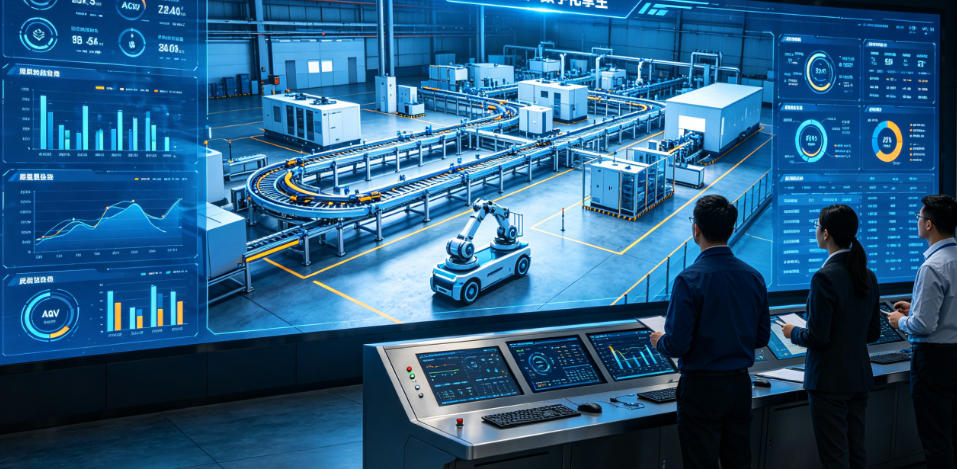
In this context, comprehensive automation solutions have become a key approach for electronic industry enterprises to achieve intelligent transformation, reduce operating costs, and improve competitiveness. By integrating robotic automation, smart production lines, AGV/AMR logistics systems, and digital management platforms, enterprises can achieve full-process automation from material handling, assembly, and testing to packaging.
What is Electronic Industry Automation?
Electronic industry automation utilizes industrial robots, AGV/AMR mobile robots, RGBD cameras, 3D vision systems, and intelligent control systems to automate the assembly, soldering, inspection, and material handling processes in electronic product manufacturing. This approach increases production efficiency, reduces human errors, and supports small-batch, multi-product flexible production.
Challenges in Electronic Industry Automation
In the electronics manufacturing sector, with rapid product updates, increasing customization, and small-batch diversified production becoming the norm, production processes are increasingly complex, demanding higher standards for efficiency, precision, and traceability. Key challenges include:
- High human error rates: Manual assembly can lead to soldering defects, component misalignment, assembly errors, or even functional failures, significantly impacting yield.
- Insufficient production line flexibility: Traditional fixed production lines struggle to adapt quickly to multiple product models, leading to long changeover times and low efficiency.
- Difficult quality traceability: Without digital monitoring and real-time data collection, critical process parameters are hard to track, and defects are challenging to detect in time.
- Low logistics efficiency: Material handling relies on manual labor or traditional conveyors, which cannot meet high-speed, high-density production, causing delays, errors, and safety risks.
- High safety and compliance requirements: Electronics manufacturing often involves high-temperature soldering, chemical handling, precision equipment, and high-voltage operations, requiring strict adherence to safety standards.

To address these challenges, modern electronic industry automation solutions integrate industrial robots, intelligent vision systems, RGBD cameras, AGV/AMR mobile robots, and industrial digital management platforms, creating intelligent, flexible, and efficient production systems. By combining automated material handling, precision assembly, online inspection, and real-time data analysis, enterprises can achieve lean production, flexible production lines, and intelligent monitoring, significantly improving production efficiency and competitiveness while ensuring quality and safety.
Moreover, with the rapid development of Industry 4.0, artificial intelligence (AI), and the Internet of Things (IoT), electronic industry automation solutions are continuously evolving to support remote monitoring, intelligent scheduling, multi-factory collaboration, and real-time data-driven decision-making, providing a solid foundation for building smart factories and digital transformation.
Core Automation Technology Applications
1. Industrial Robot Automated Assembly and Precision Soldering
In modern electronics manufacturing, industrial robots are the core force for automated assembly and precision soldering, widely applied to:
- High-precision assembly of electronic components
- Automatic soldering of PCBs and flexible circuits, including wave soldering
- Board testing, component insertion, and modular electronic product assembly
- Flexible production for small batches and multiple product models
With high-precision 3D vision systems and RGBD cameras, robots can perceive component positions and orientations (pose) in real time, automatically planning grasping, handling, and soldering paths. Closed-loop control and AI assistance significantly reduce human errors, improve line consistency and production efficiency, and handle irregular objects in complex assembly scenarios.
Additionally, industrial robots can integrate with intelligent visual inspection systems, automatic feeders, and MES platforms for end-to-end automation, reducing human intervention and optimizing production cycles.
2. AGV/AMR Intelligent Logistics and Warehouse Scheduling
Electronic production lines are often complex, with numerous component types and frequent small-batch changes. AGV/AMR mobile robots enable:
- Automated material transport and inventory replenishment
- Real-time path planning, dynamic obstacle avoidance, and multi-robot collaboration
- Warehouse picking, sorting, and delivery optimization
- Integration with MES/ERP systems for full-process material flow monitoring
With intelligent navigation (SLAM) and RGBD vision perception, AGV/AMR robots can detect dynamic obstacles, avoid personnel in work areas, and ensure safe, efficient material handling. Real-time data analysis and scheduling optimization maximize material flow efficiency, reduce labor costs, and enhance supply chain flexibility and automation.
3. Intelligent Inspection and Automated Defect Detection
Electronic products require high precision, making manual inspection inefficient and inconsistent. Automated inspection systems, combining machine vision, RGBD cameras, and deep learning algorithms, can:
- Detect surface defects on PCBs, components, and modules (scratches, dents, soldering defects)
- Measure 3D dimensions and verify assembly accuracy
- Automatically sort and remove defective products
- Provide real-time tracking, analysis, and quality reports
High-precision visual inspection and data-driven feedback significantly improve line inspection speed and consistency, reduce human intervention, and enhance yield, providing reliable quality control for electronic automation.
4. Data-Driven Smart Factory Management
Digitalization and the industrial internet play a key role in electronic automation, helping enterprises achieve intelligent management and lean operations:
- Production data collection: Real-time monitoring of equipment status, production progress, and key process parameters
- Process optimization and predictive maintenance: Use data analytics to improve assembly, soldering, logistics, and inspection processes
- Remote management: Support multi-factory centralized monitoring, remote scheduling, and collaborative production
- Intelligent safety monitoring: Combine virtual safety fences, robot safety monitoring, and Area and Perimeter Robot Safety technologies for human-robot collaboration safety
Data-driven management allows electronics manufacturers to achieve flexible scheduling, lean operations, early risk identification, optimized production efficiency, and rapid response to market demands and product upgrades under Industry 4.0 and smart manufacturing environments.

Core Advantages of Electronic Industry Automation
Automation in modern electronics manufacturing not only improves efficiency but also ensures flexible production, intelligent management, and high-quality products. Key advantages include:
1. Improved Production Efficiency
By leveraging industrial robots, AGV/AMR mobile robots, and smart assembly lines, automation can achieve full-process automation from material handling, precise grasping, assembly, to inspection.
- Significantly reduces manual labor and repetitive tasks
- Continuous robot operation minimizes downtime and changeover times
- Automated logistics and production line scheduling optimize production cadence
- Supports high-density, multi-model, rapid-switching production needs
This efficiency improvement is particularly valuable for PCB soldering, modular electronic product assembly, and flexible production lines.
2. Ensured Product Quality
Automation, combined with high-precision robots, RGBD vision inspection, and deep learning algorithms, enables precise control and monitoring:
- Accurate component positioning improves assembly precision
- Automated detection of solder joints, component defects, and misalignments
- Ensures batch consistency and stability
- Real-time data analysis corrects anomalies promptly
High-precision inspection reduces rework rates and increases overall yield, providing a quality assurance foundation for high-end electronics manufacturing.
3. Enhanced Flexible Manufacturing
Facing fast product updates, multiple models, and small batches, automated systems respond quickly to production changes:
- Robot software allows rapid switching of grasping, assembly, and soldering programs
- AGV/AMR routes can be flexibly adjusted to support multi-station delivery
- Intelligent vision systems recognize various component specifications, enabling non-standard product handling
- Supports small-batch, multi-model production, reducing preparation time
Flexible manufacturing significantly strengthens competitiveness in fast-iterating and customized production markets.
4. Reduced Operating Costs
Automation reduces reliance on manual labor and lowers production risks via intelligent management:
- Reduces labor costs and operational errors
- Prevents production downtime and material waste
- Optimizes equipment and production line utilization for higher ROI
- Automated logistics reduce forklift, manual handling, and delivery errors
Long-term investment in automation significantly lowers overall operational costs and enhances factory profitability.
5. Safety and Compliance
Electronics manufacturing involves risks such as high-temperature soldering, chemical handling, and precision equipment operation. Automation combined with virtual safety fences, Area and Perimeter Robot Safety, and RGBD monitoring:
- Monitors personnel and robot locations in real time
- Automatically slows, pauses, or stops hazardous operations
- Reduces workplace injuries and ensures safe operations
- Meets industrial safety and quality standards
Intelligent safety systems protect employees and help enterprises maintain regulatory compliance.
6. Digital Management
Using industrial internet, MES systems, and data collection platforms, enterprises can achieve full-process visibility and traceability:
- Monitor production progress, equipment status, and quality data in real time
- Track and analyze process parameters and assembly processes
- Support remote monitoring and unified multi-factory management
- Data-driven decision-making optimizes processes and logistics
Digital management enables intelligent decision-making, lean production, and continuous optimization, laying a solid foundation for Industry 4.0 smart factory development.
Synexens Industrial Outdoor 4m TOF Sensor Depth 3D Camera Rangefinder_CS40

Conclusion
In the rapidly evolving electronic industry, automation solutions have become the cornerstone of smart manufacturing. Through robotic automation, AGV/AMR logistics, intelligent inspection, and digital management platforms, enterprises can achieve efficient, safe, flexible, and intelligent production.
Looking ahead, with further integration of Industry 4.0, AI, and IoT technologies, electronic industry automation will advance toward
