

ToF Virtual Fitting Mirrors: How Smart 3D Scanning Enhances Retail
How Can ToF Technology Improve Virtual Try-On and Shopping Experiences?
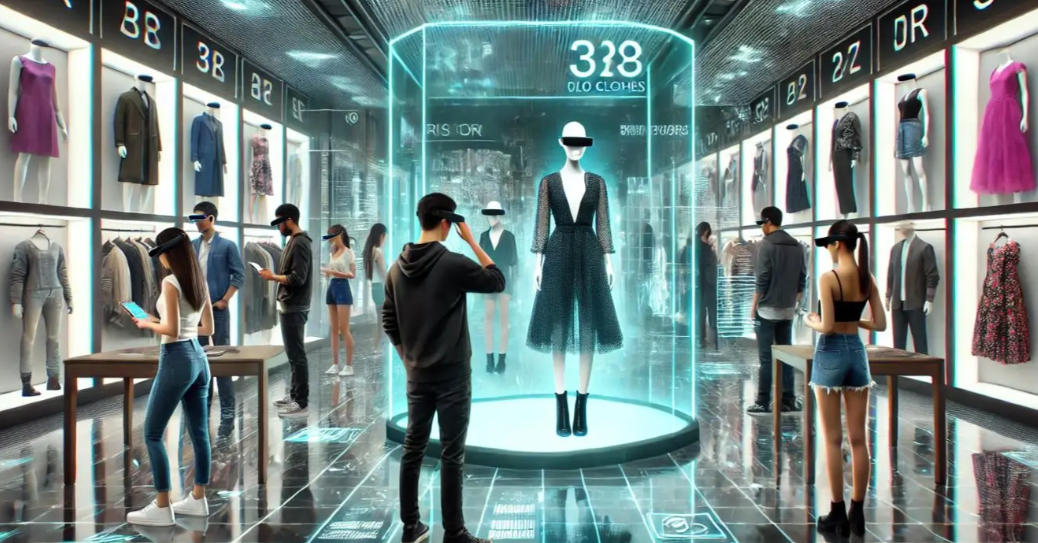
As the retail industry undergoes digital transformation and consumers increasingly demand personalized shopping experiences, Virtual Fitting Mirrors have become a key innovation bridging online and offline shopping. By integrating ToF (Time-of-Flight) technology, retailers can achieve high-precision body scanning, virtual try-on, and intelligent clothing recommendations, providing customers with a more convenient, intuitive, and immersive shopping experience.
What is ToF Time-of-Flight Technology?
TOF (Time-of-Flight) is a 3D sensing technology that measures distance based on the time it takes for light to travel between emission and reflection. In simple terms, the sensor actively emits light pulses (usually infrared or laser). When the light hits an object and bounces back, the system calculates the time difference between emission and return, thereby determining the exact distance between the sensor and the object.
Using this principle, ToF generates real-time 3D depth maps, enabling precise spatial perception and object recognition.
Key Features:
-
High precision: Millimeter-level accuracy in distance measurement.
-
Fast response: Suitable for dynamic and real-time applications.
-
Strong interference resistance: Stable performance even under varying lighting conditions.
-
Compact and low-power: Easy to integrate into smart devices.
Background: Retail Digitalization and Virtual Fitting Demand
In recent years, traditional retail has faced intense competition from e-commerce, making digital transformation essential for maintaining competitiveness. Consumers now expect more than just accurate size matching—they seek personalized, immersive, and contactless shopping experiences. Especially in the post-pandemic era, contactless interaction and precise fitting have become vital innovations for safer and smarter retail.
The Virtual Fitting Mirror exemplifies this trend. It not only delivers real-time, visualized fitting effects but also leverages body measurement data for personalized recommendations and style matching, creating an unprecedented immersive shopping journey.
At the heart of this technology lies ToF (Time-of-Flight) sensing. By emitting light pulses and measuring their return time, ToF generates high-precision, low-latency 3D depth images. It can capture a user’s full-body or partial 3D spatial data with millimeter-level accuracy, offering distinct advantages over traditional cameras or infrared sensors:
-
Instant response: Millisecond-level measurement ensures smooth motion and gesture capture for a seamless try-on experience.
-
Environmental adaptability: Reliable depth recognition under varying lighting or reflective conditions.
-
High accuracy and stability: Enables complete 3D human modeling with precise body measurements such as shoulders, chest, waist, hips, and leg length.
-
Scalability: When combined with AI and cloud computing, ToF supports personalized recommendations, intelligent outfit matching, and multi-user recognition.
Through ToF, virtual fitting mirrors overcome common challenges of physical fitting rooms—limited space, long fitting times, and hygiene concerns. Meanwhile, retailers gain valuable body-shape and behavioral data, enhancing product recommendations, inventory management, and customer engagement.
In essence, ToF empowers the digital evolution of retail, transforming virtual fitting from a conceptual idea into a practical, commercial solution—ushering in a new era of smart retail experiences.

Core Roles of ToF in Body Scanning and Virtual Try-On
1. High-Precision Body Scanning
In smart retail and virtual fitting applications, ToF depth-sensing technology provides unmatched speed and precision for full-body scanning. By emitting light pulses and calculating flight times, ToF generates high-resolution 3D point cloud data, enabling millimeter-level full-body mapping.
When combined with AI body recognition and posture estimation algorithms, the system can identify a user’s shape and key measurements such as height, shoulder width, chest, waist, hip, and leg length. Compared to traditional vision or structured light methods, ToF offers stronger light interference resistance and real-time processing, ensuring reliable capture even under complex lighting conditions.
-
Instant digital modeling: ToF can generate a personalized 3D avatar in seconds for virtual try-on use.
-
Multi-angle and dynamic scanning: Supports user movement and various poses for realistic model reconstruction.
-
Intelligent size analysis: AI algorithms match standard or brand-specific sizing, significantly reducing return rates.
This precise digital body modeling not only benefits the fashion retail industry but also extends to fitness, health monitoring, ergonomics, and digital human modeling, providing a foundation for customized experiences.
2. Virtual Try-On and Garment Matching
Based on ToF-generated 3D body models, virtual fitting mirrors and online fitting systems can deliver highly realistic try-on experiences. By combining garment size parameters, fabric properties, drape, and dynamic deformation, the system uses physics-based simulation and real-time rendering to display natural, lifelike fitting effects.
-
Real-time visualization: Users can instantly see how clothes fit their bodies, including realistic folds, tension, and texture reflections.
-
Multiple outfit and scenario simulation: Enables users to preview various styles (casual, business, athletic) across different scenes.
-
AI smart matching: Automatically suggests outfit styles and color combinations that best suit the user’s body shape and complexion.
Additionally, ToF sensors can track body movements, allowing clothing to move fluidly with the user—creating an immersive “walk-and-try” experience. This integration of ToF + AR + AI transforms shopping into a highly interactive and futuristic activity, strengthening brand engagement and customer loyalty.
3. Intelligent Recommendations and Optimized Shopping Experience
When ToF data is combined with AI algorithms and cloud analytics, the virtual fitting mirror evolves into an intelligent shopping assistant. By analyzing user body shape, fitting history, and preferences, the system provides personalized recommendations and seamless experiences.
-
Personalized recommendations: Suggests the best sizes, styles, and color combinations using big data analytics.
-
Body trend analysis: Tracks body shape changes over time, assisting brands in product design, inventory optimization, and store display strategy.
-
Immersive interaction: Voice and gesture controls allow users to switch outfits, modify colors, or zoom in for detail views naturally and intuitively.
-
Smart retail insights: Anonymous body-shape data helps retailers understand demographic trends, supporting targeted marketing and product development.
By merging perception, intelligence, and data, ToF transforms virtual try-on experiences into more realistic, personalized, and data-driven retail journeys. From precise body scanning to intelligent style recommendations, ToF is redefining fashion retail—driving it toward greater immersion, intelligence, and efficiency.
Technical Challenges: Enhancing the Reliability of ToF in Retail Applications
Although ToF (Time-of-Flight) technology shows immense potential in virtual fitting mirrors and intelligent retail interactions, it still faces several technical challenges in complex retail environments. Achieving high-precision modeling, real-time responsiveness, and stable recognition requires continuous optimization in hardware architecture, algorithm design, and environmental adaptability. Below are three key challenges and corresponding solutions for improving ToF system reliability.
1. Precision and Detail Capture
In virtual fitting applications, ToF systems must capture high-precision 3D point cloud data of a user’s entire body to ensure accurate modeling and clothing fitting. However, in real-world retail environments, complex outfits, accessories, hairstyles, and body occlusions often lead to incomplete or missing depth data. For example, long hair may cover the shoulders, hats may obscure facial features, and loose clothing can distort actual body contours—resulting in less realistic virtual try-on effects.
To improve precision and body detail reconstruction, the following technical strategies are widely adopted:
-
Multi-frame data fusion and depth restoration algorithms: Combine multi-angle and multi-frame depth data, using AI-based reconstruction to restore occluded body parts and ensure model completeness.
-
Point cloud completion and edge refinement: Apply deep learning models to fill missing points and enhance surface smoothness and realism.
-
Multi-sensor fusion: Integrate ToF with RGB cameras and structured light sensors to enhance spatial resolution and color accuracy, providing more reliable data for fabric texture and contour rendering.
These improvements not only enhance realism and authenticity in virtual try-on applications but also provide a solid data foundation for AI-driven recommendations and realistic clothing simulation.
2. Real-Time Responsiveness and System Latency
Real-time performance is the core requirement for virtual fitting mirrors. Users expect smooth and natural motion, pose switching, and outfit visualization—without noticeable lag or delay. High-resolution ToF cameras generate millions of 3D depth points per second, demanding substantial computational power. Insufficient system performance may cause frame drops, rendering delays, or motion lag, which significantly degrade the user experience.
To achieve millisecond-level responsiveness, optimization is needed at multiple system levels:
-
Edge computing and on-device AI processing: Deploy high-performance SoC chips for local data processing, minimizing cloud transmission latency.
-
GPU acceleration and lightweight AI models: Use GPU parallel computing to accelerate point cloud processing and rendering, while optimizing neural network structures for faster inference.
-
Intelligent resource allocation: Dynamically distribute computing resources among concurrent tasks (e.g., depth computation, garment rendering, gesture recognition) to prioritize real-time interactions.
With these enhancements, ToF systems can render and respond within tens of milliseconds, delivering a truly 'what you see is what you get' virtual fitting experience.

3. Environmental Adaptability
Retail spaces pose complex environmental challenges such as variable lighting, reflective surfaces, and moving backgrounds—all of which can interfere with ToF signals, causing noise, distortion, or mismeasurement in depth data.
To ensure reliable performance in diverse environments, ToF systems must incorporate intelligent optical adjustment and signal optimization technologies:
-
Multi-frequency modulation: Use multiple light pulse frequencies to reduce multi-path reflections and improve measurement accuracy under strong or reflective lighting conditions.
-
Ambient light suppression algorithms: Automatically detect and filter background light interference to maintain stability in high-brightness or mixed-light environments.
-
Auto exposure and dynamic gain control: Adjust the ToF light emission and camera exposure parameters in real time to maintain consistent depth accuracy in varying brightness levels.
-
Infrared anti-interference optical filters: Improve signal purity and reduce interference from external infrared sources such as security cameras or stage lighting.
These adaptations enable ToF-based fitting systems to operate consistently across malls, boutiques, and exhibition halls, delivering a stable, high-quality interactive experience for users.
While ToF applications in retail still face technical challenges, advancements in AI algorithms, hardware performance, and sensor fusion technologies are steadily overcoming these barriers. In the near future, ToF-powered virtual fitting mirrors will achieve greater precision, faster responsiveness, and more intelligent immersion, driving the retail industry toward deeper digitalization and personalization.
Recommendations for Retailers: Optimizing ToF to Enhance the Shopping Experience
-
Integrate AI + ToF modules: Enable rapid posture recognition and multi-user scanning to improve fitting accuracy.
-
Adopt edge computing with cloud collaboration: Achieve low-latency 3D rendering and intelligent recommendations for seamless interactions.
-
Utilize multi-sensor fusion: Combine RGB cameras, IMUs, and ToF sensors for comprehensive body analysis.
-
Implement personalized data management: Record user body profiles and preferences for ongoing experience optimization.
-
Optimize physical setup: Adjust mirror placement, lighting, and sensor configuration to ensure consistent performance in varied environments.
Outlook: Building a Smart Retail Ecosystem with ToF + AI + Cloud Data
As ToF sensor precision improves and AI and cloud analytics continue to advance, the future of retail will feature:
-
Full-body 3D virtual fitting: Accurate try-on experiences without physical fitting rooms.
-
Personalized style recommendations: AI-driven outfit matching based on body data and user preferences.
-
Real-time inventory and sales analytics: Data-driven inventory optimization and marketing strategies.
-
Cross-store data connectivity: Cloud-synced user profiles enabling virtual try-on and personalized service across multiple stores.
In conclusion, the convergence of ToF, AI, and cloud data will usher the retail industry into a new era of intelligent, digital, and personalized shopping, enhancing customer satisfaction while reducing operational costs and boosting brand competitiveness.
Synexens 3D Of RGBD ToF Depth Sensor_CS30

Our professional technical team specializing in 3D camera ranging is ready to assist you at any time. Whether you encounter any issues with your TOF camera after purchase or need clarification on TOF technology, feel free to contact us anytime. We are committed to providing high-quality technical after-sales service and user experience, ensuring your peace of mind in both shopping and using our products.
