

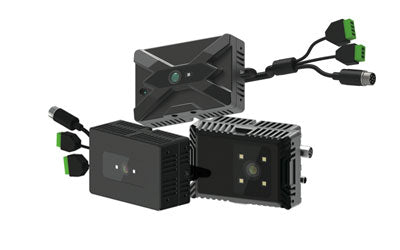
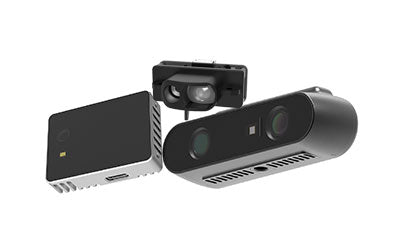
ToF 3D Sensor: How It Powers Robot Vision & Automation
How Does a ToF 3D Sensor Improve Robot Vision and Automation?
As robots evolve from performing simple tasks in fixed positions to moving autonomously, recognizing their surroundings, and completing complex operations, conventional 2D cameras are increasingly unable to meet their sensing requirements. Robots need to know where objects are, how far away they are, whether obstacles are present, and where targets are located in three-dimensional space. This makes a tof 3d sensor an important sensing technology for modern robot vision and industrial automation.
Using the Time-of-Flight measurement principle, devices can quickly obtain spatial depth information and use it for obstacle detection, 3D mapping, SLAM, object positioning, and intelligent interaction. For AGVs, AMRs, drones, industrial robots, and smart logistics equipment, ToF is becoming an effective solution for 3D sensing.
What Is a ToF 3D Sensor?
A tof 3d sensor is a ToF sensor designed to obtain three-dimensional depth information. It emits a light signal toward a target, receives the reflected signal, and calculates the target distance based on the propagation time or phase change of the light.
Compared with conventional single-point distance sensors, a ToF 3D Sensor can cover a larger spatial area and generate multiple depth data points. By combining these measurements, a robot can construct a depth map of its surrounding environment.
A 3d time of flight camera can therefore be understood as a three-dimensional vision device that combines ToF distance measurement with a camera-style sensing architecture. It can not only determine how far away a target is but also provide richer information about its spatial structure.

Why Is a Time of Flight Camera Suitable for Robotics?
Robots need to continuously understand their surroundings in real time. Whether it is an industrial robotic arm or an autonomous mobile robot, the system must constantly determine target positions and distances from obstacles.
Traditional cameras mainly provide RGB images and may require complex algorithms to infer three-dimensional structures from 2D visual information. A time of flight camera sensor, however, can directly provide depth information.
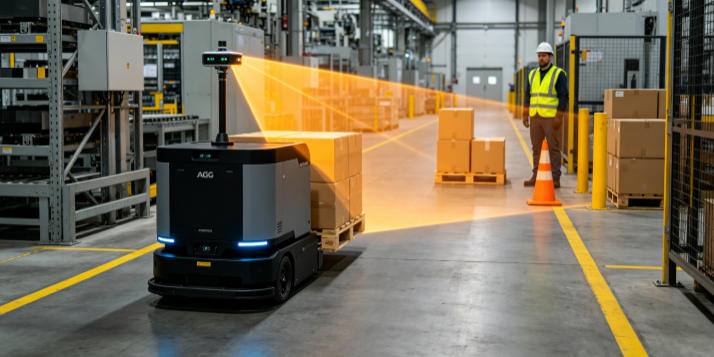
For example, an AMR operating inside a warehouse can use ToF to detect shelves, boxes, people, and other robots in front of it. When the system detects that an obstacle is getting closer, it can adjust its path accordingly.
For robotic arms, ToF depth data can help determine the position and height of a workpiece. Combined with AI vision algorithms, the robot can then perform object recognition, positioning, sorting, and automated picking.
How Is ToF 3D Sensing Used for Robot Navigation?
Robot navigation requires continuous awareness of the surrounding environment, making tof 3d sensing highly suitable for mobile robots.
A robot can use ToF to obtain distance data from different areas in front of it and determine which paths are accessible and which contain obstacles. When combined with SLAM algorithms, the robot can also use continuously collected depth information to build an environmental map.
In indoor environments, ToF can help robots detect walls, furniture, people, and changes in floor height. For drones, depth data can be used for small-object detection, collision avoidance, and detecting changes in altitude or nearby terrain.
Therefore, a time of flight tof camera can become an important part of a robot's environmental perception system.
What Are the Advantages of Industrial ToF 3D Image Sensors?
Industrial environments are often more complicated than consumer electronics scenarios. Production lines may contain fast-moving objects, materials with different colors, reflective metal surfaces, and changing lighting conditions. Industrial vision systems therefore require reliable distance and depth measurement.
industrial tof 3d image sensors can use depth information to help machines perform positioning, alignment, material detection, and spatial measurement.
For example, in an automated assembly line, ToF can detect whether components have reached their specified positions. In logistics systems, it can help identify the location and dimensions of packages. In manufacturing equipment, ToF can also support liquid-level or material-height detection.
Compared with solutions that rely only on RGB images, ToF adds a depth dimension, allowing industrial equipment to understand the spatial position of objects more directly.
How Is a ToF Camera Used in Industrial Logistics?
Industrial logistics is one of the important application areas for ToF technology. Automated warehouse equipment needs to know where goods are located, how far they are from a robotic arm, and whether there is enough space between different objects.
Using camera tof technology, logistics robots can detect boxes, pallets, people, and other obstacles. When integrated with a robot control system, ToF depth data can support positioning, path planning, and collision avoidance.
On automated production lines, ToF can also be used for equipment triggering, position detection, and assembly alignment. When an object enters a specified detection zone, the sensor can detect the change in distance and trigger the next operation.
What Do ST4D and STFall Mean in ToF Applications?
ST's ToF ecosystem extends beyond traditional distance measurement and also supports applications such as presence detection and motion sensing.
st4d can be associated with 4D sensing concepts that combine spatial depth information with changes over time. For applications that need to understand human movement or environmental changes, this type of sensing can provide additional information beyond a static depth measurement.
stfall is associated with applications such as fall detection. By continuously collecting information about changes in human position and movement, ToF systems can assist in identifying changes in posture and unusual movement patterns.
These applications demonstrate how ToF is evolving from simply measuring distance toward understanding spatial behavior.
How Can a ToF Camera Be Used for Smart Homes and Human Detection?
Smart home devices often need to determine whether a person is present, where the person is located, and whether movement has occurred. Conventional RGB cameras can perform these tasks, but camera-based monitoring may raise additional privacy considerations.
ToF primarily provides distance and depth information. In some applications, this allows systems to perform presence detection, people counting, and motion detection without requiring a conventional video image or detailed facial information.
For example, a smart lighting system can use ToF to detect when someone approaches and automatically turn on the lights. A smart display can determine whether a user is standing in front of the screen, while a smart home system can use depth data to determine whether a room is occupied.
This makes ToF useful for smart homes, retail environments, commercial spaces, and other applications requiring spatial awareness.
How Are Time of Flight Cameras Used in Smartphones?
Although robotics is an important application area for ToF, time of flight cameras can also be used in consumer electronics.
Smartphones can use ToF for laser autofocus, AR spatial positioning, gesture recognition, and distance detection. In low-light environments, ToF can also provide depth information independently of visible-light images.
For mobile devices, the tof camera module generally needs to be as compact as possible while maintaining low power consumption and fast response. Highly integrated ToF solutions are therefore particularly useful for smartphones and other portable products.
How Does a Time of Flight Sensor Help with Autofocus?
Accurately determining the distance to a target is important for smartphone photography and smart imaging devices. Traditional autofocus mainly relies on image information to determine focus, while ToF can directly provide distance information.
Therefore, a time-of-flight sensor can help a camera system lock onto a target more quickly, particularly in low-light environments or scenes with limited visual texture.
This is one reason ToF technology has become relevant to smartphones, tablets, smart cameras, and other personal electronic devices.
What Role Does a Time of Flight Senso Play in Drones?
Drones need to continuously determine their distance from surrounding objects during flight. Walls, trees, cables, buildings, and the ground can all become potential obstacles.
With ToF depth sensing, a drone can obtain distance information from objects in front of or below it and combine this data with flight-control algorithms for obstacle avoidance and altitude management.
Compared with a camera alone, ToF can provide direct distance information. Compared with larger long-range laser scanning systems, compact ToF modules can be more suitable for drone applications where size and weight are limited.
What Is the Difference Between a Time of Flight Laser Scanner and a ToF Camera?
A time of flight laser scanner generally focuses on laser-based scanning and spatial distance measurement and can be used for larger-area environmental scanning.
A ToF Camera, in comparison, focuses more on acquiring depth information for vision systems. It typically provides a camera-like field of view and can measure distances across multiple regions, making it suitable for robotics, smart devices, and short- to medium-range 3D vision.
For industrial applications, a time of flight laser distance sensor may be suitable for single-point or specific distance measurements, while a ToF Camera is better suited to applications requiring spatially distributed depth information.
When selecting a ToF solution, engineers should therefore consider measurement range, field of view, resolution, number of sensing zones, frame rate, environmental lighting, power consumption, and overall system requirements.
Can ToF and LiDAR Be Combined?
ToF and LiDAR are not necessarily competing technologies that must replace one another. Different sensors have different measurement ranges, fields of view, architectures, and application characteristics.
In robotics and autonomous systems, ToF, LiDAR, and RGB cameras can be combined through sensor fusion. RGB cameras provide color and texture information, ToF provides depth information at relatively close ranges, while LiDAR can support wider-area spatial measurement.
Together, these technologies can help robots understand three important questions: what an object is, where it is, and how far away it is.

How Does a ToF Sensor Support AI Vision?
AI vision algorithms require reliable environmental data. Traditional AI vision systems mainly process RGB images, while adding depth information can provide a richer understanding of spatial relationships.
For example, in a robotic picking application, AI does not only need to recognize a cup. It also needs to know the cup's three-dimensional position, height, and distance from the robotic arm. ToF depth data can serve as an important input for this type of AI vision system.
Therefore, tof technology combined with AI Vision can support object recognition, pose estimation, robotic picking, people detection, gesture recognition, and spatial understanding.
How Should You Choose a ToF 3D Sensor?
When choosing a ToF 3D Sensor, it is important to evaluate the complete application rather than focusing on a single specification.
First, determine the required measurement range. For smartphones, gesture recognition, or short-range presence detection, a short-range ToF solution may be sufficient. For robotics and industrial vision, however, a longer operating range may be required.
Next, consider depth resolution, field of view, number of sensing zones, refresh rate, and performance under different ambient lighting conditions.
Other factors include power consumption, package size, interface, software SDK support, and the processing load placed on the main processor. For industrial equipment, long-term stability and reliability are also important considerations.
If the system needs continuous spatial depth information, a multi-zone ToF or 3D ToF solution may be more suitable than a basic single-point distance sensor.
How Can FLIT Tools Support ToF Development?
ToF products require more than hardware. A complete development ecosystem is also important. When engineers design a camera or robotic vision system, they may need to validate distance measurements, adjust parameters, test different environments, and develop application-specific algorithms.
flit tools can help engineers evaluate ToF devices and verify their performance under different application conditions.
For development teams, matching the hardware, software, algorithms, and application environment is essential. Only by properly integrating the ToF Sensor with the main processor, camera, AI algorithms, and robotic system can the full value of 3D sensing be realized.
3D Safe Guarding Privacy RGBD Camera Synexens CS30

Where Is ToF Technology Heading?
The future of tof technology is moving beyond basic distance detection toward intelligent 3D vision.
In industrial automation, ToF can work with robotic arms, AGVs, AMRs, and smart logistics systems. In robotics, it can be combined with SLAM and AI vision. In smart homes, it can support presence detection and human motion recognition. In consumer electronics, it can continue to support autofocus, gesture recognition, and AR experiences.
As sensors become smaller, power consumption decreases, and multi-zone depth sensing capabilities improve, ToF is likely to become an increasingly important sensing component in intelligent devices.
From tof camera sensor technology to 3d tof and complete 3D Vision Systems, ToF is helping machines move beyond two-dimensional image understanding toward spatial intelligence. For robots and automated equipment that require real-time distance, position, and depth information, ToF will continue to play an important role.
