

Robotic Imaging & 3D Robot Vision Explained: Full Technology Guide
- par TofSensor
What is robotic imaging and how does 3D robot vision work in modern robotics?
In the context of rapid development in smart manufacturing, automation, and robotic perception, robotic imaging and 3D robot vision have become two of the most critical technologies in modern industrial robotics. More and more companies are focusing on how advanced machine vision systems can enhance robots’ ability to perceive complex environments, enabling higher-precision automation and intelligent decision-making.
This article provides a comprehensive breakdown of robotic vision and 3D imaging technologies, naturally integrating high-search-volume keywords such as robotic imaging, 3d robot vision, robot vision system, and 3D imaging technology to improve SEO performance and search visibility.
1. What is robotic imaging? Basic introduction to machine imaging systems
robotic imaging refers to a visual perception system in which robots capture environmental images through vision sensors and then use image processing and artificial intelligence algorithms to identify, locate, analyze, and assist in decision-making. It is not just about 'machines seeing the world,' but about enabling robots to understand their environment and take actions accordingly.
Unlike traditional camera systems, robotic imaging is not focused on simply recording visual data. Instead, it transforms images into actionable intelligence. For example, it can not only identify what an object is, but also determine where it is, how it should be grasped, and whether it is operable—directly enabling robotic execution.
Core workflow of robotic imaging
A complete robotic imaging system typically includes several key stages that together form a visual intelligence pipeline:
-
Image acquisition (RGB / depth cameras / industrial cameras)
High-resolution cameras or depth sensors collect environmental data, including color, texture, and distance information. -
Image processing (AI recognition and feature extraction)
Computer vision and deep learning algorithms are used for denoising, segmentation, edge detection, and object recognition. -
Spatial understanding (2D to 3D transformation)
2D images are converted into 3D spatial information, often generating point cloud models that describe object position and orientation. -
Decision execution (robot control systems)
Based on visual analysis, robots perform grasping, transportation, obstacle avoidance, or assembly tasks in a closed-loop system.
Evolution of robotic imaging: from vision to intelligent perception
Modern robotic imaging is no longer limited to traditional machine vision. It has evolved into a higher-level intelligent perception system with the following capabilities:
- Multi-object recognition in complex environments
- Real-time adaptation to dynamic scene changes
- High-precision spatial localization (millimeter-level accuracy)
- Fast decision-making within milliseconds
This makes robotic imaging the 'visual brain' of intelligent automation systems.

2. What is 3D robot vision? Core principles of 3D robotic vision
3d robot vision is an advanced form of robotic vision technology that not only recognizes objects in images but also captures depth information and spatial structures, enabling robots to reconstruct complete 3D environmental models.
Unlike 2D vision, which only provides flat image data, 3D robot vision allows robots to understand spatial relationships such as distance, height differences, occlusion, and grasping angles. This makes it essential for intelligent manufacturing and automation systems.
The key advantage of 3D robot vision is its ability to output XYZ spatial coordinates, enabling precise positioning and manipulation in real-world space. It also supports pose estimation, allowing robots to determine object orientation and rotation for more accurate grasping and assembly tasks. In complex or dynamic environments, 3D vision significantly improves recognition stability, even under occlusion, lighting changes, or cluttered backgrounds.
From a technical perspective, 3D robot vision relies on several imaging and depth-sensing technologies, including stereo vision, structured light, time-of-flight (ToF), and LiDAR. These technologies work together to reconstruct high-precision 3D environmental models from 2D image data.
In industrial applications, 3D robot vision is widely used in automated sorting, industrial inspection, robotic grasping, smart warehousing, and autonomous mobile robotics, making it a core foundation of modern robotic perception systems.
3. Relationship between robotic imaging and 3D robot vision
In robotic vision systems, robotic imaging serves as the data acquisition layer, while 3d robot vision represents the advanced stage of spatial interpretation and application.
Simply put:
- robotic imaging = 'seeing the world'
- 3d robot vision = 'understanding the 3D world'
Together, they enable robots to transition from visual perception to spatial intelligence, significantly improving environmental understanding capabilities.
4. How 3D imaging technology empowers robotic vision systems
Modern robotic systems rely heavily on 3D imaging technology to achieve high-precision visual recognition and spatial understanding. This technology enables robots to move from 2D observation to true 3D perception, similar to human spatial awareness.
In industrial applications, 3D imaging technology plays several key roles:
- Depth information extraction using stereo vision or laser-based sensing
- 3D point cloud reconstruction to model real-world environments
- Spatial localization and path planning based on 3D models
- Dynamic environment recognition for moving or changing objects
For example, in automated warehousing systems, robots use 3D imaging technology to identify stacked or randomly placed items and calculate optimal grasping paths, significantly improving efficiency and accuracy.
5. Key application scenarios of 3D robot vision
As the technology matures, 3d robot vision has expanded into multiple high-value industries and is now a core component of intelligent automation systems.
1. Smart manufacturing
In modern factories, 3D robot vision is used for part positioning, automated assembly, and quality inspection. It enables high-precision operations such as electronics assembly and automotive production while reducing human error and improving consistency.
2. Warehousing and logistics
3D robot vision is essential for automated sorting and intelligent warehousing systems. Robots can recognize objects even in cluttered or occluded environments and perform accurate picking and placement operations.
3. Autonomous driving and mobile robotics
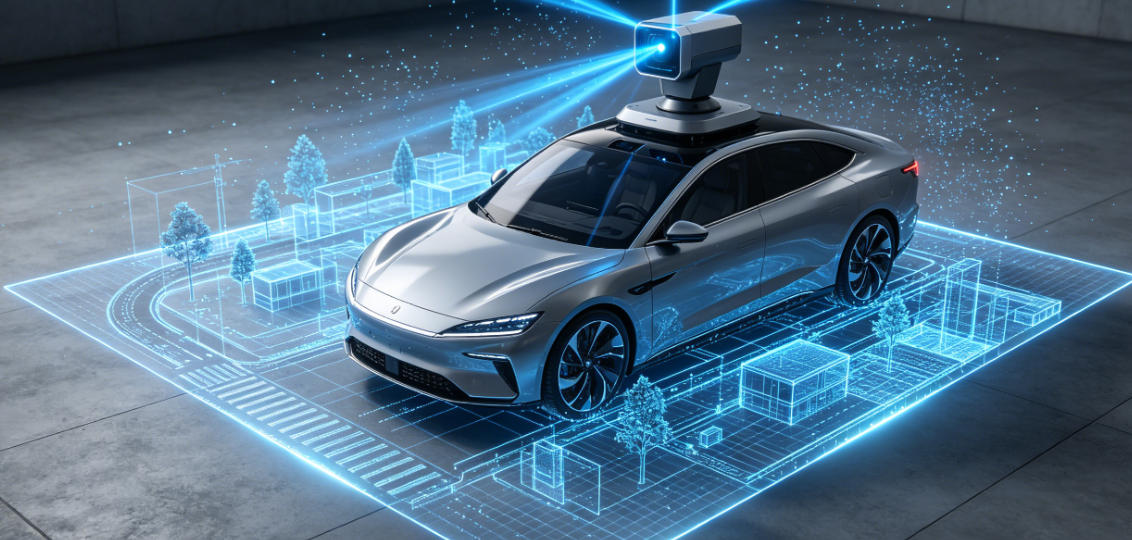
In autonomous systems, 3D vision is used for real-time environment modeling, obstacle detection, and path planning, improving safety and navigation accuracy.
4. Medical and surgical robotics
In medical applications, 3D robot vision provides high-precision spatial imaging for minimally invasive surgery, improving surgical accuracy and reducing operational risk.
Studies show that 3D vision significantly improves robotic stability and safety in complex environments.

6. Core functions of 3D imaging technology in robotics
3D imaging technology is a fundamental enabler of modern robotic vision systems. It supports:
- Depth sensing and spatial measurement
- 3D point cloud generation
- Path planning and navigation assistance
- Real-time dynamic environment recognition
In automated systems, it allows robots to understand spatial relationships between objects, improving task execution accuracy.
7. Development trends of robotic imaging
The future of robotic imaging will focus on:
- AI and deep learning integration
- Real-time 3D reconstruction
- Multi-sensor fusion (vision + LiDAR + IMU)
- Edge computing for embedded vision systems
It is evolving from a perception tool into an intelligent decision-making system.
8. Future trends of 3D robot vision
Key trends in 3d robot vision include:
- Higher-resolution depth perception
- Real-time millisecond-level processing
- Lower-cost 3D sensors
- Integration with AI foundation models
These advancements will enable robots to achieve more autonomous decision-making in complex environments.
9. Conclusion: the core value of robotic imaging and 3D robot vision
Overall, robotic imaging serves as the visual input layer of robotic systems, while 3d robot vision acts as the spatial intelligence layer.
Together, they enable a major transformation—from simple automated machines to intelligent systems capable of understanding and interacting with their environment.
With continued advancements in AI and 3D imaging technology, robotic imaging and 3D robot vision will remain key drivers of innovation in smart manufacturing and industrial automation.
3D Safe Guarding Privacy RGBD Camera Synexens CS30

After-sales Support:
Our professional technical team specializing in 3D camera ranging is ready to assist you at any time. Whether you encounter any issues with your TOF camera after purchase or need clarification on TOF technology, feel free to contact us anytime. We are committed to providing high-quality technical after-sales service and user experience, ensuring your peace of mind in both shopping and using our products.
