

iTOF vs TOF: Working Principles, Key Advantages and Applications
- Posted by TofSensor

What is iTOF and How Does It Differ from Traditional TOF Technology?
In modern sensors, 3D cameras, robotic navigation, autonomous driving, and smart devices, Time-of-Flight (TOF) technology has become one of the core distance measurement methods. Among these, Indirect Time-of-Flight (iTOF / indirect time-of-flight) is widely used in depth sensing due to its high accuracy, fast measurement speed, and low power consumption. Many engineers and developers often search for:
-
time of flight circuit ti
-
what is iTOF
-
time-of-flight depth sensing principle
-
TOF vs iTOF difference
This article systematically explains the iTOF principle, core advantages, application scenarios, and the differences from other distance measurement techniques, such as direct TOF, helping you fully understand how Time-of-Flight (TOF) technology works.
What is Time-of-Flight (TOF)?
Time-of-Flight (TOF) is a method to calculate distance by measuring the time it takes for light, sound, or electromagnetic waves to travel from the transmitter to the target and back. Using the propagation time of the wave, the distance to the object can be derived:
Distance = propagation speed × flight time / 2
Indirect Time-of-Flight (iTOF) is a type of TOF measurement. Unlike traditional direct TOF, it calculates distance indirectly by analyzing the phase difference of a modulated signal.

How iTOF Works
In iTOF technology, the transmitter emits a continuously modulated signal (usually light pulses or continuous wave modulation). The signal reflects off the target and returns to the receiver. The receiver compares the returning signal with the transmitted signal and calculates distance by measuring the phase difference:
-
Phase shift is used to estimate flight time
-
More suitable for high-frequency and continuous measurements compared to direct TOF
-
Continuous modulation enables higher precision
This indirect calculation method reduces reliance on ultra-fast time measurement circuits while improving measurement stability and noise immunity, forming the foundation for many high-performance time-of-flight circuit ti designs.
Key Differences and Advantages of iTOF vs Traditional TOF
TOF distance measurement is widely used in LiDAR, depth sensing, and 3D imaging. It is typically implemented in two ways:
Direct Time-of-Flight (Direct TOF)
-
Principle: Measures the actual time it takes for a light pulse to travel to the target and back to calculate distance.
-
Hardware requirement: Requires ultra-precise timers or high-speed sampling circuits to capture nanosecond-level pulse travel times.
-
Advantages:
-
Suitable for long-range measurements, such as outdoor LiDAR or autonomous driving sensing.
-
High precision at distances from meters to hundreds of meters.
-
-
Limitations:
-
High-speed electronics increase hardware complexity and cost.
-
Sensitive to ambient light and electronic noise, requiring precise design.
-
Indirect Time-of-Flight (iTOF)
-
Principle: Uses modulated light signals and measures the phase difference between emitted and received signals to calculate distance.
-
Hardware requirement: Less dependent on high-speed timers; simpler electronics suffice.
-
Advantages:
-
Ideal for short-range sensing, such as indoor 3D cameras, gesture recognition, and AR/VR applications.
-
Lower hardware complexity, reducing cost and power consumption.
-
High measurement stability, strong resistance to ambient light interference.
-
Supports multi-point depth measurements, performing well in compact sensor modules.
-
-
Limitations:
-
Maximum measurement range is limited, not as long as direct TOF.
-
Long-range measurements may require phase unwrapping, increasing computational complexity.
-
| Feature | Direct TOF | Indirect TOF (iTOF) |
|---|---|---|
| Distance calculation | Pulse time measurement | Phase modulation measurement |
| Optimal range | Long | Short to medium |
| Hardware complexity | High (requires high-speed timers) | Low (simple circuits) |
| Measurement stability | Medium | High, less sensitive to noise |
| Cost | Higher | Lower |
| Typical applications | Autonomous driving LiDAR, outdoor mapping | Depth cameras, AR/VR sensors, indoor mapping |
iTOF’s combination of low hardware requirements, high measurement stability, and strong anti-interference capability makes it a preferred solution in modern time-of-flight sensors, depth cameras, and compact 3D imaging modules. It provides reliable depth sensing for consumer electronics, robotics, and industrial automation without the high costs and complex hardware of direct TOF.
iTOF Circuit and Signal Processing
Key to iTOF implementation is designing stable and reliable reception and demodulation circuits. A typical iTOF system includes:
-
Light emission module (laser diode, VCSEL, etc.)
-
Modulation signal generator
-
Light reception and sampling circuit
-
Phase comparison and demodulation module
-
Digital processing and distance calculation engine
Many time-of-flight circuit ti designs combine analog and mixed-signal electronics, often using high-performance chips from TI, ADI, or Maxim to handle modulation, level conversion, and phase detection. From modulation to reflection capture to phase difference calculation, iTOF enables real-time, continuous, and high-precision distance measurement.
iTOF Phase Algorithm and Distance Calculation
The core algorithm in iTOF is based on signal phase difference:
-
Modulate the emitted signal at a specific frequency (e.g., sine wave)
-
Compare the reflected signal with the transmitted signal
-
Calculate flight time from the phase shift
-
Multiply by propagation speed to determine distance
Simplified formula:
Distance = (c × Δφ) / (2π × f)
Where:
-
c: signal propagation speed in the medium (e.g., air)
-
Δφ: phase difference between transmitted and received signals
-
f: modulation frequency
This time-of-flight calculation allows continuous sampling and high-precision measurements, easier to implement than direct TOF.

iTOF Advantages and Application Scenarios
iTOF’s unique principles and features make it highly advantageous across multiple domains, including consumer electronics, industrial automation, robotics, and autonomous driving:
3D Depth Cameras and Structured Light
iTOF enables per-pixel high-precision distance measurement, ideal for generating high-resolution depth and structured light maps. Widely used in smartphones, AR/VR devices, and gesture recognition systems. Compared to traditional TOF, iTOF offers more stability in short-range indoor scenarios, better ambient light resistance, lower dependence on high-speed timers, smaller device size, and lower power consumption.
Robotic Navigation
In robotics, obstacle avoidance, and SLAM, iTOF sensors quickly sense surrounding depth information, improving path planning and localization accuracy. High frame rate and multi-point depth sensing allow robots to react in real time, ensuring safe and reliable movement in complex indoor or industrial environments.
Autonomous Driving Perception
Short-range, accurate depth sensing is critical for autonomous vehicles. iTOF helps with front and side obstacle detection, enabling precise low-speed navigation and dynamic monitoring. Its strong ambient light and reflective surface tolerance make it stable in challenging conditions like rain, fog, or varying lighting, supporting autonomous driving safety.
Industrial Automation Inspection
iTOF is widely used in distance monitoring, dimensional measurement, and high-speed counting on production lines. High measurement stability and low hardware complexity allow it to handle fast production cycles while ensuring product quality and consistency. Compact modules can be easily integrated across various industrial equipment, achieving intelligent and efficient inspection.
In summary, iTOF offers high stability, high precision, low hardware complexity, and strong anti-interference, making it an ideal solution for short-range depth sensing in consumer electronics, robotics, autonomous driving, and industrial automation.
Comparison with Other Depth Sensing Technologies
Beyond time-of-flight, other depth sensing technologies include Stereo Vision, Structured Light, and Phase Ranging. Each has pros and cons in performance, cost, and application scenarios.
Stereo Vision
Stereo Vision uses two or more cameras to capture images and calculates depth from disparity.
-
Pros: No active light source required; suitable for natural light; relatively low cost for large-scale deployment.
-
Cons: Dependent on complex matching algorithms; sensitive to low texture, low light, or strong reflections; high latency.
Structured Light
Projects predefined light patterns onto the target and calculates depth from deformation.
-
Pros: High accuracy; suitable for close-range high-resolution measurements like gesture or face scanning.
-
Cons: Sensitive to ambient light; limited measurement range; less effective outdoors.
Phase Ranging
Measures phase difference of modulated light to calculate distance; similar to iTOF but often requires more complex modulation and decoding circuits.
-
Pros: High precision over long distances; suitable for industrial-grade measurements.
-
Cons: High hardware complexity and cost; less suitable for compact consumer devices.
iTOF Advantages
iTOF combines multiple benefits:
-
High real-time performance: full depth maps in short time, suitable for dynamic scenes and high frame rates
-
Moderate hardware cost: simpler electronics than traditional phase ranging or high-end TOF
-
Strong anti-interference: stable under complex lighting
-
Easy integration: compact modular design fits smartphones, AR/VR headsets, robotics, and industrial sensors
-
Flexible range: suitable for short-range fine measurement and medium-range depth sensing
iTOF balances accuracy, stability, cost, and flexibility, making it the ideal choice for modern short-range and indoor depth sensing.
Design and Implementation Recommendations
When designing an iTOF system:
-
Select modulation frequency to balance resolution and noise suppression
-
Optimize time-of-flight signal sampling circuits for better accuracy
-
Use high-performance DSP or FPGA for real-time phase calculation
-
Enhance ambient light interference suppression to improve system stability
These optimizations are critical for achieving high iTOF performance, especially in complex scenarios or large-scale deployments.
Conclusion: Understanding Indirect Time-of-Flight (iTOF)
Whether in time-of-flight depth sensing systems, robotic navigation sensors, 3D cameras, or autonomous driving modules, understanding iTOF principles and applications is fundamental to designing high-performance systems.
Mastering iTOF phase measurement methods combined with practical time of flight circuit ti design experience allows hardware engineers and algorithm developers to handle diverse depth sensing challenges with precision and confidence.
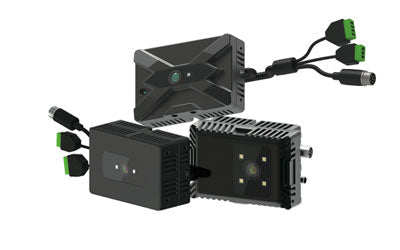
Synexens Industrial Outdoor 4m TOF Sensor Depth 3D Camera Rangefinder_CS40p

After-sales Support:
Our professional technical team specializing in 3D camera ranging is ready to assist you at any time. Whether you encounter any issues with your TOF camera after purchase or need clarification on TOF technology, feel free to contact us anytime. We are committed to providing high-quality technical after-sales service and user experience, ensuring your peace of mind in both shopping and using our products.
-
Posted in
CS40P
