

Field of View Explained:How to Understand Camera FOV and Angle of View
What Is Field of View (FOV) and How Does Camera FOV Work?
In photography, surveillance systems, drone aerial imaging, VR/AR devices, and machine vision measurement, field of view (FOV) is a critical concept. Many people often ask:
-
What is the field of view?
-
What is the field of view meaning?
-
What is the relationship between camera field of view and focal length?
-
What is the difference between focal length vs field of view?
-
How do you calculate the field of view?
This article provides a complete explanation of camera field of view, including its definition, calculation methods, real-world applications, and common misconceptions such as the difference between depth of field vs field of view, so you can truly understand how FOV works.
What Is Field of View? — Definition for Field of View
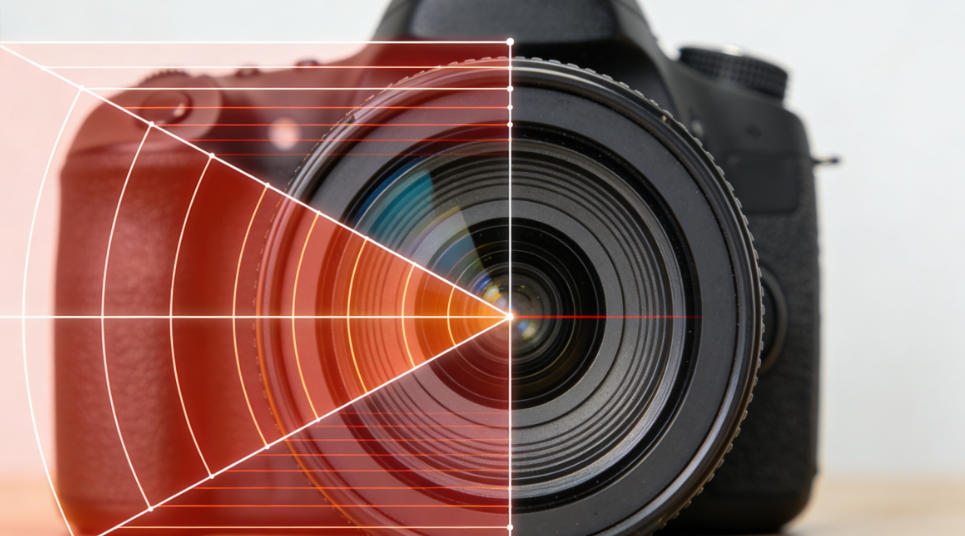
Field of view (FOV) literally refers to the observable area that a camera, lens, sensor, or viewer can capture at any given moment. In simple terms:
Camera field of view is the total visible area that a lens or camera can capture within a frame.
FOV determines how much of a scene appears in an image and how wide or narrow the visual perspective feels.
Specifically:
-
Larger field of view → Wider scene coverage
Captures more background and environmental detail. Ideal for landscape photography, security surveillance, drone footage, and immersive VR/AR applications. -
Smaller field of view → Narrower scene coverage
Makes subjects appear larger and more prominent. Suitable for portrait photography, long-distance observation, and situations requiring focus on a specific target area.
Understanding the field of view meaning is essential for photographers, videographers, and vision system engineers. It helps you select the appropriate camera field of view, optimize composition, and enhance visual impact.
Additionally, FOV is closely related to focal length, sensor size, and shooting distance. By understanding the relationship between focal length vs field of view, you can precisely control framing and perspective. Mastering these concepts allows you to capture expansive environments or highlight fine details depending on your creative or technical needs.
Core Components of Camera Field of View: Angle of View vs Horizontal and Vertical FOV
In practical applications, camera FOV is not just a single number. It includes horizontal field of view, vertical field of view, and overall angle of view. Understanding these components helps you optimize lens selection, installation planning, and FOV calculations.
1. Horizontal Field of View (Horizontal FOV)
Horizontal FOV refers to the angle the camera covers from left to right.
-
In surveillance systems, horizontal FOV determines how wide an area can be monitored. Wide-angle cameras can cover an entire room or outdoor space.
-
In drone photography or landscape imaging, a larger horizontal FOV captures more environmental elements, creating a broader visual experience.
Horizontal FOV is typically calculated using lens focal length and sensor width, often expressed with the formula:
Field of view formula: 2 × arctan (sensor width / 2f)
2. Vertical Field of View (Vertical FOV)
Vertical FOV represents the angle covered from the top to the bottom of the frame.
-
In portrait photography or industrial inspection, vertical FOV determines how much vertical area is visible.
-
In projection systems or display design, vertical FOV affects the completeness and framing of the image.
Converting Vertical to Horizontal FOV
In real-world camera design or installation, horizontal and vertical FOV are not always equal, especially when different sensor aspect ratios are involved.
-
For example, a 16:9 sensor typically produces a wider horizontal FOV than vertical FOV.
-
Conversion can be calculated using:
Horizontal FOV = 2 × arctan ( tan(Vertical FOV / 2) × aspect ratio )
Understanding camera angle of view helps you better plan surveillance coverage, optimize image composition, and design immersive VR/AR experiences. It also provides the theoretical foundation for analyzing focal length vs field of view relationships and adjusting sensor dimensions effectively.
How to Calculate the Field of View — FOV Formula Explained
To accurately calculate camera field of view, you need two key parameters:
-
Sensor width
-
Focal length
The standard formula is:
FOV (angle) = 2 × arctan ( sensor width / (2 × focal length) )
This is often written as:
Field of view formula: 2 arctan (sensor width over 2f)
This formula calculates the horizontal field of view. Similarly, you can compute the vertical FOV using sensor height instead of width.
By applying this formula, you can determine how wide your camera will see before even mounting the lens — an essential step for photography, surveillance system design, drone configuration, and machine vision calibration.
The Relationship Between FOV and Focal Length: Focal Length vs Field of View
Many people assume that focal length alone determines how much you can see, but the true relationship is:
-
Shorter focal length → Larger field of view
-
Longer focal length → Smaller field of view
For example:
-
A 24mm lens produces a wider field of view.
-
A 100mm lens produces a narrower field of view.
This is why different lenses create completely different visual experiences. Wide-angle lenses emphasize space and environment, while telephoto lenses compress perspective and isolate subjects.
FOV Applications Across Different Devices
Different types of cameras and vision systems have very different requirements for field of view (FOV). Understanding how camera FOV functions in various applications helps you choose the right lens and optimize your setup scientifically.
Cameras and Smartphone Lenses
In smartphones, digital cameras, and professional video cameras, the camera angle of view determines how much of the scene is captured and how the image feels visually.
-
Landscape or cityscape photography:
A larger FOV is typically required to capture expansive backgrounds and environmental details. -
Portraits or close-ups:
A narrower FOV helps emphasize the subject, reduce distractions, and create stronger background blur effects. -
Modern smartphones often provide multiple focal lengths and zoom options to offer different FOV choices, allowing users to adjust framing based on shooting scenarios.
Understanding what is the field of view in cameras or mobile devices helps photographers and content creators select the most suitable lens combinations and improve overall image quality.
VR/AR and Perception Devices
In virtual reality (VR), augmented reality (AR), and mixed reality systems, FOV is one of the most critical factors affecting immersion and visual realism.
-
Larger FOV → Wider visual range, creating a more natural and immersive experience closer to human vision.
-
Smaller FOV → Restricted vision, often causing a “tunnel vision” or “binocular effect,” which reduces immersion.
-
VR/AR developers must carefully balance field of view, hardware limitations, rendering performance, and visual comfort.
By understanding the meaning of field of view, designers and engineers can optimize FOV settings to enhance user experience and reduce discomfort.
Security Systems and Drones
In surveillance and drone applications, camera FOV directly determines coverage area and image usability.
Security Cameras
-
FOV determines how wide an area can be monitored.
-
A wide-angle FOV covers larger spaces but may reduce subject detail.
-
A narrow FOV focuses on key areas, improving image clarity and target identification accuracy.
Drone Aerial Imaging (UAV)
-
Different mission types require different FOV settings.
-
Mapping and panoramic shots require large FOV.
-
Target tracking or detailed inspection requires narrower FOV.
-
UAV developers often calculate focal length vs field of view, sensor size, and flight altitude together to balance coverage and image detail.
Proper understanding and application of camera field of view improves monitoring effectiveness, aerial imaging quality, deployment planning, and image analysis performance.
FOV vs DOF: Depth of Field vs Field of View
A common misconception is confusing depth of field (DOF) with field of view (FOV). These are completely different concepts.
Field of View (FOV)
-
Refers to how wide the visible area is.
Depth of Field (DOF)
-
Refers to how much of the scene appears sharp in terms of depth.
In simple terms:
-
FOV controls how much you see.
-
DOF controls what appears sharp or blurred.
You can have a wide field of view with shallow depth of field, or a narrow field of view with deep depth of field — they are independent variables.
How to Increase or Adjust Field of View
If you want to modify your camera field of view, consider the following methods:
-
Use a shorter focal length
-
Choose a larger sensor size
-
Select a wide-angle or zoom lens
-
Apply software-based distortion correction or digital FOV adjustment
These are common and effective ways to modify and optimize the practical meaning of field of view in real-world applications.
Conclusion: Truly Understanding What Is the Field of View
Whether in photography, surveillance system installation, drone deployment, or VR/AR development, understanding FOV (field of view) is fundamental.
If you are selecting camera equipment, optimizing imaging systems, or designing visual algorithms, mastering the relationship between focal length, sensor size, and FOV will help you make more scientific, precise, and effective decisions.
Synexens Industrial Outdoor 4m TOF Sensor Depth 3D Camera Rangefinder_CS40

Our professional technical team specializing in 3D camera ranging is ready to assist you at any time. Whether you encounter any issues with your TOF camera after purchase or need clarification on TOF technology, feel free to contact us anytime. We are committed to providing high-quality technical after-sales service and user experience, ensuring your peace of mind in both shopping and using our products
-
Posted in
CS40
