

Robotics Cameras Explained: Vision for Robots & Obstacle Avoidance

Learn how robotics cameras improve robot vision, obstacle avoidance, and AI navigation. Explore 3D vision, LiDAR fusion, and camera alternatives for robots.
With the rapid development of artificial intelligence and automation, cameras for robots have become one of the most critical perception components in modern robotic systems. Whether in industrial automation, autonomous logistics, or service robots, visual capability directly determines environmental understanding and decision-making performance.
Especially in vision guided robotics and autonomous navigation systems, the robotics camera has evolved from a simple image-capturing device into an intelligent sensing core with depth perception and AI-based analysis capabilities.
I. What Is a Robotics Camera?
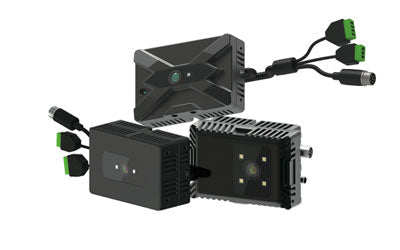
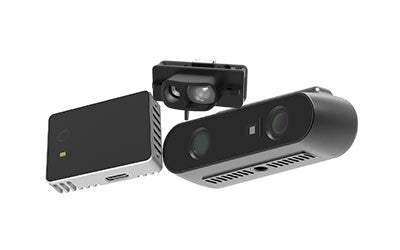
A robotics camera is a type of intelligent vision sensor designed specifically for robotic systems. It is used to capture 2D or 3D visual information in real time and, combined with computer vision and AI algorithms, enables object recognition, spatial localization, motion analysis, and path planning.
Unlike ordinary cameras, a robotics camera is not just an imaging device. It acts as the 'perception core' of the entire robotic system, serving as a data bridge between environmental understanding and decision-making. It is a fundamental enabler of modern vision guided robotics and autonomous systems.
Evolution of Modern Robotic Vision Systems
With advances in AI and deep learning, traditional 2D industrial cameras are no longer sufficient for complex scenarios. Modern systems are evolving toward more advanced architectures:
- 3D depth cameras: Provide distance and spatial structure, enabling point cloud generation and precise obstacle detection
- AI vision recognition systems: Use deep learning for object classification, semantic understanding, and dynamic tracking (e.g., pedestrians, vehicles, tools)
- Multi-sensor fusion vision systems: Combine cameras, LiDAR, infrared, and IMU data to improve robustness in complex environments
- Edge AI vision processing: Perform image processing on-device, reducing latency and improving real-time performance
This evolution allows robots to move from 'seeing the world' to 'understanding and acting on it.'

Core Applications in Industrial and Smart Scenarios
In modern industrial automation and intelligent systems, robotics cameras are essential components widely used in high-value applications:
1. Pick and Place (Object Grasping and Sorting)
Robots use vision systems to identify object position, orientation, and shape for high-precision manipulation, such as:
- Automated parcel sorting
- Electronic component assembly
- Food and pharmaceutical packaging
- Production line loading and unloading
2. Autonomous Navigation and Obstacle Avoidance
Vision systems detect environmental obstacles in real time and work with obstacle detection systems to enable:
- Dynamic path planning
- Real-time obstacle avoidance
- Multi-object environment mapping
- Safe motion control
For example, AGV warehouse robots use vision systems to detect shelves, pedestrians, and moving obstacles, and adjust routes accordingly.
3. Quality Inspection and Defect Detection
In manufacturing, robotics cameras are used for high-precision inspection, including:
- Surface scratch detection
- Dimensional measurement and deviation analysis
- Product defect identification (cracks, damage, contamination)
- Automated inspection reporting
Compared to human inspection, vision systems offer higher consistency and stability.
4. Smart Warehousing and Logistics Automation
In intelligent warehouse systems, robotics cameras are used for:
- Cargo identification and localization
- Inventory tracking
- Sorting path optimization
- Multi-robot collaboration
When combined with AI, they significantly improve efficiency and reduce labor costs.
II. Core Principles of Vision Guided Robotics
Vision guided robotics refers to systems where robots use real-time visual data to guide motion and decision-making.
Its architecture typically includes:
- Robotics camera
- Image processing system
- AI recognition algorithms
- Motion control module
Unlike traditional robots that follow fixed paths, vision-guided robots can:
- Adapt to dynamic environments
- Recognize targets in real time
- Adjust paths automatically
This makes them a foundation of modern smart manufacturing.
III. Role of 3D Cameras in Robotics
In modern robotic systems, 3D cameras are widely used, especially in complex environments requiring advanced perception.
Advantages:
- Provide depth information (Depth Data)
- Build 3D environmental models
- Improve obstacle detection accuracy
- Enable high-precision robotic grasping
Compared to 2D cameras, 3D vision enables robots to understand spatial relationships, improving navigation and manipulation performance.
IV. 3D Cameras Alternatives
Although 3D cameras are highly advanced, they are often expensive, computationally intensive, and complex to integrate. Therefore, in cost-sensitive or lightweight applications, 3D cameras alternatives are widely used.
These alternatives aim to approximate 3D perception while reducing cost and system complexity.
1. Stereo Vision
Stereo vision uses two cameras to simulate human binocular perception and compute depth through parallax.
Advantages:
- Lower cost than 3D cameras
- Easy to mass-produce
- Suitable for embedded systems
- Real-time processing capability
Applications:
- Mobile robot navigation and obstacle avoidance
- Indoor service robots
- Low-cost AGVs
- Educational vision guided robotics systems
Limitations:
- Sensitive to lighting conditions
- Poor performance in texture-less areas
- Reduced accuracy at long distances
2. LiDAR + Camera Fusion
This is one of the most widely used industrial solutions. Instead of fully replacing 3D cameras, it enhances perception through sensor fusion.
Working principle:
- LiDAR provides accurate distance and point cloud data
- Camera provides color and semantic information
- AI fuses both datasets for environment modeling
Advantages:
- High spatial accuracy
- Strong robustness in complex environments
- Suitable for dynamic scenes (humans, vehicles)
- High-quality 3D mapping capability
Applications:
- Autonomous driving systems
- High-end warehouse robotics
- Industrial inspection robots
- Smart logistics systems
This approach is widely used in high-reliability obstacle detection systems.

3. AI Monocular Depth Estimation
Monocular depth estimation is a fast-growing lightweight alternative that uses a single camera and deep learning to predict depth.
Features:
- Single-camera setup (lowest cost)
- Neural network-based depth inference
- Edge AI compatibility
- Suitable for lightweight robotic systems
Applications:
- Small mobile robots
- Indoor navigation devices
- Smart home robots
- Low-cost drone object avoidance
Advantages:
- Extremely low hardware cost
- Easy integration
- Software-upgradable performance
Limitations:
- Heavily dependent on training data
- Limited generalization in complex scenes
- Lower accuracy than real 3D sensors
V. Comparative Overview and Trends
These 3D cameras alternatives serve different tiers of robotic applications:
- Stereo Vision → Cost-effective mid- to low-end solutions
- LiDAR + Camera Fusion → High-reliability industrial systems
- AI Monocular Depth Estimation → Lightweight, low-cost deployment
The future of robotic vision is shifting from single-sensor dependency to multi-sensor fusion combined with AI-driven computation.
VI. Robotics Camera in Obstacle Detection Systems
In modern robotics, cameras for robots are not only used for object recognition but also play a critical role in obstacle detection systems.
Typical applications include:
- Obstacle avoidance
- Dynamic path planning
- Environmental mapping
- Target tracking
In warehouse robots, vision systems can detect:
- Humans
- Goods
- Obstacles
and enable intelligent navigation through AI decision-making.
VII. Future Trends in Robotic Vision Technology
Key trends in robotic vision include:
1. AI Vision Fusion
Combining machine learning with vision systems for semantic understanding
2. Multi-Sensor Fusion Systems
Integrating cameras, LiDAR, and infrared sensors for stability
3. Edge Computing (Edge AI)
On-device processing for lower latency
4. High-Resolution 3D Vision
Improved long-range detection and complex environment modeling
VIII. Conclusion
Modern robotic systems are rapidly evolving from traditional sensing toward intelligent vision-based architectures.
Cameras for robots are no longer just 'seeing devices' but have become:
- Core perception interfaces
- Decision-support systems
- Key enablers of AI-driven robotic behavior
In vision guided robotics, 3D vision, AI recognition, and multi-sensor fusion are jointly driving the next generation of intelligent robotics.
As robotics camera technology continues to advance and 3D cameras alternatives become more diverse, robots will gain stronger autonomous perception and decision-making capabilities.
For industrial automation and robotic applications, a robot arm camera can provide real-time visual information that helps robots accurately detect objects, identify their positions, and perform precise picking, assembly, inspection, and other automated tasks.
3D Safe Guarding Privacy RGBD Camera Synexens CS30

After-sales Support:
Our professional technical team specializing in 3D camera ranging is ready to assist you at any time. Whether you encounter any issues with your TOF camera after purchase or need clarification on TOF technology, feel free to contact us anytime. We are committed to providing high-quality technical after-sales service and user experience, ensuring your peace of mind in both shopping and using our products.
