

How ToF Technology Drives the Evolution of High-Speed Mobile Robots

How Does ToF Depth Sensing Enable Mobile Robots to Move Faster, Smarter, and Beyond Indoors?
Mobile Robot Industry Background and Development Trends
In recent years, mobile robots have become one of the fastest-growing segments in intelligent manufacturing, smart logistics, and intelligent service industries. According to the New Strategic Robotics Industry Research Institute, the number of industrial mobile robots in China has grown from 4,280 units in 2015 to approximately 150,000 units this year, representing a 35-fold increase over a decade.
From a global perspective, the industrial mobile robot market is expected to surpass 100 billion RMB by 2026. At the same time, industry focus is rapidly expanding from traditional indoor AGVs/AMRs to emerging applications such as outdoor mobile robots, unmanned delivery robots, autonomous inspection robots, agricultural robots, and port logistics robots.
One of the core sensing technologies driving this technological leap is ToF depth sensing technology (Time-of-Flight).
What are autonomous mobile robots?
Autonomous Mobile Robots (AMRs) are intelligent robots capable of perceiving their environment, planning paths, avoiding obstacles, and completing tasks independently without real-time human intervention. They are typically equipped with multiple sensors such as LiDAR, ToF depth cameras, RGB-D cameras, and IMUs for environmental perception and localization. Using SLAM (Simultaneous Localization and Mapping) or other navigation algorithms, AMRs can move autonomously and execute tasks such as material handling, inspection, cleaning, and delivery. Compared to traditional automated guided vehicles (AGVs), AMRs can dynamically adapt to complex, changing environments, offering more flexible and safer collaboration with humans and other devices.
From Low Speed to High Speed: How ToF Depth Sensing Boosts Mobile Robot Efficiency
In the early stages of mobile robot development, applications were mainly confined to controlled indoor environments, such as warehouse aisles and production line material handling zones. Robots operated at low speeds for safety and sensing limitations, relying on fixed routes and struggling to respond to unexpected obstacles or environmental changes.
However, with the rapid growth of e-commerce logistics, instant delivery, flexible manufacturing, and smart factories, higher operational efficiency and responsiveness are required, making traditional low-speed robots inadequate. High-speed mobile robots have thus become an inevitable trend.
In this evolution, TOF (Time-of-Flight) depth sensing technology plays an indispensable role.
Why ToF Depth Sensing is Core to High-Speed Robots
At high speeds, robots must complete the perception-decision-action loop in a very short time, demanding sensors with high real-time performance, stability, and accuracy. ToF depth cameras meet these requirements:
-
Millisecond-level depth measurement
ToF measures distance by calculating the time light takes to travel to an object and back, capturing the entire scene depth in milliseconds, ensuring stable perception during high-speed operation. -
High-frame-rate 3D depth output
Compared to low-frame-rate vision solutions, ToF continuously outputs high-frame-rate 3D point cloud data, providing a reliable foundation for high-speed path planning, obstacle avoidance, and trajectory prediction. -
Robust to complex lighting conditions
As an active depth sensing technology, ToF performs reliably in strong light, backlight, or rapidly changing illumination, making it ideal for semi-outdoor or industrial environments with variable lighting.
ToF + AI Algorithms: Unlocking High-Speed Mobile Robot Potential
When ToF depth cameras are integrated with AI algorithms, high-speed mobile robots can perform advanced intelligent behaviors in complex environments:
-
Real-time obstacle detection and classification
Using 3D depth data from ToF, robots can detect obstacle positions and classify them (e.g., people, equipment, cargo), enabling differentiated avoidance strategies. -
Dynamic path re-planning
During high-speed movement, if unexpected obstacles or environmental changes are detected, the system can quickly recalculate optimal routes based on real-time depth data. -
High-precision avoidance and emergency braking
Accurate distance measurements from ToF allow robots to anticipate risks, perform smooth and safe avoidance maneuvers, and execute reliable emergency stops when necessary.

From 'Slow Transport' to 'High-Speed Execution'
With ToF depth sensing, mobile robots evolve from slow, conservative “automatic transport tools” into:
-
High-speed mobile platforms capable of stable operation in complex environments
-
Intelligent execution units with environmental understanding and rapid decision-making capabilities
-
High-efficiency automation nodes supporting large-scale, continuous operations
This transformation significantly increases operational efficiency and lays a solid technological foundation for intelligent logistics, flexible manufacturing, and future unmanned scenarios.
From Indoors to Outdoors: ToF Enables Robots to Navigate Complex Environments
Outdoor mobile robots face challenges far beyond indoor scenarios, including:
-
Complex lighting such as strong sunlight, backlight, and nighttime conditions
-
Adverse weather such as rain, snow, and fog
-
Unstructured roads, slopes, and uneven terrain
Compared with traditional 2D vision systems, ToF depth cameras provide clear advantages for outdoor robots:
-
Active light emission, independent of natural lighting
-
Direct acquisition of high-precision depth information
-
Complementary integration with LiDAR, reducing system cost
As a result, ToF technology is widely applied in:
-
Campus and park unmanned delivery robots
-
Port and airport autonomous inspection robots
-
Agricultural automation and mining robots
-
Outdoor cleaning and security patrol robots
The ToF + LiDAR + IMU multi-sensor fusion approach has become one of the mainstream architectures for outdoor mobile robots.

From Autonomous Mobility to Embodied Intelligence: ToF Depth Sensing as a Key Perceptual Foundation
Embodied Intelligence is one of the core directions in modern robotics. Unlike traditional modular robots that operate in a 'perception–control–execution' manner, embodied intelligence emphasizes the tight coupling of perception, cognition, decision-making, and physical action, allowing robots to continuously interact with their environment and achieve human-like understanding, learning, and adaptability.
In other words, robots are no longer just 'capable of moving'; they need to truly understand the three-dimensional world around them. The foundation of this capability lies in high-quality, real-time, and computable spatial perception data.
ToF: The 'Spatial Cognition Organ' of Embodied Intelligence
Within an embodied intelligence system, Time-of-Flight (ToF) depth sensing technology serves as the robot’s 'spatial understanding hub,' offering far more than simple distance measurement:
-
Real-time high-precision 3D environment modeling
ToF cameras continuously output dense 3D point clouds, helping robots build a volumetric understanding of their surroundings, providing a geometric foundation for behavior and decision-making. -
Understanding object size, shape, and spatial relationships
With ToF depth data, robots can accurately assess object dimensions, boundaries, relative positions, and reachability—essential for stable grasping and precise manipulation. -
Providing closed-loop feedback for complex actions
In tasks such as grasping, obstacle avoidance, crossing gaps, climbing, and human–robot collaboration, ToF delivers real-time spatial feedback, allowing robots to dynamically adjust movements for safe, continuous, and natural control.
From 'Obstacle Perception' to 'Scene Understanding'
Traditional robots mostly operate at the level of detecting whether obstacles exist. Embodied intelligence, however, requires scene-level understanding. ToF depth sensing provides the necessary foundation for this upgrade:
-
Not just 'seeing objects,' but understanding their functional roles in space
-
Not just 'avoiding obstacles,' but judging whether objects can be crossed, pushed, or collaborated with
-
Not just 'executing actions,' but continuously optimizing behavior based on real-time feedback
By combining ToF with AI semantic algorithms, robots gain true spatial reasoning capabilities.
ToF’s Core Value Across Robot Forms
Regardless of robot form factor, ToF is an indispensable perceptual foundation for embodied intelligence:
-
Humanoid robots
ToF helps maintain walking stability, coordinate hand-eye tasks, and perform dual-arm collaborative operations in complex environments. -
Quadruped robots
ToF depth data supports terrain perception, foot placement decisions, and dynamic balance control, enabling stable movement over rugged terrain. -
Specialized mobile robots
In industrial inspection, specialized operations, and outdoor tasks, ToF enables spatial modeling, path planning, and closed-loop task execution.
ToF + Multimodal Perception: The Inevitable Trend in Embodied Intelligence
In practical systems, ToF often works alongside RGB cameras, LiDAR, IMUs, and tactile sensors in a multimodal perception framework. ToF’s advantages include:
-
Providing stable, real-time, structured 3D spatial data
-
Acting as a critical supplement between vision and LiDAR
-
Significantly reducing perceptual uncertainty in embodied intelligence systems
For these reasons, ToF is gradually becoming a ‘standard configuration' for embodied intelligent robots.
The essence of robot evolution—from autonomous mobility to embodied intelligence—is shifting from task execution to world understanding. In this journey, ToF depth sensing provides the 3D perceptual foundation, serving as an irreplaceable core capability for achieving embodied intelligence.

Navigation Technology Upgrade: ToF Enables Markerless SLAM
Traditional mobile robots rely on external markers such as QR codes, magnetic strips, or reflective poles for navigation, resulting in high deployment costs and low flexibility.
With the development of SLAM (Simultaneous Localization and Mapping) technology, ToF depth cameras are widely applied in:
-
Visual SLAM
-
Depth-based SLAM
-
Multisensor-fusion SLAM
ToF’s advantages in SLAM include:
-
Providing stable, dense depth information
-
Enhancing mapping accuracy and localization robustness
-
Reducing dependence on environmental texture
This enables mobile robots to achieve markerless navigation and plug-and-play deployment, significantly improving commercial applicability.
Perception Upgrade: From 2D to 3D, ToF as the Core Sensor
2D perception only allows robots to 'see planes,' while 3D perception enables 'understanding space.' ToF depth cameras empower robots with:
-
Accurate distance measurement
-
Volumetric spatial perception
-
Dynamic 3D obstacle avoidance
This is especially critical in applications such as:
-
High-rack picking and placing
-
Human–robot collaborative environments
-
Multi-robot coordinated operations
3D ToF perception has become a standard configuration for high-end mobile and service robots.
From Point Clouds to Semantic Understanding: ToF Drives Intelligent Upgrades
ToF generates high-quality point cloud data, but true intelligence lies in semantic understanding.
With ToF + AI algorithms, robots can:
-
Distinguish between people, vehicles, equipment, and obstacles
-
Determine whether objects are movable
-
Understand scene semantics (pathways, workstations, hazard zones)
This marks the transition of mobile robots from 'perceiving the world' to understanding the world.
Conclusion: ToF Technology, an Accelerator for Mobile Robot Intelligence
From low speed to high speed, from indoors to outdoors, and from autonomous mobility to embodied intelligence, ToF depth sensing technology has always played a key enabling role.
With continued reductions in ToF chip, algorithm, and system costs, its application in mobile robots, autonomous driving, intelligent security, and industrial vision will continue to expand.
The future mobile robot will not only move faster and farther but also 'see more accurately and think smarter.' ToF is the foundation for all of this.
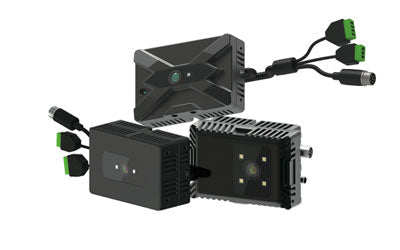
Synexens Industrial Outdoor 4m TOF Sensor Depth 3D Camera Rangefinder_CS40

Our professional technical team specializing in 3D camera ranging is ready to assist you at any time. Whether you encounter any issues with your TOF camera after purchase or need clarification on TOF technology, feel free to contact us anytime. We are committed to providing high-quality technical after-sales service and user experience, ensuring your peace of mind in both shopping and using our products
-
Veröffentlicht in
CS40
