

Autonomous Forklift Robots: The Future of Smart Warehouse Automation
- von LidarSensor
How Do Autonomous Forklift Robots Use Machine Vision to Transform Smart Warehouses?
With the rapid development of Industry 4.0, artificial intelligence (AI), robotics, and smart manufacturing, global manufacturing and logistics industries are accelerating their transformation toward automation and digitalization. In this process, Auto Forklifts, Autonomous Forklifts, and Autonomous Forklift Robots are becoming essential solutions for smart warehousing and industrial logistics.
Traditional forklifts have long relied on human operators. In high-intensity logistics environments, they are often affected by labor costs, operational efficiency limitations, safety risks, and restricted working hours. As enterprises demand higher warehouse efficiency, faster logistics operations, and more flexible production systems, more manufacturers and logistics centers are adopting Autonomous Forklift Robots powered by artificial intelligence and machine vision technologies to achieve smarter, safer, and more efficient material handling.
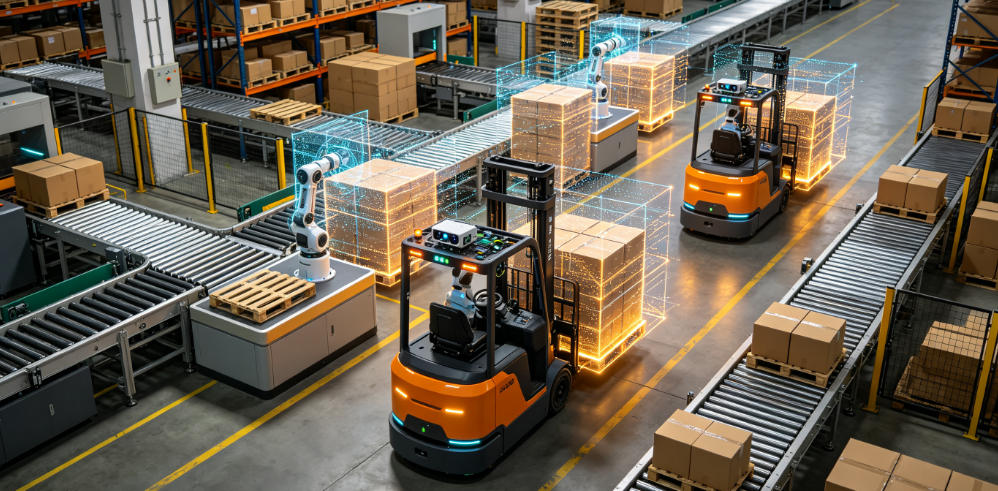
Compared with traditional forklifts, modern Autonomous Forklift Robots integrate Machine Vision, Artificial Intelligence (AI), LiDAR, 3D vision sensors, SLAM navigation technology, and intelligent path planning algorithms. These technologies enable robots to perform autonomous positioning, environmental perception, obstacle detection, cargo transportation, and task scheduling in complex industrial environments.
Today, Autonomous Forklift Robots are widely used in smart warehouses, manufacturing plants, logistics centers, automotive production lines, electronics factories, and e-commerce distribution centers. By connecting with WMS (Warehouse Management System), MES (Manufacturing Execution System), and Industrial Internet of Things (IIoT) platforms, autonomous forklifts can achieve a fully automated workflow from task assignment and route planning to material transportation, helping enterprises upgrade toward smart warehousing and intelligent manufacturing.
What Is an Autonomous Forklift Robot?
An Autonomous Forklift Robot is an industrial robotic system equipped with autonomous driving, self-navigation, and intelligent material handling capabilities. It can complete pallet transportation, cargo movement, production line supply, and warehouse logistics operations without human drivers through sensor fusion, artificial intelligence algorithms, and robotic control systems.
Unlike traditional forklifts, the biggest advantage of an autonomous forklift robot is its ability to perceive the environment and make intelligent decisions. Traditional forklifts mainly depend on operators to observe surroundings and control movements, while modern autonomous forklift robots use Machine Vision, LiDAR, and 3D sensing technologies to collect real-time environmental information and automatically adjust their operating strategies.
For example, in a smart warehouse, when the robot detects workers, other forklifts, or temporary obstacles ahead, the system can quickly analyze the situation and automatically slow down, avoid obstacles, or re-plan routes, improving transportation safety and operational efficiency.
With the continuous advancement of artificial intelligence technology, Autonomous Forklift Robots have evolved from simple automated transport equipment into intelligent logistics systems that play a critical role in modern industrial automation.

How Does Machine Vision Transform Autonomous Forklift Technology?
Machine Vision is one of the core technologies driving the intelligent development of autonomous forklifts. Through industrial cameras, depth sensors, and AI vision algorithms, machine vision gives forklift robots human-like visual perception capabilities, allowing them to recognize objects, estimate distances, and perform complex operations.
In autonomous forklift systems, Machine Vision is mainly used for environmental recognition, obstacle detection, pallet positioning, and intelligent navigation.
First, machine vision enables autonomous forklift robots to understand their surroundings in real time. By combining technologies such as RGB Cameras, 3D Cameras, ToF Sensors, and Stereo Vision Cameras, robots can detect workers, shelves, pallets, vehicles, and production equipment, then adjust their movement speed and navigation paths according to environmental changes.
Second, machine vision improves pallet recognition and cargo handling accuracy. In traditional warehouses, forklift operators rely heavily on experience to determine pallet locations. However, AI vision systems can automatically analyze pallet orientation, position, and fork insertion areas, allowing robots to accurately pick up and transport goods while reducing damage and operational errors.
In addition, Machine Vision combined with SLAM navigation technology provides autonomous forklifts with stronger mobility capabilities. Robots can use visual data and LiDAR information to build warehouse maps, determine their own location in real time, and plan the most efficient transportation routes according to task requirements.
Compared with traditional AGV systems that rely on fixed routes, Machine Vision-based Autonomous Forklift Robots do not require magnetic strips, tracks, or QR code guidance, enabling greater flexibility in dynamic warehouse environments.
Core Advantages of Autonomous Forklift Robots in Smart Warehousing
With the development of smart manufacturing and industrial automation, enterprises are demanding logistics systems with higher efficiency, greater accuracy, and stronger intelligence. Compared with traditional forklifts, Autonomous Forklift Robots integrate Machine Vision, artificial intelligence, autonomous navigation, and intelligent scheduling technologies to provide more advanced warehouse automation solutions.
First, autonomous forklift robots can significantly improve logistics efficiency. Traditional forklifts rely on human operators to complete material transportation, while autonomous forklifts can operate around the clock and automatically execute transportation tasks based on system instructions. In large warehouses and manufacturing plants, multiple Autonomous Forklift Robots can cooperate through intelligent scheduling systems, automatically assigning transportation tasks according to priority, distance, and real-time traffic conditions, thereby improving overall logistics efficiency.
Second, autonomous forklift robots enhance warehouse safety. Industrial warehouses often involve complex environments where workers, forklifts, and equipment operate simultaneously. Manual operations can be affected by fatigue, insufficient experience, and human errors. AI vision systems can continuously monitor surrounding environments, identify moving objects, and use intelligent algorithms to predict potential risks in advance, reducing the probability of collision accidents.
In addition, autonomous forklift robots provide stronger flexibility and scalability. Traditional automated logistics equipment usually requires fixed tracks or major warehouse modifications, while modern Autonomous Forklift Robots rely on SLAM navigation, LiDAR, and Machine Vision technologies to quickly adapt to different warehouse environments. When companies adjust production layouts or increase logistics requirements, large-scale infrastructure changes are often unnecessary.
How Do Autonomous Forklift Robots Use Machine Vision for Intelligent Material Handling?
In smart logistics systems, Machine Vision is not only used for environmental perception but also serves as a key data source for intelligent decision-making in Autonomous Forklift Robots.
Through AI vision algorithms, robots can perform advanced visual tasks such as cargo recognition, pallet detection, spatial positioning, and route analysis.
During pallet handling operations, machine vision systems can automatically identify different pallet sizes and types and calculate the optimal fork insertion angle. At the same time, through depth vision data, robots can determine cargo height, distance, and position, ensuring that forklift arms accurately complete lifting and transportation operations.
In warehouse environments, Machine Vision also helps autonomous forklifts identify different operational zones. For example, robots can recognize:
- Raw material storage areas;
- Production line supply areas;
- Finished goods warehouse areas;
- Restricted access zones.
By integrating with Warehouse Management Systems (WMS), autonomous forklift robots can automatically travel to designated locations according to order requirements, creating an intelligent workflow from inventory management to material transportation.
What Is the Difference Between Autonomous Forklift Robots and Traditional AGV Forklifts?
Although both AGV (Automated Guided Vehicle) forklifts and Autonomous Forklift Robots are used for automated logistics transportation, they have significant differences in technical capabilities.
Traditional AGV forklifts usually rely on magnetic strips, tracks, QR codes, or fixed routes for operation. When factory layouts change, companies often need to redesign routes or modify infrastructure.
In contrast, Autonomous Forklift Robots use more advanced autonomous navigation technologies, including LiDAR, Machine Vision, SLAM, and AI algorithms, to understand environments in real time and make intelligent decisions.
The main differences include:
Traditional AGV Forklifts:
- Depend on fixed navigation paths;
- Have limited environmental adaptability;
- Require higher modification costs;
- Provide weaker intelligent decision-making capabilities.
Autonomous Forklift Robots:
- Support autonomous positioning and navigation;
- Enable dynamic path planning;
- Can recognize people and obstacles;
- Operate in complex industrial environments;
- Connect with smart manufacturing systems.
Therefore, more enterprises are upgrading from traditional AGV logistics solutions to more intelligent Autonomous Forklift Robot systems.
Application Scenarios of Autonomous Forklift Robots in Manufacturing
1. Automated Transportation in Smart Warehouses
Smart warehousing is one of the most important application fields for Autonomous Forklift Robots. In large logistics centers and warehouses, unmanned forklifts can perform pallet transportation, stacking operations, inventory replenishment, and order delivery tasks.
After integration with WMS systems, robots can automatically receive tasks and select the optimal transportation routes based on real-time warehouse conditions, improving warehouse operation efficiency.

2. Automotive Manufacturing Factory Logistics
Automotive manufacturing requires a large number of components, including engine parts, battery modules, and vehicle body components. Traditional manual transportation methods are increasingly unable to meet the high-efficiency requirements of modern automotive factories.
By deploying Autonomous Forklift Robots, automotive manufacturers can achieve automated component delivery, production line material supply, and intelligent logistics management.
Especially in new energy vehicle manufacturing, autonomous forklifts can improve safety and stability during battery production and assembly processes.
3. Electronics Manufacturing and Semiconductor Industry
The electronics manufacturing industry has strict requirements for environmental stability and transportation precision. Products such as chips, PCBs, and electronic components require careful handling to avoid collisions and human contamination.
By combining Machine Vision, ToF Cameras, 3D Vision Sensors, and high-precision navigation systems, autonomous forklift robots can perform accurate material transportation in electronics factories, improving production reliability.
4. Medical Equipment Manufacturing
Medical equipment manufacturing often involves high-value and high-precision components, requiring strict production environments.
Autonomous forklift robots can be used for cleanroom logistics, equipment component transportation, and production area delivery, reducing human contact and improving manufacturing stability.
5. Smart Logistics Centers
With the growth of e-commerce and global supply chains, logistics centers require more efficient automation systems.
Autonomous Forklift Robots can integrate with automated sorting systems, warehouse robots, and logistics software to create more efficient intelligent logistics networks.
Why Will Autonomous Forklift Robots Become the Core of Future Logistics Automation?
As global manufacturing continues moving toward digitalization and intelligence, the demand for automated logistics systems is continuously increasing.
Traditional manual forklift operations can no longer fully meet modern industrial requirements for:
- High efficiency;
- High safety;
- Low operating costs;
- Flexible production.
However, Autonomous Forklift Robots, combined with Machine Vision, AI, LiDAR, SLAM, and intelligent scheduling technologies, provide enterprises with a more advanced logistics automation solution.
They not only improve warehouse transportation efficiency but also help companies achieve:
- Smart warehouse upgrades;
- Industrial logistics automation;
- Intelligent manufacturing transformation;
- Production process optimization.
In the future, as artificial intelligence and robotics technologies continue to advance, Autonomous Forklift Robots will play an increasingly important role in manufacturing, logistics, and global supply chain systems.
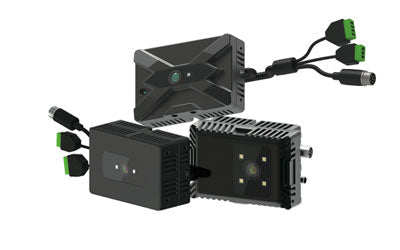
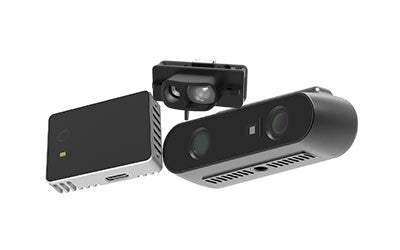
Synexens Industrial Outdoor 4m TOF Sensor Depth 3D Camera Rangefinder_CS40p

Conclusion: Machine Vision Is Redefining the Future of Autonomous Forklifts
From smart warehouses to manufacturing plants, from automotive production lines to logistics centers, Autonomous Forklift Robots are becoming one of the most important directions in industrial automation development.
By integrating Machine Vision, AI vision, LiDAR, 3D vision sensors, SLAM navigation, and intelligent scheduling systems, modern autonomous forklift robots can achieve more accurate, safer, and more efficient automated logistics transportation.
Compared with traditional forklifts and early AGV systems, AI-powered autonomous forklift robots offer stronger environmental adaptability and intelligent decision-making capabilities, meeting the future requirements of smart factories for flexible logistics and automated production.
With the continuous advancement of Industry 4.0, smart manufacturing, and digital transformation, Autonomous Forklift Robots will become a critical infrastructure for future smart warehousing and industrial logistics, driving global manufacturing into a more intelligent, efficient, and automated era.
