

AUBO Robotics Showcases Embodied AI Robots & AI Education Solutions
- von LidarSensor
How Is AUBO Robotics Driving the Future of Embodied AI Robots and AI Education?
With the rapid development of artificial intelligence technology, Embodied AI has become one of the most important directions in the global AI industry. Unlike traditional AI systems that mainly rely on algorithms and data processing, embodied intelligence integrates robot hardware, AI models, perception systems, motion control, and intelligent decision-making technologies, enabling machines to truly perceive their surroundings, understand tasks, and autonomously perform operations.
From July 17 to 20, 2026, the 2026 World Artificial Intelligence Conference (WAIC) will be held in Shanghai, China. For the first time, Embodied Intelligence will be elevated as one of the two major core tracks alongside AI computing power, attracting more than 200 companies to showcase their latest innovations and highlighting the industry transition from 'digital intelligence' to 'physical intelligence.'
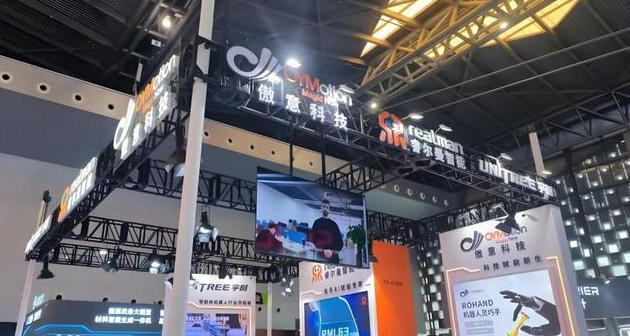
As an important participant in the embodied intelligence ecosystem, AUBO Robotics will officially launch its Embodied AI Education Product Matrix during WAIC 2026. Centered around robot hardware, AI algorithm development, data collection, and practical application training, the company aims to build an integrated education ecosystem covering learning, development, practice, and innovation.
AUBO Robotics Embodied AI Product Matrix: Building a New Ecosystem for AI Robot Education
With the rapid growth of AI robots, intelligent robot education, robot programming, artificial intelligence experimental platforms, and embodied AI development platforms, demand for advanced robotics education solutions continues to rise. Universities, research institutions, and vocational education organizations increasingly require robot platforms that support real-world development environments, algorithm training, and practical application scenarios.
Future AI professionals need more than theoretical knowledge of algorithms. They must also understand complete technology stacks including robot hardware architecture, sensor systems, motion control, computer vision, and intelligent decision-making. Therefore, integrated embodied AI education platforms are becoming increasingly important for cultivating the next generation of robotics engineers.
AUBO Robotics’ newly launched Embodied AI Education Product Matrix is designed around the future needs of AI talent development. By combining robot hardware platforms with AI algorithm education, it creates a complete learning pathway covering fundamental understanding, technology development, data training, and practical applications.
The product ecosystem not only helps students understand robot structures and operating principles but also allows them to participate in real-world robot development processes, improving their ability to move from basic robotics experiments to advanced intelligent application development.
The AUBO Robotics Embodied AI Education Product Matrix focuses on several key areas, including:
- Robot hardware assembly and disassembly training
- Robot motion control development
- AI algorithm model deployment
- Robot data collection and training
- Intelligent scenario application practice
Through modular robot structures, students can gain hands-on experience with robotic mechanisms, joint modules, control systems, and key components while developing essential hardware design and maintenance skills.
Through robot motion control development, learners can study motion planning, trajectory control, and multi-joint coordination technologies, gaining a deeper understanding of precision robotic control.
By integrating artificial intelligence algorithms, machine learning, and deep learning technologies, students can develop AI models for vision recognition, object detection, and intelligent decision-making, enabling robots to evolve from simple execution systems into intelligent machines capable of understanding tasks and performing autonomous operations.

At the same time, AUBO Robotics’ education platform provides developers with real robot operation data for training and algorithm optimization. This allows learners to explore advanced technologies such as robot learning, reinforcement learning, and multimodal intelligence.
Through intelligent scenario-based practice, students and researchers can apply robotics technologies in real-world environments such as smart manufacturing, scientific research, and intelligent education, bridging the gap between theoretical learning and engineering implementation.
By combining hardware and software into an integrated educational system, AUBO Robotics helps students, engineers, and researchers gain a deeper understanding of the embodied AI robot technology architecture. The platform supports the development of future AI robot engineers, robotics algorithm engineers, intelligent manufacturing professionals, and embodied AI researchers.
AUBO Robotics Products: Bringing Embodied AI from Laboratories to Real-World Applications
Robots are the key carriers of embodied intelligence and an important gateway for artificial intelligence to enter the physical world. Unlike traditional automation equipment, embodied AI robots must do more than execute predefined tasks. They require capabilities including environmental perception, intelligent decision-making, autonomous execution, and human-robot interaction.
AUBO Robotics has long focused on the development of collaborative robots, humanoid robot technologies, intelligent robotic systems, and core robot control technologies. Through high-performance robotic platforms, the company helps enterprises, universities, and research institutions explore next-generation smart manufacturing and intelligent service applications.
As embodied intelligence continues to evolve, robots are transforming from single-purpose machines into open intelligent platforms. By integrating mechanical structures, control algorithms, AI models, and perception technologies, robots can adapt to increasingly complex and dynamic real-world environments.
Key Technology Advantages of AUBO Robotics Platforms
AUBO Robotics products offer multiple technological advantages that support the development and deployment of embodied AI applications.
First, in terms of high-precision robot motion control, intelligent robots must accurately perform complex tasks such as grasping, moving, assembling, and material handling. Motion control technology is one of the fundamental capabilities enabling robots to achieve higher levels of intelligence.
Through advanced control algorithms, AUBO Robotics robots achieve coordinated multi-joint movement, improving operational stability, motion accuracy, and task execution efficiency. These capabilities enable applications in areas such as precision assembly, automated manufacturing assistance, laboratory robot operations, and human-robot collaboration.
Second, in terms of intelligent perception and AI vision integration, future robots need to understand their surrounding environment in a human-like manner. By combining cameras, sensors, and artificial intelligence vision algorithms, robots can perform functions including object recognition, environmental perception, object positioning, and scene understanding.
These technologies enhance robots’ ability to adapt independently to complex environments and will play an important role in smart factories, intelligent laboratories, robotics education, and service robot applications.
In addition, AUBO Robotics platforms provide open development capabilities, supporting developers in:
- Robot algorithm research
- AI model training
- Control system development
- Secondary application development
- Intelligent scenario deployment
An open robotics development platform lowers the barriers to robotics innovation and provides universities, research teams, and enterprises with powerful tools to explore embodied AI technologies.
In terms of applications, AUBO Robotics solutions cover multiple fields, including:
- Smart manufacturing robots
- Industrial automation robots
- Collaborative robot applications
- AI robot development platforms
- Robotics education and training
- Artificial intelligence experimental teaching
In smart manufacturing environments, robots can help companies improve automation capabilities and achieve intelligent upgrades of production processes. In industrial automation scenarios, robots can perform tasks such as assembly, transportation, and inspection, improving productivity and operational stability.
In education and research, AUBO Robotics platforms serve as practical development environments that allow students and researchers to explore artificial intelligence, robotics, automation control, and related technologies.
WAIC 2026: Embodied Intelligence Becomes a New Growth Engine for the AI Industry
The 2026 World Artificial Intelligence Conference (WAIC) has identified embodied intelligence as a major focus area, demonstrating the strategic importance of robotics in the future development of artificial intelligence.
As technologies including large AI models, computer vision, intelligent control systems, and advanced robot hardware continue to converge, embodied intelligence is becoming a critical bridge connecting the digital world with the physical world.
AUBO Robotics’ launch of the Embodied AI Education Product Matrix not only showcases innovation in robotics technology but also strengthens the connection between AI education, robotics research, and industrial applications.
Through integrated robot products, educational platforms, and open development ecosystems, AUBO Robotics is helping more universities, enterprises, and developers enter the field of embodied intelligence.
In the future, with the continuous advancement of technologies such as AI robots, embodied intelligence robots, humanoid robots, robotics education platforms, and smart manufacturing robots, robots will no longer be simple automation devices that execute fixed commands.
Instead, they will become intelligent partners capable of perceiving environments, understanding human needs, learning from experience, and collaborating with people.
AUBO Robotics continues to advance robotics innovation and accelerate the development of the intelligent robotics era.
Embodied AI Education Products: Connecting Robotics Technology with AI Talent Development
With the rapid growth of the global artificial intelligence industry, demand for professionals with expertise in robotics development and AI algorithms continues to increase.
Traditional robotics education often focuses mainly on theoretical concepts. However, embodied AI education requires students to directly engage with practical technologies, including:
- Robot mechanical structure design
- Sensor data collection
- AI vision recognition
- Motion planning algorithms
- Autonomous robot decision-making
AUBO Robotics’ education product matrix is designed specifically to address these needs.
Through a complete learning pathway:
Hardware Assembly → Algorithm Development → Data Collection → Scenario-Based Training
students can not only learn robot structures and operating principles but also participate in real AI robot development workflows.
This approach plays an important role in cultivating future:
- Artificial Intelligence Engineers
- Robotics Algorithm Engineers
- Automation Development Specialists
- Embodied AI Developers
By combining theoretical knowledge with practical engineering experience, AUBO Robotics helps create a new generation of professionals capable of driving robotics innovation.

How AUBO Robotics Supports the AI Robot Industry
The global robotics industry is entering a new stage of intelligent transformation. With continuous advancements in AI foundation models, multimodal AI, intelligent chips, robot sensing technologies, and advanced control algorithms, robots are evolving from traditional 'automated execution devices' into Embodied AI Robots capable of environmental understanding, task planning, and autonomous decision-making.
Future intelligent robots must do more than complete repetitive tasks. They need human-like abilities in perception, reasoning, and manipulation to independently perform complex tasks in dynamic environments.
AUBO Robotics focuses on robot hardware platforms, intelligent control systems, AI algorithm development, and embodied AI education ecosystems, continuously advancing robotics innovation and accelerating the transition of embodied intelligence from research environments into commercial applications.
Core Capabilities Required for Future Intelligent Robots
Vision Perception Capability
Vision perception is a fundamental capability that allows robots to understand the physical world.
By integrating cameras, depth sensors, machine vision systems, and AI vision algorithms, robots can collect real-time environmental information and achieve functions such as object recognition, object localization, spatial understanding, and precision manipulation.
In applications including smart manufacturing, scientific research, and robotics education, advanced vision perception enables robots to identify targets more accurately and adapt to changing environments.
This allows robots to move beyond simply following programmed instructions and evolve toward autonomous adjustment based on real-world conditions.
Intelligent Decision-Making Capability
Intelligent decision-making is one of the most important development directions for future AI robots.
By combining AI foundation models, multimodal artificial intelligence technologies, and advanced robotic algorithms, robots can understand user commands, analyze environmental changes, and autonomously plan actions based on specific situations.
For example, in complex industrial environments, robots can adjust workflows according to production requirements and optimize task execution. In research and education scenarios, robots can autonomously complete different operations based on assigned objectives, improving flexibility and adaptability.
With the integration of large language models and robotics, future robots will become more capable of understanding natural language instructions, reasoning about tasks, and interacting intelligently with humans.
Flexible Manipulation Capability
For robots to achieve true intelligence, they must possess highly precise and flexible manipulation capabilities.
Through optimized mechanical structures, advanced joint control systems, and intelligent motion planning algorithms, robots can perform more sophisticated tasks such as precision grasping, assembly, transportation, and human-robot collaborative operations.
Especially in areas such as industrial automation, smart manufacturing, and service robotics, flexible manipulation capabilities significantly expand robot application possibilities, enabling machines to operate effectively in more complex and dynamic environments.
AUBO Robotics continues to improve robot platforms by integrating mechanical design, intelligent control, and AI technologies, helping robots move from simple task execution toward more adaptive and collaborative intelligence.
Accelerating the Commercialization of Embodied AI Technologies
By building integrated robotics platforms that combine robot hardware, AI algorithms, intelligent control systems, and application development environments, AUBO Robotics provides comprehensive support for universities, research institutions, and enterprises exploring intelligent robot applications.
At the same time, through its Embodied AI Education Product Matrix, AUBO Robotics helps develop future professionals in:
- AI robotics development
- Robotics algorithm engineering
- Intelligent manufacturing technologies
- Embodied AI research and application
By connecting education, research, and industry, AUBO Robotics contributes to building a complete embodied intelligence ecosystem.
In the future, with continuous advancements in embodied AI robots, AI robots, humanoid robots, robotics education platforms, and intelligent manufacturing solutions, AUBO Robotics will continue promoting robotics innovation and accelerating the commercialization of embodied intelligence technologies.
The company aims to help artificial intelligence move beyond the digital world and enter the physical world, enabling robots to become intelligent systems that can perceive, learn, interact, and collaborate.
WAIC 2026: Embodied Intelligence Becomes a Key Direction for Artificial Intelligence Development
The 2026 World Artificial Intelligence Conference positions embodied intelligence as one of the most important technology areas, demonstrating that robotics has become a major breakthrough point in the evolution of AI.
During WAIC 2026, Hall H3 is expected to showcase more than 30 new embodied intelligence hardware and software products, covering key categories such as:
- Robot core components
- Dexterous hand technologies
- Industrial robots
- General-purpose humanoid robots
- Quadruped robots
- Embodied AI foundation models
These innovations represent the transition of artificial intelligence from cloud-based computing systems into real-world physical applications.
Through the launch of its embodied intelligence education product matrix, AUBO Robotics not only demonstrates its latest robotics innovations but also strengthens the connection between AI education, robot research, and industrial development.
Future Outlook: AUBO Robotics Driving the Era of Intelligent Robots
With the continuous integration of artificial intelligence and robotics technologies, embodied AI robots will create new possibilities across manufacturing, education, research, healthcare, services, and many other industries.
Future robots will no longer be limited to performing fixed and repetitive tasks. Instead, they will become intelligent partners capable of learning, understanding, adapting, and collaborating with humans.
Through continuous innovation in robotics products and educational ecosystems, AUBO Robotics is accelerating the cultivation of the next generation of AI talent and supporting the growth of the global robotics industry.
In the future intelligent era, embodied intelligence will serve as a critical bridge connecting artificial intelligence with the physical world. Robots will become a core technology driving the integration of digital intelligence and real-world environments.
