

3D Machine Vision in Robotics: Smart Vision-Guided Automation
- Posted by TofSensor
How Does 3D Machine Vision Improve Robots and Industrial Automation?
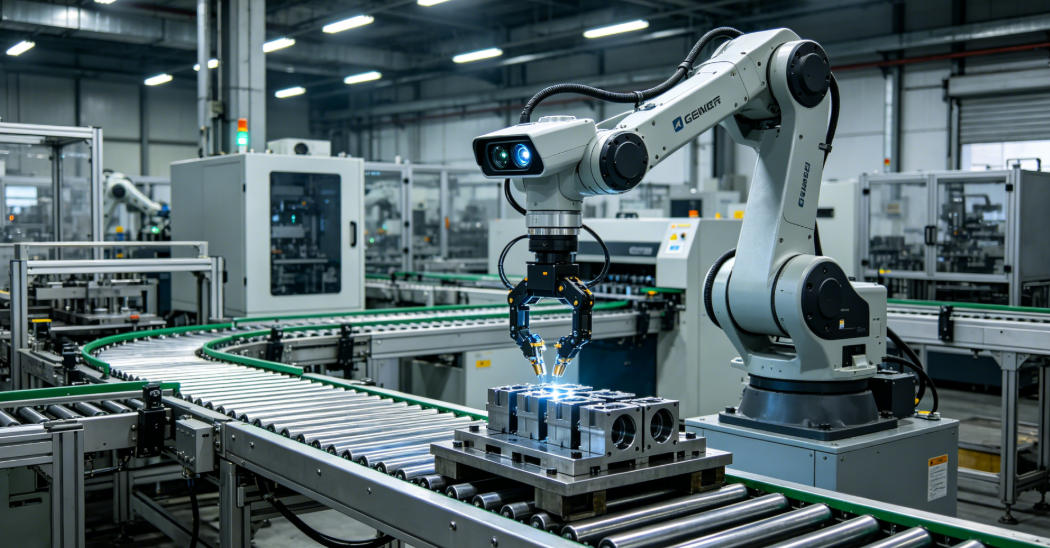
In an era where artificial intelligence and industrial automation are rapidly converging, 3d robotics inc and advanced vision systems are driving the next generation of robotics upgrades. With the rapid growth of manufacturing, logistics, and smart warehousing, camera robots and robot with a camera have become essential technologies for improving automation accuracy and operational efficiency.
From traditional industrial automation to modern vision guided robotic systems, visual perception has become the 'second pair of eyes' for robotic systems. This article explores how camera robotic, robot with vision, and 3d vision systems collectively enable the evolution of intelligent industrial automation.
What Is a Robot Vision System? (robot with vision)
A robot with vision refers to an intelligent robotic system equipped with visual perception capabilities. It uses industrial cameras, depth sensors, and AI vision algorithms to create a full perception loop of 'see–understand–decide–act.' These systems not only capture images but also recognize, locate, classify, and track objects—enabling robots to achieve near-human visual intelligence.
In modern industrial environments, such systems are also known as:
- vision robots
- robots camera
- camera robots
- robot vision camera
The core of these systems is the integration of camera robotics with deep learning, allowing robots to understand the real world in both 2D and 3D environments.
How Vision Robots Work
A complete robot with vision system typically consists of three layers:
1. Image Acquisition Layer (Camera System)
Industrial cameras, 3D cameras, or depth sensors capture environmental data such as object position, shape, distance, and motion.
2. Vision Processing Layer (AI Vision Algorithm)
Computer vision and deep learning models analyze images for object detection, segmentation, and 3D reconstruction.
3. Decision & Execution Layer (Robotic Control System)
Visual outputs are converted into actions such as picking, moving, avoiding obstacles, or path planning.
This structure transforms the robot vision camera from a simple imaging device into a core component of intelligent robotic decision-making systems.

Core Capabilities of Vision Robots
Compared with traditional industrial robots, vision robots offer significantly stronger environmental understanding and adaptability, including:
- Real-time object recognition across shapes, colors, and categories
- Precise spatial localization using visual computation
- Dynamic environment adaptation in changing conditions
- Autonomous path adjustment based on visual feedback
- High-precision manipulation supporting micrometer or millimeter-level tasks
These capabilities make camera robots a critical enabling technology in smart manufacturing and logistics systems.
Advantages of Vision-Guided Robotic Systems
vision-guided robotic systems offer significant advantages over traditional automation systems, especially in flexible manufacturing and complex environments:
- No need for fixed tracks or templates, enabling higher flexibility
- Supports multi-product task switching in flexible production lines
- Reduces manual calibration through automatic visual alignment
- Improves production accuracy and consistency
- Enhances overall system intelligence and autonomy
As a result, these systems have become a foundational technology for Industry 4.0 and smart factories.
Evolution of Robot Vision Technology
With continuous advancements in AI and hardware, robot with vision is evolving toward more advanced capabilities:
- From 2D vision to 3d vision systems
- From single cameras to multi-sensor fusion
- From rule-based recognition to deep learning understanding
- From static detection to dynamic environment perception
In the future, the robot vision camera will not only 'see' but also interpret spatial structures and behavioral logic, driving robots from execution tools to intelligent decision systems.
At its core, robot with vision represents a deep integration of visual perception and intelligent control systems, forming a fundamental capability in modern industrial automation.
As vision robots, camera robotics, and AI vision technologies continue to evolve, robots will operate in increasingly complex environments with higher levels of autonomy and intelligence.
The future competitiveness of industry will heavily depend on vision-driven robotic systems.
Core Role of 3D Vision Systems (3d vision system)
In modern industry, the 3d vision system is a core component of robotic perception.
By combining 3d camera for robotics with deep learning algorithms, robots can achieve:
- 3D spatial modeling
- Precise object localization
- Dynamic path planning
- High-precision picking and assembly
These 3d vision systems for robots are widely used in manufacturing and logistics, enabling robots to move from '2D recognition' to '3D understanding.'
Meanwhile, industrial 3d camera and 3d machine vision camera are among the fastest-growing technologies in the machine vision market.
Industrial Applications of Vision-Guided Robotic Systems
vision-guided robotic systems are rapidly transforming industrial production across multiple sectors:
1. Automation Manufacturing (robot guidance)
On production lines, robots use robot guidance technology to perform high-precision tasks such as assembly and inspection.
2. Smart Picking & Sorting (vision-guided pick and place)
In logistics systems, robots use visual recognition to automate sorting and picking, improving speed and accuracy.
3. Mobile Robot Systems (mobile robot camera)
In AGV and AMR systems, agv stereo camera and mobile robot camera are used for navigation and obstacle avoidance.
How 3D Vision Technology Drives Robot Evolution
With the deep integration of AI and vision technology, 3d vision + ai robotics is becoming a core trend in intelligent manufacturing and robotics. This fusion not only enhances the robot’s ability to “see the world” but also enables spatial understanding and decision support, transforming traditional automation systems into intelligent platforms.
Unlike early 2D-based systems, 3D vision provides complete spatial information, including depth, angles, volume, and positional relationships. This allows robots not only to recognize 'what something is,' but also to understand 'where it is,' 'how to grasp it,' and “how to avoid it,” significantly improving precision and adaptability.
Core Technologies Include:
- 3d vision camera: Provides high-precision depth data and spatial structure, enabling millimeter-level accuracy in complex environments
- industrial vision sensor: Designed for industrial environments, ensuring stable detection under varying lighting and conditions, widely used in quality inspection and automation control
- camera for robotics vision: A robotics-optimized vision module enabling low-latency image processing and synchronized robot actions
- camera vision 3d: Integrates 3D imaging and deep learning to enable semantic scene understanding, classification, and motion prediction

Machine Vision Camera Market Trends
As industrial automation demand continues to grow, the machine vision camera market is expanding rapidly.
Key trends include:
- Higher-resolution products from industrial camera manufacturers
- More cost-efficient 3d industrial vision systems
- Stronger AI integration in vision solutions
- Miniaturized 3d industrial camera systems
At the same time, 3d vision systems are increasingly integrated with AI, enabling robots to achieve deeper environmental understanding.
Typical Application Scenarios
1. Industrial Automation (industrial 3d cameras)
Used for production line inspection, quality control, and precision assembly.
2. Warehouse Logistics (vision-guided agvs)
AGVs and AMRs integrate vision systems for autonomous navigation and sorting.
3. Intelligent Robotics (robot visual)
Robots use vision systems to perceive environments and make autonomous decisions.
4. AI Vision Robotics (3d vision + ai robotics)
Combines AI and 3D vision for higher-level automation intelligence.
3D Vision Robotics Ecosystem Is Emerging
The current ecosystem includes:
- 3d camera company: Core provider of 3D imaging and depth perception solutions
- industrial vision sensor: High-reliability sensors for industrial detection and measurement
- robot video camera: Real-time visual capture and monitoring for robotic systems
- camera robotics: Deep integration of vision and robotic control systems
- dvs camera: Event-based vision sensors optimized for high-speed environments
- 3d vision sensor: Core depth sensing device for navigation and manipulation
Together, these technologies form the foundation of next-generation intelligent robotic systems.
Future Trend: From Vision to Intelligent Decision-Making
In the future, robots will no longer just 'see' but truly 'understand.'
With further integration of vision-guided robotic systems and AI, robots will gain:
- Stronger environmental understanding
- Higher autonomous decision-making capability
- Improved industrial adaptability
This means that a robot with a camera will evolve into a true intelligent system rather than just a visual execution tool.
Conclusion: 3D Vision Is Defining the Next Generation of Robotics
From camera robots to 3d vision systems for robots, from industrial manufacturing to smart logistics, vision technology is becoming the core driver of robotic evolution.
With continuous advancements in robot vision camera and AI, the industrial world is moving toward full-scale intelligent automation.
If you are exploring:
- 3d machine vision system
- vision guided robotic systems
- industrial 3d camera
- robot with vision
Now is the ideal time to invest in robotic vision technology.
Synexens 3D Camera Of ToF Sensor Soild-State Lidar_CS20

After-sales Support:
Our professional technical team specializing in 3D camera ranging is ready to assist you at any time. Whether you encounter any issues with your TOF camera after purchase or need clarification on TOF technology, feel free to contact us anytime. We are committed to providing high-quality technical after-sales service and user experience, ensuring your peace of mind in both shopping and using our products
