

What Is Machine Vision? Technology, Working Principles, and Uses
What Is Machine Vision and How Do Machine Vision Systems Work?
In industrial automation, smart manufacturing, robotic navigation, and quality inspection, machine vision has become an indispensable key technology. Whether improving production line inspection efficiency or enabling equipment with environmental perception, understanding what is machine vision and machine vision technology is crucial for designing, developing, and implementing vision systems. This article provides a comprehensive explanation of the core concepts of machine vision, including its definition, working principles, technical composition, and application scenarios.
What is Machine Vision?
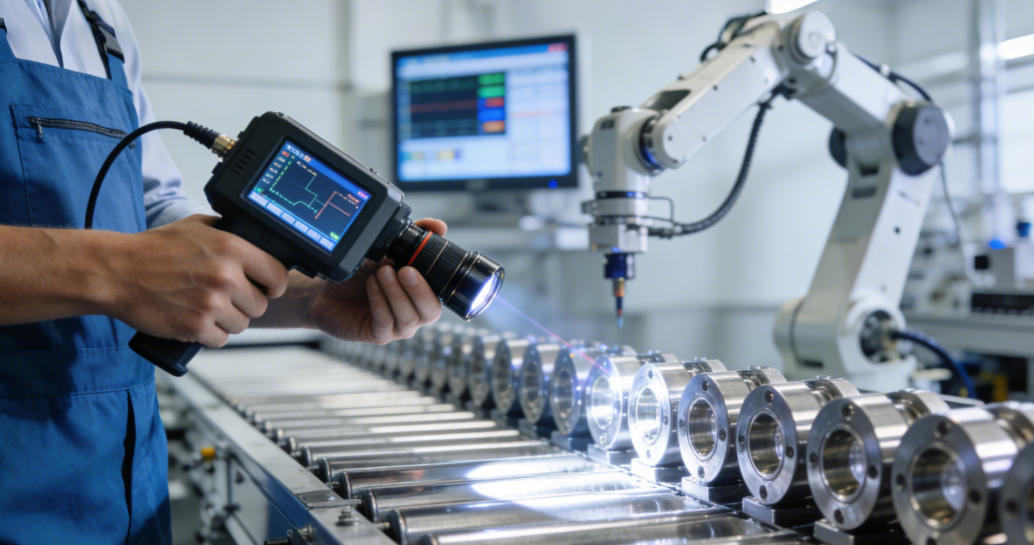
Machine vision is an advanced technology system that simulates human visual perception. It captures visual information of the environment and objects through industrial cameras, sensors, or other image acquisition devices, then analyzes and interprets the images in real time using image processing software, computer vision algorithms, and AI models. After processing, the system converts the results into control signals or operational commands, driving machines to perform specific tasks such as robotic arm manipulation, production line sorting, quality inspection, or automated navigation. As such, machine vision has become a core technology in industrial automation, smart manufacturing, robotics, and IoT systems.
Similar to human vision, machine vision systems can 'see' and 'understand,' but their advantages lie in speed, precision, and repeatability. The system acquires images through electronic sensors, extracts features (edges, shapes, colors, textures, or dimensions) via image processing modules, and makes decisions using control logic. Unlike human eyes, machine vision can maintain high-precision operation for long periods without being affected by lighting, fatigue, or subjective judgment.
Typical applications of machine vision include:
-
Industrial defect detection: Automatically identifying surface scratches, color deviations, printing errors, and dimensional defects to improve product quality and consistency.
-
Object localization and guidance: Assisting robots in complex environments to accurately locate, pick, transport, or assemble items.
-
Dimensional measurement and inspection: Using high-resolution cameras to measure parts or products, ensuring production accuracy.
-
Automated navigation and obstacle avoidance: Providing real-time environmental perception and path planning for AGVs, drones, or autonomous vehicles.
-
Smart security and surveillance: Real-time recognition and analysis of people, objects, and events for safety management and behavior monitoring.
Moreover, modern machine vision systems often integrate depth sensing (3D vision), infrared imaging, LiDAR scanning, and AI algorithms, creating smarter vision solutions that not only 'see' but also understand spatial relationships and complex scenes, enabling highly automated industrial and commercial applications.
In short, machine vision, through its closed-loop system of image acquisition, analysis, and automated control, gives machines human-like perception capabilities—but faster, more precise, and more stable, making it a core driver of modern industrial intelligence and automation.

Machine Vision Technology Definition and Features
Machine vision definition can be understood as a set of integrated technologies and methods, combining hardware and software to automatically extract actionable information from images, which can then serve as the basis for system decision-making or control. Unlike simple image processing, machine vision emphasizes automation, real-time performance, and industrial-grade applications.
Key features of machine vision systems include:
-
Automated image acquisition and processing without manual intervention
-
Reliable visual recognition and judgment capabilities
-
Seamless integration with industrial control systems
-
Repeatable high-precision task execution
These characteristics make machine vision ideal for industrial quality inspection, automated assembly, robotic guidance, and similar applications.
Core Components of a Machine Vision System
To understand how does machine vision work, it is essential to know its core components. A complete machine vision system typically consists of several modules, each critical to performance and application effectiveness:
1. Image Acquisition Devices
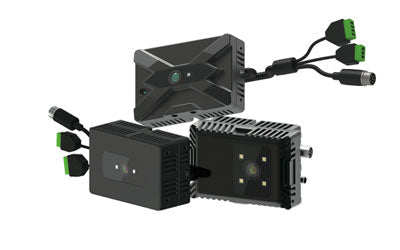
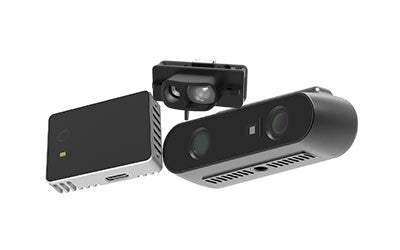
Image acquisition devices are the 'eyes' of a machine vision system, including industrial cameras, high-definition cameras, line scan cameras, and various sensors. Their primary function is to capture images of target objects or the environment, directly determining the precision and speed of subsequent image analysis.
-
Industrial Cameras: Commonly used on high-speed production lines and for precision inspection, supporting color, black-and-white, or high-resolution imaging.
-
Line Scan Cameras: Suitable for long, continuous, or moving objects, such as printed materials or metal sheets.
-
Depth Sensors: Combined with 3D vision technology, enabling object spatial positioning, distance measurement, and 3D modeling.
Selecting the right image acquisition device depends on task-specific requirements, including resolution, frame rate, field of view, and light sensitivity, which directly affect system detection capability and efficiency.
2. Illumination Systems
Lighting conditions have a decisive impact on image quality in machine vision. Illumination systems provide stable and uniform light sources, enabling cameras to capture clear, high-contrast images while minimizing noise and shadows that could affect detection accuracy.
-
Ring Lights: Ideal for surface defect detection and capturing fine details.
-
Bar Lights: Suitable for line scanning or planar illumination scenarios.
-
Backlights: Highlight object contours for precise measurement and localization.
In complex environments, adjustable-intensity, multi-wavelength, or synchronized strobe lighting can be used to accommodate targets with varying materials, colors, and motion speeds.
3. Image Processing and Analysis Software
This is the brain of a machine vision system. After images are captured, the system analyzes them using image processing algorithms, machine learning, or deep learning models to extract features, recognize patterns, and make automated decisions.
Key functions include:
-
Image Preprocessing: Noise reduction, enhancement, geometric correction, and normalization.
-
Feature Extraction: Detection of edges, contours, colors, textures, and shapes.
-
Pattern Recognition and Classification: Defect detection, part recognition, barcode or label reading.
-
3D Analysis: Using depth information for spatial measurement, 3D modeling, and pose estimation.
Advanced machine vision systems also integrate AI vision inspection technologies, enabling complex classification, prediction, and anomaly detection capabilities through deep neural networks.
4. Execution and Feedback Modules
Once the analysis is complete, the system converts visual results into control signals to drive industrial equipment or robots, achieving a closed-loop control of "see–understand–act."
-
PLC Controllers: Control mechanical operations on production lines, such as sorting, painting, or assembly.
-
Robotic Execution Systems: Enable precise picking, handling, or assembly based on recognition results.
-
Alerts and Monitoring: Trigger alarms or automatically adjust processes during anomaly detection or security monitoring.
This module ensures that visual information is efficiently translated into real-world actions, improving automation and system intelligence.
By coordinating these four core modules, machine vision systems achieve high-precision, automated, and real-time visual perception. Whether in industrial automation, intelligent robotics, autonomous vehicles, 3D scanning, or smart security, a well-designed machine vision system allows devices to 'see, understand, and decide,' significantly enhancing efficiency, accuracy, and reliability.

How Machine Vision Works
Understanding how does machine vision work helps explain its operational process in real-world applications:
-
Image Capture: Industrial cameras or vision sensors acquire images of the target objects or environment.
-
Image Preprocessing: Raw images are denoised, enhanced, or corrected to improve analysis accuracy.
-
Feature Extraction and Analysis: Algorithms identify edges, shapes, colors, textures, and other relevant features.
-
Decision Output: Analysis results are interpreted according to preset rules or deep learning models, generating decisions and triggering actions.
This workflow allows machine vision systems to perform high-speed automated inspection and control without interruption.
Advantages of Machine Vision Technology
Compared to manual inspection and traditional automation solutions, machine vision technology offers significant advantages:
-
Increased Production Efficiency: Capable of high-speed operation on production lines without downtime.
-
High Stability: Reduces human errors and ensures consistent inspection results.
-
Non-Contact Inspection: Avoids damaging the target object, suitable for high-precision tasks.
-
Improved Product Quality: Automatically detects defects, measures dimensions, and classifies products.
These benefits make machine vision a core technology in modern industrial manufacturing and automation upgrades.
Main Applications of Machine Vision
Machine vision technology has been widely applied across various industries:
Industrial Automation and Production Line Inspection
Tasks such as automatic defect detection, paint quality inspection, and dimensional measurement significantly enhance quality control.
Robotic Guidance and Navigation
Machine vision enables robots to perform complex tasks including path planning, obstacle avoidance, and precise object handling.
Intelligent Transportation and Security Surveillance
By identifying vehicles, pedestrians, and traffic signs in real time, machine vision supports smart traffic management and safety monitoring.
Medical Imaging and Visual Inspection
Machine vision assists in cell detection, medical scan analysis, and intelligent diagnostic systems.
These applications highlight the diversity and significance of machine vision technology across industries.
Future Development Trends
With the development of artificial intelligence (AI), deep learning, and edge computing, machine vision systems are becoming smarter, more flexible, and more accurate. Future trends include:
-
3D Machine Vision: For more complex spatial perception and analysis.
-
Multi-Sensor Fusion: Integrating LiDAR, infrared imaging, and other sensors to enhance perception.
-
Intelligent Robotics: Tightly integrating machine vision with robots for autonomous decision-making and actions.
These trends will further expand the applications and commercial value of machine vision technology.
Conclusion: Machine Vision as a Key Driver of Industrial Intelligence
In summary, machine vision is a system that integrates image acquisition, processing, analysis, and automated control, enabling machines to "understand" the world and perform tasks accordingly. Understanding what is machine vision, machine vision definition, how does machine vision work helps grasp the immense value of this technology in industrial automation, robotic control, quality inspection, and intelligent systems.

