

ToF Technology in Airports & Stations: Smarter Crowd Management
How Can ToF Technology Improve Crowd Management at Airports and Train Stations?
With the acceleration of urbanization, passenger flow at large transportation hubs such as airports and train stations continues to grow. Efficient and safe crowd management has become a key concern for transportation administrators. Traditional manual monitoring methods often face coverage gaps, slow response times, and inaccurate statistics, making it difficult to meet the modern demand for real-time monitoring and intelligent management. By introducing TOF (Time-of-Flight) depth sensing technology, transportation management systems can achieve precise passenger counting, queue management, and area monitoring, providing reliable technical support for building smart transportation hubs.
What is the meaning of crowd management?
Crowd management refers to the systematic planning, control, and guidance of the flow, gathering, and behavior of people within a certain area. Its core goals are to ensure safety, improve efficiency, and optimize overall order.
Key aspects of crowd management include:
-
Flow control: Guiding people through proper passage design, directional signage, and entrance/exit management to prevent congestion or stampede risks.
-
Risk prevention and safety assurance: Identifying potential hazard zones or high-density areas and taking preemptive measures such as security patrols, monitoring, or warning signage.
-
Emergency management and evacuation: Quickly organizing safe evacuation during emergencies like fires, panic, or accidents.
-
Data analysis and optimization: Using crowd monitoring, video analysis, sensors, or intelligent systems to collect, predict, and optimize management strategies based on behavior patterns.
Crowd management is widely applied in large events, public transport hubs, sports events, concerts, shopping centers, exhibitions, and urban public spaces, serving as a vital tool for public safety, event management, and operational efficiency.

1. Safety and Crowd Monitoring Needs at Transportation Hubs
Airports, train stations, and subway stations are high-density public spaces where passenger flow is complex and safety risks are significant:
-
Overcrowding may lead to stampedes or delays
-
Low efficiency in crowd movement affects operational order
-
Delayed response to safety incidents due to lack of real-time data
Thus, transportation managers require a solution capable of real-time, non-contact, and intelligent crowd monitoring. In this context, ToF technology emerges as a new approach for crowd management.
2. Core Role of ToF in Crowd Management
ToF technology works by emitting infrared light or laser pulses and calculating the time it takes for the light to return after hitting a target, enabling high-precision 3D depth measurement. Compared to traditional cameras, ToF provides the following advantages in airport and train station crowd management:
2.1 Passenger Counting and High-Density Crowd Analysis
During peak periods at airports and stations, passenger density is high, and traditional cameras or manual counting often struggle to provide accurate real-time numbers. ToF depth sensors measure the time it takes light to travel to an object and back, generating high-precision 3D depth maps for accurate crowd monitoring and analysis.
-
High-precision counting: ToF sensors can detect individual contours and spatial positions, distinguishing adjacent people even in dense crowds. Using 3D point cloud technology, the system can identify adults, children, and wheelchairs, providing multi-type crowd statistics. Compared to 2D cameras, ToF is more resistant to occlusion and performs stably under low-light conditions.
-
Real-time data updates: ToF systems support millisecond- or second-level updates, giving transportation managers instant insight into crowd dynamics. Managers can monitor ticket gates, security checkpoints, waiting halls, and boarding gates, quickly identifying potential congestion. Real-time data can be integrated with staffing, gate openings, or lane diversion strategies to improve operational efficiency and reduce passenger waiting times.
-
Visualized analysis: Depth data from ToF sensors can be converted into heatmaps and trajectory maps, allowing managers to visually assess peak-time crowd density and movement patterns. Systems can highlight crowded areas, track dwell times, movement speeds, and flow directions, assisting in pathway optimization, resource allocation, and risk prediction. By analyzing historical data with AI, future peak flows can be forecasted, enabling proactive scheduling for holidays or emergencies, achieving intelligent, data-driven hub management.
High-precision counting, real-time updates, and visualized analysis enable ToF technology to provide accurate, efficient, and safe crowd management at airports and train stations, enhancing operational capacity and passenger experience.
2.2 Queue Management and Dynamic Optimization
Queues are common at transportation hubs during peak hours, and traditional manual monitoring or basic cameras cannot accurately capture real-time conditions. ToF depth sensors measure spatial distances and positions of crowds, enabling intelligent queue management and dynamic optimization for safe and efficient passenger flow.
-
Intelligent queue detection: ToF sensors can monitor queue length, density, and movement speed in real-time. Combined with AI algorithms, the system can predict near-future queue trends, such as anticipating congestion at security checkpoints or boarding gates, and alert managers to deploy staff or open additional lanes proactively.
-
Automated diversion and optimization: When queues become long or congested, the system can provide real-time guidance to passengers through displays, apps, or mobile terminals, suggesting optimal paths and waiting times. By analyzing depth maps and AI predictions, managers can allocate resources efficiently at ticket counters, security gates, or boarding areas to maximize throughput and improve the passenger experience.
-
Safety alerts and risk control: In case of high-density queues or abnormal behavior, the ToF system can trigger automatic safety alerts, prompting staff or management platforms to take action, reducing risks of pushing, shoving, or crowd chaos. Integrated with area monitoring systems, alerts can be quickly relayed to the central management center for rapid response and emergency handling, providing comprehensive protection in crowded environments.
Through intelligent queue detection, dynamic diversion, and safety alerts, ToF technology offers detailed, real-time, and secure queue management solutions for transportation hubs, enhancing operational efficiency and passenger satisfaction.

2.3 Area Monitoring and Abnormal Event Detection
In large transportation hubs, managing area safety and order is crucial. Traditional monitoring relies on manual patrols or standard cameras, which are prone to blind spots, missed detections, or false alarms. By combining ToF (Time-of-Flight) depth sensors with AI algorithms, precise, efficient, and privacy-friendly area monitoring and abnormal event detection can be achieved, providing technical support for crowd safety management in airports and train stations.
-
Area Behavior Monitoring: ToF sensors can capture the spatial positions, dwell times, and movement trajectories of people within designated areas in real time. By generating heatmaps and trajectory analyses, administrators can understand crowd density, hotspots, and potential congestion points. For example, in waiting halls, ticket gates, or baggage claim areas, the system can monitor crowd concentration and identify behavior patterns that may lead to congestion or safety risks, enabling data-driven, scientific management.
-
Intelligent Event Triggers: When the system detects abnormal behaviors or events—such as people entering restricted zones, prolonged loitering, unusual gatherings, or high-density crowds—ToF combined with AI can immediately trigger alerts. The system can automatically coordinate security personnel, broadcast messages, or display notifications, allowing rapid crowd guidance, area lockdowns, or resource deployment to manage incidents promptly and reduce safety risks.
-
Privacy-Friendly and Secure: ToF technology collects only depth and spatial contour information without recording facial or personal images, effectively protecting passengers’ privacy. When combined with AI algorithms, behavior recognition, abnormal event detection, and safety management can be conducted without involving personal identities, balancing security and privacy in line with smart transportation and public safety standards.
By integrating area behavior monitoring, intelligent event triggers, and privacy protection, ToF provides a highly efficient, accurate, and intelligent safety management solution for transportation hubs. It enables administrators to track crowd dynamics in real time, prevent incidents, enhance operational efficiency, and increase passenger safety, laying a solid technological foundation for smart transportation hubs.
3. Technical Challenges: High-Density Recognition and Ambient Light Interference
Although ToF depth sensors offer significant advantages for crowd management in airports and train stations, real-world deployment faces several technical challenges that require hardware optimization, algorithm improvement, and system integration.
-
High-Density Crowd Recognition
During peak hours or holidays, passenger flow is extremely high, especially at ticket gates, security checkpoints, or boarding areas. Individual contours are easily occluded or overlapped, increasing the difficulty of counting and behavior recognition.
-
Risk of recognition errors: A single ToF sensor may miss or misidentify individuals in dense crowds.
-
Optimization solutions: Multi-sensor fusion (e.g., ToF sensors deployed at multiple angles), point cloud processing, and AI deep learning algorithms can distinguish individual contours and track movement trajectories, improving counting accuracy and behavior analysis.
-
Practical value: Even in high-density environments, precise monitoring supports crowd scheduling, congestion warnings, and safety management.
-
Complex Ambient Light Interference
Transportation hubs feature diverse and changing lighting conditions, including strong indoor light, direct sunlight, glass reflections, or flickering lights, which may interfere with ToF optical measurements and cause unstable depth data or increased noise.
-
Challenges: Light interference can cause distance measurement deviations and blurred contours, affecting counting and behavior recognition.
-
Optimization strategies:
-
Adjust ToF light source power and modulation frequency for different lighting conditions
-
Apply filtering algorithms, multi-frame averaging, and signal calibration to remove noise
-
Use AI models to dynamically correct abnormal data and ensure system stability
-
-
Outcome: Reliable real-time crowd monitoring is maintained even under complex lighting, ensuring precise management in transportation hubs.
-
System Integration and Data Synchronization
The value of a ToF system lies not only in measurement or monitoring capabilities but also in seamless integration with security, ticketing, video surveillance, IoT platforms, and dispatch systems.
-
Challenges: Different equipment vendors, data formats, and transmission delays may cause information silos or delayed responses.
-
Solutions:
-
Standardize interfaces and data protocols to enable real-time sharing of ToF data with security, video, and dispatch systems
-
Utilize edge computing and cloud collaboration for fast data processing and real-time alerts
-
Integrate and visualize data so passenger counts, queue information, and alerts are unified for administrators
-
-
Application value: Ensures real-time system response, improves operational efficiency and safety, and enables intelligent, visualized transportation hub management.
By addressing high-density recognition, complex lighting interference, and system integration challenges, ToF technology can maintain stable and accurate crowd monitoring in high-traffic areas, providing strong technical support for building smart transportation hubs.

4. Manufacturer Optimization Recommendations: Enhancing Efficiency and Safety
To fully leverage ToF in transportation hub crowd management, manufacturers can optimize systems through:
-
Selecting high-performance ToF modules: Support high frame rates, long-distance measurement, and multi-point recognition to adapt to different scenarios.
-
AI-based recognition optimization: Use deep learning for crowd segmentation, behavior recognition, and abnormal event detection to reduce false alarms.
-
Building IoT management platforms: Integrate multi-sensor data for real-time monitoring, remote dispatch, and big data analysis.
-
Multi-scenario testing and optimization: Test in security checkpoints, waiting halls, and boarding areas to continuously refine algorithms and sensor placement.
5. Future Outlook: ToF + AI + IoT for Smart Transportation Hubs
In the future, with the deep integration of AI algorithms and IoT platforms, ToF technology will play an even greater role in smart transportation hubs:
-
Full-process crowd monitoring: Covering entry, waiting, and boarding for comprehensive passenger flow management.
-
Predictive and optimized scheduling: Using historical data to anticipate peak flow and pre-deploy personnel and resources.
-
Intelligent safety protection: Real-time detection of abnormal behavior and crowding, automatically triggering safety measures.
-
Data-driven decision-making: Optimize checkpoint layouts, waiting area space usage, and overall traffic flow using big data analytics.
With a ToF + AI + IoT intelligent system, airports and train stations can not only enhance safety but also significantly improve passenger experience, advancing transportation hub management toward smarter, digital, and more refined operations.
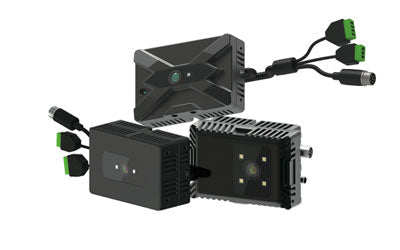
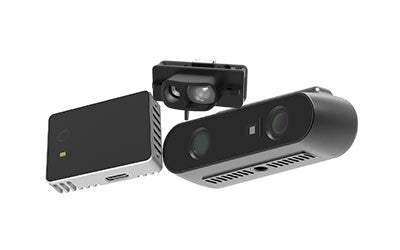
Synexens Industrial Outdoor 4m TOF Sensor Depth 3D Camera Rangefinder_CS40p

After-sales Support:
Our professional technical team specializing in 3D camera ranging is ready to assist you at any time. Whether you encounter any issues with your TOF camera after purchase or need clarification on TOF technology, feel free to contact us anytime. We are committed to providing high-quality technical after-sales service and user experience, ensuring your peace of mind in both shopping and using our products.
-
Postado em
CS40P
