How Can ToF Sensors Make Warehouses Smarter and Improve Logistics Efficiency?
With the rapid growth of e-commerce and the globalization of supply chains, the logistics industry faces increasing demands for efficient and precise warehouse management. Traditional warehouses that rely on manual operations or 2D monitoring suffer from low efficiency and high error rates, making it difficult to meet the needs of modern intelligent logistics. Leveraging TOF (Time-of-Flight)sensors, which provide high-accuracy, real-time 3D depth perception, is revolutionizing smart warehouses, AGVs, warehouse robots, and logistics automation. This article explores the applications, advantages, challenges, and future trends of ToF technology in smart warehousing and logistics automation.
What is a Smart Warehouse?
A Smart Warehouse refers to a modern, technology-driven storage system that integrates information technology, automation, and artificial intelligence algorithms to achieve intelligent management and control across the entire warehousing process. It relies on sensors, robots, AI, IoT (Internet of Things), and big data analytics to enable full automation and visualization from goods entry, storage, sorting, to dispatch.
Core Features of Smart Warehousing:
Automated Operations – AGVs (Automated Guided Vehicles), robotic arms, and automated sorting systems perform stacking and sorting tasks with minimal human intervention.
Real-Time Data Monitoring – 3D ToF sensors, RFID, and cameras collect real-time data on goods’ locations and quantities, enabling dynamic inventory visibility.
Smart Decision-Making and Path Optimization – AI algorithms plan optimal routes and task priorities based on warehouse layout and order demands.
High Efficiency and Low Error Rate – Systematic automation increases productivity and reduces human error and overstocking.
Energy Efficiency and Sustainability – Smart systems optimize power use, enabling green and sustainable warehouse operations.
In short, a smart warehouse is a self-thinking, self-operating storage ecosystem, designed to help businesses achieve high efficiency, low cost, and zero-delay logistics management.
The Urgent Need for Smart Warehousing in Modern Logistics
With the explosive growth of global e-commerce and the rise of same-day delivery demands, warehouse and logistics systems face unprecedented transformation challenges. Traditional management struggles to handle large order volumes, fast turnover rates, and multi-SKU inventory efficiently. To address these bottlenecks, companies are turning to digitalization and intelligent technologies to improve efficiency, reduce costs, and stabilize supply chains.
In this context, 3D ToF (Time-of-Flight) sensors, known for their real-time 3D perception, millimeter-level accuracy, and robust performance, have become a cornerstone technology for smart warehouse innovation.
1. Precision Management in High-Density Storage
Modern warehouses often feature dense, multi-layer shelving systems. Traditional 2D barcode or laser scanning methods can only capture planar data and cannot accurately identify the height, volume, or stacking layers of goods. This limitation leads to poor space utilization and inaccurate inventory tracking.
ToF 3D depth sensors, however, emit light pulses and calculate the time it takes for light to return, generating real-time 3D point cloud images that provide precise spatial data:
Automatically detect rack occupancy and identify empty slots for optimized layout.
Monitor stacking height and alignment to prevent instability or damage.
Enable automated inventory counting and visualization when integrated with AI-based volume recognition systems.
2. Real-Time Path Planning and AGV Navigation
In intelligent warehouses, AGVs (Automated Guided Vehicles) and AMRs (Autonomous Mobile Robots) play critical roles in material handling. Operating in complex, dynamic environments, they require high-precision navigation and obstacle avoidance. Unlike traditional visual or ultrasonic systems that struggle with lighting and reflection issues, 3D ToF sensors deliver stable depth data in both bright and low-light conditions.
By combining ToF point cloud data with SLAM (Simultaneous Localization and Mapping) algorithms, AGVs can achieve:
Accurate Obstacle Avoidance and Route Optimization – Detect shelves, workers, and moving objects in real time to dynamically adjust routes.
Intelligent Zone Scheduling – Coordinate optimal transport paths based on task priority and warehouse activity.
Safe Human-Robot Collaboration – Monitor worker proximity to ensure safe AGV operation in mixed environments.
3. Automation Efficiency and Cost Optimization
ToF technology empowers automated systems with spatial awareness and decision-making capabilities, enabling 24/7 high-efficiency operations with minimal human involvement.
Dynamic Slot Management – ToF modules continuously monitor goods inflow and outflow for automated restocking and dispatching.
Enhanced Picking and Handling Speed – Robotic arms and forklifts guided by ToF data achieve millimeter-level precision for faster operations.
Reduced Labor and Energy Costs – Automation powered by ToF sensing can lower operational costs by 20–30% while improving energy efficiency.
4. ToF Technology as the Core of Smart Logistics Ecosystems
As warehouses evolve toward full automation and network integration, ToF sensors are becoming more than just distance-measuring tools—they are key components of intelligent logistics ecosystems.
Real-Time 3D Point Cloud Generation – Enables digital twin modeling of warehouse spaces.
Millimeter-Level Distance Accuracy – Ensures safe stacking and robotic arm precision.
Dynamic Obstacle Avoidance and Route Optimization – Supports multi-robot collaboration and efficient scheduling.
With the integration of AI algorithms, edge computing, and cloud-based management, businesses can achieve full-process intelligent decision-making and real-time monitoring—from inbound logistics and shelving to picking and outbound dispatch—creating a data-driven, sustainable logistics system.
Typical ToF Applications in Smart Warehousing and Logistics Automation
1. AGV Path Planning and Warehouse Robotics AGVs and warehouse robots rely on ToF sensors for real-time 3D point cloud data, enabling precise navigation and obstacle avoidance. With millimeter-level distance measurement, ToF technology ensures optimal route planning, efficient material handling, and multi-robot coordination.
2. Cargo Stacking and Inventory Management ToF modules measure height, volume, and position with high accuracy, providing real-time data for intelligent inventory management. Systems can automatically detect stacking conditions, prevent overloading risks, and generate 3D inventory maps for digital warehouse management.
3. Dynamic Obstacle Detection and Safety Monitoring In complex warehouse environments, ToF sensors continuously monitor environmental changes to ensure safe human-robot collaboration. Using real-time point cloud data, systems can identify moving objects, define safety zones, and trigger alerts to prevent collisions.
Advantages of ToF Technology
In the wave of intelligent warehousing and logistics automation, Time-of-Flight (ToF) technology has emerged as a core depth-sensing solution, replacing traditional LiDAR and vision-based systems. With its lightweight design, high-precision distance measurement, real-time 3D perception, and strong environmental adaptability, ToF is revolutionizing the way warehouses and logistics systems perceive and interact with their surroundings. The following sections explore ToF’s advantages from four key dimensions: design, performance, adaptability, and cost-efficiency.
1. Lightweight Design & Low Power Consumption — Ideal for Multi-Device Integration
ToF modules are highly integrated systems composed of an emitter (light source), receiver (image sensor), modulation circuits, and data processing units. Compared to bulky and power-hungry LiDAR systems, ToF sensors offer several distinct advantages:
Compact and Lightweight: A single ToF module measures only a few centimeters, making it suitable for AGVs (Automated Guided Vehicles), AMRs (Autonomous Mobile Robots), robotic arms, and unmanned forklifts.
Low Power, Long Operation: As an active optical sensing technology, ToF consumes very little power, extending the operational endurance of warehouse robots.
Modular and Easy to Integrate: Its standardized interfaces and compact packaging allow for easy integration with robot control systems and edge computing units, supporting multi-device deployment and maintenance.
This makes ToF the ideal depth-sensing solution for lightweight, long-endurance, and high-density robotic systems, especially in autonomous warehouse environments requiring continuous operation.
2. Real-Time 3D Depth Perception — Delivering High-Precision Spatial Understanding
The most distinctive feature of ToF technology is its ability to generate real-time 3D point cloud data with millimeter-level precision, providing accurate spatial awareness in dynamic environments. In smart warehousing, this capability plays a crucial role in:
Real-Time Path Planning & Obstacle Avoidance: ToF modules measure depth variations within milliseconds, enabling AGVs and AMRs to perform safe and smooth navigation even in narrow aisles and crowded shelf areas.
High-Precision Warehouse Mapping: By continuously capturing point cloud data, ToF systems can construct accurate 3D warehouse models for shelf positioning, item identification, and space optimization.
Millimeter-Level Accuracy: ToF ensures precise distance and angle measurements for tasks such as stacking, gripping, or loading, enabling robotic arms to operate with extreme precision.
Dynamic Object Recognition: The technology detects moving objects in real time, ensuring safety and coordination during human-robot or multi-robot operations.
By enabling 'spatial vision' and 'situational awareness,' ToF transforms warehouse robots from passive executors to intelligent agents capable of autonomous decision-making.
3. Strong Environmental Adaptability — Reliable Under Complex Conditions
Warehouse environments vary greatly—from brightly lit loading areas to dimly lit shelves, and from reflective metal surfaces to dusty or humid conditions. Traditional vision or infrared systems often struggle in these scenarios.
With active light emission and modulation, ToF technology offers superior environmental adaptability:
Resistant to Bright and Low Light: ToF uses modulated infrared light, maintaining reliable depth output under strong sunlight, shadowed, or nighttime conditions.
Adaptable to Reflective Surfaces: ToF modules employ signal filtering and multi-frequency modulation algorithms to reduce noise on reflective or transparent materials such as metal, glass, and plastic.
Dust and Smoke Resistance: Depth sensing is minimally affected by airborne particles, allowing stable performance in dusty or humid warehouse environments.
This exceptional robustness ensures ToF sensors maintain stability and precision even in challenging or extreme logistics conditions, making them the 'visual nervous system' of smart logistics systems.
When it comes to balancing performance and cost, ToF modules hold significant advantages over LiDAR systems:
Lower Manufacturing Costs: With fewer components and simpler structures, ToF systems don’t require high-power lasers or rotating assemblies, reducing production costs.
Low Maintenance & Deployment Costs: The absence of moving parts enhances reliability and minimizes maintenance needs.
Scalable Integration: Their compact, affordable design allows ToF modules to be installed in every robot, forklift, or sorting machine, enabling full-scale warehouse automation.
High Cost-Performance Ratio: ToF delivers sufficient accuracy for most warehouse applications at a fraction of the cost of high-end LiDAR systems.
As a result, ToF technology has become the preferred depth-sensing solution for medium and large logistics enterprises pursuing rapid automation and system standardization.
Technical Challenges
Despite its advantages, ToF technology still faces several challenges in smart logistics applications:
Occlusion Issues: Stacked goods or multi-layer shelves can block depth sensing, requiring multiple ToF modules or sensor fusion.
Environmental Complexity: Variations in lighting, reflections, and dust can affect depth accuracy, necessitating algorithmic filtering and calibration.
Processing Latency: Real-time point cloud data requires powerful edge computing and AI acceleration to minimize system delay.
Integration Recommendations
Edge AI and Data Fusion: Deploy AI-enabled edge computing on AGVs and warehouse robots for real-time point cloud processing, path planning, and obstacle avoidance.
Modular Sensor Layout: Select and position ToF modules based on warehouse layout to ensure full coverage.
Multi-Sensor Fusion: Combine ToF data with RGB cameras, IMUs, GPS, and LiDAR for enhanced perception accuracy and reliability.
Future Outlook: ToF + AI + IoT
The future of intelligent warehousing lies in the deep integration of ToF technology, artificial intelligence, and the Internet of Things (IoT), driving a new era of full automation and data-driven logistics management:
Comprehensive Smart Monitoring: Real-time tracking of inventory, goods, and equipment enables complete digital visibility.
Autonomous Decision-Making: AI algorithms optimize navigation, task allocation, and resource management for higher operational efficiency.
IoT Connectivity: ToF-generated depth data integrates seamlessly with warehouse management and supply chain systems for real-time synchronization.
Through the convergence of ToF + AI + IoT, intelligent warehousing and logistics systems will achieve greater efficiency, lower cost, and higher automation, paving the way for the next generation of fully autonomous 3D intelligent logistics ecosystems.
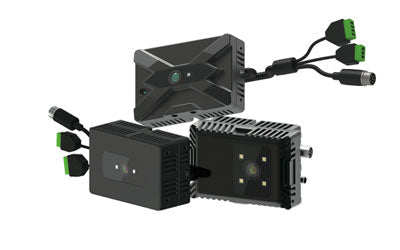
Synexens Industrial Outdoor 4m TOF Sensor Depth 3D Camera Rangefinder_CS40p
After-sales Support: Our professional technical team specializing in 3D camera ranging is ready to assist you at any time. Whether you encounter any issues with your TOF camera after purchase or need clarification on TOF technology, feel free to contact us anytime. We are committed to providing high-quality technical after-sales service and user experience, ensuring your peace of mind in both shopping and using our products.