

ToF Depth Cameras in Industrial Automation & 3D Vision Systems
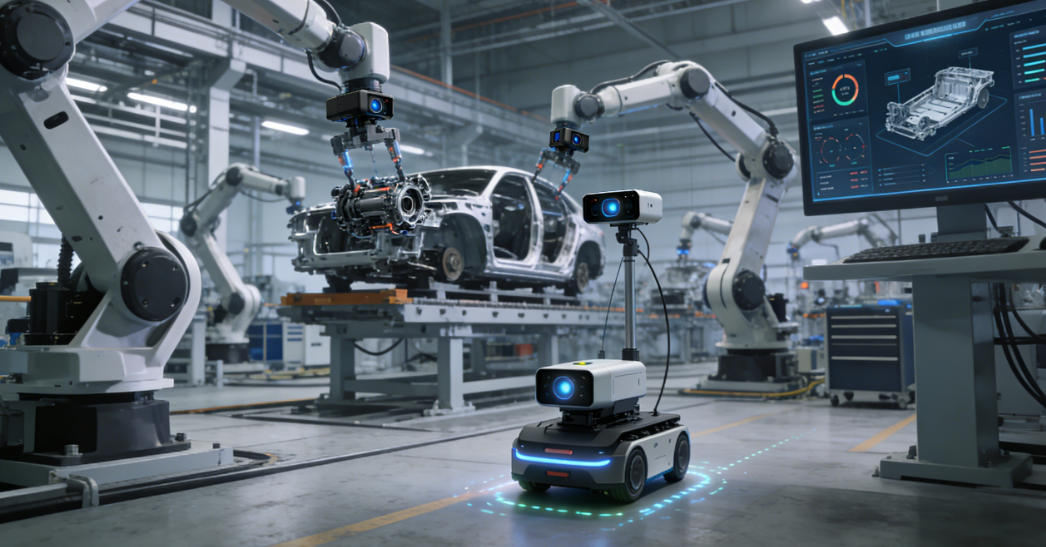
Amid the rapid upgrade of industrial automation, Depth Cameras and Time-of-Flight (ToF) technology have become essential components of modern machine vision systems. From single automation cameras to large-scale deployment of automation cameras, ToF-based depth perception is driving innovation across the Electronics Industry, smart manufacturing, robot navigation, and 3D visual inspection.
What Is a True Depth Camera?
A True Depth Camera refers to an imaging system capable of directly capturing real-world spatial depth information. Unlike traditional RGB cameras (camera RGB / RGB color camera), depth cameras use a depth sensor or depth sensing camera to measure distances and generate 3D point cloud data.
Common depth sensing technologies include:
-
iToF (indirect Time-of-Flight)
-
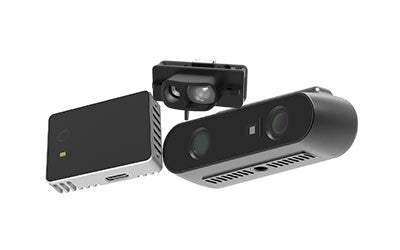
Stereo Camera / Binocular Camera
-
RGBD camera
-
Structured light systems
-
RealSense 3D camera
Among these, ToF depth sensors offer high real-time performance and strong resistance to environmental interference, making them especially suitable for industrial automation and AMR camera navigation applications.
Precision vs Accuracy: Understanding the Difference
In machine vision measurement, 3D depth sensing, and statistical analysis, Precision and Accuracy are two often-confused but fundamentally different concepts. Understanding the distinction is critical when deploying and calibrating depth cameras, ToF sensors, and automation camera systems.
Basic Definitions
-
Precision refers to the consistency and repeatability of measurement results.
-
Example: If multiple measurements of the same object produce nearly identical values, the system has high precision—even if those values deviate from the true value.
-
-
Accuracy refers to how close a measurement is to the true value.
-
Example: If a measured value is close to the actual dimension of a target, it has high accuracy—even if repeated measurements fluctuate.
-
In short, precision emphasizes stability, while accuracy emphasizes correctness.

Visual Interpretation
Measurement results can typically be categorized into four scenarios:
-
High Precision, High Accuracy: Measurements are consistent and close to the true value (ideal condition).
-
High Precision, Low Accuracy: Measurements are consistent but offset from the true value (systematic error).
-
Low Precision, High Accuracy: Measurements fluctuate but average near the true value (random error).
-
Low Precision, Low Accuracy: Measurements are inconsistent and far from the true value (unacceptable condition).
This classification is commonly applied in 3D stereo-camera systems testing, ToF depth camera calibration, and industrial inspection.
Applications in Industrial Automation
In AMR camera navigation, vision-guided depalletizing, and warehouse robotics (area and perimeter robots), both precision and accuracy directly influence:
-
Safety and repeatability of AGV path planning
-
Pallet positioning and cargo grasping success rates
-
Reliability of 3D point cloud modeling
-
Accuracy of 3D people counting / human counting
For example, if a ToF depth sensing camera repeatedly measures a warehouse shelf height with highly consistent results but those results deviate from the actual height, the system demonstrates high precision but low accuracy. Through proper calibration—such as camera matrix intrinsic adjustment and focal length vs field of view optimization—accuracy can be improved while maintaining measurement stability.
Common Questions and Search Queries
In industrial and research contexts, professionals often search for:
-
precise vs accurate
-
precise and accuracy
-
percision vs accuracy
-
precision or accuracy
-
explain accuracy and precision
-
distinguish between accuracy and precision
-
accuracy and precision in measurements
-
what is precision vs accuracy
-
what is accuracy precision
These queries are directly relevant to the performance evaluation of Depth Cameras, RGBD cameras, and stereo 3D cameras in machine vision measurement and intelligent automation systems.
Practical Optimization Recommendations
When deploying automation cameras and depth sensor cameras, the following methods can improve both precision and accuracy:
-
Calibrate the camera intrinsic matrix (camera matrix intrinsic)
-
Optimize exposure time (Exposure Time) and lighting conditions
-
Use pixel filtering (pixel filtering) to reduce noise
-
Combine FOV (camera field of view) calculations with world coordinate system calibration (world matrix computer vision definition)
-
Regularly verify measurements and compare 3D point clouds against real-world dimensions
Implementing these steps ensures that intelligent warehousing, AMR navigation, and industrial inspection systems achieve both precise and reliable performance in real-world applications.
Camera Field of View (FOV) Explained
In modern Depth Cameras, RGBD cameras, and ToF depth sensor camera systems, Camera Field of View (FOV) is a key metric for evaluating camera performance. Whether for AMR camera navigation or industrial automation vision systems (automation cameras), understanding FOV and its calculation is critical.
What Is Field of View
The field of view (FOV) refers to the angle range that a camera can cover in space. It is also referred to as the camera angle of view, representing the area the lens “sees.” A larger FOV allows the camera fov to cover more area, which is ideal for applications such as vision guided depalletizing or 3D people counting / human counting, but excessively large FOV may reduce pixel density, impacting both precision and accuracy.
For stereo 3D cameras or ToF cameras (time-of-flight cameras), FOV affects not only horizontal coverage but also vertical measurement range, which is essential for depth sensing of warehouse shelves (depth sensing camera) and indoor people counting sensors.

FOV Calculation Formula
FOV can be calculated using:
Where sensor width is the width of the camera sensor, and f is the focal length. Shorter focal lengths produce larger FOV, while longer focal lengths reduce FOV. Understanding the relationship of focal length vs field of view is critical for camera matrix intrinsic calibration and depth sensor calibration.
In industrial applications, correctly calculating FOV helps calculate the field of view, ensuring accurate camera ds data output and reliable 3D point cloud modeling.
Horizontal and Vertical FOV
-
Horizontal FOV determines coverage in the horizontal plane, affecting AGV or AMR navigation path planning.
-
Vertical FOV determines coverage in the vertical plane, influencing pallet height measurement and automated depalletizing accuracy.
-
Diagonal FOV is used to assess the overall environment coverage of a camera.
In 3D stereo-camera systems testing, considering both horizontal and vertical FOV can optimize the world matrix computer vision definition and enhance stability in AGV navigation and automated warehousing systems.
FOV vs Depth of Field
FOV is often confused with Depth of Field, but they are different:
-
FOV (Field of View) describes the angle coverage of a camera.
-
Depth of Field (DoF) describes the distance range within which the camera can produce sharp images.
In ToF depth sensor cameras or stereo 3D cameras, FOV determines the observed area, while DoF determines the effective measurement range. For example:
-
Indoor people counting sensors require larger horizontal FOV to cover entire lobbies.
-
Automated depalletizing systems require sufficient depth of field to ensure accurate grasping.
Camera Angle of View and Applications
The camera angle of view represents the practical realization of FOV, directly affecting vision guided depalletizing, human counting, and 3D people counter system layouts. Proper FOV configuration reduces the need for pixel filtering, improving precision and accuracy and ensuring reliable depth measurements and statistical analysis.
Application Scenarios
-
AMR Navigation
ToF depth cameras with a 90° horizontal FOV can cover AGV travel paths for real-time obstacle detection and dynamic path planning. -
Intelligent Warehousing and Depalletizing
Using a vertical FOV of 60° combined with camera matrix intrinsic calibration enables precise measurement of pallet heights for automated picking. -
3D People Counting and Security
Deploying RGBD cameras or RealSense 3D cameras at entrances and lobbies improves human counting and 3D people counting, increasing statistical accuracy and supporting behavioral analysis. -
Industrial Inspection and Quality Control
Depth sensing cameras combined with world matrix computer vision definition allow for dimensional measurement, shape detection, and object recognition, providing automated solutions for the Electronics Industry.
Camera Coordinate Systems and Matrix Parameters
In computer vision systems, the image space coordinate system and world coordinate matrix (world matrix computer vision definition) are critical.
Key parameters include:
-
Camera matrix intrinsic
-
OpenCV coordinate system (opencv 坐标 系)
-
Pixel filtering
-
Exposure time (Exposure Time)
-
Timestamp decoding (decoding time stamp)
These parameters affect the positioning accuracy of depth sensor cameras in AMR navigation and area and perimeter robot path planning.
ToF Applications in Industrial Automation
1️⃣ Vision Guided Depalletizing
Depth cameras enable precise picking and positioning of pallets and goods.
2️⃣ AMR Camera Navigation
ToF depth sense provides real-time obstacle detection and mapping.
3️⃣ Electronics Industry Inspection
Depth cameras measure height, volume, and perform automated quality inspection.
4️⃣ 3D Stereo Vision Systems
Systems integrate stereo 3D cameras and DS86 modules for accurate 3D perception in industrial and robotics applications.
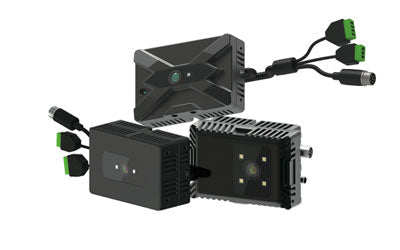
Synexens Industrial Outdoor 4m TOF Sensor Depth 3D Camera Rangefinder_CS40

Our professional technical team specializing in 3D camera ranging is ready to assist you at any time. Whether you encounter any issues with your TOF camera after purchase or need clarification on TOF technology, feel free to contact us anytime. We are committed to providing high-quality technical after-sales service and user experience, ensuring your peace of mind in both shopping and using our products
-
Postado em
CS40
