

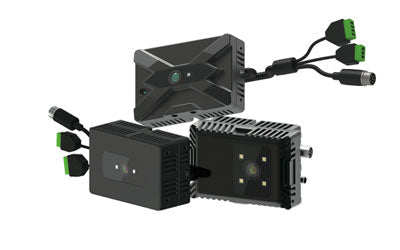
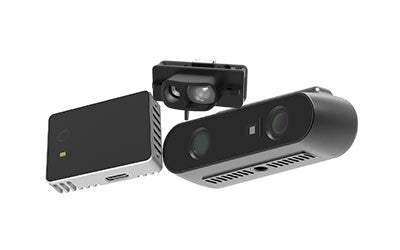
Intelligent Obstacle Avoidance Robot Cameras for AGVs & Warehousing
- por LidarSensor
How Do Intelligent Obstacle-Avoidance Robot Cameras Improve AGV Navigation and Warehouse Automation?
With the rapid development of industrial automation, smart warehousing, and robotics, the demand for safe and efficient navigation and obstacle-avoidance systems is increasing significantly. In modern logistics and production environments, camaras roboticas (robotic cameras) have become a core component for mobile robots (AGV/AMR), enabling obstacle avoidance, path planning, and high-precision positioning.
By combining advanced visual sensing technologies with deep learning algorithms, these cameras can deliver real-time environmental perception, obstacle detection, and intelligent navigation—greatly improving operational efficiency and safety in warehouses, factories, and distribution centers.
What Are Intelligent Obstacle-Avoidance Robot Cameras?
Intelligent obstacle-avoidance robot cameras are high-precision visual sensing devices that integrate Computer Vision, Deep Learning, and 3D Spatial Perception. They are specifically designed for mobile robots (AGVs and AMRs) operating in complex and dynamic environments to achieve autonomous obstacle avoidance and intelligent path planning.
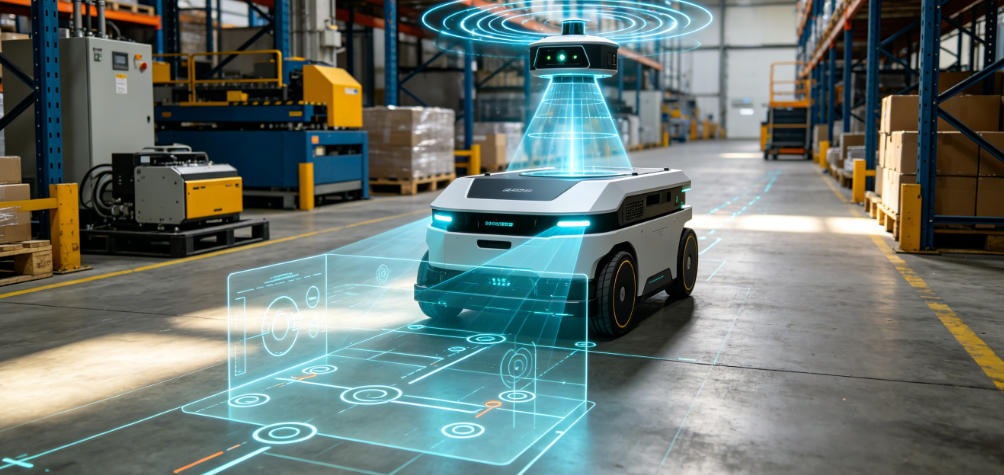
In modern smart warehousing, industrial automation, and logistics systems, these devices continuously scan the surrounding environment in real time, building accurate spatial models that allow robots to detect obstacles such as people, shelves, pallets, and other moving robots, and automatically calculate optimal travel paths.
Powered by AI and multi-sensor fusion, camaras roboticas have evolved from simple perception devices into the 'visual brain' of intelligent robotic systems.
Key capabilities include:
- Precise localization and navigation (Visual SLAM-based): enabling real-time positioning in complex environments
- Dynamic path optimization: adjusting routes based on real-time conditions
- Real-time 3D environment mapping: building digital warehouse models for navigation and analysis
- System integration with WMS/ERP platforms: enabling automated scheduling, inventory updates, and logistics coordination
Today, camaras roboticas are widely used in unmanned warehouses, flexible manufacturing systems, and intelligent distribution centers, becoming a critical enabler of robotic autonomy and warehouse automation.

Core Technical Principles
Intelligent obstacle-avoidance robot cameras rely on a multi-layer technical architecture combining perception, understanding, decision-making, and execution.
1. Multi-source Image Acquisition
The system uses multiple sensors such as stereo cameras, structured light systems, and LiDAR to capture both 2D images and 3D point cloud data.
This multi-source fusion improves performance in complex environments such as low lighting, reflective surfaces, or dynamic occlusion, providing a robust foundation for navigation in warehouses and factories.
2. AI Vision Analysis
Using Deep Learning and Convolutional Neural Networks (CNNs), the system extracts features from images and point clouds to analyze obstacles in detail.
It can identify:
- Object type and geometry
- Movement direction and speed
- Collision risk with robot trajectory
- Priority levels of obstacles
This enables the system to evolve from simple detection to full environmental understanding.
3. Real-time Obstacle Avoidance and Path Planning
Based on AI analysis, the system uses path planning algorithms and motion control models to compute optimal navigation routes in real time.
It can dynamically:
- Avoid sudden obstacles
- Re-route in congested areas
- Optimize multi-robot traffic flow
- Adjust paths based on task priority
These computations are executed in milliseconds, ensuring safe and efficient movement of AGVs and AMRs in high-speed logistics environments.
4. Structured Data Output and System Integration
After processing, the system converts all perception data into structured outputs, including:
- Obstacle position and dimensions
- Trajectory and velocity vectors
- Robot path and route adjustments
- Risk levels and navigation strategies
This data is transmitted to robot controllers or upper-level systems such as WMS, MES, or fleet management platforms, enabling coordinated automation across the entire logistics network.
Applications of Camaras Roboticas in Smart Warehousing and Industry
In modern industrial and logistics environments, camaras roboticas are no longer just vision sensors—they are the core enablers of autonomous navigation, obstacle avoidance, and intelligent data acquisition.
1. Smart Warehouse Automation
In high-density warehouses, AGVs and AMRs must operate safely in narrow aisles. camaras roboticas enable:
- Real-time obstacle detection and avoidance
- Dynamic path optimization
- Precise pallet and case localization
- Integration with Warehouse Management Systems (WMS)
This improves operational speed, accuracy, and space utilization.

2. Manufacturing Logistics
In flexible manufacturing environments, robots use camaras roboticas to transport components between machines.
Key benefits include:
- Autonomous material handling
- Flexible routing and scheduling
- Reduced labor dependency
- Real-time production line monitoring
This enhances production flexibility and efficiency in small-batch, multi-product manufacturing.
3. E-commerce and Distribution Centers
In high-speed sorting environments, robots rely on camaras roboticas for:
- Parcel detection and identification
- Automated obstacle avoidance
- Fleet coordination and traffic control
- Real-time order tracking
This improves fulfillment speed, reduces errors, and ensures timely deliveries.
4. Hazardous Environment Operations
In chemical plants, high-temperature zones, or dusty environments, robots equipped with camaras roboticas can operate safely without human intervention.
Applications include:
- Remote obstacle avoidance
- Safe navigation in hazardous zones
- Real-time environment monitoring
- Fully automated task execution
This significantly reduces operational risks and improves workplace safety.
Application Value Summary
Across these scenarios, camaras roboticas deliver key benefits:
- Enhanced autonomous navigation and obstacle avoidance
- Improved efficiency and safety in logistics and production
- Support for digital transformation in industrial systems
- Reduced labor costs and increased automation levels
They have become a foundational technology in smart warehousing, industrial automation, and digital logistics transformation.
Technology Development Trends
Future developments of intelligent robot cameras will focus on:
- Multi-modal sensor fusion (RGB, depth, infrared, LiDAR)
- Digital twin simulation for logistics optimization
- Edge computing for real-time decision-making
- Deep integration with AGV/AMR fleets
- Fully automated smart warehouses and Industry 4.0 systems
These trends will further expand the role of camaras roboticas, making robotic systems more intelligent, efficient, and autonomous.
3D Safe Guarding Privacy RGBD Camera Synexens CS30

Conclusion
Intelligent obstacle-avoidance robot cameras integrate AI vision, 3D sensing, and deep learning to provide robots with precise navigation, obstacle detection, and path planning capabilities. When combined with AGV/AMR systems and smart warehouse platforms, camaras roboticas significantly improve operational efficiency and safety while accelerating the transition toward Industry 4.0 and fully automated logistics.
As technology continues to evolve, these systems will become indispensable core components in industrial robotics and intelligent logistics, enabling fully automated, intelligent, and highly efficient operations.
