

From ToF to LiDAR: Next-Gen 3D Sensing for Digital Twins
- por TofSensor

How Do ToF Cameras and LiDAR Enable Digital Twins in the Geospatial Industry?
With the rapid development of the Geospatial Industry, 3D perception technologies are becoming a fundamental pillar for surveying and mapping, urban planning, drones, autonomous driving, and digital twin systems. Among these technologies, ToF cameras (Time-of-Flight camera sensors) and LiDAR (Light Detection and Ranging) stand out as the most important active ranging solutions, fundamentally reshaping how spatial data is captured and understood.
This article provides a systematic overview of ToF, LiDAR, SLAM, Digital Twin technologies, vertical datums, and geodetic coordinate systems, explaining their principles, differences, and application scenarios while incorporating high-impact industry keywords and long-tail search terms.
What Is Time-of-Flight (ToF)?
TOF (Time-of-Flight) is a distance-measurement principle that calculates depth by measuring the time it takes for light or a laser signal to travel from a sensor to an object and back. By multiplying this round-trip time by the speed of light and dividing by two, the system determines the distance to the target.
Based on this principle, ToF-based devices can compute per-pixel depth information, enabling the generation of depth maps or real-time 3D data. Because ToF relies on active illumination and does not depend on ambient light or surface texture, it provides low latency and stable performance in low-light or low-texture environments. As a result, ToF is widely used in ToF cameras, RGB-D cameras, LiDAR systems, SLAM, robotics, human detection, and industrial automation.

1. What Is a ToF Camera? (ToF Camera / RGB-D Camera)
A ToF (Time-of-Flight) camera is an imaging device that acquires spatial depth information by measuring the time it takes for emitted light to travel to an object and return to the sensor. Typically, the camera emits modulated near-infrared light and calculates the distance from the sensor to each pixel based on the measured flight time.
Because ToF cameras can directly output pixel-level depth information, they are classified as a typical type of depth camera and represent one of the most important technology paths in modern 3D perception.
In real-world applications, ToF technology is often combined with a standard RGB camera to form an RGB-D camera, which outputs both RGB images and depth maps simultaneously.
Common Related Terminology
-
ToF Camera
A complete depth camera system based on the Time-of-Flight principle -
ToF Camera Sensor
The core sensor that receives reflected light and computes phase or time differences -
RGB-D Camera / RGBD Camera
A camera system capable of outputting both RGB images and depth maps -
RGB Camera + Depth
A general term describing the combination of an RGB camera with a depth module -
QVGA Resolution Depth Camera
A ToF depth camera with QVGA resolution (320×240), commonly used in embedded and low-power applications

How a ToF Camera Works (Simplified)
A typical ToF camera operates as follows:
-
The camera emits modulated infrared light (continuous wave or pulsed)
-
The light reflects off the surface of objects
-
The reflected light is captured by the ToF sensor
-
The system calculates distance using flight time or phase difference
-
This process is repeated for every pixel to generate a complete depth map
The core equation is:
Distance = (Speed of Light × Time of Flight) / 2
Because ToF uses active illumination and active ranging, it does not rely on scene texture and performs well on low-texture or uniformly colored surfaces.
Core Advantages of ToF Cameras
1. Real-Time Depth Output
ToF cameras can capture a full depth map in a single frame, offering:
-
High frame rates (30 fps / 60 fps)
-
Low latency suitable for real-time systems
-
Excellent performance in SLAM and real-time localization and mapping
This makes them ideal for robotics, AR/VR, and interactive perception systems.
2. Simple System Architecture and Controllable Cost
Compared to stereo vision or structured-light solutions, ToF cameras feature:
-
Simpler optical structures
-
Lower algorithmic complexity
-
High hardware integration
As a result, ToF cameras are often regarded as an inexpensive 3D scanning solution, making them well-suited for mass production and embedded platforms.
3. Strong Environmental Adaptability (Especially Indoors)
ToF cameras perform reliably in:
-
Indoor environments
-
Scenes with stable lighting conditions
-
Low-texture or repetitive-texture objects
They are therefore widely used in:
-
Indoor robotics
-
Human pose estimation
-
Gesture recognition
-
Industrial automation and inspection

The Role of ToF Cameras in RGB-D Systems
In an RGB-D camera system:
-
The RGB camera provides color, texture, and semantic information
-
The ToF depth camera delivers accurate spatial distance measurements
When combined, they enable:
-
3D reconstruction
-
Point cloud generation
-
Object segmentation and recognition
-
Spatial measurement and volume estimation
Typical Application Areas of ToF Cameras
ToF technology is widely adopted across many advanced domains, including but not limited to:
-
SLAM mapping (Simultaneous Localization and Mapping)
-
Digital Twin systems
-
Trajectory definition and path planning
-
Service and mobile robots
-
Smart manufacturing and industrial automation
-
Intelligent security and human detection
-
AR / VR / MR spatial perception systems
In these applications, ToF cameras often serve as a core 3D perception sensor.
Summary
A ToF camera is a depth-sensing technology based on the Time-of-Flight principle, offering real-time performance, simple system architecture, and controllable cost. When integrated with RGB cameras to form RGB-D systems, ToF technology provides both color information and precise depth data, making it a key enabling component for SLAM, digital twin platforms, robotics, and industrial vision systems.
If you’d like, I can continue by expanding into:
-
ToF vs LiDAR vs Stereo Vision (technical comparison)
-
Error sources and calibration methods in ToF depth sensing
-
The role of ToF and LiDAR in digital twin pipelines
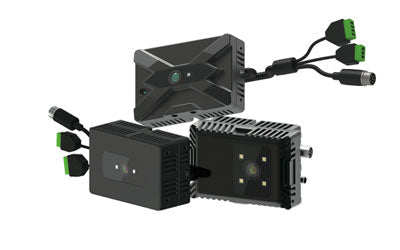
Synexens Industrial Outdoor 4m TOF Sensor Depth 3D Camera Rangefinder_CS40

Our professional technical team specializing in 3D camera ranging is ready to assist you at any time. Whether you encounter any issues with your TOF camera after purchase or need clarification on TOF technology, feel free to contact us anytime. We are committed to providing high-quality technical after-sales service and user experience, ensuring your peace of mind in both shopping and using our products
