


Accuracy vs Precision Explained: Key Differences & Examples
- por TofSensor

What Is the Difference Between Accuracy and Precision in Science and Measurement?
In scientific experiments, engineering manufacturing, industrial inspection, and data analysis, accuracy vs precision is a fundamental concept that is often misunderstood. Many people search for:
-
precision vs accuracy
-
accuracy and precision
-
accuracy versus precision
-
difference between accuracy and precision
If you have ever wondered, 'What exactly are accuracy and precision? How are they different?', this article will clearly explain the definitions, differences, and real-world applications so you can fully understand the essence of accurate vs precision.
What Is Accuracy? — What Is Accuracy
Accuracy refers to how close a measurement is to the true or accepted value. In scientific experiments, industrial measurement, and data analysis, understanding the accuracy vs precision definition helps distinguish correctness from reliability.
Everyday Example:
Suppose you weigh a bag of flour with a true weight of 100g:
-
Measurement = 99.8g → High accuracy (very close to the true value)
-
Measurement = 92g → Low accuracy (significant deviation from the true value)
It is important to note that accuracy focuses on whether the result is correct — not whether it is consistent or repeatable. Understanding the accuracy in science definition helps researchers and engineers properly evaluate experimental data.

What Is Precision? — What Is Precision vs Accuracy
Precision refers to the consistency and repeatability of measurements — how close repeated measurements are to one another — regardless of whether they are close to the true value. Understanding precision versus accuracy helps distinguish instrument stability from measurement correctness.
Example (True Value = 100g):
-
Measurements: 92g, 92.1g, 91.9g → High precision, but low accuracy
-
Measurements: 98g, 102g, 101g → Possibly higher accuracy, but lower precision
Precision measures how stable the results are. It is extremely important in quality control, repeatability testing, and instrument calibration. By learning to differentiate accuracy and precision and applying proper precision calculation, scientists and engineers can evaluate measurement system stability and optimize processes.
Mastering precision v accuracy helps avoid confusion in experimental design, data analysis, and industrial production, improving reliability in measurement and decision-making.
Accuracy vs Precision: The Core Difference
In science, engineering, and statistics, the difference between accuracy and precision is critical.
-
Accuracy measures closeness to the true value.
-
Precision measures consistency across repeated measurements.
| Comparison | Accuracy | Precision |
|---|---|---|
| Definition | Closeness to true value | Consistency of repeated results |
| Focus | Correctness | Stability |
| Error Type | Systematic error | Random error |
A simple way to remember:
Accurate means 'right.' Precise means 'consistent.'
A measurement system can fall into four scenarios:
-
High accuracy + High precision → Ideal (correct and stable)
-
High accuracy + Low precision → Correct on average, but inconsistent
-
Low accuracy + High precision → Consistent but biased
-
Low accuracy + Low precision → Neither correct nor stable
Understanding accuracy v precision and the precision and accuracy difference helps reduce measurement errors and improve reliability in experiments and instrument calibration.
Applications in Statistics: Accuracy and Precision in Statistics
In statistics, data analysis, and machine learning, understanding accuracy and precision in measurements is essential for evaluating experimental quality and model performance.
-
Accuracy represents overall correctness — how close predictions are to actual outcomes.
-
Precision (in classification models) represents the proportion of true positives among predicted positives, measuring prediction reliability.
In research and industry, mastering precision vs accuracy statistics and accuracy vs precise concepts helps optimize experiment design, model evaluation, and quality control processes.
By properly learning how to calculate accuracy and precision, scientists and engineers can improve both correctness and stability in measurement systems, resulting in more reliable and scientifically sound conclusions.
Understanding the meaning of accuracy and precision also supports better decision-making in statistical modeling and industrial measurement.

Advanced Examples and Practical Applications
To better understand the difference between accuracy and precision, consider these examples:
1. The Target Shooting Analogy
-
Shots tightly grouped at the center → High accuracy + High precision
-
Shots tightly grouped but off-center → High precision, low accuracy
-
Shots scattered but centered on average → High accuracy, low precision
-
Shots scattered and off-center → Low accuracy + Low precision
2. Industrial Measurement and Instrument Calibration
-
High precision does not guarantee high accuracy — if the instrument is not calibrated, results may be consistent but incorrect.
-
High accuracy does not guarantee high precision — repeatability is necessary for reliable measurement.
3. Scientific Research and Statistical Experiments
-
In research and data analysis, tools such as the accuracy equation, calculating precision, and calculation of accuracy and precision are used to quantify experimental data.
-
Understanding accuracy and precision difference with example helps researchers design better experiments, reduce error, and improve data reliability.
These examples make it easier to apply accurate vs precision concepts to laboratory experiments, industrial inspection, and statistical analysis — ensuring results that are both correct and consistent.
Summary
-
Accuracy = Correctness (closeness to the true value)
-
Precision = Consistency (repeatability of results)
-
Accurate vs precision are not synonyms and must be clearly distinguished
-
Properly differentiate accuracy and precision to evaluate measurement systems or statistical models correctly
-
Practical examples help explain the difference between precision and accuracy more intuitively
Once you master these concepts, you can confidently interpret measurement data and experimental results in scientific research, industrial production, and statistical analysis — leading to more efficient, reliable, and data-driven decision-making.
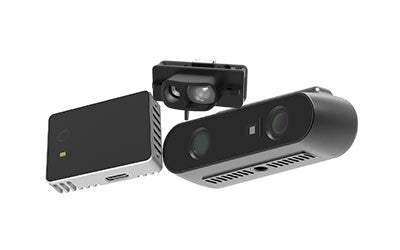
Synexens 3D Of RGBD ToF Depth Sensor_CS30

Our professional technical team specializing in 3D camera ranging is ready to assist you at any time. Whether you encounter any issues with your TOF camera after purchase or need clarification on TOF technology, feel free to contact us anytime. We are committed to providing high-quality technical after-sales service and user experience, ensuring your peace of mind in both shopping and using our products.
-
Postado em
CS30
