

RGBD Camera Guide: How Depth and Color Enable 3D Vision Applications
How Do RGBD Cameras Work and What Are Their Key Applications in 3D Vision?
Imagine a camera that not only captures the rich colors of the world, but also understands depth, distance, and spatial relationships. This is the core capability of an RGBD camera. By combining traditional RGB imaging with advanced depth-sensing technology, RGBD cameras enable machines to achieve true three-dimensional spatial perception.
This article provides a systematic introduction to how RGBD cameras work, the depth-sensing technologies they use, their key advantages, and how they play a crucial role in industries such as robotics, automation, augmented reality, and computer vision.
What Does 'RGBD' Mean?
RGBD is a commonly used term in computer vision, 3D imaging, and sensor technologies.
Definition of RGBD
RGBD = RGB + Depth
-
RGB refers to color image information composed of three channels:
-
R (Red)
-
G (Green)
-
B (Blue)
These channels represent the color and texture of objects.
-
-
D (Depth) refers to depth information, which measures the distance from the sensor to the surface of an object, typically expressed in millimeters or meters.

How RGBD Cameras Work: Capturing Color and Depth Simultaneously
An RGBD camera (also known as a depth camera or 3D camera) can simultaneously acquire color images (RGB) and depth data (D) in real time. Unlike traditional cameras that record only two-dimensional images, RGBD cameras integrate additional depth-sensing technologies to measure the distance between the camera and objects in the scene.
By fusing depth data with RGB images, RGBD cameras generate a three-dimensional representation of the environment, enabling more accurate spatial understanding, object segmentation, and scene reconstruction.
Depth-Sensing Technologies Used in RGBD Cameras
RGBD cameras typically employ one of the following mainstream depth-sensing technologies:
Time-of-Flight (ToF)
ToF cameras emit modulated infrared light and calculate distance by measuring the time it takes for the light to travel to an object and return.
This technology features fast response times and strong resistance to ambient light, making it especially suitable for real-time 3D vision and outdoor applications.
Structured Light
Structured light cameras project predefined infrared light patterns onto a scene and calculate depth by analyzing how the patterns deform on object surfaces. This method offers high accuracy at short ranges and is commonly used in indoor 3D scanning and gesture recognition applications.
Each technology has its strengths, and the optimal choice depends on factors such as measurement range, ambient lighting conditions, and accuracy requirements.

Industry Applications of RGBD Cameras
Thanks to their precise 3D data acquisition capabilities, RGBD cameras are widely used across multiple industries.
Robotics and Automation
In robotics, RGBD cameras are key sensors for enabling environment perception and interaction. Real-time 3D depth maps allow robots to:
-
Navigate autonomously in complex environments
-
Detect and avoid obstacles
-
Recognize objects and perform grasping tasks
-
Achieve high-precision picking, sorting, and manipulation
RGBD vision significantly enhances the autonomy and reliability of industrial robots, service robots, and mobile robots.
Augmented Reality (AR) and Virtual Reality (VR)
By providing accurate depth perception, RGBD cameras greatly enhance the realism and immersion of AR and VR experiences. Systems not only understand color information but also perceive scene geometry, allowing virtual objects to blend naturally into real environments.
Typical applications include:
-
Immersive gaming
-
Virtual training and simulation
-
Architecture and spatial visualization
-
Gesture-based human–computer interaction
Depth-enabled AR applications offer clear advantages in spatial consistency and interactive experience.
Key Advantages of RGBD Cameras
Compared with traditional RGB cameras or standalone depth sensors, RGBD cameras offer several major advantages.
Synchronized Color and Depth Acquisition
RGBD cameras can simultaneously capture color and depth data, significantly improving performance in object recognition, dimensional measurement, 3D modeling, and AI-based vision processing.
Real-Time 3D Depth Perception
RGBD cameras support real-time depth sensing, enabling immediate feedback to environmental changes. This capability is especially critical in applications with strict response-time requirements, such as robot control, interactive gaming, augmented reality, and autonomous navigation.
Compact and Cost-Effective Design
Modern RGBD cameras integrate RGB imaging and depth sensing into a single device, reducing system complexity and overall cost. They eliminate the need for additional sensors or complex installations, enabling widespread adoption in both consumer-grade and industrial-grade applications, including:
-
3D scanning
-
Gesture recognition
-
Virtual try-on / fitting
-
Smart retail and people detection
How to Choose the Right RGBD Camera
When selecting an RGBD camera, several key factors should be carefully evaluated:
Depth-Sensing Technology Type
Choosing between ToF and Structured Light depends on the application environment.
ToF cameras are better suited for outdoor or dynamic scenes, while structured light cameras offer higher accuracy in controlled indoor environments.
Resolution and Measurement Accuracy
Higher resolution and accuracy provide more detailed depth information but may affect frame rate.
Applications with strict requirements for measurement precision or robotic grasping should prioritize high-accuracy models.
Interface and System Compatibility
Ensure the RGBD camera supports the required interfaces (such as USB or Ethernet) and is compatible with your existing software architecture, SDKs, and development frameworks.
Cost and Budget Considerations
RGBD camera prices vary depending on performance, features, and industrial grade. Balancing budget constraints with functional requirements is critical to successful system selection.

Explore Our RGBD Depth Camera Products
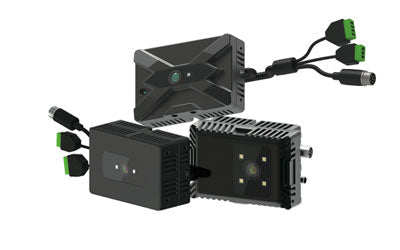
CS30 RGBD Camera
-
Price: USD 299 (shipping included)
-
Lead Time: 1 week
-
Advantages: Cost-effective, ultra-wide field of view (100° horizontal × 75° vertical), lightweight design
-
Limitations: Indoor use only, rolling-shutter RGB sensor
The CS30 is ideal for budget-conscious projects requiring a wide field of view.
X-D500 Depth Camera
-
Price: USD 549 (shipping included)
-
Lead Time: 1–2 weeks
-
Advantages: Industrial-grade design, aviation connector interface, suitable for outdoor applications
-
Limitations: Rolling-shutter RGB sensor
The X-D500 is designed for industrial and outdoor scenarios where reliability and environmental robustness are essential.
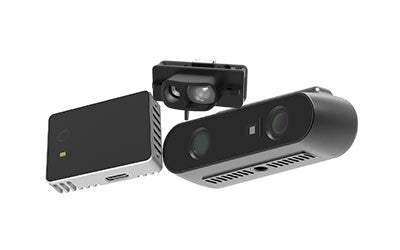
Okulo C1 RGBD Camera
-
Price: USD 699 (shipping included)
-
Lead Time: 2–3 weeks
-
Advantages: VGA resolution at 30 FPS, wide field of view, integrated IMU
-
Limitations: Rolling-shutter RGB sensor
The Okulo C1 is well suited for robotics and intelligent systems that demand higher frame rates, motion tracking, and advanced 3D vision performance.
Conclusion
The CS30, X-D500, and Okulo C1 RGBD cameras each offer distinct strengths in terms of cost, performance, and application scenarios. The final choice should be based on a comprehensive evaluation of project budget, operating environment, accuracy requirements, and system integration needs.
As 3D vision and depth-sensing technologies continue to evolve, RGBD cameras have become an essential component of modern computer vision systems—providing a solid foundation for intelligent robotics, immersive AR experiences, and advanced perception systems.
Explore Options in Our Depth-Sensor Store
CS30:
- Cost: 299 USD (Shipping included)
- Lead time: 1 week
- Pros: Cost-effective, Large field of view (H100*V75), Lightweight
- Cons: Limited to indoor applications, Utilizes a rolling shutter RGB system

- Cost: 549 USD (Shipping included)
- Lead time: 1-2 weeks
- Pros: Industrial design with aviation plug, Suitable for outdoor applications
- Cons: Utilizes a rolling shutter RGB system

- Cost: 699 USD (Shipping included)
- Lead time: 2-3 weeks
- Pros: VGA resolution at High frames(30fps), Big Depth and RGB FoV, IMU integrated
- Cons: Utilizes a rolling shutter RGB system

In evaluating the CS30, X-D500, Okulo C1 depth sensors and other depth cameras, it's evident that each device offers a unique set of features catering to specific needs and applications.
The CS30, priced at 299 USD, stands out for its cost-effectiveness, large field of view (H100*V75), and lightweight design. While it is limited to indoor applications and utilizes a rolling shutter RGB system, its affordability and versatile field of view make it a compelling option for various projects.
The X-D500, priced at 549 USD, presents an industrial design with an aviation plug, making it suitable for outdoor applications. Despite also employing a rolling shutter RGB system, its robust construction and adaptability to outdoor environments make it an attractive choice for scenarios requiring durability and resilience.
For those seeking a higher resolution and advanced features, the Okulo C1, priced at 699 USD, offers VGA resolution at high frames (30fps), a generous depth and RGB field of view, and an integrated Inertial Measurement Unit (IMU). While it shares the rolling shutter RGB system limitation, its enhanced capabilities make it well-suited for applications demanding superior image quality and motion tracking.
Ultimately, the choice among the CS30, X-D500, and Okulo C1 depends on the specific requirements of the project, including budget constraints, environmental conditions, and desired features. As technology continues to evolve, these depth sensors exemplify the ongoing innovation in the field, providing users with a range of options to meet diverse needs in computer vision and robotics applications.
