

How ToF 3D Sensing Boosts AGV & AMR Warehouse Efficiency and Safety
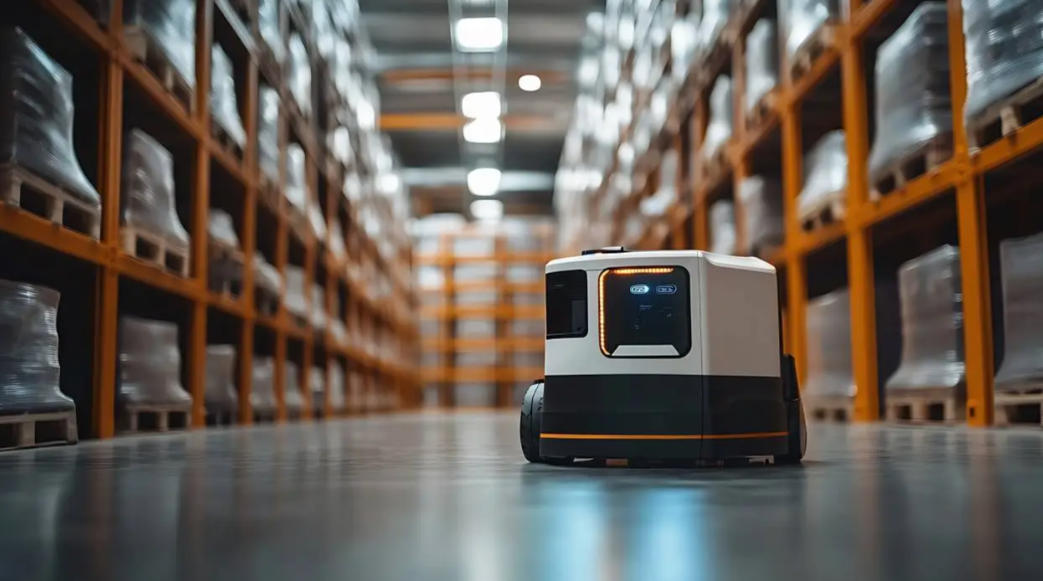
How Can ToF Technology Improve Navigation, Obstacle Avoidance, and Efficiency for Smart Warehouse Robots?
ToF Depth Sensing Drives AGV/AMR Intelligence Upgrade
With the rapid development of smart warehousing, intelligent logistics, and Industry 4.0 globally and in China, mobile warehousing and material handling robots (including AGVs, AMRs, and autonomous forklifts) have become core equipment in modern logistics systems.
In complex, dynamic, and high-density warehouse environments, robots face increasing demands for environmental perception accuracy, intelligent decision-making, and collaborative efficiency, where ToF (Time-of-Flight) 3D depth sensing technology is gradually becoming a key technological enabler.
What is a ToF (Time-of-Flight) Technology?
TOF (Time-of-Flight) technology is an active 3D ranging and perception technology. It emits modulated light (typically infrared) toward a target and measures the time it takes for the light to travel to the target and back or the phase difference, thereby calculating the actual distance between the sensor and the object.
Using ToF technology, sensors can directly generate high-precision depth maps and 3D point clouds without relying on ambient light or object textures. Key features include:
-
High precision: millimeter to centimeter-level distance measurement
-
Real-time performance: outputs high-frame-rate depth data, supporting dynamic scene perception
-
Strong environmental adaptability: stable operation under strong light, weak light, or even no light
-
Structured data output: depth information aligns naturally with image coordinates, making it ideal for AI algorithms
As a result, ToF technology is widely used in intelligent logistics (e.g., forklift pallet recognition), robot navigation, industrial automation, consumer electronics (face and gesture recognition), and 3D imaging and measurement where reliable spatial perception is required.

1. Intelligence and Automation: ToF Depth Sensing Strengthens Core Capabilities
With the continuous development of smart logistics and automated warehousing, mobile robots are evolving from 'passive execution tools' to intelligent systems with environmental understanding and autonomous decision-making. In this process, highly reliable 3D perception becomes the core foundation determining system performance, and ToF depth sensing technology is playing an increasingly critical role.
1. Continuous Upgrade of Autonomous Navigation and Obstacle Avoidance
Traditional AGVs often rely on magnetic strips, QR codes, or preset routes, with limited flexibility and environmental adaptability. Today, mobile warehouse robots are rapidly evolving into AMRs (Autonomous Mobile Robots), whose core capabilities lie in real-time perception, dynamic judgment, and autonomous planning.
By integrating ToF depth cameras, LiDAR, IMU sensors, and AI algorithms, AGVs/AMRs can achieve:
-
High-precision 3D environment modeling and spatial understanding
-
Real-time detection and avoidance of dynamic obstacles such as pedestrians, forklifts, and pallets
-
Autonomous navigation and path replanning across multiple zones and scenarios
-
Continuous, stable operation in unknown or changing environments
In this context, ToF depth cameras excel in near-range perception and fine obstacle detection. Unlike LiDAR, which is more suited for mid- to long-range contour sensing, ToF captures low obstacles, edge details, and height variations, making it particularly valuable in dense shelving, narrow aisles, and mixed human-robot warehouse environments.
2. ToF Technology Significantly Enhances Visual Recognition Stability and Reliability
In real warehouses, lighting conditions are complex and variable, and the shape and placement of goods are highly unpredictable.
Traditional 2D vision systems, which rely on color, texture, and edge features, often encounter misidentification in situations such as:
-
Strong light, backlight, or partial shadows
-
Low-texture goods or items with colors similar to the floor
-
Stacked, occluded goods or cluttered backgrounds
In contrast, ToF depth sensing technology measures the actual spatial distance directly, effectively avoiding these problems:
-
Independent of ambient lighting, stable operation under strong, weak, or no light
-
Accurate measurement of object height, volume, contours, and spatial structure
-
Depth data is physically constrained, significantly reducing false positives and missed detections
-
Provides AI algorithms with cleaner and more interpretable input data
Thus, ToF is becoming a key component of warehouse robot vision and 3D perception systems, providing a reliable foundation for tasks such as gripping, obstacle avoidance, alignment, and path planning.
Whether for autonomous navigation, intelligent obstacle avoidance, or stable visual recognition and spatial understanding, ToF depth sensing continually strengthens the core capabilities of intelligent logistics equipment. With declining sensor costs, mature algorithms, and enhanced computing power, ToF will increasingly integrate with LiDAR, vision, and AI to help mobile robots evolve from “usable” to reliable, high-performance, and scalable solutions.

2. 1 Adapting to Complex and Narrow Spaces, Maximizing Storage Density
To improve warehouse space utilization, modern warehouses commonly adopt high-density shelving, narrow aisles, and vertical storage layouts, placing higher demands on the maneuverability and perception accuracy of mobile robots.
AGVs/AMRs equipped with Mecanum wheels and ToF depth sensing can achieve:
-
Omnidirectional movement with centimeter-level precise positioning, allowing flexible posture adjustment in tight spaces
-
Safe and stable obstacle avoidance in narrow aisles and high-density shelving environments
-
Accurate recognition of shelf columns, beams, and storage boundaries for high-precision docking and alignment
-
Reduced reliance on fixed guidance infrastructure, enhancing system deployment flexibility
Notably, ToF depth cameras offer high-resolution and high-precision spatial perception within 0–2 meters, accurately capturing edges, gaps, and height variations—an essential foundation for flexible mobility, precise manipulation, and safe navigation.
2. Accurate Cargo Positioning and Intelligent Handling to Improve Operational Efficiency
In a flexible warehouse system, robots need not only to “move” but also to “handle accurately and place securely.”
By combining ToF depth cameras with AI algorithms, mobile robots can achieve fine 3D perception and intelligent decision-making:
-
Precisely identifying cargo position, orientation, and spatial posture, reducing pick-and-place errors
-
Real-time assessment of stack height, volume, and overload risks, ensuring operational safety
-
Compatibility with various cargo sizes, shapes, and placement methods, minimizing human intervention
-
Support for automated transport, intelligent sorting, shelving, and precise alignment tasks
Compared with traditional 2D vision solutions, ToF provides real depth information that significantly reduces misdetection and environmental dependency, enabling stable performance in complex backgrounds, occluded cargo, or varying lighting conditions.
This capability is critical for intelligent warehouse robots, driverless forklifts, automated picking systems, and flexible production line logistics, forming the technical foundation for high efficiency and reliability.
By integrating ToF depth sensing, flexible warehouse systems achieve substantial improvements in space utilization, operational precision, and operational safety.
ToF not only enhances robots’ 'vision' but directly drives their ability to move stably, handle accurately, and operate durably.
With the continued growth of flexible manufacturing and intelligent logistics demands, ToF + AI + multi-sensor fusion is becoming a standard configuration for high-density storage and intelligent handling systems, accelerating warehouse automation toward higher efficiency and adaptability.
3. Multi-Robot Collaboration and Intelligent Scheduling: ToF as a Reliable Perception Foundation
In large-scale warehouse systems, multi-robot collaboration has become a core method for improving efficiency.
Through ToF depth sensing + intelligent scheduling algorithms, the system can:
-
Acquire real-time spatial information around robots
-
Dynamically adjust paths to avoid congestion and conflicts
-
Build efficient task collaboration models
Reliable 3D perception data is fundamental to successful multi-AGV/AMR coordination and scheduling.

4. 5G + ToF: Driving Real-Time Upgrades in Intelligent Warehousing
In the era of intelligent logistics and Industry 4.0, real-time perception and fast decision-making are key competitive advantages for flexible warehouse systems. Through the integration of 5G networks and ToF depth cameras, mobile robots, driverless forklifts, and automated picking systems are moving toward high real-time performance, high reliability, and advanced intelligence.
1. 5G Accelerates Data Transmission and Decision-Making
With the deployment of 5G networks in smart factories and warehouses, high-density 3D point clouds and depth maps generated by ToF cameras can benefit from:
-
Low-latency transmission: Millisecond-level 5G latency ensures near-zero perception delay for movement, obstacle avoidance, and pallet handling
-
Real-time cloud analysis: Fast cloud computation for pallet recognition, cargo sorting, and path planning enables multi-robot collaborative operations
-
Edge-cloud computing collaboration: High-frequency tasks processed locally at edge devices, global scheduling handled by the cloud, achieving distributed intelligence and scalable expansion
-
Large-scale data support: Enabling tens to hundreds of robots in a warehouse to simultaneously upload and share ToF data
With 5G, flexible warehouse systems can maintain high-speed, stable responses in complex, dynamic environments, significantly improving operational efficiency and system reliability.
2. ToF + Edge AI: Enabling Local Intelligence and Autonomous Decision-Making
With enhanced edge computing capabilities and optimized integration of ToF modules, mobile robots can perform most perception and decision-making tasks locally, without relying entirely on central servers:
-
Local AI inference: Real-time processing of depth maps and point clouds for rapid recognition of cargo, pallets, and obstacles
-
Autonomous obstacle avoidance and path planning: Quickly adjusting movement paths in dynamic environments to reduce collision and congestion risks
-
Real-time task feedback: Instant assessment of cargo stack height, pallet posture, and handling feasibility
-
Reduced network dependency and latency: Critical tasks handled at the edge, while the cloud manages global optimization, enhancing system fault tolerance
This ToF + Edge AI architecture enables robots to perceive nearby spaces precisely while supporting global coordination and task optimization—becoming the mainstream solution for high-density, flexible warehouse systems.
3. Collaborative Advantages: 5G + ToF + Edge AI in Practice
-
Multi-robot collaboration: AGVs/AMRs share real-time depth data to coordinate cargo handling and obstacle avoidance, improving throughput
-
Remote monitoring and scheduling: Operations centers receive real-time 3D data via 5G for global warehouse management and exception handling
-
Dynamic flexible warehousing: Supporting on-the-fly adjustment of shelf layouts, aisle widths, and operational strategies without downtime
-
High operational safety: Real-time perception and AI decision-making reduce collisions, cargo damage, and human-robot conflict risks
By combining 5G’s low-latency, high-bandwidth transmission + ToF’s high-precision 3D perception + Edge AI’s immediate decision-making, flexible warehouse systems improve operational efficiency and space utilization, while achieving intelligence, automation, and high reliability.
5. Human-Robot Collaboration and Safety: ToF as a Key Sensor
In human-robot mixed warehouse environments, safety is paramount.
ToF depth sensing enables:
-
Real-time monitoring of human-robot distances
-
Dynamic safety zone allocation
-
Collision risk warnings and speed reduction/emergency stops
Compared with traditional sensors, ToF offers higher reliability in close-range human detection and posture perception.
6. Continuous Operation and Structural Optimization: ToF Enhances System Stability
With the miniaturization and low-power characteristics of ToF sensors, their advantages are further highlighted:
-
Compact design for easy robot integration
-
Low power consumption, extending robot runtime
-
High reliability, suitable for 24/7 continuous operation
This provides a solid foundation for long-term stable operation of mobile warehouse robots.
7. Future Trends: ToF Sets the New Standard for Mobile Warehouse Robots
Overall, the future development of mobile warehouse robots focuses on:
-
Stronger intelligent perception capabilities
-
Higher system coordination efficiency
-
Safer human-robot coexistence environments
In this process, Time-of-Flight (ToF) depth sensing technology, with its high precision, stability, and AI-friendly features, is gradually becoming a core sensor for AGVs, AMRs, driverless forklifts, and intelligent warehouse robots.
Conclusion
Against the backdrop of global and Chinese intelligent logistics upgrades, ToF depth sensing technology is reshaping the perception systems of mobile warehouse robots. By deeply integrating with AI, 5G, IoT, and other technologies, ToF not only enhances robot perception in complex environments but also provides a solid foundation for intelligent scheduling, human-robot collaboration, and efficient operations.
In the future, as technology matures and costs decrease, ToF will evolve from a 'high-end feature' to an 'industry standard', continuously driving intelligent warehousing and logistics automation to higher levels.
Synexens Industrial Outdoor 4m TOF Sensor Depth 3D Camera Rangefinder_CS40p

After-sales Support:
Our professional technical team specializing in 3D camera ranging is ready to assist you at any time. Whether you encounter any issues with your TOF camera after purchase or need clarification on TOF technology, feel free to contact us anytime. We are committed to providing high-quality technical after-sales service and user experience, ensuring your peace of mind in both shopping and using our products.
