

Fourier Intelligence GR-3 Humanoid Robot at WAIC 2026 | Embodied AI
- 投稿者LidarSensor
How Is Fourier Intelligence GR-3 Humanoid Robot Driving the Future of Embodied AI?
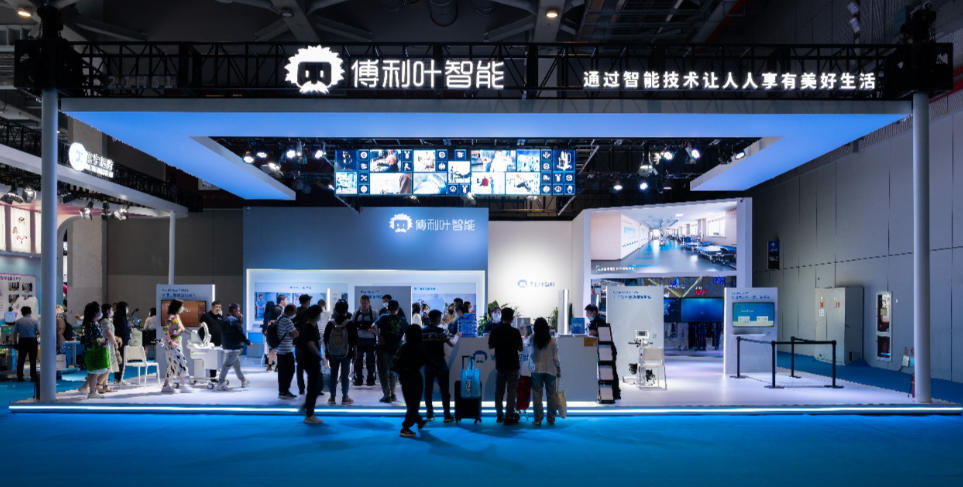
With the rapid development of artificial intelligence (AI), robotics, and smart manufacturing, embodied AI robots (Embodied AI Robot) are becoming a major competitive frontier in the global technology industry. During the 2026 World Artificial Intelligence Conference (WAIC 2026), Fourier Intelligence showcased a range of advanced robotic products, highlighting its latest achievements in humanoid robots, rehabilitation robots, intelligent service robots, and multi-robot collaborative embodied intelligence systems. As one of the leading intelligent robotics companies, Fourier Intelligence has long focused on humanoid robot development, general-purpose robotics technology, AI robot motion control, and rehabilitation robot solutions. By integrating artificial intelligence, large-scale AI models, robotic control algorithms, and intelligent hardware, the company is accelerating the transition of robots from research environments into real-world applications.
What Is Fourier Intelligence? Exploring the Future of Embodied Intelligent Robots
Fourier Intelligence is committed to advancing the commercialization of robotics technology, with solutions covering intelligent rehabilitation robots, humanoid robots, industrial assist robots, robotic operating systems, and embodied intelligence platforms. As artificial intelligence enters the era of embodied intelligence, robots are evolving from traditional automation equipment into intelligent entities capable of understanding environments, making decisions, and performing complex tasks.
By combining technologies such as AI foundation models, robot vision, natural language interaction, autonomous motion planning, and reinforcement learning, Fourier Intelligence is developing the next generation of general-purpose humanoid robots. These innovations are expected to accelerate the adoption of robots in areas including home assistance, elderly care, industrial manufacturing, and commercial services.

WAIC 2026: Fourier Intelligence Showcases Multiple Robotic Innovations
At WAIC 2026, Fourier Intelligence presented a series of cutting-edge robotic innovations centered around 'Embodied Intelligence + Robotics Applications', including the GR-3 Humanoid Robot, GRW Heavy-Duty Wheeled Dual-Arm Robot, GR Series “Cat-Head” Robot Family, and semantic model-driven multi-robot autonomous closed-loop embodied intelligence system.
These products cover a complete robotics ecosystem ranging from general-purpose humanoid robots and intelligent service robots to industry-specific robotic solutions. The showcase demonstrated Fourier Intelligence’s strong capabilities in robot hardware development, artificial intelligence algorithms, motion control technology, robotic perception, and intelligent interaction systems.
As an important contributor to the embodied intelligence industry, Fourier Intelligence focuses not only on whether robots can move, but also on whether they can understand, learn, and independently complete tasks. By integrating AI foundation models, robot vision, natural language interaction, intelligent decision-making algorithms, and high-performance motion control systems, Fourier Intelligence is driving robots beyond traditional automation toward intelligent systems capable of understanding and interacting with the real world.
Among the showcased products, the GR-3 Humanoid Robot is one of Fourier Intelligence’s key platforms for the future era of general-purpose robotics. Unlike traditional industrial robots that only perform repetitive tasks based on fixed programming, GR-3 integrates AI semantic understanding models, multimodal perception systems, high-precision motion control algorithms, autonomous task planning technologies, and intelligent decision-making capabilities. This enables the robot to naturally understand user commands and autonomously complete complex tasks according to changing environments.
By combining large language models (LLMs) with robotic control systems, GR-3 delivers a more advanced human-robot interaction experience. For example, in home, commercial service, or industrial assistance scenarios, users can issue commands through natural language. The robot can understand instructions, analyze surrounding environments through visual perception, determine task objectives, plan movement paths, and complete continuous operations autonomously.
This ability to move from 'receiving commands' to 'understanding needs and independently executing tasks' represents one of the key differences between embodied AI robots (Embodied AI Robot) and traditional robotic systems.
In addition, GR-3 features optimized humanoid design with flexible joint structures, high-performance actuators, and advanced motion control algorithms, improving stability and adaptability in complex environments. In the future, general-purpose humanoid robots are expected to be widely used in smart manufacturing, elderly care, home services, commercial reception, education, hazardous environment operations, and AI assistant applications, becoming a critical bridge between artificial intelligence and the physical world.
The appearance of Fourier Intelligence at WAIC 2026 further highlights the company’s vision for the future of robotics. As AI foundation models, robot vision, and autonomous control technologies continue to advance, humanoid robots will gradually move from laboratories into real-world environments, taking on more roles in assistance, collaboration, and intelligent services, driving the evolution of AI robots.
Semantic Model-Driven Multi-Robot Collaboration: Advancing Robot Intelligence
At WAIC 2026, Fourier Intelligence also introduced a semantic model-driven multi-robot autonomous closed-loop embodied intelligence demonstration. By integrating AI foundation models, robotic control systems, and multi-robot collaboration technologies, the system enables multiple robots to perform task allocation, environmental understanding, and coordinated execution.
Compared with traditional automation equipment, multi-robot collaboration systems offer greater flexibility and can be applied in areas such as smart warehousing and logistics, smart factories, industrial automation, commercial services, and elderly care. As robotic intelligence continues to improve, multi-robot collaboration will become an important foundation for smart manufacturing and future intelligent factories.
GRW Dual-Arm Robot: Designed for Elderly Care and Industrial Assistance
In addition to humanoid robots, Fourier Intelligence introduced its first heavy-duty wheeled dual-arm robot — the GRW Robot. Featuring a wheeled mobile platform combined with dual robotic arms, GRW provides stronger load capacity, more stable mobility, and flexible operation capabilities, making it suitable for elderly care and industrial assistance applications.
In the field of intelligent elderly care robots, GRW can assist with object transportation, daily support tasks, human-robot interaction, and rehabilitation services, improving the efficiency of elderly care solutions.
In industrial environments, GRW can support applications such as material handling, workstation assistance, warehouse logistics, and repetitive task execution, becoming an important form of future AI robot assistants.
GR Series 'Cat-Head' Robots: Creating More Natural Human-Robot Interaction
Besides large humanoid robots, Fourier Intelligence also showcased the GR Series 'Cat-Head' robot family. With a more approachable design concept, these robots combine intelligent voice interaction, emotional expression, AI companionship features, and smart control systems to deliver a more natural human-robot interaction experience.
In the future, small intelligent robots are expected to play important roles in home companionship, educational robotics, commercial services, and smart living spaces.

Core Technologies Behind Fourier Intelligence Robots
Fourier Intelligence robots are powered by multiple advanced technologies. First, in humanoid robot motion control, the company utilizes robot dynamics algorithms, joint control technologies, and motion planning systems to achieve balance control, flexible movement, and complex action execution.
Second, in AI visual perception, robots integrate RGB cameras, depth sensors, 3D perception technologies, and AI vision algorithms to recognize human actions, object locations, and environmental changes, enabling autonomous operations.
Furthermore, embodied intelligence foundation models represent a critical direction for future robotics development. Through large-scale AI models, robots can understand language, learn tasks, plan actions, and adapt to complex environments, transforming robots from simple execution machines into intelligent partners.
Expanding Applications of Fourier Intelligence Robots
As robotics technology continues to mature, Fourier Intelligence is exploring broader application scenarios. In smart elderly care, robots can provide assistance, rehabilitation support, and daily living services. In smart manufacturing, robots can help enterprises improve automation efficiency and accelerate smart factory transformation. In commercial environments, robots can be deployed in hotels, shopping malls, exhibition halls, and office spaces to provide intelligent services.
By covering multiple fields including elderly care robots, industrial robots, service robots, AI robot assistants, and humanoid robots, Fourier Intelligence is accelerating the development of the global robotics industry.
The Era of Embodied Intelligence: Fourier Intelligence Driving the Future of Robotics
With the rapid progress of ChatGPT, large language models, and artificial intelligence algorithms, the robotics industry is entering a new era of intelligent transformation. Future robots will no longer be simple mechanical devices, but intelligent entities with perception, reasoning, learning, and action capabilities.
Through its GR Series humanoid robots, GRW dual-arm robot, and embodied intelligence systems, Fourier Intelligence is helping transform robots from 'automation tools' into 'intelligent partners.' The company’s presence at WAIC 2026 further demonstrates that embodied intelligence robots (Embodied Intelligence Robot) have become one of the core directions shaping the future of artificial intelligence development.
