

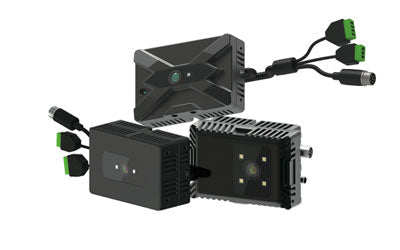
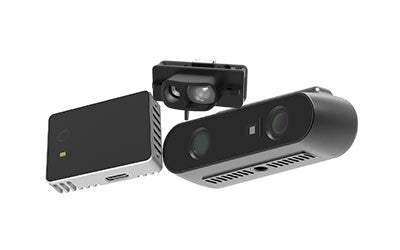
3D M Series ToF Camera for Industrial 3D Vision & Depth Sensing
- 投稿者TofSensor
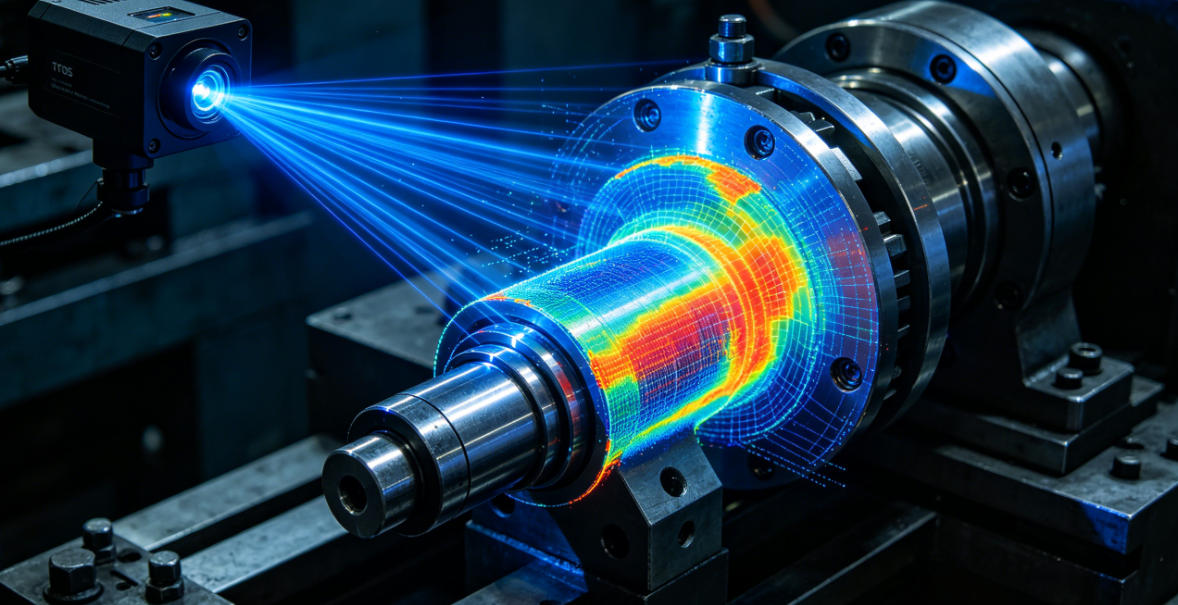
What is the 3D M Series ToF Camera and How Does It Work in Industrial 3D Vision?
With the rapid development of smart manufacturing, robotics vision, and industrial automation, the 3D M Series (M Series ToF depth camera) has become a core sensing device in next-generation industrial 3D vision systems. Based on the Time-of-Flight (ToF) principle, this high-performance depth camera can reliably output high-precision 3D data in complex industrial environments, enabling machines with true spatial understanding.
Unlike traditional 2D industrial cameras, modern camera for 3d systems (3D vision cameras) not only capture images but also directly measure object distance, spatial structure, and geometry, enabling real 3D perception and intelligent decision-making.
What is the 3D M Series ToF Camera?
The 3D M Series ToF Camera is an industrial-grade high-precision depth imaging device and a next-generation core sensor for 3D vision and spatial perception. It is based on ToF (Time-of-Flight) technology, which actively emits modulated infrared light and calculates the time difference between emission, reflection from the object surface, and return to the sensor to precisely obtain distance information for each pixel.
Unlike traditional 2D industrial cameras, this device does not only capture images—it directly outputs 3D spatial structure data. In other words, it not only tells you 'what is seen,' but also 'where it is, how far it is, and what shape it has,' enabling true spatial intelligence. Therefore, it is widely recognized as a high-performance camera for 3d solution.
In practical output, the 3D M Series generates multiple types of data that together form a complete visual information system, including Depth Map, IR Image, RGB Image, 3D Point Cloud, and fused RGB-D data. These data complement each other, enabling both visual recognition and spatial measurement capabilities.
Among them, 3d m series images refer to this fused structured visual dataset. It is not a single image but a multi-dimensional data output containing color, depth, and spatial coordinates. This type of data can be directly used for AI processing, robotics control, and industrial inspection tasks such as object detection, pose estimation, volume measurement, and defect analysis.
Because of its combined 'image + depth + spatial structure' capability, 3d m series images are highly valuable in industrial automation and smart manufacturing. Robots can use them for precise grasping and obstacle avoidance, vision systems can perform accurate dimensional measurement and 3D reconstruction, and AI models can be trained and inferred based on this data, significantly improving system intelligence.
Overall, the 3D M Series ToF Camera transforms traditional 2D vision into 3D spatial perception, enabling machines to truly understand real-world structures and becoming a critical component of modern industrial vision systems.

Core Technical Principles of the 3D M Series
The core of the 3D M Series ToF Camera is a complete industrial-grade depth sensing system built around high-precision spatial ranging and real-time 3D reconstruction. It is not a single-sensor function but a combination of optical modulation, time measurement, signal processing, and 3D modeling algorithms. Therefore, in industrial applications, it is widely regarded as a key component of high-performance camera for 3d systems.
1. ToF Time-of-Flight Ranging Technology
The foundation of the M Series is ToF technology, which measures distance by emitting modulated infrared light. After the light hits an object and reflects back to the sensor, the system calculates the time difference and converts it into depth values for each pixel.
The process can be described as:
- Emit modulated infrared light signal
- Light propagates and illuminates the object surface
- Reflected light returns to the sensor
- System calculates flight time difference and converts it into depth value
- Pixel-by-pixel generation of depth map and 3D reconstruction
Because light travels extremely fast, this process is completed within microseconds or even nanoseconds, enabling real-time 3D spatial reconstruction.
Compared to stereo vision or structured light systems, ToF offers better stability and resistance to environmental interference, especially in dynamic or complex lighting conditions, making it one of the mainstream technologies in industrial 3D vision systems.
2. High-Density 3D Point Cloud Generation
After depth calculation, the 3D M Series converts depth data into structured 3D point cloud data, forming a complete spatial model.
This point cloud is not just a set of distance points but a full spatial representation containing geometric coordinates that describe object shape, contour, and spatial relationships.
Key capabilities include:
- High-density spatial sampling for fine detail capture
- Accurate reconstruction of complex and irregular surfaces
- Support for 3D modeling, reverse engineering, and digital reconstruction
- Direct input for AI algorithms (classification, segmentation, etc.)
In industrial camera for 3d systems, point cloud quality directly impacts algorithm performance. The M Series provides stable and consistent output even in high-speed environments.
3. HDR and Complex Lighting Adaptability
Industrial environments are often far from ideal lighting conditions, including strong reflections, dark materials, shadows, and high-contrast scenes.
The 3D M Series integrates HDR (High Dynamic Range) imaging and signal enhancement algorithms, allowing it to capture both bright and dark details simultaneously within the same frame.
Benefits include:
- Stable depth output on reflective metal surfaces
- Measurable performance on dark or low-reflective objects
- Full depth map integrity under high-contrast lighting
- Reduced noise and missing data in 3D output
Even in complex production environments, the M Series maintains reliable 3D sensing capability.
4. Real-Time 3D Data Output Capability
In industrial automation and robotics, real-time performance is as critical as accuracy. The 3D M Series supports high-frame-rate real-time 3D data output, enabling continuous spatial data streaming in dynamic environments.
Typical applications include:
- High-speed production line inspection
- Real-time robot pick-and-place operations
- Automated sorting systems
- AGV/AMR navigation and obstacle avoidance
In these scenarios, systems require not only accurate perception but also fast response. The M Series enables millisecond-level environmental awareness and decision updates, significantly improving automation efficiency and safety.
Overall, the technical strength of the 3D M Series is not a single feature but the integration of ToF ranging, high-quality point cloud generation, HDR adaptability, and real-time output capability. This multi-dimensional fusion makes it a highly reliable solution for modern industrial camera for 3d systems.

3D M Series Images: Structure and Characteristics
In practical applications, 3d m series images are not single images but multi-layer structured data combinations:
- RGB color images (visual recognition)
- Depth maps (spatial distance)
- IR images (environmental support)
- Point cloud data (3D modeling)
These data are widely used for:
- AI object detection
- Robotics positioning
- 3D reconstruction
- Industrial defect inspection
- Digital twin systems
They are especially valuable in AI training and machine vision applications due to their structured nature.
Camera for 3D Core Application Scenarios
1. Industrial Robotics Vision Systems
Used for object detection, robot grasping, path planning, and assembly guidance.
2. Smart Logistics and Warehouse Automation
Used for pallet detection, volume measurement, and automated sorting.
3. Industrial Inspection and Quality Control
Used for dimensional measurement, defect detection, and 3D analysis.
4. Smart Manufacturing Production Lines
Used for real-time monitoring, automation, and process tracking.
5. AI Vision and Machine Learning Systems
Used for 3D model training, point cloud segmentation, and multi-modal AI systems.
Why Choose the 3D M Series as a Camera for 3D Solution?
Compared to stereo vision or structured light systems, the M Series offers clear advantages:
- ✔ Higher depth stability (native ToF advantage)
- ✔ Strong environmental adaptability
- ✔ Real-time 3D output capability
- ✔ RGB-D data fusion support
- ✔ Industrial-grade reliability
- ✔ Better performance in dynamic scenes
Therefore, it has become one of the mainstream solutions in industrial camera for 3d systems.
Conclusion
The 3D M Series ToF Camera is driving industrial vision from 2D image recognition toward true 3D spatial understanding. With ToF depth sensing and RGB-D fusion capabilities, it generates high-precision 3D data including 3d m series images, widely used in robotics, smart manufacturing, logistics automation, and industrial inspection.
As AI and 3D vision continue to converge, camera for 3d systems will become a standard configuration in future smart factories, and the M Series will play an increasingly important role in this evolution.
3D Safe Guarding Privacy RGBD Camera Synexens CS30

After-sales Support:
Our professional technical team specializing in 3D camera ranging is ready to assist you at any time. Whether you encounter any issues with your TOF camera after purchase or need clarification on TOF technology, feel free to contact us anytime. We are committed to providing high-quality technical after-sales service and user experience, ensuring your peace of mind in both shopping and using our products.
