
website
(852)56489966
7*12 時間の専門技術サポート

Arduino Laser Distance Sensor Guide: Setup, Uses & LiDAR Projects
Arduino Laser Distance Sensor Guide: Setup, Uses & LiDAR Projects

How Does an Arduino Laser Distance Sensor Work and How Can You Use It?


With the rapid development of robotics, automation, IoT devices, and smart hardware, Arduino laser distance sensor technology has become increasingly popular among engineers, makers, and developers. By combining precise laser measurement technology with the flexible Arduino platform, users can easily build intelligent projects that require accurate distance detection, object positioning, and real-time measurement.

Many developers search for solutions such as laser distance sensor Arduino, Arduino laser sensor module, or Arduino laser range finder when building robotics and automation projects. Compared with traditional ultrasonic sensors and infrared sensors, laser-based distance measurement provides higher accuracy, faster response speed, and stronger resistance to environmental interference.

So, what is an Arduino laser distance sensor? How do you connect a laser distance sensor to Arduino? What projects can you build with an Arduino laser sensor?

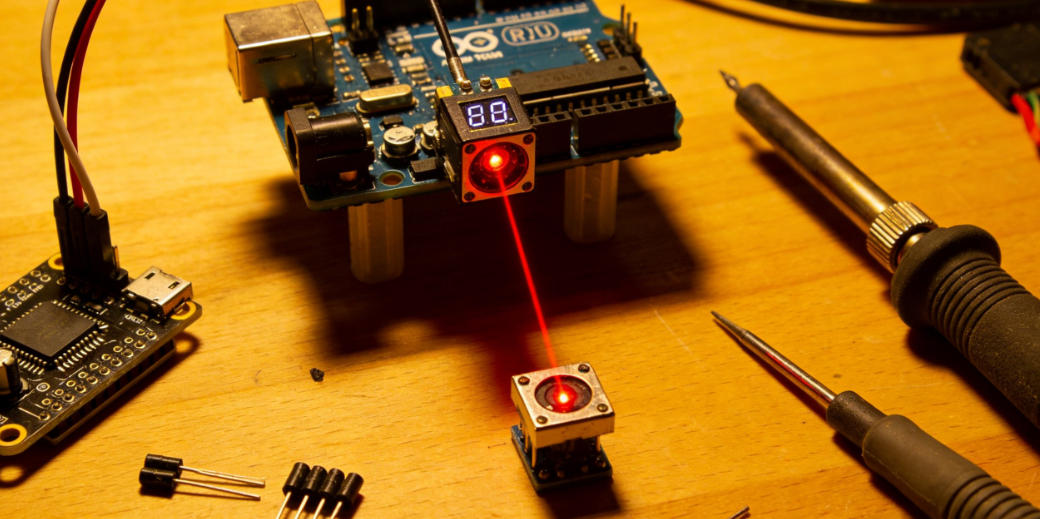
An Arduino laser distance sensor is a sensor module that combines laser ranging technology with an Arduino microcontroller board. The sensor emits a laser beam toward an object, receives the reflected signal, and calculates the distance between the sensor and target through advanced measurement algorithms.

The measured distance data can then be transferred to Arduino boards such as:

  • Arduino Uno
  • Arduino Nano
  • Arduino Mega
  • Arduino Leonardo

through communication interfaces including:

  • I2C
  • UART
  • SPI
  • Analog output
  • Digital trigger signals

This makes Arduino laser distance sensors widely used in:

  • Robot obstacle avoidance
  • Autonomous mobile robots
  • Smart home devices
  • Industrial automation prototypes
  • Drone altitude measurement
  • Warehouse monitoring systems
  • DIY maker projects

Unlike simple proximity sensors, a laser distance sensor can provide accurate distance information instead of only detecting whether an object exists.

In short, an Arduino laser distance sensor combines laser measurement technology with easy Arduino integration, making it an ideal solution for developing intelligent sensing systems.


How Does an Arduino Laser Distance Sensor Work?

An Arduino laser distance sensor works by emitting laser light toward a target and analyzing the returned signal. According to different measurement principles, laser distance sensors can be divided into several categories, including Time-of-Flight (ToF), phase-shift measurement, and laser triangulation.

Each technology has different advantages depending on measurement range, accuracy requirements, and application scenarios.

1. Time-of-Flight (ToF) Laser Distance Sensor

ToF laser sensors are among the most popular solutions for Arduino projects.

The working principle is based on measuring the time required for a laser pulse to travel to the target and return to the sensor.

The formula is:

Distance = (Speed of Light × Travel Time) / 2

Because light travels at a constant speed, the sensor can calculate the distance accurately by measuring the flight time.

Advantages of ToF laser sensors:

  • Fast response speed
  • High measurement accuracy
  • Compact size
  • Low power consumption
  • Easy Arduino integration

Common applications include:

  • Arduino robot obstacle avoidance
  • Small autonomous robots
  • Smart home devices
  • UAV altitude detection
  • IoT distance monitoring

Popular ToF modules include:

  • VL53L0X
  • VL53L1X
  • Other compact ToF laser ranging modules

These modules are widely used because they support simple communication protocols such as I2C and can be directly connected to Arduino development boards.

Arduino Laser Distance Sensor Guide: Setup, Uses & LiDAR Projects

2. Phase-Shift Laser Distance Measurement

Phase-shift measurement uses a continuously modulated laser signal. The sensor compares the phase difference between the emitted and reflected laser signals to calculate distance.

This method provides excellent accuracy and stability, making it suitable for more advanced applications.

Main advantages:

  • High measurement precision
  • Stable long-term operation
  • Strong anti-interference capability

Typical applications:

  • Industrial measurement systems
  • Robot positioning
  • Precision manufacturing
  • Laboratory measurement equipment

Compared with basic Arduino distance sensors, phase-based laser measurement systems are usually used in professional applications requiring higher accuracy.

3. Laser Triangulation Sensor

Laser triangulation determines distance by analyzing the geometric relationship between:

  • Laser emitter
  • Target reflection point
  • Optical receiver

The reflected laser position changes according to object distance, allowing the sensor to calculate the measurement result.

Advantages:

  • High accuracy at short distances
  • Fast response
  • Simple structure

Common applications:

  • Small robot navigation
  • Object detection
  • Surface inspection
  • Precision assembly

For close-range laser proximity sensor Arduino projects, triangulation sensors are often a practical choice.


Popular Arduino Laser Distance Sensor Modules

When building an Arduino laser distance measurement project, choosing the right sensor module is one of the most important steps. Different laser sensors provide different measurement ranges, accuracy levels, communication methods, and power requirements.

The best laser distance sensor for Arduino depends on the specific application, such as robotics, automation, IoT devices, or precision measurement.

1. VL53L0X ToF Laser Distance Sensor

The VL53L0X ToF sensor is one of the most widely used laser distance sensor modules for Arduino projects. It uses Time-of-Flight technology to measure distance by calculating the travel time of laser pulses.

Key features include:

  • Compact size
  • Low power consumption
  • I2C communication
  • Fast response speed
  • Accurate short-range measurement

Typical applications:

  • Arduino obstacle avoidance robots
  • Smart home devices
  • Gesture detection systems
  • Small automation projects

Because of its simple wiring and easy programming, VL53L0X is often considered one of the best beginner-friendly Arduino laser sensor modules.

2. VL53L1X Long Range ToF Sensor

The VL53L1X is an upgraded ToF laser sensor designed for longer measurement distances and improved performance.

Compared with traditional infrared sensors, it provides:

  • Longer detection range
  • Better ambient light resistance
  • Higher measurement stability
  • Adjustable measurement zones

This makes it suitable for:

  • Arduino robot navigation
  • Autonomous vehicles
  • Industrial prototype systems
  • Smart detection devices

For developers looking for an Arduino LiDAR sensor solution, long-range ToF modules provide a good balance between size, cost, and performance.

3. LiDAR Laser Distance Sensor Modules

For more advanced Arduino projects, developers may choose compact Arduino LiDAR sensors.

Unlike simple proximity sensors, LiDAR modules can provide accurate distance measurement over longer ranges by using laser ranging technology.

Typical advantages include:

  • Long measurement distance
  • High accuracy
  • Fast scanning capability
  • Better environmental adaptability

Applications include:

  • Mobile robots
  • Autonomous navigation
  • Drone altitude measurement
  • Mapping systems

An Arduino LiDAR sensor can be combined with motors, cameras, and other sensors to create more intelligent robotic platforms.

4. Industrial Laser Distance Sensor Modules

Some Arduino-based projects require higher measurement accuracy and stronger reliability. In these cases, industrial-grade laser distance sensors can be integrated with Arduino controllers.

These sensors usually offer:

  • Longer working distance
  • Higher measurement precision
  • More stable performance
  • Industrial communication interfaces

They are commonly used for:

  • Factory automation prototypes
  • Conveyor monitoring
  • Position detection
  • Machine control systems

Although industrial laser sensors may be more expensive, they provide better performance for demanding applications.


How to Connect a Laser Distance Sensor to Arduino?

One of the most common questions from developers is:

How do you connect a laser distance sensor to Arduino?

Most Arduino laser distance sensor modules use simple communication protocols, especially I2C and UART, making integration straightforward.

Arduino Laser Sensor Wiring Using I2C

Many ToF laser sensors use I2C communication.

Typical connection:

Laser Sensor → Arduino

  • VCC → 5V or 3.3V
  • GND → GND
  • SDA → Arduino SDA pin
  • SCL → Arduino SCL pin

For example, on Arduino Uno:

  • SDA connects to A4
  • SCL connects to A5

After connecting the hardware, developers can use Arduino libraries to read distance data from the sensor.

Arduino Laser Sensor Wiring Using UART

Some LiDAR modules use UART communication.

Connection:

  • VCC → Power supply
  • GND → Ground
  • TX → Arduino RX
  • RX → Arduino TX

UART-based sensors are commonly used in applications requiring:

  • Longer distance measurement
  • Higher update frequency
  • Stable communication

Examples include:

  • Robot navigation
  • Drone systems
  • Autonomous vehicle prototypes


Arduino Laser Distance Sensor Programming Example

After hardware connection, Arduino needs a program to communicate with the laser sensor and process measurement data.

A typical Arduino laser distance sensor program includes:

  1. Initialize the sensor library
  2. Start communication
  3. Read distance values
  4. Send data through serial output
  5. Use measurement results for control decisions

For example, a robot can use laser distance data to:

  • Detect obstacles
  • Adjust movement direction
  • Maintain safe distance
  • Trigger automatic actions

This is why Arduino laser sensor projects are extremely popular among robotics developers and makers.

Compared with ultrasonic sensors, laser sensors provide several advantages:

  • Higher measurement accuracy
  • Faster response
  • Smaller detection area
  • Better directional measurement

For applications requiring precise object positioning, a laser distance sensor Arduino setup is often a better choice.

Arduino Laser Distance Sensor Guide: Setup, Uses & LiDAR Projects

Arduino Laser Distance Sensor vs Ultrasonic Sensor

Many beginners compare Arduino laser distance sensors with ultrasonic sensors because both can measure distance.

However, their working principles and performance are different.

Laser Distance Sensor Advantages

Higher Accuracy

Laser sensors can achieve much higher precision, especially for short and medium-range measurement.

Narrow Detection Area

The laser beam provides focused measurement, allowing more accurate target identification.

Faster Response

Laser sensors can provide faster distance updates, which is important for moving robots and automation systems.

Better Compact Design

Most ToF laser modules are extremely small, making them suitable for portable devices and embedded applications.

Ultrasonic Sensor Advantages

Ultrasonic sensors still have advantages in certain applications:

  • Lower cost
  • Simple design
  • Good performance in some dark environments

However, they are more affected by:

  • Object material
  • Surface angle
  • Temperature changes
  • Air conditions

For advanced robotics and automation projects, many developers prefer Arduino laser distance sensors because they provide more precise and reliable distance information.


Future Trends of Arduino Laser Sensor Technology

As robotics, artificial intelligence, and IoT technologies continue to develop, Arduino laser distance sensors will become more powerful, smaller, and easier to integrate.

Future developments may include:

  • More compact LiDAR modules
  • Higher-resolution ToF sensors
  • AI-based distance processing
  • Improved outdoor measurement capability
  • Lower-cost professional sensing solutions

The combination of Arduino and advanced laser measurement technology will continue to support innovation in:

  • Educational robotics
  • Smart home devices
  • Autonomous machines
  • Industrial automation
  • IoT applications

For developers, makers, and engineers, learning how to integrate a laser distance sensor with Arduino provides an excellent foundation for building intelligent sensing systems.


Synexens Industrial Outdoor 4m TOF Sensor Depth 3D Camera Rangefinder_CS40


Synexens Industrial Outdoor 4m TOF Sensor Depth 3D Camera Rangefinder_CS40

Conclusion: Why Use an Arduino Laser Distance Sensor?

An Arduino laser distance sensor provides a simple and powerful way to add accurate distance measurement capabilities to electronic projects.

Compared with traditional distance sensors, laser-based solutions offer:

  • Higher measurement accuracy
  • Faster response speed
  • More precise target detection
  • Compact design
  • Easy Arduino integration

Whether you are building an Arduino robot, a smart home device, an IoT project, or an automation prototype, a laser distance sensor can significantly improve system intelligence and reliability.

From beginner-friendly ToF laser sensor Arduino projects to advanced Arduino LiDAR robot navigation systems, laser measurement technology provides developers with more possibilities for creating the next generation of smart devices.

コメントを残す

コメントは公開前に承認が必要です。

何を探していますか?