

ToF Sensors Driving Precision Agriculture and Autonomous Farming
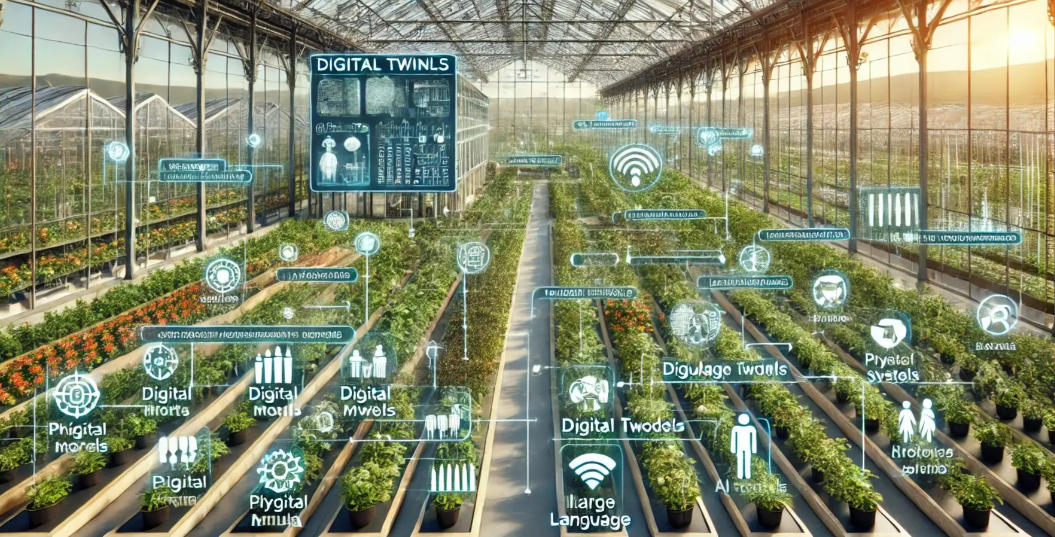
The Role of ToF Technology in Agricultural Automation and Smart Farming
As smart agriculture and precision farming continue to evolve, automation, unmanned operations, and data-driven management have become the core trends of the modern agricultural industry. To achieve efficient and precise crop management, advanced 3D depth sensing technologies, particularly the TOF (Time-of-Flight) sensor, now play a vital role.
This article explores how ToF technology enables automated machinery, crop measurement, row detection, and obstacle avoidance, as well as its challenges and future development potential in agriculture.
What Is a 3D ToF Sensor?
A 3D ToF sensor (3D Time-of-Flight Sensor) is a depth imaging device based on the time-of-flight principle. It emits modulated light (usually near-infrared) and calculates the time taken for the light to travel to an object and back. By measuring this light flight time, the sensor determines the exact distance to each point in the scene, enabling high-precision 3D depth sensing.
How It Works
The fundamental concept of ToF (Time of Flight) technology is 'measure time to get distance.'
When a 3D ToF sensor emits modulated light pulses into a scene, the reflected light returns to the receiver after hitting an object. The system measures the time difference (Δt) between emission and reception to calculate distance:
Distance = (Speed of Light × Flight Time) ÷ 2
This process allows the sensor to generate 3D depth maps and point cloud data in real time, giving machines the ability to “see and understand” spatial structures.

1. The Urgent Need for Depth Sensing in Smart Agriculture
As agriculture becomes more intelligent and data-driven, depth sensing has become an essential component of smart farming. Precision agriculture depends not only on meteorological and soil data but also on real-time, high-accuracy 3D measurements of crops and field environments.
In automated agricultural machinery—such as intelligent tractors, unmanned sprayers, and robotic harvesters—precise information about crop height, canopy density, row spacing, terrain variation, and obstacle locations is crucial. Only through accurate 3D perception can machines operate safely and efficiently, avoiding damage to crops or equipment.
Traditional RGB cameras or ultrasonic sensors often struggle under variable lighting, reflections, or dust, which leads to unreliable distance measurements. By contrast, a 3D ToF sensor can operate stably under strong sunlight, night conditions, or dusty fields, producing high-resolution 3D point cloud data that serve as a reliable foundation for agricultural automation.
When integrated into 3D ToF camera modules or depth-sensing systems, these sensors enable millimeter-level spatial perception and support key agricultural tasks such as:
-
Precision Operation Control – Dynamically adjusting seeding depth, spraying range, or fertilizer volume according to terrain and crop height.
-
Intelligent Obstacle Detection & Avoidance – Identifying and avoiding obstacles to ensure safe machine operation.
-
Crop Growth Monitoring – Measuring canopy structure and plant density for growth analysis and yield forecasting.
-
Autonomous Navigation & Path Planning – Combining GPS with ToF depth data for centimeter-level navigation accuracy.
Moreover, 3D ToF sensing enhances the integration of AI vision recognition and edge computing in modern farming. By combining real-time depth data with machine learning algorithms, agricultural robots can identify targets and make instant decisions—for example, locating and picking ripe fruit in orchards with millimeter precision.
Thanks to continuous improvements in 3D ToF sensor technology, its applications are expanding from open fields to greenhouses, from drones to agricultural robots. High frame rates, wide detection ranges, and strong anti-interference performance make ToF cameras a core component in modern agricultural sensing systems.
Looking ahead, the combination of sensor fusion and cloud-based data analytics will allow ToF cameras to provide more comprehensive environmental awareness and intelligent decision-making capabilities.
In summary, 3D ToF depth sensing is driving agriculture’s transformation from experience-based to data-driven, enabling machines to 'see, understand, and act precisely.' It provides strong technological support for global agricultural sustainability and food security.
2. Key Applications of ToF in Agricultural Automation
With the rise of smart farming and precision agriculture, Time-of-Flight (ToF) 3D vision technology has become an indispensable sensing tool for modern agricultural machinery and robots. Unlike traditional vision or ultrasonic systems, the ToF 3D camera measures distance by emitting and detecting infrared light, generating accurate 3D depth maps for reliable spatial modeling and target recognition.
Below are three key applications of 3D ToF sensors in agricultural automation:
1. Crop Height Measurement & Growth Monitoring
In precision farming, real-time crop monitoring is vital for informed management. Using a time-of-flight 3D sensor or 3D ToF module, agricultural machinery can measure crop height, canopy density, and leaf structure with high spatial resolution.
The resulting 3D point cloud data accurately represent crop morphology, providing a data foundation for automated growth analysis and yield prediction.
When combined with AI-based growth analysis algorithms, these data can:
-
Identify crop characteristics at different growth stages;
-
Analyze how sunlight, moisture, and nutrients affect height and canopy size;
-
Detect growth irregularities or nutrient deficiencies early;
-
Predict pest and disease risks;
-
Generate dynamic, precision-based irrigation, spraying, and fertilization plans.
For example, in wheat, corn, or rice fields, 3D ToF cameras can periodically scan crops and construct growth curves. Farm managers can then use this data for data-driven decision-making, improving accuracy and operational efficiency across the entire farming cycle.

2. Row Spacing and Operation Path Detection
Modern agricultural machinery—such as seeders, sprayers, and fertilizer applicators—requires precise row detection and path following to maximize efficiency and reduce waste. While GPS navigation offers large-scale positioning, it lacks the fine-grained spatial awareness needed for micro-level operations.
A ToF 3D camera captures real-time 3D spatial data of crop rows, field boundaries, and terrain variations. This enables the system to:
-
Automatically plan optimal working paths;
-
Adjust tool width and operation angles dynamically;
-
Prevent overlap or missed areas;
-
Reduce crop damage and improve input utilization efficiency;
-
Lower overall resource costs.
When combined with GPS and IMU systems, the 3D ToF module can achieve centimeter-level path accuracy, enabling a new era of automated, precise, and intelligent farming operations.
3. Obstacle Detection and Safety Assurance
As autonomous agricultural machinery and self-driving tractors become more common, reliable obstacle detection and collision prevention are essential. The agricultural environment is unpredictable, often containing weeds, stones, film residues, fallen crops, or animals.
A ToF 3D depth sensor can operate reliably under strong sunlight, dust, rain, or night conditions, capturing dense depth data for millimeter-level obstacle detection.
By integrating the 3D ToF camera module with AI path planning algorithms, these systems can:
-
Detect and classify obstacles in real time;
-
Predict their motion patterns;
-
Adjust paths or stop operations automatically;
-
Generate optimal routes to avoid collisions or crop damage;
-
Enhance night-time and complex-terrain safety.
In advanced unmanned sprayers and harvesting robots, ToF cameras are often fused with LiDAR and stereo vision sensors to form a multi-sensor fusion system, significantly improving environmental awareness and ensuring safe and efficient operations.
3D ToF technology is revolutionizing modern agriculture by giving machines true spatial intelligence. Its integration into farming machinery enables real-time perception, precise operation, and autonomous decision-making, all crucial to the future of smart agriculture.
As the technology matures, the 3D ToF camera will continue to be the cornerstone of intelligent agricultural systems—bridging traditional farming with the digital, data-driven future.
ToF Technology Empowering Smart Agriculture Perception Upgrades
With the increasing resolution and decreasing cost of 3D ToF cameras, their application in agriculture is rapidly expanding. Whether for crop growth monitoring, path planning, obstacle avoidance, or combined with AI for crop recognition and precision operation control, ToF technology has become a core perception component in smart agricultural systems.
By deeply integrating 3D depth sensing with AI-driven decision-making, future farming machinery will be able to 'understand' the field environment like a human, achieving truly autonomous, data-driven, and sustainable smart farming.
3. Technical Challenges
Despite the tremendous potential of Time-of-Flight (ToF) 3D sensing technology in smart agriculture, its real-world application in fields faces multiple technical challenges. Agricultural environments are complex and variable, with factors such as lighting, weather, terrain, and machinery affecting the accuracy and stability of ToF 3D cameras. Achieving efficient and reliable 3D depth sensing requires optimization across hardware, algorithms, and system integration.
Here are the four main technical challenges of ToF in agriculture:

1. Outdoor Light Interference
In open fields, direct sunlight is a major factor affecting ToF 3D camera distance measurement. Since ToF cameras typically use near-infrared light (NIR) for active ranging, sunlight—which also contains infrared components—can cause background interference, leading to measurement errors or signal saturation.
Especially at noon or on reflective surfaces (e.g., wet soil, plastic mulch), ToF modules may experience lower signal-to-noise ratio and increased depth map noise. Solutions include:
-
High Range ToF Sensors: Offer higher dynamic range and sensitivity to maintain stable measurements under strong light.
-
Optical Bandpass Filters: Filter out unwanted infrared wavelengths, improving signal quality.
-
Multi-frequency ToF Measurement: Use multi-frequency modulation to resist ambient light interference.
-
Intelligent Light Compensation Algorithms: Adjust exposure and emission power dynamically based on AI-analyzed light intensity.
By combining hardware and software, ToF cameras can maintain high-precision depth measurement and stable 3D imaging, supporting all-weather agricultural operations.
2. Complex Weather Conditions
Weather changes in agricultural environments—rain, fog, wind, and dust—can impact time-of-flight sensor imaging. Raindrops or dust scatter or absorb infrared light, causing signal attenuation, depth errors, or measurement interruptions.
To maintain reliable perception in harsh conditions, ToF devices must meet higher protection standards:
-
Industrial ToF Camera Design: IP65/IP67-rated protection for water, dust, and corrosion resistance.
-
Multi-frame Averaging & Noise Reduction: Smooth random noise caused by rain or fog.
-
Active Illumination Control: Adjust infrared light intensity based on visibility to enhance signal penetration.
-
Sensor Heating & Anti-fog Coating: Prevent lens fogging in cold or high-humidity environments.
These optimizations allow ToF cameras to deliver high-quality depth maps even in rain, morning dew, or dusty conditions, ensuring reliable environmental data for agricultural robots.
3. Durability and Protection in Harsh Environments
Field operations often expose agricultural machinery to mud, vibration, dust, and chemical corrosion, placing high demands on 3D ToF modules. Consumer-grade ToF devices cannot withstand prolonged outdoor use. Agricultural-grade devices need reinforced structure and materials:
-
Sealed Housing Design: Fully enclosed metal casing and waterproof connectors to prevent dust and moisture ingress.
-
Vibration-proof & Shock-resistant Mounting: Shock-absorbing mounts to withstand tractor or harvester vibrations.
-
Corrosion-resistant Materials: Protective coatings resist fertilizers, pesticides, and acidic soil.
-
Wide Temperature Range Operation: Reliable performance from -20°C to 60°C for year-round deployment.
These measures ensure that ToF cameras maintain stable precision under long-term outdoor operation, providing consistent perception for autonomous agricultural systems.
4. Data Processing and Real-time Performance
In agriculture, 3D ToF sensors continuously capture massive 3D data across large fields. Each device can generate millions of depth points per second, making real-time depth sensing and decision-making a key challenge.
Data latency directly affects the responsiveness and safety of autonomous machines. Optimization is required across the full data chain:
-
Edge Computing Integration: AI chips onboard process ToF data locally, minimizing cloud dependency.
-
3D ToF Sensor + AI Algorithms: Deep learning models quickly classify obstacles, terrain, and crop distribution.
-
Efficient Data Compression: Reduce point cloud size while preserving accuracy for manageable bandwidth.
-
Parallel Processing Frameworks: GPU or FPGA acceleration for rapid data analysis and visual recognition.
By integrating hardware and software optimizations, ToF systems can complete data acquisition → depth calculation → decision output in milliseconds, meeting the real-time requirements of autonomous farming and precision operations.
Future Optimization Directions for ToF Technology
ToF technology in agriculture still faces multiple hurdles. Future trends focus on:
-
High Dynamic Range (HDR) ToF Chip Development
-
AI-enhanced Depth Sensing and Adaptive Algorithms
-
Lightweight, Low-power Edge AI Designs
-
Multi-sensor Fusion (LiDAR, RGB, IMU integration)
These advancements will enable 3D ToF cameras to achieve higher environmental adaptability, robustness, and faster response, establishing them as the 'eyes' of future autonomous agricultural perception systems.
4. Recommendations for Agricultural Equipment Manufacturers
To fully leverage ToF in automated machinery, manufacturers should:
-
Integrate 3D ToF camera modules with farm machinery control systems for precise crop measurement and row detection.
-
Combine AI algorithms for growth prediction, obstacle detection, and path planning.
-
Use high-performance 3D ToF sensors for stable operation in bright sunlight and complex terrain.
-
Adopt modular designs for adaptability across different machinery types (autonomous tractors, seeders, sprayers).
-
Implement cloud-based 3D sensing applications for data collection, analysis, and operational optimization.
5. Future Outlook: ToF + AI + UAV Driving Smart Agriculture
The future of smart agriculture lies in deep integration of 3D ToF sensors, AI, and UAVs:
-
Air-ground coordination with drones: ToF cameras mounted on UAVs scan fields for comprehensive crop monitoring.
-
Precision machinery operations: AI algorithms combined with ToF data enable automatic planning of cultivation, fertilization, and spraying routes.
-
Smart farm management: Real-time monitoring of crop growth and operational progress via 3D sensing + cloud analytics, boosting yield and efficiency.
-
Growing market potential: As the 3D sensor market and ToF sensor market expand, the demand for high-performance time-of-flight sensors in smart agriculture will continue to rise.
Conclusion
ToF technology is increasingly vital in agricultural automation and intelligence. By combining 3D ToF camera modules with AI-based path planning, agricultural machinery can perform precise crop measurement, row detection, and autonomous obstacle avoidance, significantly improving efficiency and safety. With UAV integration and intelligent farming systems, ToF sensors + AI + UAV will form the cornerstone of next-generation smart agriculture.
Synexens Industrial Outdoor 4m TOF Sensor Depth 3D Camera Rangefinder_CS40p

After-sales Support:
Our professional technical team specializing in 3D camera ranging is ready to assist you at any time. Whether you encounter any issues with your TOF camera after purchase or need clarification on TOF technology, feel free to contact us anytime. We are committed to providing high-quality technical after-sales service and user experience, ensuring your peace of mind in both shopping and using our products.
-
で掲示されます
CS40P
