

ToF in Robotics Education: 3D Spatial Sensing for STEM Learning
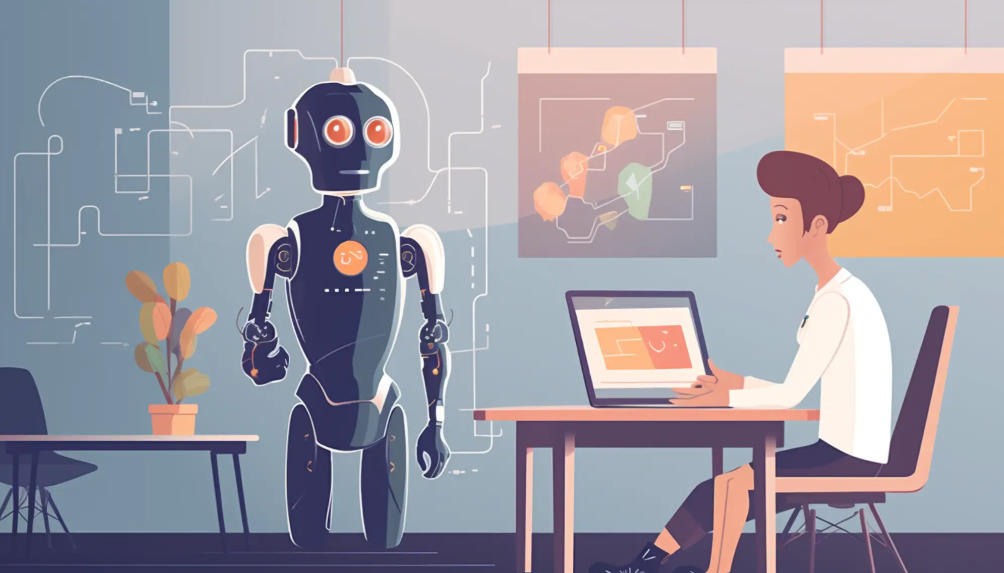
How Does ToF Technology Improve Robotics Education and STEM Learning for Students?
With the widespread adoption of artificial intelligence, robotics, and STEM/STEAM education, there is an increasing demand for low-cost, highly interactive 3D-sensing educational robots. Traditional educational robots often rely on 2D sensors or simple infrared rangefinders, which cannot fully meet the needs of students for spatial understanding, motion interaction, and innovative practice. TOF (Time-of-Flight) sensor technology, with its real-time 3D depth sensing, non-contact interaction, and high-precision spatial recognition, provides a new solution for robotics education and youth STEM innovation.
What kind of education is needed for robotics?
Robotics education requires a multidisciplinary knowledge system that integrates theory and practice. Core areas include computer science and programming (Python, C++, Scratch, algorithms, and AI fundamentals), electronics and electrical engineering (sensor and actuator principles, embedded systems, circuit design, and robot dynamics), mechanical engineering and design (mechanical structures, kinematics, assembly, and 3D printing), and mathematics and physics foundations (linear algebra, calculus, probability, mechanics, and signal processing).
Practical experience is also essential, including participation in robotics competitions, building and programming projects, and applying technologies such as SLAM, path planning, and motion recognition. Robotics education also emphasizes developing creativity, problem-solving, teamwork, and data analysis skills, combining theory and practice to comprehensively enhance students’ competence in robot development and application.

Core Applications of ToF in Robotics Education
As STEM education and AI courses develop, educational robots play a key role in cultivating students’ programming, logical thinking, and spatial cognition. ToF (Time-of-Flight) sensors provide educational robots with precise 3D depth perception, allowing students to intuitively understand robotics and AI principles in practice. Key applications include:
1. Robot Navigation and Path Planning
ToF sensors generate real-time 3D point cloud data, enabling educational robots to navigate classrooms, labs, or makerspaces autonomously. Combined with SLAM (Simultaneous Localization and Mapping) and AI path planning, robots can recognize the environment, plan optimal paths, and avoid obstacles like desks, boxes, or moving objects.
-
Safe autonomous movement: Robots dynamically adjust speed and direction to navigate safely in complex environments.
-
Spatial perception learning: Students observe how robots perceive obstacles and spaces, understanding the basics of LiDAR, depth sensing, and path planning.
-
Multi-robot collaboration experiments: Multiple robots can operate simultaneously, sharing ToF data for coordinated navigation and task allocation, fostering teamwork and multi-agent control thinking.
This allows students to learn theory while experiencing spatial perception, path planning, and autonomous movement logic firsthand.
2. Obstacle Detection and Safe Interaction
In classrooms or maker labs, students may move freely around robots. ToF sensors detect surrounding environments and people in real time, enabling non-contact obstacle detection and safety control.
-
Dynamic obstacle avoidance: Robots adjust movement based on depth data to prevent collisions.
-
Safe experimental environment: Non-contact monitoring avoids physical sensors on students, reducing risk while ensuring efficient experiments.
-
Learning programming and sensor application: Students can visualize ToF data and obstacle detection logic, understanding how sensor data informs control.
This approach helps students grasp safe programming and intelligent decision-making, building a foundation for AI learning.
3. Gesture Recognition and Human-Robot Interaction
ToF sensors can capture hand gestures, motions, and body postures, enabling intelligent robot interaction.
-
Gesture-controlled robots: Students can control robots with hand gestures to complete tasks like grabbing, transporting, or demonstrating lessons, enhancing engagement.
-
Body posture recognition: Robots can detect standing posture, gestures, or motion patterns, providing feedback or interactive mini-games, showing AI applications in motion and posture recognition.
-
Enhanced practical experience: Non-contact interaction allows students to focus on logic and experiment design without worrying about physical handling.
This helps students experience AI, 3D spatial understanding, and robot control integration, deepening understanding of intelligent systems, human-robot interaction, and depth sensing technology.
4. Data Collection and Visualization Experiments
ToF sensors enable 3D depth data visualization, providing tools for student experiments:
-
Point cloud visualization: Students can view the spatial point cloud around the robot to understand data collection and processing.
-
AI algorithm training: ToF data can be used to train simple motion recognition or path planning models, linking theory with practice.
-
Experimental result analysis: Students can evaluate task execution and sensing accuracy through data comparison and visualization.
This expands robotics education from demonstrations to data-driven experiments integrated with AI learning.
ToF sensors provide high-precision, real-time, non-contact spatial perception in educational robots, with applications in navigation, obstacle avoidance, motion recognition, human-robot interaction, and experimental data analysis. They allow students to intuitively understand robotics and AI, while developing programming, logical thinking, spatial cognition, and innovation skills, supporting STEM education and AI literacy.

Technical Advantages
In educational robotics, ToF sensors are a core technology enhancing teaching effectiveness and student practice. Key advantages include:
1. Real-Time Depth Perception — Accurate Environment and Object Recognition
ToF sensors generate high-precision 3D point cloud data, enabling robots to perceive classrooms, labs, or makerspaces and dynamic objects in real time.
-
Rapid environment modeling: Robots generate 3D maps instantly, identifying desks, walls, and moving objects, providing accurate data for navigation and path planning.
-
Dynamic object tracking: Students, lab equipment, or other moving items are tracked in real time, ensuring safe robot interactions.
-
Intuitive learning demonstrations: Students observe 3D point clouds to understand spatial structures, depth perception principles, and SLAM/path planning concepts.
This real-time depth perception enhances robot autonomy and allows students to experience spatial cognition and dynamic decision-making in practice.
2. Contactless Interaction — Safe and Efficient Learning Experience
ToF sensors support contactless gesture recognition and environmental sensing, allowing students to interact with robots without direct touch, greatly enhancing classroom safety and ease of operation.
-
Gesture and motion recognition: Students can use hand waves, pointing, or gestures to control the robot in tasks such as picking up objects, moving, or performing instructional demonstrations.
-
Enhanced safety: Contactless interaction avoids collision or misoperation risks, making it suitable for experiments and classroom activities involving multiple participants.
-
Improved engagement: Real-time feedback and interactive experiences increase student interest, making abstract concepts of robot control and AI more intuitive.
Contactless interaction makes teaching not only safer but also more fun and interactive, suitable for practical learning across all age groups.
3. Easy Programming and Modular Development — Supporting Rapid Educational Experiments
The ToF module features standardized interfaces, allowing easy integration into various educational robot platforms and support for multiple programming languages such as Python, Scratch, or C++.
-
Rapid data acquisition and processing: Students can easily obtain 3D depth data for path planning, motion recognition, or AI algorithm experiments.
-
Modular development: The sensor can be combined with other sensors, servos, motors, and control modules to support multifunctional robot development and innovative experiments.
-
Education-friendly: Standardized interfaces and extensive development documentation lower the learning threshold, enabling students to focus on algorithm logic, data analysis, and experiment design without being overly concerned with hardware complexity.
These features make ToF sensors suitable not only for robot navigation and motion recognition experiments but also for data science, AI training, and cross-disciplinary STEAM education.

4. Additional Advantages
-
High frame rate and low latency: Supports fast motion capture and real-time feedback, ensuring smooth interaction.
-
Strong environmental adaptability: Operates reliably under strong light or low-light conditions, suitable for classrooms or laboratories.
-
Multi-robot collaboration: Supports multiple robots using ToF perception simultaneously, enabling collaborative experiments and group demonstrations.
In summary, ToF technology provides high-precision, real-time, contactless, and easy-to-program capabilities in educational robotics, offering students a safe, efficient, intuitive, and engaging hands-on learning experience, while laying a solid technical foundation for AI and spatial perception education.
Technical Challenges
-
Sensor stability
Frequent robot movement in educational environments can affect ToF sensor performance; anti-shake designs and algorithmic compensation are required. -
Calibration accuracy and environmental adaptability
To ensure accurate 3D depth perception, ToF sensors need periodic calibration and optimization for strong light or complex lighting conditions. -
Integration with teaching content
The educational value of ToF data must be combined with curriculum design, experimental cases, and maker projects to achieve effective integration of theory and practice.
Recommendations for Educational and Maker Practice
-
Modular ToF kits: Provide schools and maker programs with integrated sensor kits including ToF modules, AI processing units, and control boards for quick assembly and experimentation.
-
Supporting teaching materials: Offer textbooks, instructional videos, and experimental examples covering principles to practical applications, allowing students to understand depth perception and robot control through hands-on experience.
-
Project-based learning: Integrate projects such as robot navigation, obstacle avoidance, and gesture recognition to cultivate innovation and STEM skills in students through practical operation.
Future Outlook: ToF + AI + STEAM — Popularizing 3D Spatial Awareness
With the continuous advancement of AI algorithms, low-cost ToF modules, and educational robot platforms, young learners will more easily master 3D spatial perception, motion recognition, and intelligent robot interaction in STEM education. In the future, combining ToF sensors with AI will promote:
-
Intelligent STEAM teaching: Students can collect real-time environmental data via robots to conduct innovative experiments and scientific exploration.
-
Maker and competition innovation: Use 3D depth data for robot programming, navigation courses, and gesture recognition challenges to enhance practical skills.
-
Comprehensive spatial awareness education: From visual understanding and motion analysis to AI decision-making, students can experience real-world intelligent perception and operation.
Through ToF technology, robotics education not only enhances classroom interaction but also cultivates spatial understanding, innovative thinking, and comprehensive STEM abilities in youth, laying a solid foundation for future smart manufacturing, AI development, and maker innovation.
Synexens 3D Of RGBD ToF Depth Sensor_CS30

Our professional technical team specializing in 3D camera ranging is ready to assist you at any time. Whether you encounter any issues with your TOF camera after purchase or need clarification on TOF technology, feel free to contact us anytime. We are committed to providing high-quality technical after-sales service and user experience, ensuring your peace of mind in both shopping and using our products.
-
で掲示されます
CS30
