

ToF Technology in Robotics Education: Empowering AI and STEAM Learning
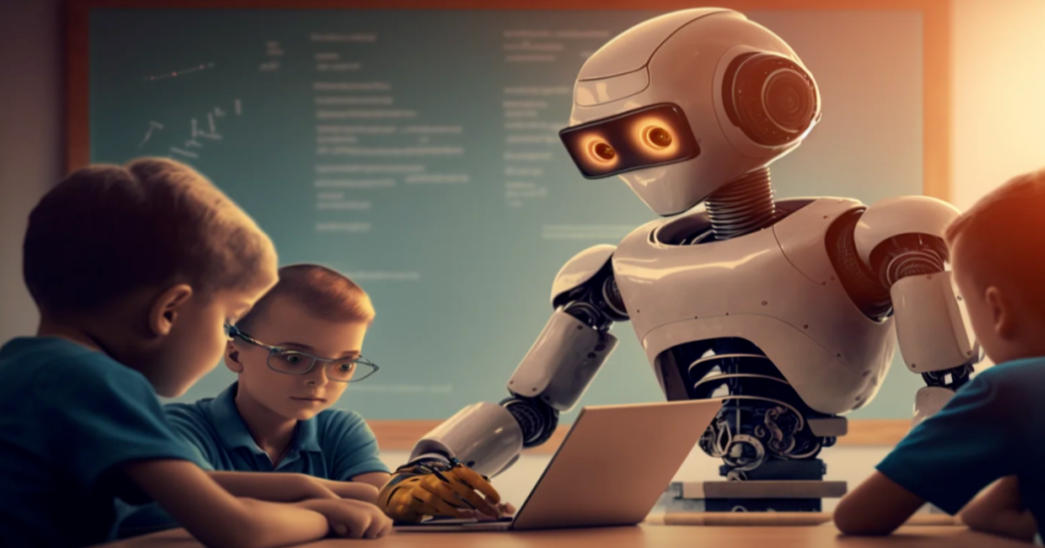
How Can ToF Technology Revolutionize Robotics and Programming Education?
In today’s rapidly advancing era of artificial intelligence and robotics, the education sector is seeing growing demand for low-cost, interactive intelligent robots. Increasingly, schools and training institutions are exploring how to integrate advanced 3D depth sensing modules into programming curricula — enabling students not only to learn coding languages but also to understand how robots 'see' and 'perceive' the world. Among these technologies, TOF (Time-of-Flight) has become a key sensing method in educational robotics, injecting new vitality into STEAM and AI-powered robotics education.
What Kind of Education Is Needed for Robotics?
Robotics education requires a multidisciplinary and integrated approach that combines programming, electronics, mechanical design, artificial intelligence, and mathematical logic. Specifically, robotics education should include the following key aspects:
-
Programming and Algorithm Fundamentals – Students should master programming languages such as Python and C++, understand control logic, data structures, and basic algorithms to build a foundation for robotic behavior design and automation control.
-
Electronics and Sensor Technology – Students need to understand circuit principles and sensor operation (such as ToF, ultrasonic, or infrared), and apply them in practice to enable robots to sense and interpret their surroundings.
-
Mechanical and Engineering Design – Learning the fundamentals of mechanical structures, motion principles, and 3D modeling enables students to design stable and flexible robotic systems.
-
Artificial Intelligence and Data Analysis – Through computer vision and machine learning, students can make robots capable of recognizing, reasoning, and making autonomous decisions.
-
Project-Based Learning and Team Collaboration – Robotics education emphasizes hands-on learning. By working on real projects, students develop systems thinking, innovation skills, and the ability to collaborate across disciplines.
Ultimately, robotics education is not just about technology — it represents a comprehensive STEAM education model (Science, Technology, Engineering, Arts, and Mathematics) that helps students understand the logic behind technology and cultivate creativity and problem-solving abilities.
I. Educational Transformation: From Traditional Coding to Intelligent Perception
Traditional programming education often relied on virtual platforms or basic sensors such as infrared or ultrasonic modules. However, these sensors have limitations in accuracy, real-time response, and spatial recognition. With the rise of ToF-based educational robotics kits, students can now visualize depth data in real time, gaining intuitive insight into how robots perform obstacle avoidance, navigation, and environmental perception.
By integrating ToF depth sensors into classroom robots, students can engage in hands-on projects such as distance measurement, obstacle detection, and autonomous navigation. This not only enhances engagement but also bridges the gap between abstract programming logic and tangible physical behavior — helping students master algorithmic thinking and spatial awareness through real-world experimentation.

II. The Key Roles of ToF in Robotics Education
1. Intelligent Navigation and Localization
In robotics navigation courses, the ToF (Time-of-Flight) sensor module plays a crucial role in achieving high-precision environmental perception. By measuring the time light takes to travel to and from an object, the ToF module provides accurate distance information within milliseconds. This allows students to construct 3D depth maps of the environment, enabling robots to “see” spatial structures and perform path planning, SLAM (Simultaneous Localization and Mapping), and autonomous positioning with high precision.
In classroom experiments, students can learn not only how ToF data is collected but also how to convert this depth information into movement commands through programming. Using Python or ROS frameworks, they can develop robots capable of analyzing surroundings in real time, mapping obstacles, and planning optimal routes — achieving a seamless loop from perception to decision-making.
Compared to traditional ultrasonic or infrared sensors, ToF-based navigation systems have significant advantages. They offer stronger resistance to interference, operate reliably regardless of light or surface conditions, and provide longer range and higher resolution. This allows students to perform experiments in diverse settings such as complex indoor mapping or multi-robot cooperative localization.
Most importantly, ToF technology transforms robotics courses from simple linear navigation experiments into advanced studies involving real-time mapping, spatial awareness, and autonomous decision-making. Teachers can introduce SLAM algorithms and guide students to generate 3D scene models using multi-point distance data — nurturing spatial computing and AI integration skills essential for modern robotics.
Thus, ToF’s role in navigation education goes beyond technical demonstration — it inspires students to explore how robots can truly understand and adapt to the real world, laying the foundation for future intelligent systems.
2. Obstacle Detection and Motion Control
In robotics programming courses, the ToF sensor serves as a pivotal component. With its high frame rate and precision, it provides real-time, reliable depth data for robots. In “sensor application in programming” lessons, students can use Python, C++, or ROS environments to integrate ToF modules with control systems, creating robots capable of autonomous obstacle avoidance and adaptive path correction.
For example, when a ToF sensor detects an obstacle closer than 30 cm, the robot can instantly execute stop or turn commands via its control algorithm. This real-time feedback and dynamic decision mechanism helps students understand the link between distance data and movement control, while introducing them to key algorithmic concepts such as data filtering, threshold logic, and PID control.
Advanced students can use ToF point cloud data to develop multi-sensor fusion systems that combine infrared, gyroscope, or camera inputs — simulating complex obstacle avoidance in realistic environments. In narrow pathways, ToF sensors can continuously monitor side-wall distances for precise path planning and posture adjustment.
By introducing both static and dynamic obstacle scenarios, teachers can help students explore ToF’s role in dynamic environment recognition, motion prediction, and intelligent response. This not only increases project complexity and engagement but also deepens students’ understanding of the complete feedback loop — from sensor data acquisition to robotic behavior execution.
Overall, ToF technology elevates obstacle detection and motion control from basic logic exercises to integrated projects combining intelligent perception, real-time control, and algorithmic optimization — cultivating strong engineering and innovation skills.
3. Human-Robot Interaction and Gesture Recognition
In modern AI education, the ToF depth camera is more than just a distance sensor — it’s a bridge enabling natural human-robot interaction. By combining high-precision ToF depth data with AI algorithms (such as convolutional neural networks or pose estimation models), students can design complete AI gesture recognition systems.
In hands-on labs, students can use the ToF module to capture hand contours and motion trajectories, then apply machine learning to identify gestures such as “wave,” “stop,” or “move forward.” The robot can then respond with corresponding actions — nodding, moving, or speaking — creating an engaging and intuitive interactive learning experience.
This ToF-based interactive teaching approach greatly enhances classroom engagement. Students are no longer writing abstract code but building robots that can “understand” human intent.
Moreover, ToF’s high resolution and real-time performance allow students to observe the full technical chain — from perception to data processing to action execution — helping them grasp the coordination between computer vision, AI perception, and robotic control systems.
Looking ahead, as ToF modules become smaller and more affordable, ToF + AI interactive teaching projects are expected to become a mainstream trend in robotics education — enabling students to master the core integration of AI and sensor fusion technologies through real-world experimentation.


