

Time-of-Flight Sensor: ToF Technology & 3D Sensing Guide

What Is a Time-of-Flight Sensor and How Does ToF Technology Work?
As robotics, smartphones, AR/VR, autonomous driving, and industrial automation continue to evolve, devices are no longer satisfied with simply “seeing” objects. They also need to understand object distance, spatial position, and three-dimensional structure. Traditional RGB cameras mainly capture colors and textures, while Time-of-Flight technology can obtain distance information by measuring the flight time of light, making it an important technology for modern 3D vision and spatial sensing. So, what is a time of flight sensor? Why can it help devices achieve fast and accurate depth measurement? This article provides a comprehensive introduction to Time-of-Flight principles, ToF sensor types, ToF Camera structures, and 3D ToF applications.
What Is a Time of Flight Sensor?
Simply put, a time of flight sensor is a depth sensor that calculates distance by measuring how long it takes for light to travel from the sensor to a target and return to the receiver. The term “Time-of-Flight” refers to this travel time, with the core concept relying on the propagation speed of light to determine the distance of an object from the returned signal.
Compared with traditional image sensors, a tof sensor can provide not only two-dimensional image information but also depth data. Multiple depth points can be combined to create more complete spatial information, which is why ToF technology is widely used in 3D sensing, robot navigation, gesture recognition, autofocus, people detection, and smart home applications.
When users search for what is time of flight sensor or what is time of flight sensing, they are usually looking for an explanation of this basic principle: the device emits a light signal, the target reflects the signal, the sensor detects the returning light, and the system calculates the distance based on the measured travel time.

How Does Time-of-Flight Measure Distance?
A complete time-of-flight system typically includes a light source, transmitter, receiver, processing circuit, and software algorithms. The sensor emits modulated infrared light toward a target. When the light reaches the object, it is reflected back toward the receiver. The system then captures the returning signal and calculates the target distance according to the measured travel time.
One advantage of this approach is that it does not need to rely heavily on the texture or clearly defined edges of an object to estimate depth. Even when a target has relatively limited visual texture, ToF technology can still provide useful depth information.
In practical applications, time-of-flight sensors can be designed for single-point, single-zone, multi-zone, or full 3D depth detection. Modern ToF solutions also focus on compact size, low power consumption, and high system integration, allowing them to be incorporated into smartphones, robots, industrial equipment, and a wide range of smart devices.
How Is a ToF Sensor Different from a Conventional Camera?
A conventional camera mainly uses RGB information to produce a two-dimensional image, while a tof camera adds distance information and can therefore function as a depth camera.
For example, a conventional camera can recognize a table, but it does not directly know how far the table is from the camera. A ToF system, however, can provide depth information that tells the device the spatial position of the target. When a large number of depth points are combined, the system can create a three-dimensional representation of the surrounding environment.
Therefore, a tof camera sensor does not simply replace a conventional camera. Instead, it adds depth perception to an existing vision system. An RGB camera helps a device understand 'what it sees,' while ToF adds information about 'where it is' and 'how far away it is.'
What Types of Time-of-Flight Cameras Are Available?
Today's time of flight camera solutions can be classified according to their measurement method, sensing zones, resolution, and application requirements. Two common approaches are Direct ToF and Indirect ToF.
Direct ToF measures the time difference between the emission and return of photons, allowing the system to determine distance directly. A dtof sensor is an important component of this technology approach.
Another approach is Indirect ToF, or iToF. An indirect time of flight sensor generally uses modulated light and analyzes changes in the phase of the received signal to calculate distance. iToF is particularly suitable for 3D vision applications that require continuous depth information.
Therefore, when users search for dtof, iToF, or time-of-flight sensor, they are often looking for information about the differences between ToF architectures and which applications are best suited to each approach.
What Are the Advantages of a dToF Sensor?
A dtof sensor uses the Direct Time-of-Flight approach to directly measure the propagation time of light. Compared with traditional distance estimation methods, dToF can provide distance information rapidly and is well suited to low-latency depth sensing systems.
For robots, drones, and smart devices, obtaining distance information quickly is extremely important. A mobile robot, for example, needs to continuously detect obstacles in front of it, while a drone needs to determine its distance from walls, the ground, buildings, or other objects. In these scenarios, dToF can become an important component of a real-time spatial sensing system.
At the same time, modern tof sensors increasingly focus on low power consumption, compact dimensions, and high integration. Integrating the transmitter, receiver, and processing functions into a compact sensor can simplify product design and reduce system integration requirements.
Why Is ToF Technology Suitable for 3D Vision?
One of the most important characteristics of tof technology is its ability to directly provide depth information. Traditional vision algorithms may use stereo vision, feature matching, or complex calculations to estimate depth, while ToF can determine distance directly through the flight time of light.
When multiple distance points are arranged according to their spatial positions, they can form a depth map or even point cloud data. This is the foundation of tof 3d sensing.
In practical applications, ToF can provide target distance, relative position, and spatial structure information. For example, robots can use ToF to detect obstacles, smartphones can use ToF to assist autofocus and AR positioning, and smart home devices can use depth information for human presence detection and motion recognition.
What Components Make Up a ToF Camera Module?
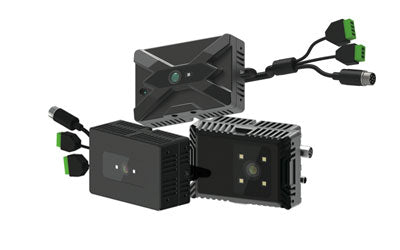
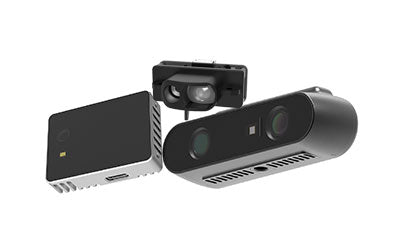
A complete tof camera module generally consists of a light source, optical system, ToF receiver, signal processing circuit, and software algorithms.
First, the transmitter produces modulated infrared light. The light travels toward the target and is reflected back. The receiver captures the returning light, while the processing circuit calculates distance according to the measured time or phase information.
Some ToF systems also integrate processing capabilities into the sensor itself, reducing the amount of processing required from the main processor. This type of architecture can help products achieve a more compact design, lower power consumption, and a simpler overall system structure.
How Does a ToF Image Sensor Generate a Depth Map?
A tof image sensor differs from a conventional image sensor because it needs to process optical signals associated with distance. Depending on the architecture, the sensor may output single-point distance measurements, multiple-zone depth information, or more complete depth data.
For example, in a multi-zone ToF system, the field of view can be divided into multiple zones, with each zone providing its own distance information. Combining these measurements allows the device to understand how objects are distributed throughout its field of view.
Therefore, 3d tof is not simply an upgraded distance sensor. It extends distance measurement into a richer three-dimensional vision environment.
ST FlightSense and ToF Technology
STMicroelectronics has developed FlightSense products and Time-of-Flight technology for many years. Its ToF portfolio covers Direct ToF and Indirect ToF approaches, including single-zone, multi-zone, and 3D ToF solutions.
The core value of flightsense is the integration of distance measurement capabilities into compact sensor solutions, making them suitable for consumer electronics, industrial equipment, robotics, smart home devices, and other products that require distance detection.
From a technical perspective, FlightSense represents more than a simple distance measurement component. It is part of a broader ToF sensing ecosystem designed for different application requirements.

ToF Technology and Low-Power Design
Modern smart devices are increasingly sensitive to power consumption. Smartphones, wearable devices, wireless sensors, and robots all need to operate for long periods within limited battery capacity, making low power consumption an important development direction for tof technology.
By integrating transmitting, receiving, and processing functions, ToF sensors can reduce the number of external components and simplify system architecture. For smart home devices, industrial equipment, and robots that need to operate continuously, this type of integration can help reduce overall energy consumption.
At the same time, ToF can continue to provide distance information in low-light environments. Compared with vision solutions that rely entirely on visible-light images, this can provide an additional sensing capability in certain nighttime or dark environments.
What Applications Can ToF Sensors Support?
Today, time-of-flight sensors have expanded from simple distance measurement into a wide range of intelligent applications.
In industrial environments, ToF can be used for material positioning, liquid-level detection, production-line alignment, and equipment triggering. In robotics, it can support obstacle detection, collision avoidance, 3D mapping, and SLAM. In smartphones, it can assist autofocus, gesture recognition, and short-range detection. In smart homes, ToF can support people counting, presence detection, and motion recognition.
These applications show how ToF is developing from a single-purpose distance sensor into an important spatial sensing technology.
How Does a Time of Flight Sensor Compare with Other Distance Sensors?
In addition to ToF, the market includes ultrasonic, infrared, and LiDAR-based distance measurement technologies. ultrasonic sensor time of flight systems also use the concept of flight time, but they use sound waves rather than optical signals to calculate distance.
Optical ToF systems use light signals, enabling fast distance feedback and supporting high-density 3D vision applications.
Meanwhile, a time of flight laser distance sensor generally emphasizes laser-based distance measurement and may be designed for longer-range or specific measurement applications. A ToF Camera focuses more on multi-zone depth perception and integration with vision systems. Although both belong to the broader Time-of-Flight technology family, their target applications can be different.
3D Safe Guarding Privacy RGBD Camera Synexens CS30

What Is the Future of ToF Technology?
Future tof technology will continue to develop toward higher integration, lower power consumption, greater accuracy, and richer 3D information.
As robotics, AI, AR/VR, smart homes, and industrial automation continue to advance, devices need to understand increasingly complex three-dimensional environments. ToF can be combined with RGB cameras, AI algorithms, LiDAR, and other sensors to create more comprehensive environmental perception systems.
From single-point distance measurement to multi-zone depth sensing, and from basic distance detection to complete 3D spatial understanding, ToF is becoming an important technology for helping intelligent machines understand distance and space.
