

Why Are TOF Cameras Essential for High-End Smartphones in 2026?
- par LidarSensor
Why Are TOF Cameras Becoming Important in Smartphones in 2026?
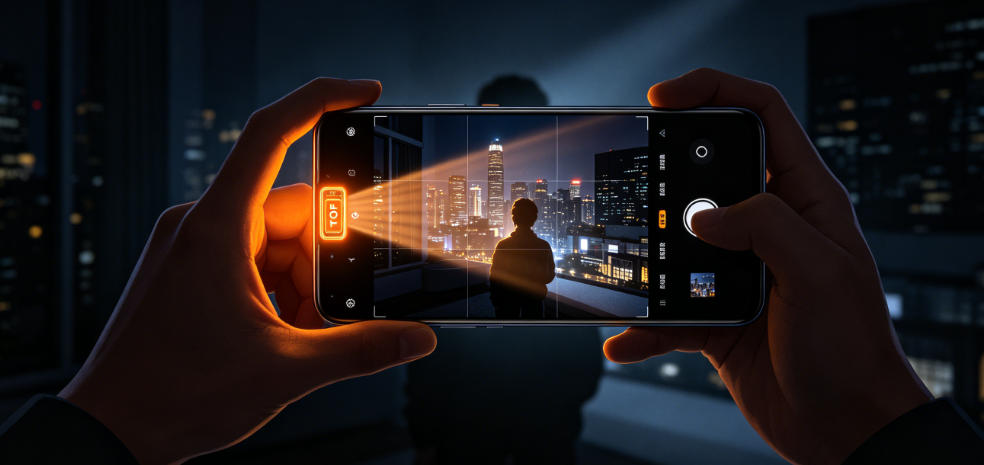
With the rapid development of smartphone photography, artificial intelligence, and spatial computing technology, smartphones are no longer just simple devices for communication and photography. They are evolving into intelligent terminals with advanced environmental perception capabilities. In this trend, the TOF camera (Time-of-Flight camera) is gradually becoming an important hardware component in high-end smartphones, providing more accurate depth sensing, more natural portrait photography, more secure facial recognition, and more immersive AR experiences.
In the past, smartphones mainly relied on RGB cameras and dual-camera algorithms to simulate spatial depth. However, this approach could be affected by lighting conditions, object textures, and complex environments. A TOF camera actively emits infrared light and measures the time required for the light to return, allowing it to directly capture distance information and generate an accurate 3D depth map. This enables smartphones to truly understand the surrounding environment instead of simply recording two-dimensional images.
As consumer demand for professional photography, AR applications, security authentication, and intelligent interaction continues to increase, best TOF camera smartphone has become an important indicator for evaluating the imaging capability and intelligence level of premium smartphones.
What Is a TOF Camera?
A TOF camera (Time-of-Flight camera) is a 3D depth sensing device based on the principle of measuring light travel time. It works by emitting invisible infrared light pulses toward an object and calculating the time required for the light to travel from the camera to the object and return, allowing the device to accurately measure the distance between the smartphone and the target object.
Simply put, a traditional camera can only see 'what an object is,' while a TOF camera can not only recognize objects but also understand “where the object is located.”
A TOF camera mainly consists of the following components:
- Infrared VCSEL laser emitter
- TOF image sensor
- Infrared filter module
- Depth calculation processing unit
- AI image processing system
Through these components, a TOF camera can generate real-time spatial depth information and support applications including photography, AR, identity recognition, gesture control, and intelligent interaction.
Compared with traditional RGB cameras, TOF depth cameras offer several significant advantages.
First, TOF cameras can directly obtain real distance data instead of estimating depth through image algorithms, providing higher accuracy in complex environments.
Second, TOF sensors feature fast response times and can capture moving targets in real time, making them highly suitable for dynamic photography and interactive applications on smartphones.
In addition, because TOF technology uses infrared light for measurement, it can maintain stable performance even in low-light environments.
How Does a TOF Camera Work in Smartphones?
Understanding how TOF cameras work helps explain why this technology is becoming an important feature in high-end smartphones.
The core principle of a TOF camera is light flight-time measurement.
The working process includes the following steps:
- The infrared emitter inside the smartphone sends out high-speed light pulses.
- The light reaches the surface of a person or object.
- The reflected light returns to the TOF sensor.
- The system calculates the travel time of the light.
- A precise 3D depth map is generated.
These depth data are then processed by the smartphone’s processor and AI algorithms to optimize photography performance, improve facial recognition security, and enhance AR experiences.
Compared with traditional dual-camera solutions, TOF cameras do not rely heavily on complex image matching algorithms, allowing them to provide more stable and accurate depth information.
For example, in portrait photography, a TOF camera can precisely determine the distance between the subject and the background, creating more natural background blur effects. In AR applications, it helps smartphones better understand real-world environments, allowing virtual objects to align more accurately with physical spaces.

Why Do High-End Smartphones Need TOF Cameras?
As smartphone competition shifts from simply increasing pixel counts to improving intelligent perception capabilities, TOF cameras are becoming an important upgrade direction for premium smartphones.
1. Professional Portrait Photography and Better Bokeh Effects
Portrait photography has always been one of the most important features for smartphone users and a key area where smartphone manufacturers continue to improve their imaging capabilities.
Traditional smartphone portrait modes mainly rely on RGB cameras to capture 2D images and then use AI algorithms to analyze human edges and background differences to simulate depth-of-field effects. However, because this method depends heavily on software processing, it can encounter problems in complex shooting environments, including inaccurate hair-edge detection, incorrect subject separation, and unnatural background blur transitions.
These issues become more noticeable in low-light conditions, scenes with complicated backgrounds, or when the subject is moving quickly. Traditional algorithms often struggle to provide consistent portrait effects.
A smartphone TOF camera solves these limitations by actively emitting infrared light and measuring the return time of the signal to obtain real distance information between the subject and the background. By generating a more accurate 3D depth map, TOF cameras can distinguish foreground subjects and backgrounds more precisely.
Compared with traditional depth estimation methods based on image analysis, TOF cameras allow smartphones to achieve more professional-level depth effects in portrait photography.
Through depth information provided by the TOF sensor, smartphones can achieve:
- More accurate facial contour recognition
- More natural background blur effects
- Better edge processing
- Improved performance in complicated shooting environments
For example, when capturing human hair, transparent objects, or backgrounds with complex textures, TOF cameras help AI algorithms better understand spatial relationships, reduce segmentation errors, and improve overall image quality.
Therefore, TOF cameras have become an important technology for enhancing computational photography capabilities and delivering professional imaging experiences on high-end smartphones.
2. Enhanced AR Experience and Spatial Computing
Augmented reality (AR) is one of the most important application areas for TOF cameras, and it is also considered a key development direction for future smartphones. Traditional smartphone cameras mainly capture two-dimensional image information, but AR applications require devices to truly understand spatial relationships in the real world, including room dimensions, object locations, surface distances, user movements, and environmental structures. Without accurate depth perception, virtual content cannot maintain correct positioning and interaction with the physical environment.
Through real-time 3D depth sensing technology, a TOF camera helps smartphones build more accurate spatial models of their surroundings. By capturing distance information for each pixel, the TOF sensor enables smartphones to understand the three-dimensional structure of the environment, allowing virtual objects to be integrated more naturally into real-world scenes.
For example, in AR furniture placement applications, a TOF camera can measure room dimensions and object positions, helping users preview virtual furniture at realistic scales. In virtual try-on applications, depth data can improve body recognition and clothing fitting accuracy. In AR gaming, TOF sensors can recognize user movements and environmental changes, creating a more immersive interactive experience.
In addition, TOF technology can be applied to indoor design simulation, 3D scanning, spatial measurement, and future spatial computing devices.
With the development of technologies such as Apple Vision, smart glasses, AI-powered spatial computing, and next-generation wearable devices, the demand for environmental perception capabilities will continue to grow. TOF cameras will play an increasingly important role in future AR ecosystems and 3D sensing applications.
3. More Secure Facial Recognition
Security authentication is another important application of TOF cameras in smartphones.
With the increasing popularity of mobile payments, digital identity verification, and smartphone security features, traditional 2D facial recognition technology has revealed certain limitations. Conventional 2D face recognition mainly relies on image information for identification and can be affected by lighting conditions, camera angles, and image spoofing attacks.
A TOF camera improves facial recognition by capturing three-dimensional facial structure information and generating a more accurate depth model of the user's face.
Unlike ordinary cameras, TOF technology can analyze not only facial color and texture but also spatial characteristics, including:
- Facial contours
- Nose depth
- Eye position and depth
- Distance relationships between different facial areas
Compared with traditional 2D facial recognition, TOF-based facial recognition provides higher security and reliability.
Because the TOF sensor can detect real-world depth information, it can significantly reduce the possibility of spoofing attempts using photos, videos, or images displayed on screens.
Another advantage is that TOF cameras do not rely heavily on environmental lighting conditions. Even in dark or low-light environments, they can continue providing stable depth data, improving the experience of:
- Smartphone unlocking
- Mobile payment authentication
- Digital identity verification
In the future, as intelligent device security requirements continue to increase, TOF technology will become an important foundation for next-generation biometric authentication systems.
4. Gesture Recognition and Touchless Interaction
Future smartphone interaction will no longer be limited to touchscreen operations. New interaction methods based on spatial perception and natural user interfaces are emerging rapidly.
A TOF camera can capture changes in hand movements, body gestures, and user actions, enabling smarter and more intuitive touchless interaction experiences.
Although traditional cameras can recognize images, they lack accurate distance information, making gesture recognition vulnerable to background interference, lighting changes, and viewing angles.
A TOF sensor can obtain real-time spatial relationships between the user and the device, allowing smartphones to better understand human movements.
For example, TOF technology can support:
- Gesture-based page scrolling
- Air gesture photography
- AR controls
- Motion-based gaming interaction
- Accessibility features
In future smartphones, smart home devices, and AR terminals, users may no longer need to directly touch screens. Instead, simple hand gestures could be used to control devices.
Combined with AI algorithms, TOF cameras can further analyze user behavior and help smartphones evolve from traditional touchscreen devices into intelligent terminals capable of understanding their surroundings.
5. Improved Low-Light Photography
Low-light photography has always been one of the biggest challenges for smartphone imaging systems.
Traditional cameras mainly rely on available environmental light to capture images. In dark or insufficient lighting conditions, smartphones may experience:
- Slower autofocus performance
- Reduced image details
- Increased image noise
- Difficulty identifying subjects
A TOF camera provides additional distance information, helping smartphones quickly determine the location and spatial relationship of the subject, improving autofocus speed and accuracy.
Even in dark environments, TOF sensors can use infrared light measurement to provide stable depth data for the camera system.
In scenarios such as:
- Night photography
- Indoor shooting
- Portrait mode
- Video recording
TOF cameras help smartphones achieve faster focusing, more accurate subject recognition, and improved background processing.
For example, when taking portraits at night, TOF depth information allows AI systems to better separate the person from the background, improving image clarity and overall quality.
Therefore, TOF cameras are not only improving daytime photography but are also becoming an important technology for enhancing smartphone night imaging capabilities.
TOF Camera vs Traditional Smartphone Camera
The biggest difference between a TOF camera and a traditional smartphone camera is whether the device has true spatial perception capabilities.
Traditional RGB cameras mainly capture color, brightness, and texture information. They can record high-quality images, but they cannot directly measure the actual distance between objects. Instead, they usually rely on AI algorithms to estimate depth.
The main characteristics of traditional RGB cameras include:
- Mainly capturing 2D image information
- Relying on software algorithms to simulate depth effects
- Limited depth accuracy in complex environments
- Unable to provide real-time spatial data
In contrast, TOF cameras use active distance measurement technology to achieve more accurate 3D perception:
- Directly measuring object distances
- Generating real-time 3D depth maps
- Providing spatial position information
- Supporting AR, AI vision, and intelligent interaction applications
Therefore, a TOF camera is not simply an additional sensor for improving smartphone photography. It is an important foundation for future smartphones to achieve AI vision capabilities, spatial computing, and intelligent environmental perception.
With the continuous development of 3D sensing technology, TOF cameras will play an increasingly important role in high-end smartphones, AR devices, and next-generation intelligent terminals.

Market Trends: TOF Cameras Are Becoming a Key Smartphone Technology
With the rapid development of AI photography, AR applications, and intelligent interaction technologies, TOF cameras are gradually evolving from a premium flagship feature into an important technology trend for smart devices.
The future development of smartphones will no longer focus only on higher megapixel counts. Instead, the industry is moving toward stronger environmental understanding and intelligent perception capabilities.
TOF technology will help smartphones achieve:
- Smarter computational photography optimization
- More realistic AR experiences
- More secure identity authentication
- More natural human-device interaction
- More accurate spatial perception
At the same time, as TOF sensors become smaller, more affordable, and more energy-efficient, this technology may gradually expand from flagship smartphones to more mid-range and mainstream smart devices.
Future Development Trends of TOF Cameras
In the future, TOF camera technology will continue evolving in several key directions.
AI Integration
The combination of TOF sensors and artificial intelligence will further improve smartphone perception capabilities.
By combining real-time depth information with AI algorithms, future smartphones will be able to automatically analyze spatial data and provide more intelligent photography, recognition, and interaction experiences.
For example, AI systems can use TOF depth information to better understand scenes, recognize objects, optimize image effects, and enable more advanced smart functions.
Smaller and More Efficient Sensors
Future TOF modules will continue becoming smaller while offering lower power consumption and higher performance.
As smartphone manufacturers continue optimizing internal hardware design, compact TOF sensors will become easier to integrate into thinner and lighter mobile devices.
At the same time, improvements in sensor technology and semiconductor manufacturing will help reduce power consumption, improve battery efficiency, and make TOF technology more practical for large-scale smartphone adoption.
Multi-Sensor Fusion
The future of smartphone 3D perception will not rely on a single sensing technology.
Instead, TOF cameras will increasingly work together with other imaging and sensing technologies, including:
- RGB cameras
- LiDAR sensors
- Structured light systems
- AI vision processors
Through multi-sensor fusion, smartphones can achieve more accurate and reliable 3D sensing capabilities.
For example, RGB cameras can provide detailed color information, while TOF sensors provide accurate depth measurements. Combining both data sources allows devices to better understand the environment and deliver improved photography, AR, and intelligent interaction experiences.
Expansion Beyond Smartphones
Although smartphones are currently one of the most important applications for TOF technology, its future potential extends far beyond mobile devices.
TOF cameras will continue expanding into various industries and intelligent devices, including:
- AR/VR devices
- Smart glasses
- Drones
- Smart home systems
- Robots
- Autonomous driving systems
In these applications, TOF sensors provide essential environmental perception capabilities, allowing machines and devices to better understand surrounding spaces and interact with the real world.
For example:
- In AR/VR devices, TOF cameras improve spatial mapping and user interaction.
- In robots, TOF sensors enable obstacle detection, navigation, and environmental understanding.
- In drones, TOF technology supports accurate distance measurement and safer flight control.
- In autonomous systems, depth sensing helps improve object recognition and decision-making.
As intelligent devices become increasingly connected and autonomous, TOF technology will become a critical component of future machine perception systems.

Conclusion: Why TOF Cameras Matter for Future Smartphones
TOF cameras are redefining the visual capabilities of modern smartphones.
Through accurate 3D depth sensing, fast distance measurement, and real-time spatial understanding, TOF technology not only improves smartphone photography but also drives innovation in AR applications, facial recognition, intelligent interaction, and spatial computing.
For users who demand professional photography performance, immersive digital experiences, and stronger security protection, the smartphone TOF camera has become an important feature of high-end mobile devices.
In the future, as AI, spatial computing, and 3D vision technologies continue to advance, TOF cameras will help smartphones evolve from simple image-recording tools into intelligent terminals capable of understanding the world, sensing environments, and interacting naturally with users.
