

Overhead Camera AMR Navigation System for Smart Warehouses & Factories

With the rapid development of smart factories, automated warehouses, and Industry 4.0, Autonomous Mobile Robots (AMR / robot mobile autonome) are becoming the core operational units in modern logistics and manufacturing. Deploying a high-precision, cost-effective, and scalable navigation system is a key technical challenge for companies implementing AMRs.
Overhead camera-based visual navigation systems have emerged as a mature robot mobile autonome navigation solution, widely used in smart factories, warehouse logistics, and flexible production environments, providing reliable support for multi-robot coordination.
What Is an Overhead Camera-Based Robot Navigation System?
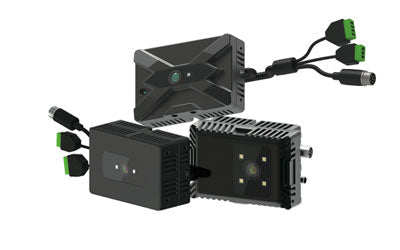
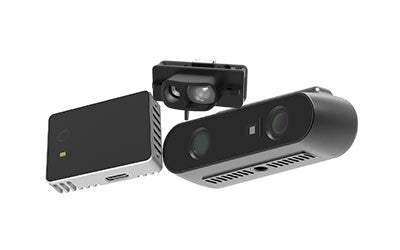
An overhead camera-based robot navigation system is an advanced robot mobile autonome navigation solution. It uses industrial cameras installed on ceilings or elevated structures in factories, warehouses, or logistics centers to achieve full-area visual coverage and real-time monitoring.
The system integrates computer vision, artificial intelligence (AI), deep learning-based object recognition, and path planning algorithms to perceive and manage AMRs and AGVs across the environment, achieving high-precision localization, navigation, and coordinated scheduling.
Unlike traditional solutions that rely on onboard sensors, this system 'moves perception upward,' enabling global decision-making through centralized visual computing. This makes robots lighter, reduces costs, and enhances overall system intelligence.

Core Functions and Capabilities
The system enables unified management and intelligent scheduling of multiple robots, including:
- Multi-robot coordinated localization and scheduling: Real-time tracking of multiple AMRs/robot mobile autonome to avoid path conflicts and congestion
- Global path planning and dynamic optimization: Task allocation and optimal route calculation based on a global map to improve overall logistics efficiency
- Dynamic obstacle detection and intelligent avoidance: Detecting moving objects such as personnel, forklifts, and goods for real-time collision avoidance
- Real-time traffic management: Centralized monitoring of robot traffic flow to prevent congestion in high-density environments
- Reduced onboard sensor dependency: Minimizes reliance on LiDAR, IMU, and depth cameras, significantly lowering individual robot cost and maintenance complexity
System Architecture Features
This solution is a typical centralized vision-based navigation system, with core features including:
- Overhead camera network as a unified perception layer
- AI vision server as the decision and computing core
- AMR/AGV as the execution terminal
This architecture shifts the system from 'distributed sensing' to 'centralized intelligent scheduling,' providing clear advantages for large-scale robot deployments.
Advantages over Traditional SLAM Navigation
Compared to traditional onboard SLAM-based navigation, this system offers:
- Higher global positioning accuracy
- Stronger multi-robot coordination capabilities
- Lower hardware and maintenance costs
- More stable long-term performance
- Better suitability for high-density logistics and complex industrial environments
Key Advantages of Overhead Camera Navigation Systems
1. Global Perspective for High-Precision Localization
Overhead cameras provide a “bird’s-eye view” of the factory or warehouse, offering stronger global perception and consistent positioning compared to traditional onboard sensors. Key benefits include:
- Unobstructed full-area view: Top-down perspective avoids visual blockage from shelves, equipment, or personnel
- Unified coordinate system management: All AMRs/robot mobile autonome share a global coordinate system for standardized positioning and scheduling
- Synchronized multi-robot localization and tracking: Real-time monitoring and trajectory analysis for dozens or even hundreds of robots simultaneously
- Reduced cumulative errors and drift: Prevents SLAM-related drift during long-term operations
- Enhanced path planning accuracy: Provides high-precision spatial data for AI-based path planning and scheduling
This global visual advantage is critical in large warehouses, electronics manufacturing plants, smart sorting systems, and high-density AMR environments, improving operational efficiency and safety.
2. Reduced Robot Hardware Costs
Traditional AMRs often rely on complex onboard sensor suites:
- LiDAR for mapping the environment
- Depth cameras for obstacle detection
- IMU for pose correction
- Multi-sensor fusion computing modules
Centralized overhead camera solutions shift much of the computation and perception to the system layer, delivering significant cost benefits:
- Fewer onboard sensors, reducing robot BOM costs
- Simplified robot design, improving reliability and maintenance ease
- Lower deployment and maintenance costs
- Higher ROI, particularly for large-scale AMR/robot mobile autonome deployments
This approach is ideal for smart factories, automated warehouses, and flexible electronics manufacturing lines with high robot density.
3. Multi-Robot Coordination and High-Density Operations
In high-density AMR environments, common challenges include path conflicts, congestion, and complex task scheduling. Overhead vision systems can address these issues effectively:
- Real-time traffic flow control: Unified monitoring of robot trajectories and speeds
- Dynamic path optimization and replanning: Adjusting routes automatically based on real-time changes
- Multi-robot coordination: Task priority allocation and resource scheduling
- Collision avoidance: Predicting and preventing potential conflicts in advance
- Increased throughput: Supports high-frequency, high-density logistics tasks
These capabilities significantly improve operational efficiency and system stability in smart warehouse sorting centers, electronics production material transport systems, and large-scale manufacturing logistics networks.
4. Flexible and Scalable robot mobile autonome Navigation Solutions
As smart manufacturing and logistics scale, companies require highly flexible navigation systems. Overhead camera-based visual navigation offers natural scalability:
- Modular camera deployment: Expand or adjust coverage areas as needed
- Software-based algorithm upgrades: Improve recognition, localization, and scheduling without hardware changes
- Support for multi-zone and multi-floor expansion: Suitable for complex warehouse and multi-factory setups
- Deep MES/WMS integration: Enables unified production and logistics scheduling
- Digital twin and IIoT support: Allows virtual simulation and real-time data optimization
This architecture positions overhead camera navigation systems as a next-generation robot mobile autonome navigation solution, providing a core infrastructure for flexible manufacturing and intelligent logistics.

How Overhead Camera Navigation Systems Work
- Cameras capture real-time top-down images of the workspace
- AI vision algorithms detect AMRs/robot mobile autonome and obstacles
- Build global 2D or 3D environment maps
- Perform global path planning and task allocation
- Send movement commands to robots for autonomous navigation
- Continuously monitor and dynamically adjust paths to ensure safe, efficient operation
Through this closed-loop control, robots can safely execute transport, delivery, and material handling tasks in complex environments.
Typical Applications
Overhead camera navigation systems have become core solutions for robot mobile autonome deployment across industrial automation, smart logistics, and high-precision manufacturing. Key applications include:
1. Smart Warehousing and Logistics
- Automated material handling: AMRs/robot mobile autonome can autonomously pick, transport, and place goods, reducing manual work
- Dynamic inbound/outbound scheduling: Real-time monitoring of robot operations and inventory
- Automated storage management: High-density shelf management, stocktaking, and location tracking integrated with WMS
- Multi-robot collaborative transport: Avoids path conflicts and congestion, improving efficiency
- High-throughput logistics: Ideal for e-commerce, courier, and large distribution centers
Reduces labor costs while ensuring accurate and safe material handling.
2. Smart Factory Production Lines
- Automated material delivery: Real-time monitoring ensures on-demand supply of raw materials
- Efficient inter-station transport: AMRs autonomously navigate between workstations
- Flexible production task support: Dynamic adjustment of tasks based on order changes
- Dynamic task allocation and scheduling: Integration with MES for optimal task distribution
- Multi-robot cooperative production: Reduces bottlenecks in multi-station, multi-robot setups
Applicable to automotive manufacturing, electronics assembly, and small-batch flexible production.
3. High-Precision Electronics Manufacturing & Assembly
- PCB material handling: Precise robot pick-and-place of sensitive components
- Small-part automated sorting: AI-assisted recognition enables high-density sorting
- High-precision logistics scheduling: Accurate path control reduces collision risks
- Automated inventory management: Real-time tracking of components and semi-finished goods
Enhances intelligence, accuracy, and product quality in electronics and precision assembly.
4. Medical and Specialized Environments
- Unmanned delivery systems: Robots transport medicines, medical supplies, or lab materials
- High-safety / sterile environment transport: Safe operation in cleanrooms or hazardous areas
- Virtual safety boundaries & collision control: Monitors personnel and equipment to prevent accidents
- Multi-robot collaborative delivery: Supports cooperative material transport for efficiency
Ensures safety and efficiency in sensitive medical or high-risk environments.
Comparison with Traditional Navigation Solutions
| Feature | Overhead Camera Navigation | Onboard SLAM Navigation |
|---|---|---|
| Positioning Method | Global visual positioning | Local sensor-based positioning |
| Cost | Lower at system level | Higher per robot |
| Accuracy | High (unified coordinate system) | Medium (prone to drift) |
| Scalability | Strong | Medium |
| Multi-Robot Coordination | Very strong |
Complex |

