

How ToF Cameras Improve Forklift Accuracy in Smart Warehouses
How Can ToF Cameras Help Autonomous Forklifts Operate More Accurately and Safely?
Empowering Smart Warehousing and Efficient AGV Human-Robot Collaboration
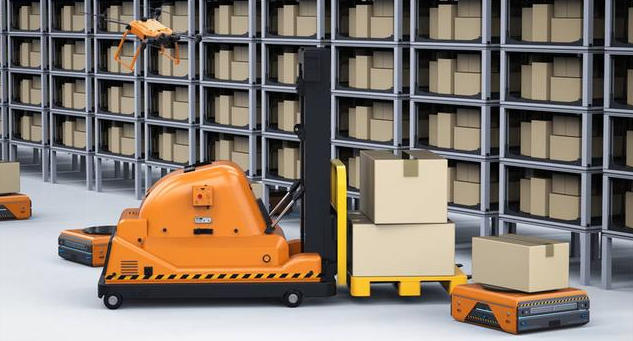
With the continuous advancement of warehouse automation, smart logistics, and Industry 4.0, autonomous forklifts (AGV/AMR) have become indispensable in modern warehouses. Compared with traditional forklifts, autonomous forklifts demand higher environmental perception, storage slot recognition accuracy, and operational stability, especially in human-robot collaborative real-world warehouse scenarios.
Among these, storage slot status recognition—determining whether a slot is occupied, the height of the cargo, and the stacking condition—has become a key technology affecting autonomous forklift scheduling, safety, and system reliability.
1. Core Challenges of Autonomous Forklifts in Smart Warehousing
In real warehouse operations, autonomous forklifts face the challenge of not just 'can it move?' but rather, 'can it move stably, accurately, and safely?'
1. Information Lag in Human-AGV Collaborative Operations
In many warehouse scenarios, human labor is still unavoidable:
-
Temporary placement or removal of goods by humans
-
Storage slot status not updated in real-time in WMS/WCS
-
AGVs receive incorrect instructions, leading to empty picks, misplacements, or collisions
👉 Delayed storage slot information is one of the biggest risks to autonomous forklift efficiency and safety.

2. Higher Requirements for Storage Slot Perception
Autonomous forklifts need to know more than just:
-
Whether a slot is occupied
-
Whether a slot is empty
They also need to perceive:
-
Cargo stack height
-
Over-height or tilted items
-
Whether secondary stacking conditions are met
This poses a significant challenge for traditional 2D sensing solutions.
2. Case Study: East China Lithium Battery Warehouse (Typical Application Scenario)
In an automated lithium battery warehouse in East China, a large number of AGVs were deployed for pallet and box handling. During daily operations:
-
Humans frequently participated in shelving and retrieval operations
-
Storage slot status updates were delayed
-
AGVs executed tasks based on incorrect slot information
-
Resulting in reduced operational efficiency and potential safety risks
To address these issues, the project planned to introduce a storage slot status automatic recognition system to achieve:
-
Real-time monitoring of each storage slot
-
Automatic feedback of occupancy and height information
-
Real-time integration with the WMS system
This ensures stability, safety, and high efficiency for AGV picking and placement operations.

3. Common Sensor Solutions for Storage Slot Status Recognition
1. Single-Point LiDAR (Laser Rangefinder)
-
Captures only a single distance point, providing very limited spatial information
-
Easily misses gaps between pallets or boxes
-
May misidentify occupied slots as empty, increasing operational errors
-
Cannot accurately detect stack height, posing potential stacking hazards
❌ Not suitable for complex storage slot recognition
Single-point LiDAR is simple and cost-effective, but its one-dimensional sensing severely limits its applicability in high-density or irregular warehouse layouts.
2. RGB Industrial Cameras
-
Highly dependent on training data quality and quantity
-
Susceptible to misdetection with non-standard or irregular cargo
-
Cannot directly capture cargo height or depth
-
Limited support for stacking decisions or 3D manipulation
❌ 2D vision alone struggles to meet 3D warehouse perception requirements
Although RGB cameras are widely used in visual inspection, their lack of depth perception reduces reliability in automated warehouse operations, especially in high-density or complex shelving environments.
3. Ultra-Wide Fisheye Cameras
-
Significant edge distortion, affecting measurement accuracy
-
Complex model training and calibration required
-
Highly dependent on GPU or server processing, increasing operational overhead
-
Overall engineering complexity and cost significantly increase
❌ High deployment complexity, not ideal for large-scale applications
Fisheye cameras provide a wide field of view but introduce technical challenges, making large-scale deployment costly and difficult to maintain.
4. ToF Depth Cameras (Preferred Solution)
-
Natively outputs 3D depth data + RGB information, capturing both shape and color
-
Can directly measure slot height, cargo volume, and spatial structure
-
Often equipped with onboard edge AI processing, enabling local computation
-
Eliminates the need for additional industrial PCs or heavy servers
-
Supports real-time, high-precision slot detection and stacking decisions
✅ The mainstream choice for intelligent warehouse slot recognition
ToF depth cameras combine high-precision 3D sensing, compact design, and AI-friendly integration, making them ideal for modern flexible warehouses, providing accuracy, speed, and scalability.
4. Detailed ToF Camera-Based Storage Slot Status Recognition Solution
What is a ToF Camera?
A TOF (Time-of-Flight) camera is an active depth sensing device. It emits modulated infrared light or short light pulses and measures the time it takes for the light to travel to an object and back. By calculating this flight time, the camera can directly determine the distance to objects. Using this method, ToF cameras can generate high-precision 3D depth maps and point clouds in real time, providing a complete spatial representation of target objects.
Key Advantages
-
High-Precision 3D Perception
-
Unlike traditional 2D vision, ToF cameras can directly capture height, volume, edges, and gaps of objects.
-
Supports centimeter- or even millimeter-level precision, making it highly reliable for detecting warehouse racks, pallets, and stacked cargo.
-
-
Independent of Ambient Light
-
Built-in infrared light source ensures stable sensing even in low-light or dark environments.
-
Ideal for enclosed warehouses, night operations, or environments with complex lighting conditions.
-
-
Unaffected by Object Color or Texture
-
Does not rely on RGB visual features, reducing misdetection caused by color, reflection, or packaging materials.
-
Accurately recognizes pallets, boxes, and loose cargo of various shapes and materials.
-
-
AI-Friendly by Design
-
Provides native 3D data suitable for deep learning algorithms for object recognition, pose estimation, and collision detection.
-
Supports edge AI inference, enabling local computation and real-time decision-making.
-
Easily integrates with AGV/AMR systems for intelligent material handling, automated sorting, and storage management.
-
-
High Reliability and Real-Time Performance
-
Adaptable to dynamic environments and high-speed operations.
-
Generates real-time point clouds to assist robots in precise obstacle avoidance and path planning.
-
In summary, ToF cameras, with their active depth sensing, robust stability, and AI-friendly features, have become the preferred sensor for modern smart warehouse slot status recognition and automated material handling systems.

ToF-Based Storage Slot Status Recognition Solution
This solution, based on RGB-D ToF cameras + AI algorithms, provides real-time, precise, and intelligent monitoring of each storage slot, offering reliable data and decision support for smart warehouse systems.
1. Storage Slot Occupancy Detection
-
Real-time determination of whether a slot is empty or occupied
-
Prevents empty picks or misplacement by AGVs/AMRs, improving handling efficiency
-
Handles different cargo sizes and forms, reducing human intervention
-
Dynamically updates slot status to provide accurate inventory information to upper-level warehouse management systems
2. Stack Height and Over-Height Detection
-
Precisely measures cargo stack height and shape
-
Automatically checks compliance with safe stacking regulations, preventing over-height stacking and collision risks
-
Supports monitoring of multi-layer cargo stacks, providing height data for intelligent handling and automated picking
-
Enhances warehouse safety and operational reliability
3. Edge AI Algorithm Deployment
-
Recognition algorithms run directly on the ToF camera or edge computing module
-
No need for external industrial PCs or high-performance servers
-
Enables low-latency, real-time processing, supporting rapid response and immediate decision-making
-
Reduces system deployment cost and operational complexity
-
Supports continuous operation for high-density, intelligent warehouses
Through ToF depth sensing + edge AI deployment, warehouse systems can achieve a closed-loop workflow from slot monitoring and cargo stack assessment to intelligent handling, providing high precision, high efficiency, and high reliability for modern smart warehouses.
Technical Advantages Summary
-
More accurate 3D perception: Realistic height and spatial structure
-
Simple deployment: Plug-and-play, reducing setup effort
-
Flexible communication: Supports TCP/IP, UDP, HTTP, JSON
-
Strong real-time performance: Millisecond-level data feedback to WMS/WCS
-
Scalable for large deployments: Supports hundreds to thousands of sensors
5. ToF + AI Enables Efficient AGV-Human Collaboration
With the ToF-based storage slot status recognition system, warehouses can achieve:
-
Automatic slot status verification before AGV operations
-
Elimination of information lag caused by human operations
-
Intelligent task allocation by the scheduling system
-
Significant improvement in overall throughput
In practical projects, the warehouse deployed hundreds of ToF cameras, enabling real-time monitoring of all critical slots and greatly reducing AGV errors and safety risks.
Conclusion
In the era of rapid development of smart warehouses and autonomous forklifts, 'accurate perception, fast response, and stable deployment' has become the core standard for sensing systems.
The ToF camera-based storage slot status recognition solution, combining 3D perception and AI, effectively addresses the limitations of traditional solutions in complex warehouse environments, providing a reliable data foundation for AGV-human collaborative operations.
In the future, as ToF sensor costs decrease and algorithms mature, ToF is expected to become a standard sensor for smart warehouses, autonomous forklifts, and logistics automation systems.

-
Publié dans
CS20P
