

Qiyuan T1 Robot: Swancor’s Transformable AI Robot at WAIC 2026
- par LidarSensor
What Is Qiyuan T1 and How Is Swancor Building the Future of Transformable AI Robots?
With the rapid development of artificial intelligence, foundation models, robotic control systems, and smart manufacturing industries, Embodied AI is becoming one of the most important directions in the global AI landscape. Unlike traditional AI, which mainly exists in digital environments, embodied intelligence gives AI robots the ability to perceive, move, and interact with the physical world, enabling robots to perform more complex real-world tasks.
From July 17 to 20, 2026, the 2026 World Artificial Intelligence Conference (WAIC 2026) will be held in Shanghai. For the first time, Embodied Intelligence will be elevated as one of the two major core tracks alongside AI computing power, further accelerating the integration of artificial intelligence and robotics technologies.
The event is expected to attract more than 200 companies and become an important platform for showcasing global AI robots, humanoid robots, smart manufacturing robots, and embodied intelligence technologies.
According to incomplete statistics, WAIC 2026 Hall H3 will feature more than 30 new embodied intelligence hardware and software products, covering key categories such as robot core components, robotic dexterous hands, industrial robots, general-purpose humanoid robots, quadruped robots, and embodied AI models.
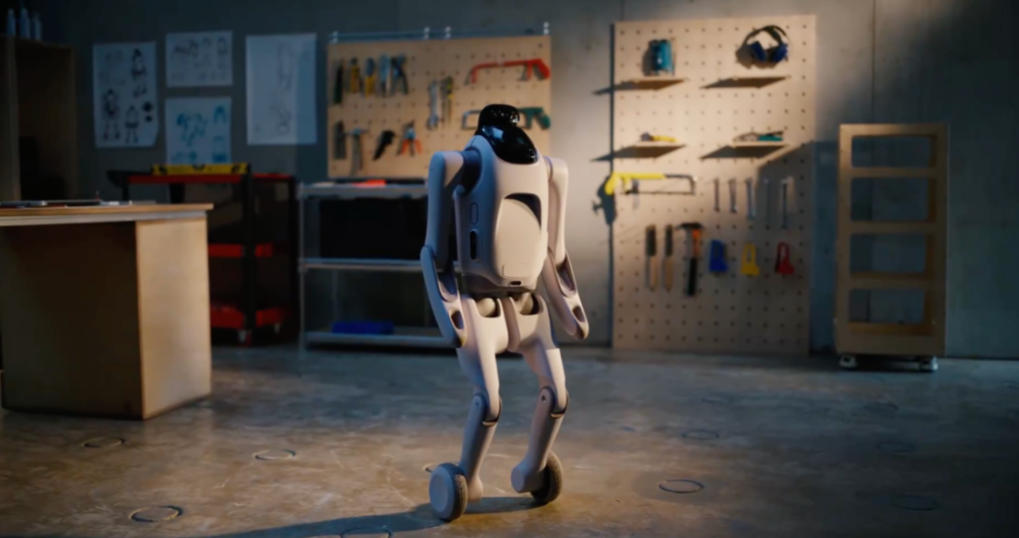
As an important company in advanced materials and intelligent robotics, Swancor Advanced Materials will globally debut Qiyuan T1, the world’s first transformable personal robot. The robot can autonomously switch between a wheeled humanoid robot mode and a quadruped robot mode according to different application environments, enabling indoor mobility, human-robot interaction, photography tasks, and exploration in complex outdoor environments.
What Is the Swancor Advanced Materials Robot? Exploring a New Generation of Personal Robots in the Embodied AI Era
The Swancor Advanced Materials Robot is an innovative embodied AI robotic product designed for future smart living and robotic application scenarios. By integrating robot structural design, intelligent control algorithms, motion systems, and artificial intelligence technologies, Swancor Advanced Materials is exploring new possibilities for robots in personal assistance, home services, commercial applications, and outdoor environments.
As AI robot technology continues to evolve, future robots will require not only execution capabilities but also stronger environmental adaptability.
Traditional mobile robots are usually limited to specific environments:
- Wheeled robots are efficient on flat surfaces but have limited ability to handle stairs and complex terrain.
- Quadruped robots offer strong obstacle-crossing capabilities but may have limitations in human interaction and indoor mobility scenarios.
The Qiyuan T1 transformable personal robot developed by Swancor Advanced Materials combines the advantages of both robot types through adaptive form switching technology, providing a new solution for future general-purpose intelligent robots.

Qiyuan T1 Global Debut: The World’s First Transformable Personal Robot
During the 2026 World Artificial Intelligence Conference (WAIC 2026), Swancor Advanced Materials will officially showcase the Qiyuan T1 transformable personal robot.
As the world’s first personal robot capable of autonomous form switching, the biggest feature of Qiyuan T1 is its ability to freely transform between:
- Wheeled humanoid robot mode
- Quadruped robot mode
This innovative design allows the robot to adapt to both indoor urban environments and complex outdoor terrains, providing new possibilities for the development of personal intelligent robots, AI assistant robots, home robots, and service robots.
Wheeled Humanoid Mode: Designed for Indoor Mobility and Human-Robot Interaction
In indoor environments, Qiyuan T1 can switch into its wheeled humanoid robot mode.
This mode is designed for applications including:
- Home environments
- Office spaces
- Commercial exhibitions
- Human-robot interaction
- Intelligent photography
Compared with traditional robots, the wheeled structure improves movement efficiency, allowing the robot to move faster and more flexibly on flat surfaces.
At the same time, the humanoid design better matches human living spaces, enabling more natural tasks such as:
- Communicating with users
- Environmental monitoring
- Intelligent photography
- Information collection
In the future, this type of personal robot could become an important part of smart living ecosystems, providing users with companionship, assistance, and intelligent services.
Quadruped Robot Mode: Adapting to Complex Terrain and Outdoor Tasks
When facing stairs, uneven roads, and complex outdoor environments, Qiyuan T1 can transform into a quadruped robot mode.
The quadruped configuration enhances:
- Terrain adaptability
- Obstacle-crossing ability
- Movement stability
- Outdoor exploration capability
It can be applied in scenarios such as:
Outdoor Inspection
The robot can enter complex environments for observation, data collection, and intelligent monitoring.
Special Environment Exploration
In hazardous areas or locations difficult for humans to access, quadruped robots can replace humans in completing tasks.
Intelligent Transportation
The robot can assist with object transportation and improve operational efficiency in challenging environments.
By combining wheeled humanoid and quadruped configurations, Qiyuan T1 breaks the limitations of traditional robots with fixed movement forms.
How Does the Swancor Advanced Materials Robot Promote Embodied AI Development?
The core goal of embodied intelligence is to enable robots with human-like capabilities, including:
- Perception ability
- Decision-making ability
- Mobility
- Manipulation ability
- Learning capability
Qiyuan T1 integrates:
- AI algorithms
- Intelligent sensing systems
- Robot motion control technology
- Multi-form mechanical structures
to allow robots to automatically select the optimal operating mode based on different environments.
This concept of adaptive robotic form switching could become an important direction for future general-purpose robots.
Compared with fixed-form robots, transformable robots can cover more application scenarios and improve commercial value.
WAIC 2026 Highlights Embodied Intelligence Trends: Swancor Advanced Materials Explores the Future of Robotics
The 2026 World Artificial Intelligence Conference is not only a platform for AI technology demonstrations but also an important opportunity to observe the future development of the robotics industry.
With:
- Rapid progress in AI foundation models
- Improved robot chip performance
- Upgraded sensor technologies
- Growing smart manufacturing demand
the global robotics industry is entering a new stage of development.
At WAIC 2026, Swancor Advanced Materials demonstrates the future direction of personal robots through Qiyuan T1:
From single-function robots toward:
- Multi-form robots
- Autonomous mobile robots
- AI interactive robots
- Intelligent personal assistants
In the future, embodied AI robots will play increasingly important roles across various industries.

Future Application Scenarios of Swancor Advanced Materials Robots
With the continuous development of Qiyuan T1 transformable personal robots and other intelligent robotic systems, future robots will no longer be limited to single-purpose functions. Through AI perception, intelligent control, multimodal interaction, and autonomous mobility technologies, robots will enter more real-world application environments.
Compared with traditional robots that perform fixed tasks, transformable robots can automatically adjust their movement modes according to environmental requirements, flexibly operating across indoor spaces, outdoor terrains, and professional application scenarios. This creates new possibilities for personal robots, service robots, industrial robots, and embodied AI applications.
Smart Home
In home environments, AI personal robots could become an important part of future smart home ecosystems.
By integrating visual perception, voice interaction, and artificial intelligence systems, robots can assist users with information searches, reminders, smart home control, object locating, and companionship services.
Compared with traditional smart speakers or stationary intelligent devices, mobile robots can actively perceive their surroundings and provide more personalized services based on user needs.
As humanoid robots and home service robots continue to mature, robots may become intelligent household assistants, providing support for elderly people, children, and families.
Commercial Services
In commercial environments, robots can use autonomous mobility and intelligent interaction capabilities to provide more efficient service solutions.
In hotels, shopping malls, exhibition centers, office buildings, airports, and other public spaces, robots can perform:
- Customer reception
- Intelligent navigation
- Product demonstrations
- Information consultation
- Event guidance
With stronger environmental adaptability, transformable robots can adjust their movement methods according to different spaces, delivering more flexible service experiences.
In the future, combining AI foundation models with robotic interaction technologies will enable service robots to achieve more natural human-robot communication and improve service efficiency.
Intelligent Inspection
In industries such as manufacturing, energy, and transportation, robotic inspection is becoming an important direction for intelligent upgrades.
By combining AI vision recognition, intelligent sensors, environmental perception systems, and autonomous navigation technologies, robots can enter complex or hazardous areas to monitor equipment conditions in real time.
Applications include:
- Factory equipment inspection
- Power facility monitoring
- Warehouse safety inspection
- Outdoor environmental monitoring
The quadruped mode provides stronger obstacle-crossing capabilities, allowing robots to operate on stairs, uneven surfaces, and complex outdoor terrain.
Content Creation and Intelligent Photography
With the rapid growth of short videos, livestreaming, and intelligent content production, robots are also creating new opportunities in content creation.
Robots like Qiyuan T1 can serve as:
- Intelligent photography assistants
- Automatic tracking devices
- Mobile camera platforms
helping users complete automated tracking, dynamic shooting, and multi-angle image capture.
Compared with traditional fixed cameras, intelligent robots can automatically adjust their positions according to movement, improving creative flexibility and efficiency.
In the future, combined with AI video analysis, automatic editing, and intelligent content generation technologies, robots may become important assistants for individual creators and professional production teams.
Industrial and Logistics Assistance
In smart manufacturing and intelligent logistics, robots will become an important force driving automation upgrades.
By integrating:
- AI task planning
- Machine vision
- Autonomous navigation
- Precision control systems
robots can participate in:
- Material transportation
- Component handling
- Smart warehouse management
- Equipment inspection
- Production assistance
Especially in flexible manufacturing environments, transformable robots can switch movement modes according to different tasks, improving adaptability in production environments.
In the future, the deep integration of AI robots and smart factory systems will accelerate manufacturing toward greater automation, flexibility, and intelligence.
Overall, with continuous advances in embodied intelligence technologies, robotic AI models, and intelligent hardware, transformable personal robots represented by Qiyuan T1 will gradually overcome the limitations of single-purpose robots and become next-generation intelligent terminals connecting homes, businesses, industries, and outdoor environments.
Future robots will not only be tools for completing tasks but also intelligent partners capable of understanding environments, adapting to scenarios, and actively collaborating with humans.
Transformable Robots Open a New Future: Qiyuan T1 Demonstrates the Next Direction of Embodied Intelligence
With the continuous integration of artificial intelligence and robotics technologies, embodied AI robots are becoming one of the most important directions for next-generation AI development.
The decision to make embodied intelligence a core track at WAIC 2026 indicates that the robotics industry is entering a period of rapid growth.
As a key product showcased at the conference, the Swancor Advanced Materials Qiyuan T1 robot provides a new exploration path for future personal robots through its innovative wheeled humanoid and quadruped transformation technology.
In the future, as markets for AI robots, humanoid robots, quadruped robots, transformable robots, and smart manufacturing robots continue to expand, Swancor Advanced Materials robots are expected to play an increasingly important role in the embodied intelligence era, accelerating the evolution of robots from single-function devices into intelligent partners across multiple scenarios.
