

QiaoYin Embodied AI Robot at WAIC 2026 Smart City Solutions
- par LidarSensor
How Is QiaoYin’s Embodied AI Robot Transforming Future Smart City Services?
With the rapid development of artificial intelligence (AI), robotics, and smart city infrastructure, embodied AI robots (Embodied AI Robots) are becoming one of the most important directions in the global technology industry. During the 2026 World Artificial Intelligence Conference (WAIC 2026), embodied intelligence was elevated for the first time as one of the two core technology tracks alongside intelligent computing, attracting more than 200 companies to showcase their latest innovations.
The exhibition covers a wide range of categories, including robotic components, dexterous hands, industrial robots, general-purpose humanoid robots, quadruped robots, and embodied AI models.
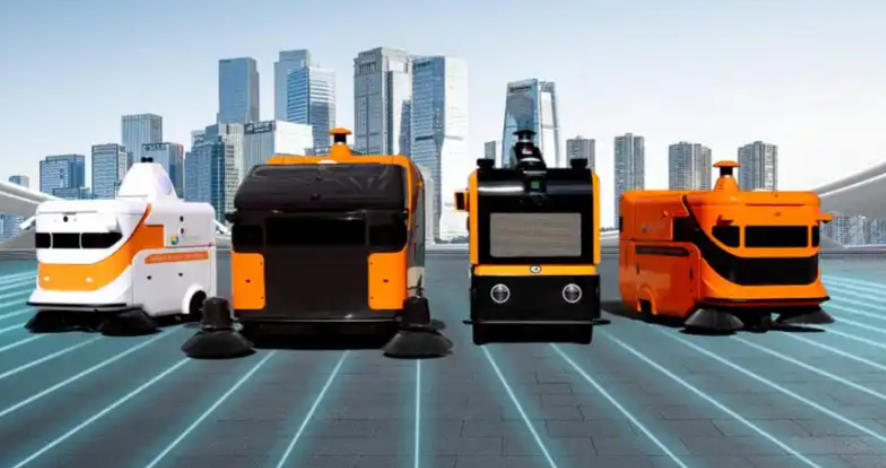
At the event, QiaoYin Co., Ltd. will unveil its independently developed embodied AI robot product for the first time globally. Based on the concept of humanoid intelligent equipment, the robot explores the integration of artificial intelligence and urban service scenarios, driving intelligent transformation in areas such as sanitation services, urban management, and public facility maintenance.
As an important company in the urban service industry, QiaoYin has long focused on smart city operations, urban environmental services, intelligent equipment development, and AI-powered urban management solutions. By combining AI algorithms, robotics technology, intelligent perception systems, and automation equipment, QiaoYin is exploring the transition from traditional urban service models toward a new generation of AI-powered urban management systems.
What Is QiaoYin? Exploring AI-Powered Urban Service Innovation
QiaoYin is a company specializing in urban public service solutions, with business areas covering urban environmental management, smart sanitation, and city operation services.
With the rapid advancement of artificial intelligence technology, traditional urban services are undergoing a major transformation toward automation and intelligence.
Future city management will not only rely on human labor to complete repetitive tasks but will also utilize AI robots to improve efficiency, safety, and service quality.
By integrating:
- Artificial Intelligence (AI)
- Robot Control Systems
- Smart Perception Technology
- Autonomous Mobility Technology
- Big Data Analytics Platforms
urban service robots can achieve more accurate, efficient, and intelligent task execution.
QiaoYin’s exploration of embodied AI robots aims to address complex urban service challenges through robotics technology, making intelligent equipment an important foundation for future smart cities.

WAIC 2026: QiaoYin Globally Launches Its Embodied AI Robot
During WAIC 2026, QiaoYin will showcase its independently developed Embodied AI Robot for the first time.
Designed as intelligent equipment for urban services, the robot integrates:
- AI-based decision-making capabilities
- Multimodal environmental perception
- Autonomous mobility technology
- Intelligent task execution systems
- Human-machine interaction capabilities
to enable robots to better understand and adapt to complex urban environments.
Unlike traditional automation equipment that can only perform fixed tasks according to predefined programs, embodied AI robots can perceive their surroundings, analyze task requirements, and autonomously execute operations, providing more flexible and intelligent service solutions.
The launch of this new product represents QiaoYin’s important exploration in the robotics field and highlights the future trend of urban services shifting from manual operation to intelligent operation.
How Can QiaoYin’s Embodied AI Robot Upgrade Urban Services?
Urban services involve numerous complex, repetitive, and high-frequency tasks, including environmental maintenance, public area management, facility inspection, and data collection.
As cities continue to expand, traditional service models that rely heavily on human labor face increasing challenges in efficiency, cost control, and operational safety.
In recent years, rapid advances in artificial intelligence (AI), robotic vision, autonomous navigation, intelligent perception, and embodied AI technologies have made intelligent robots an important component of smart city development.
Compared with traditional automation systems, embodied AI robots can not only execute programmed tasks but also perceive environments, understand requirements, and adjust their actions autonomously, enabling more flexible and efficient urban services.
QiaoYin’s Embodied AI Robot combines AI algorithms, intelligent hardware, and robotic control technologies to support various urban service scenarios and accelerate the transition from human-driven management to intelligent collaboration.
Smart Sanitation Applications: Improving Urban Environmental Management Efficiency
Smart sanitation is one of the key application areas for artificial intelligence in urban services.
Traditional sanitation operations often require significant human resources, and many tasks involve repetitive workloads or challenging environments.
In the future, QiaoYin’s embodied AI robot can combine AI vision recognition, environmental perception technology, and intelligent task scheduling systems to assist with:
- Urban environment inspection
- Public area cleaning assistance
- Waste classification recognition
- Environmental data collection
- Waste management support
- Intelligent route planning
By integrating cameras, sensors, and AI algorithms, robots can continuously perceive surrounding environments, identify road conditions, detect human activities, and analyze environmental changes.
For example, in urban roads, parks, and residential communities, robots can assist workers with daily inspections, detect abnormal conditions, and provide timely feedback, improving overall urban management efficiency.
Unlike traditional equipment that follows fixed routes, intelligent robots can dynamically adjust their strategies according to real-world conditions, delivering more accurate and flexible smart sanitation solutions.
Urban Inspection and Public Facility Management: Building Smart City Perception Networks
The development of smart cities relies heavily on real-time and accurate data. Intelligent robots can become important carriers for collecting urban information and supporting digital city management.
In public service scenarios, QiaoYin’s embodied AI robot could potentially support:
- Urban infrastructure inspection
- Road environment monitoring
- Public area safety supervision
- Facility condition data collection
- Urban information feedback
By combining robot vision systems, multi-sensor fusion technology, and AI analysis algorithms, robots can continuously perceive urban environments and transmit collected data to intelligent management platforms.
For example, in public spaces, robots can assist with checking the operational status of urban facilities, identifying potential problems, and helping management teams detect risks in advance.
Compared with traditional manual inspection methods, intelligent robot-based inspection can improve response speed, reduce operational costs, and enhance the efficiency of urban management.
In the future, with the deeper integration of 5G, Internet of Things (IoT), artificial intelligence, and robotics technology, urban robots are expected to become an important part of smart city infrastructure, enabling more digitalized and intelligent city operations.
Human-Robot Collaboration in Urban Services: Creating More Efficient City Management
The future of urban services will not mean completely replacing human workers with robots. Instead, it will focus on human-robot collaboration, where robots handle repetitive, high-intensity, or potentially dangerous tasks while humans focus on more complex management, decision-making, and problem-solving activities.
QiaoYin’s embodied AI robot can serve as an intelligent assistant for urban service workers by helping complete:
- High-frequency repetitive tasks
- Long-duration environmental inspections
- Data collection and analysis
- Automated basic operations
- Assistance in special working environments
Through collaboration between humans and robots, urban service efficiency can be improved while reducing workload and operational risks for employees.
For example, in large public areas, city roads, and complex environments, robots can first complete basic information gathering and task execution, while human operators analyze results and handle advanced situations.
This new service model of 'robots execute, humans manage' is expected to become an important direction for future smart city robots (Smart City Robots).
As embodied AI robots, AI foundation models, autonomous navigation, and intelligent perception technologies continue to advance, QiaoYin’s intelligent robots may expand into more applications, helping urban management become more efficient, precise, and sustainable.
Core Technologies Behind Embodied AI Robots
The key advantage of embodied AI robots lies in integrating multiple capabilities, including perception, understanding, decision-making, and execution.
Unlike traditional industrial automation equipment that operates through fixed programming, embodied AI robots combine artificial intelligence, foundation models, robot vision, sensor technologies, and motion control algorithms to achieve stronger environmental adaptability and autonomous operation capabilities.
With continuous advancements in AI technology, embodied AI robots are expected to play important roles in:
- Smart cities
- Intelligent manufacturing
- Commercial services
- Healthcare assistance
- Home service applications

AI Vision Technology: Giving Robots the Ability to Understand the World
Visual perception is one of the fundamental capabilities of embodied AI robots.
Robots need to understand their surroundings, recognize people and objects, and identify environmental changes before they can complete autonomous tasks.
By combining:
- AI Vision Recognition
- Deep Learning Algorithms
- Environmental Perception Systems
- Multi-Sensor Fusion Technology
- 3D Vision and Depth Perception Technology
robots can obtain richer environmental information and achieve object recognition, spatial positioning, and situation analysis.
For example, in urban service scenarios, embodied AI robots can use vision systems to identify road conditions, detect obstacles, and discover abnormal situations.
In industrial applications, robots can recognize component positions and perform precise grasping and automated operations.
Compared with traditional equipment that follows fixed procedures, AI-powered robots with advanced vision capabilities can dynamically adjust their behaviors based on environmental changes, providing essential support for autonomous navigation, intelligent manipulation, and human-robot interaction.
Autonomous Mobility and Navigation Technology: Enabling Intelligent Movement in Complex Environments
Stable and efficient autonomous navigation is one of the key technologies required for embodied AI robots to achieve real-world deployment.
Urban environments, industrial spaces, and public areas are constantly changing, with moving people, dynamic obstacles, and changing layouts. Therefore, robots need advanced positioning and path-planning capabilities.
By integrating:
- SLAM Navigation Technology (Simultaneous Localization and Mapping)
- Path Planning Algorithms
- Localization Technology
- Intelligent Obstacle Avoidance Systems
- Autonomous Mobility Control
robots can build environmental maps, determine their own positions, and calculate optimal movement paths.
For example:
In smart city applications, robots can autonomously perform area inspections.
In commercial environments, robots can safely move through crowds to provide guidance and customer services.
In industrial environments, robots can adjust their routes according to production requirements to improve operational efficiency.
Autonomous navigation technology allows robots to move beyond fixed pathways and adapt to more open, dynamic, and real-world application environments.
AI Decision-Making and Task Execution: Helping Robots Understand and Complete Complex Tasks
Future robots need more than movement capability—they need the ability to understand tasks.
Traditional robots usually rely on pre-programmed instructions to perform specific actions, while embodied AI robots use AI models and intelligent control systems to achieve more flexible task understanding and execution.
By combining:
- AI Foundation Models
- Natural Language Understanding
- AI Decision-Making Algorithms
- Robot Control Systems
- Reinforcement Learning Technology
robots can:
- Understand user requirements
- Analyze environmental conditions
- Develop execution strategies
- Adjust behaviors autonomously
- Complete complex tasks
For example, users can give instructions through natural language, and the robot can understand the objective, combine visual perception, navigation, and motion control capabilities, and complete multi-step operations.
This closed-loop capability of “understanding → planning → execution” is one of the key differences between embodied intelligence robots and traditional automation equipment.
With further development of robot foundation models and AI algorithms, future robots will gain stronger learning capabilities and adaptability, allowing them to operate in more complex environments and become essential intelligent terminals for smart cities and intelligent industries.
Humanoid Intelligent Equipment: The Future Direction of Urban Service Robots
The humanoid intelligent equipment showcased by QiaoYin represents the future trend of robots becoming more versatile and adaptable.
Compared with traditional specialized machines, humanoid robots feature structures closer to humans, allowing them to better adapt to existing urban environments and service spaces.
In the future, humanoid intelligent equipment may be applied in:
- Smart city management
- Public services
- Commercial services
- Industrial assistance
- Special environment operations
As robotic hardware, AI models, and intelligent control technologies continue to mature, humanoid robots will become important intelligent platforms connecting digital systems with the physical world.
QiaoYin’s AI Robot Strategy: Driving the Future of Smart Cities
With accelerating global urban digital transformation, smart cities have become one of the most important application areas for artificial intelligence.
Future cities require more intelligent, efficient, and sustainable management approaches, and AI robots will become a critical component of this transformation.
Through the development of embodied AI robots, intelligent equipment, and AI-powered urban service solutions, QiaoYin is exploring new possibilities for integrating robotics technology with city operations.
In the future, its intelligent robotics solutions may support:
- Smart sanitation
- Urban management
- Public services
- Smart parks
- Intelligent inspection
- City operation platforms
helping urban service systems move toward greater digitalization and intelligence.
In the Era of Embodied AI, QiaoYin Opens a New Future for Urban Service Robots
The 2026 World Artificial Intelligence Conference (WAIC 2026) has further increased global attention toward embodied intelligence technologies.
With continuous integration of AI foundation models, robotic perception, intelligent control, and automation technologies, robots are evolving from simple execution machines into intelligent systems capable of understanding environments, completing tasks, and collaborating with humans.
QiaoYin’s first global debut of its independently developed embodied AI robot at WAIC 2026 not only demonstrates the company’s exploration in intelligent equipment but also reflects the future direction of urban service transformation.
In the future, as technologies including:
- AI Robots
- Embodied AI Robots
- Humanoid Robots
- Smart City Robots
- Service Robots
continue to mature, robots will play an increasingly important role in urban management and public services, accelerating the arrival of a new era of intelligent cities.
