

Kepler Robotics at WAIC 2026: K3 Embodied AI Robot Innovation
- par LidarSensor
How Is Kepler Robotics Building the Future of Embodied AI Robots?
With the rapid development of artificial intelligence technologies, robotic control algorithms, and smart manufacturing industries, Embodied AI is becoming one of the most important development directions in the global artificial intelligence ecosystem.
Unlike traditional artificial intelligence, which mainly relies on data processing and algorithms to complete digital tasks, embodied intelligence integrates robot hardware, AI models, environmental perception, motion control, and intelligent decision-making systems to enable robots to truly understand the physical world and autonomously perform interactions and tasks.
From July 17 to 20, 2026, the 2026 World Artificial Intelligence Conference (WAIC 2026) will be held in Shanghai, China. For the first time, Embodied Intelligence will be elevated as one of the two major core tracks alongside AI computing power, attracting more than 200 companies to showcase their latest innovations and demonstrating the industry transition from “digital intelligence” to “physical intelligence.”
According to incomplete statistics, Hall H3 at WAIC 2026 will feature more than 30 new embodied intelligence hardware and software products, covering key categories including robot core components, dexterous hands, industrial robots, general-purpose humanoid robots, quadruped robots, and embodied AI models.
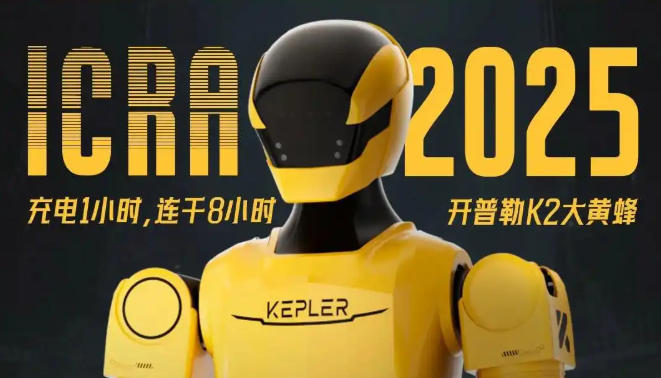
As an important company in the embodied AI robotics industry, Kepler Robotics will showcase its latest K3 Bumblebee Series Robot at the conference and complete the first public physical demonstration of its Qilin Series Robot, highlighting its innovations in intelligent robots, embodied AI technologies, and commercial robot applications.
Kepler Robotics Product Matrix: Exploring Next-Generation Embodied AI Robot Technologies
With the rapid growth of AI robots, humanoid robots, intelligent robots, robotic automation systems, and embodied AI platforms, the robotics industry is undergoing a major transformation from 'automated execution' toward 'autonomous intelligence.'
Traditional robots mainly rely on pre-programmed instructions to complete repetitive tasks. In contrast, next-generation Embodied AI Robots combine artificial intelligence algorithms, environmental perception, motion control, and intelligent decision-making capabilities, allowing robots to understand the physical world, adapt to complex environments, and complete diverse tasks autonomously.
Under this development trend, robots are gradually evolving from single-function machines into intelligent terminals with complete capabilities of:
Perception → Understanding → Decision-Making → Execution
In the future, embodied AI robots will play an increasingly important role across industries including:
- Smart manufacturing
- Industrial automation
- Robotics research and education
- Commercial services
- Smart cities
- Human-robot collaboration
Kepler Robotics focuses on embodied AI robot development, intelligent robotic system design, and core robotics technology innovation, aiming to create next-generation intelligent robots designed for future applications.
Through continuous exploration of robot structures, artificial intelligence algorithms, intelligent control systems, and multimodal interaction technologies, Kepler Robotics is accelerating the transition of robots from laboratory research environments into real-world applications.

Kepler Robotics’ product ecosystem focuses on several key technology areas:
Artificial Intelligence Algorithms
By utilizing AI models and intelligent algorithms, robots can improve their ability to understand environments, plan tasks, and perform autonomous operations.
Advanced AI technologies allow robots to analyze surrounding conditions, make intelligent decisions, and continuously improve task execution efficiency.
Robot Motion Control Technology
Motion control is one of the fundamental technologies enabling intelligent robots.
Through advanced control systems, robots can achieve:
- Precise movement control
- Multi-joint coordinated motion
- Complex action execution
- Improved stability and flexibility
These capabilities provide the foundation for robots operating in dynamic and challenging environments.
Multimodal Perception Systems
Future intelligent robots require stronger environmental understanding capabilities.
By integrating:
- Visual perception systems
- Sensors
- Environmental data analysis
- AI perception algorithms
robots can achieve better spatial understanding, object recognition, and environmental adaptation.
Intelligent Interaction Capability
Human-robot interaction is becoming increasingly important in future robotics applications.
Through intelligent communication technologies, robots can achieve more natural and efficient interaction with humans, improving collaboration experiences and expanding application possibilities.
High-Performance Robot Hardware Platforms
Advanced mechanical structures, robotic actuators, and intelligent control systems provide the foundation for high-performance robot operation.
By combining hardware and software optimization, Kepler Robotics enables robots to expand their capabilities according to different application requirements, providing flexible solutions for:
- Smart manufacturing
- Robotics research
- AI education
- Commercial intelligent services
Compared with traditional robots that mainly focus on mechanical performance and execution efficiency, Kepler Robotics places greater emphasis on autonomous understanding and task completion capabilities in real-world environments.
K3 Bumblebee Series Robot: Building a High-Performance Embodied AI Robot Platform
During WAIC 2026, Kepler Robotics will showcase its latest K3 Bumblebee Series Robot.
Designed as a next-generation intelligent robot platform, the K3 series integrates advanced robotic control technologies, artificial intelligence algorithms, and intelligent perception capabilities, representing the latest trends in embodied AI robot development.
Unlike traditional robots that mainly perform fixed tasks, future embodied AI robots require stronger capabilities in:
- Environmental understanding
- Autonomous decision-making
- Complex task execution
- Adaptive operation
The K3 Bumblebee Series is designed around intelligence, flexibility, openness, and application scalability, supporting diverse requirements in research, technology development, and commercial applications.
K3 Bumblebee Series Robot: Supporting Intelligent Robotics Research and Real-World Applications
The K3 Bumblebee Series Robot provides multiple application values as an advanced embodied AI robotics platform.
Intelligent Robotics Development Platform
The K3 Bumblebee Series can serve as an important platform for artificial intelligence and robotics research, supporting developers and researchers in exploring:
- Robot algorithm development
- AI model testing
- Intelligent control system research
- Robot learning experiments
- Human-robot interaction technologies
Through an open robotics platform design, universities, research institutions, and enterprises can conduct embodied AI research more efficiently and accelerate the development of innovative robotic applications.
High-Precision Motion Control Capability
Robot mobility and motion control are fundamental technologies for achieving intelligent manipulation.
The K3 Bumblebee Series integrates advanced motion control technologies to achieve more stable and accurate robotic operations.
In complex task environments, robots can perform:
- Multi-joint coordinated movements
- Precision motion control
- Dynamic posture adjustment
- Task trajectory planning
These capabilities enable robots to adapt to more challenging environments and provide technical support for future applications in:
- Industrial automation
- Human-robot collaboration
- Intelligent service robotics
AI Perception and Intelligent Interaction Capability
Future robots need the ability to understand their surroundings and communicate effectively with humans.
The K3 Series integrates artificial intelligence perception technologies, combining vision systems, sensor fusion, and intelligent algorithms to analyze and understand surrounding environments.
The robot can support capabilities including:
- Environmental recognition
- Object detection
- Spatial positioning
- Intelligent interaction
- Autonomous task execution
With AI technologies, robots are evolving from simple instruction-following machines into intelligent systems capable of understanding requirements and independently completing tasks.
Multi-Scenario Application Expansion Capability
Embodied AI robots will create value across various industries in the future.
Through an open and expandable design, the K3 Bumblebee Series can support development and deployment across multiple scenarios.
Potential application areas include:
Smart Manufacturing
Robots can assist enterprises in automation upgrades, improving production efficiency and supporting the development of flexible manufacturing systems and smart factories.
Research and Education
The K3 platform provides universities and research institutions with robotics experimentation capabilities, supporting studies in:
- Artificial intelligence
- Robotics
- Automation control
- Human-machine interaction
Commercial Services
Robots can be explored for future applications in public services, intelligent interaction environments, and commercial scenarios.
Robotics Development
The platform helps developers quickly validate robot algorithms and intelligent applications, accelerating innovation in robotics technologies.
With continuous advances in robot vision, AI foundation models, multimodal artificial intelligence, intelligent control algorithms, and robot learning technologies, the K3 Bumblebee Series is expected to become an important platform for embodied AI robotics research and commercial deployment.
In the future, robots will no longer be limited to executing predefined tasks. Instead, they will become intelligent partners capable of sensing environments, understanding human needs, learning autonomously, and collaborating with people.
Through continuous integration of robot hardware, AI algorithms, and intelligent systems, Kepler Robotics is exploring new possibilities for the development of embodied intelligence technologies.
Qilin Series Robot Makes First Public Physical Appearance: Demonstrating Kepler Robotics’ Innovation Strength
In addition to the K3 Bumblebee Series Robot, Kepler Robotics will also showcase the Qilin Series Robot for the first time at WAIC 2026, further demonstrating its technological capabilities in intelligent robotics.
To achieve true intelligence, embodied AI robots must combine multiple advanced capabilities, including:
- High-precision movement
- Environmental perception
- Autonomous decision-making
- Flexible execution
- Human-robot collaboration
The Qilin Series Robot integrates robotic mechanical structures, intelligent control systems, and artificial intelligence technologies to explore new possibilities for robots operating in complex environments.
As robotics technology continues to evolve, future robots will not only serve manufacturing industries but will also play important roles in:
- Smart factories
- Research laboratories
- Intelligent education
- Commercial services
- Specialized application scenarios
Through continuous development of embodied AI robot products, Kepler Robotics is accelerating the transition of robotics technologies from concept validation toward large-scale practical applications.

How Kepler Robotics Supports the Development of the Embodied AI Industry
The global robotics industry is entering a new stage of intelligent transformation.
With the continuous maturity of technologies including AI foundation models, multimodal AI, robotic chips, sensing technologies, and advanced control algorithms, robots are evolving from traditional 'automated execution devices' into intelligent systems capable of understanding environments and autonomously planning tasks.
Future intelligent robots require several core capabilities:
AI Vision and Environmental Perception Capability
Vision perception is one of the most important foundations for robots to understand the physical world.
By combining:
- Cameras
- Depth sensors
- 3D perception technologies
- AI vision algorithms
robots can recognize objects, analyze spatial environments, locate targets, and adjust their actions according to real-world conditions.
In applications such as smart manufacturing, logistics automation, and service robotics, advanced vision systems enable robots to improve task efficiency and achieve more precise operations.
Intelligent Decision-Making and Autonomous Learning Capability
Future robots must do more than simply execute commands. They need to understand objectives and independently complete complex operations.
By combining AI foundation models, multimodal AI technologies, and robot learning algorithms, robots can:
- Understand natural language instructions
- Analyze environmental changes
- Develop task plans
- Optimize execution processes
These capabilities are transforming robotics from traditional automation systems into truly intelligent robotic systems.
Flexible Motion and Precision Manipulation Capability
Embodied AI robots need human-like mobility and manipulation abilities to operate effectively in increasingly complex real-world environments.
Through advanced technologies including:
- Robot joint design
- Motion control algorithms
- Dynamic balance technologies
- Precision actuators
robots can perform tasks such as movement, object grasping, assembly, transportation, and complex operations.
These capabilities are essential foundations for the commercial deployment of future humanoid robots, industrial robots, and service robots.
As robots become more intelligent and adaptable, they will be able to operate in environments that were previously difficult for traditional automation systems, expanding the possibilities of robotics applications across different industries.
Kepler Robotics Applications: From Smart Manufacturing to Future Intelligent Living
With the continuous development of embodied AI technologies, the application scope of intelligent robots is rapidly expanding.
Kepler Robotics products have the potential to support multiple industries and scenarios, including:
Smart Manufacturing and Industrial Automation
In smart factories, robots can assist with production, assembly, inspection, transportation, and other industrial tasks.
By improving automation capabilities and operational efficiency, intelligent robots can help enterprises achieve digital transformation and build next-generation smart manufacturing systems.
Future industrial robots will not only perform repetitive tasks but also collaborate with human workers, adapt to production changes, and improve manufacturing flexibility.
Robotics Research and Development
As an advanced robotics platform, Kepler Robotics provides support for universities, research institutions, and development teams to conduct:
- AI robotics research
- Robot control algorithm development
- Human-robot interaction experiments
- Intelligent system testing
These capabilities make intelligent robots an important tool for exploring next-generation robotics technologies.
Through practical robot platforms, researchers can accelerate innovation in areas such as artificial intelligence, autonomous systems, and embodied intelligence.
Intelligent Education and Talent Development
With the increasing demand for artificial intelligence professionals, robotics platforms are becoming essential tools for cultivating future AI talent.
Through robotics education platforms, students can learn:
- Robot mechanical design
- AI algorithm development
- Computer vision technologies
- Automatic control systems
These practical learning experiences help develop future:
- Robotics engineers
- AI developers
- Automation specialists
- Intelligent manufacturing professionals
By connecting theoretical knowledge with hands-on robotics practice, intelligent robot platforms provide an effective approach for AI education and workforce development.
Commercial Services and Intelligent Applications
In the future, intelligent robots will play an increasingly important role in commercial services, public spaces, and smart city environments.
Robots may provide more intelligent and efficient services through:
- Smart interaction
- Autonomous assistance
- Intelligent information services
- Human-machine collaboration
As AI and robotics technologies continue to mature, intelligent robots will gradually become part of everyday life and business environments.
WAIC 2026: Embodied AI Robots Enter a New Stage of Industry Development
The 2026 World Artificial Intelligence Conference (WAIC 2026) highlights embodied intelligence as a major technology track, demonstrating that robotics has become a key breakthrough direction for the artificial intelligence industry.
From humanoid robots, quadruped robots, and industrial robots to embodied AI models, an increasing number of innovative products are driving artificial intelligence beyond virtual computing environments and into the physical world.
Kepler Robotics’ participation at WAIC 2026 with the K3 Bumblebee Series Robot and Qilin Series Robot not only demonstrates the company’s technological achievements in robotics but also contributes to the growth of the embodied AI robotics ecosystem.
As AI technologies, robotic hardware, and intelligent control systems continue to converge, robots will become a critical bridge connecting artificial intelligence with the real world.
The Future of Kepler Robotics: Accelerating the Era of Intelligent Robots
In the future, with continuous advances in:
- Embodied AI robots
- AI robotics
- Humanoid robot technologies
- Intelligent manufacturing solutions
- Autonomous robotic systems
robots will become more capable of understanding environments, learning from experience, and collaborating with humans.
Kepler Robotics will continue exploring innovations in embodied intelligence robots, AI robots, humanoid robotics technologies, and smart manufacturing solutions, helping intelligent robots expand into more industries and application scenarios.
By integrating artificial intelligence, robotics hardware, and intelligent control systems, Kepler Robotics aims to accelerate the arrival of the intelligent robotics era and create new possibilities for the future of human-machine collaboration.
