How Can ToF Technology Improve Accuracy and Efficiency in Industrial Quality Inspection?
The Demand for Automation and Precision Inspection in Industrial Manufacturing
With the advancement of Industry 4.0 and intelligent manufacturing, modern production increasingly demands automated inspection, precise measurement, and real-time quality feedback. Traditional manual inspection methods are inefficient, time-consuming, and prone to human error, making them unsuitable for large-scale, high-precision production lines.
In industries such as electronics, machinery, automotive, aerospace, and precision instruments, requirements for dimensional accuracy, shape consistency, and surface quality are particularly stringent.
TOF (Time-of-Flight) technology, with its high-precision depth sensing, fast distance measurement, and 3D imaging capabilities, has become a key tool in industrial quality inspection. By emitting light pulses and measuring their reflection time, ToF can quickly generate 3D point cloud data and depth maps of workpieces, enabling automated dimensional measurement, defect detection, and quality monitoring. Compared to traditional 2D vision or laser measurement technologies, ToF offers significant advantages in speed, spatial resolution, complex surface adaptability, and real-time feedback, providing a reliable data foundation for intelligent manufacturing.
What is a ToF used for?
ToF (Time of Flight) is a 3D sensing technology that measures distance by calculating the time it takes for light to travel from emission to reflection. It is widely used across various fields with multiple applications:
-
Industrial Inspection – For dimensional measurement, defect detection, and surface quality monitoring, enabling automated and high-precision quality control.
-
Robotics and Autonomous Driving – Assists robots and vehicles with environment perception, obstacle avoidance, navigation, and path planning.
-
Consumer Electronics – Powers facial recognition, gesture control, and AR/VR depth perception, enhancing user interaction.
-
Retail and Virtual Fitting – Enables body scanning, virtual try-on, 3D modeling, and personalized recommendation, advancing smart retail.
-
Security and Surveillance – Provides human detection, posture recognition, and spatial localization, enhancing system intelligence.
-
Healthcare and Medical Monitoring – Used in posture analysis, rehabilitation tracking, and biometric identification.
In short, ToF is used for precise distance measurement and 3D spatial perception—a core technology wherever machines need to 'understand' their surroundings.
The Core Role of ToF in Industrial Quality Inspection
In modern manufacturing, high precision and high efficiency in quality inspection are key to ensuring product consistency and reliability. Traditional contact measurement or 2D vision systems often suffer from slow processing, limited accuracy, and sensitivity to lighting conditions. In contrast, ToF (Time-of-Flight) technology, with its fast, non-contact, and high-precision 3D measurement, is becoming a cornerstone of intelligent quality control.
By emitting modulated light signals and measuring reflection time differences, ToF sensors rapidly calculate surface distances and generate high-density, high-precision 3D point cloud data. This depth information enables dimensional measurement, defect detection, surface analysis, and automated process control, empowering manufacturers to achieve smarter and more reliable quality assurance.
1. High-Precision Dimensional Measurement
ToF sensors can complete global or local 3D scans within milliseconds, creating accurate depth models of components. This capability makes ToF ideal for inspecting complex parts, precision molds, and high-speed production lines.
Typical applications include:
-
Dimensional and shape measurement – Accurately measures length, width, height, and geometry to ensure components meet design tolerances.
-
Multi-point thickness detection – Monitors uniformity in sheets, tubes, or stamped parts.
-
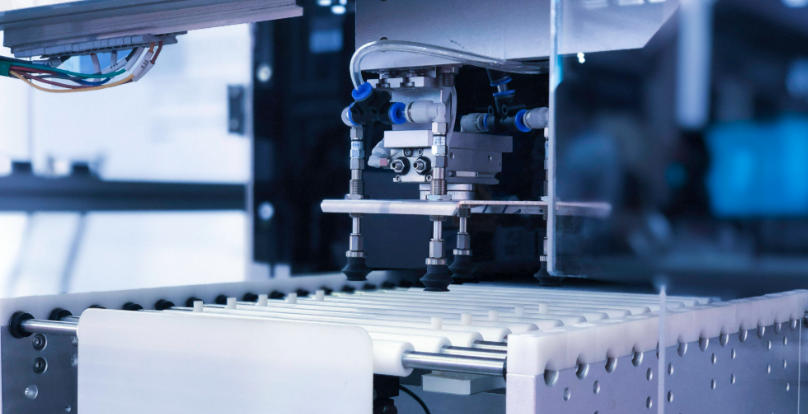
Dynamic inspection – Maintains high frame rates during real-time detection of moving parts on conveyor belts or assembly lines.
Unlike traditional contact measurement, ToF inspection is non-destructive and free from probe wear or sample damage. Moreover, it integrates seamlessly with robotic arms and industrial automation systems, greatly improving consistency and efficiency.
2. Defect Detection and Surface Quality Monitoring
Product quality depends not only on dimensional accuracy but also on surface integrity. ToF, combined with machine vision and AI algorithms, can identify and classify various surface defects.
-
Surface defect detection – Identifies scratches, dents, cracks, burrs, or uneven coatings through high-resolution 3D analysis.
-
Assembly precision inspection – Detects misalignment, gaps, or looseness between components.
-
Dynamic defect monitoring – Captures and removes defective products in real-time, preventing faulty parts from reaching subsequent stages.
Unlike 2D vision systems, ToF provides true depth perception, making it ideal for detecting issues on complex curved or reflective surfaces—such as in automotive, electronics, or metal processing.
Furthermore, 3D visualization reports can compare measurement data with CAD models, visually presenting deviations and defect locations to aid engineers in decision-making.
3. Real-Time Feedback and Automated Control
One of ToF’s greatest advantages in industrial inspection is real-time responsiveness and integration capability.
On automated production lines, ToF systems can instantly transmit depth data to central control units or PLCs, forming a closed-loop inspection and correction mechanism.
-
Automated sorting and rejection – Defective items are automatically identified and removed using robotic or conveyor-based systems.
-
Dynamic production optimization – When deviations are detected, ToF systems immediately feed data back to machining equipment for parameter adjustment.
-
Multi-sensor fusion – ToF can collaborate with LiDAR, RGB cameras, and thermal sensors to enhance robustness and precision under varying conditions.
This “measure–control–correct” loop enables end-to-end intelligent monitoring and adaptive adjustment, significantly improving yield, efficiency, and automation.
ToF Empowering Intelligent Manufacturing and Quality Upgrades
As Industry 4.0 continues to evolve, ToF technology is becoming a vital bridge between the physical manufacturing world and digital control systems.
Its strengths in non-contact precision measurement, dynamic monitoring, and real-time feedback make it indispensable in sectors like automotive components, consumer electronics, mechanical processing, and semiconductor packaging.
With ongoing advancements in sensor resolution, frame rates, AI algorithms, and cloud analytics, ToF-enabled inspection will soon deliver:
-
Higher precision in real-time quality monitoring
-
Smarter defect recognition and trend prediction
-
More adaptive, closed-loop production optimization
Ultimately, ToF technology will help manufacturers enhance quality assurance, improve efficiency, and achieve zero-defect smart manufacturing, paving the way toward a fully digital, data-driven industrial future.
Technical Challenges: Enhancing the Reliability of ToF in Industrial Inspection
Although Time-of-Flight (ToF) technology offers clear advantages such as high precision, non-contact measurement, and high efficiency in industrial quality inspection, its performance in complex and dynamic environments is still limited by multiple factors. Varying lighting conditions, material reflectivity, inspection speed, and system architecture can all affect ToF measurement accuracy and stability. To ensure long-term stable operation and precise detection performance on production lines, improvements must be made across optical design, algorithm optimization, and hardware architecture.
Below are three major challenges faced by ToF in industrial inspection and their corresponding solutions:
1. Ambient Light Interference: Enhancing Measurement Stability and Anti-Interference Capability
Industrial environments often include bright lighting, metallic reflections, and transparent materials, which can distort the reflection path of emitted light, leading to inaccurate distance readings or signal loss.
For instance, during metal component inspection, reflections may cause a multi-path effect, resulting in distance deviations. Similarly, for transparent materials like glass or plastic, light penetration may create 'holes' in depth data.
Solutions include:
-
Multi-Frequency Modulation Technology
By emitting multiple modulation frequencies simultaneously, the system can distinguish real reflection signals from ambient noise, improving measurement robustness.
-
Optical Filters and Narrow-Band Reception
Optical filters at the receiver end limit light intake to a specific wavelength, reducing interference from ambient illumination.
-
Dynamic Exposure and Auto-Gain Control
Exposure time and emission power are automatically adjusted according to real-time lighting conditions, maintaining stable depth output under bright, dark, or reflective environments.
Through these techniques, ToF sensors maintain a high signal-to-noise ratio (SNR) even in high-brightness workshops or reflective metal environments, ensuring reliable and consistent depth measurements.
2. Measurement Accuracy and Point Cloud Integrity: Improving 3D Reconstruction Quality
In industrial applications, objects often have complex geometries such as curved, recessed, or reflective surfaces. These can lead to missing data, edge noise, or geometric distortions in ToF-generated 3D point clouds, which affect downstream measurement and defect analysis.
Optimization strategies include:
-
Multi-Angle Scanning and View Fusion
Deploying multiple ToF sensors at different viewpoints and fusing the data through geometric registration algorithms produces complete and accurate 3D models.
-
AI-Based Point Cloud Reconstruction
Deep learning algorithms can intelligently predict and fill in missing point cloud regions, improving reconstruction accuracy in recessed or occluded areas.
-
Multi-Frame Fusion and Filtering
Temporal data fusion with Kalman or mean filters helps reduce random noise and stabilize the point cloud over time.
-
Hybrid ToF + Structured Light/Laser Scanning
Combining ToF with structured light or laser scanning systems achieves both speed and precision for high-quality 3D data acquisition.
These approaches enable ToF systems to produce dense, low-noise depth maps even on reflective or complex surfaces, supporting micron-level measurement and geometric analysis.

3. System Stability and Real-Time Performance: Ensuring Efficiency on High-Speed Production Lines
In smart manufacturing, production cycles are short and inspection frequencies high, demanding exceptional real-time performance and processing power from ToF systems.
High-resolution ToF cameras generate millions of depth points per frame, and without sufficient computational capacity, frame rate drops or latency can disrupt automated inspection and feedback control.
Optimizations include:
-
Embedded AI Chips and Edge Computing
Integrating AI processors within sensors enables local data processing and real-time decision-making, minimizing latency.
-
FPGA/GPU Acceleration
Using parallel computing hardware such as FPGAs or GPUs greatly speeds up 3D point cloud processing and depth computation tasks.
-
Distributed Data Processing Systems
Cloud-edge hybrid architectures distribute data across multiple nodes for efficient load balancing and consistent performance.
-
Thermal Design and Power Management
Optimized heat dissipation and energy management prevent temperature drift and ensure long-term measurement accuracy under heavy workloads.
With these improvements, ToF systems can achieve millisecond-level response times on fast-moving production lines, enabling real-time quality analysis and automated control — the foundation of intelligent, adaptive manufacturing.
Toward a Reliable Industrial ToF Inspection System
To maximize the potential of ToF in industrial inspection, innovation must advance across optical anti-interference, point cloud optimization, computational efficiency, and system stability.
With continued progress in AI algorithms, processing power, and multi-sensor fusion, ToF systems are steadily achieving:
-
Stable distance measurements under complex lighting,
-
High-precision 3D reconstruction of complex surfaces,
-
Real-time inspection feedback on high-speed lines.
In the future, ToF will become the core sensing technology for industrial automation, digital twin systems, and intelligent quality control, driving manufacturers toward higher precision and smarter production.
Recommendations for Manufacturers: Optimizing ToF for Better Quality Control
-
Integrate AI for Intelligent Detection
Apply deep learning to analyze point clouds and automatically identify defects or complex geometries with higher accuracy.
-
Adopt Multi-Sensor Fusion Systems
Combine ToF with RGB cameras, laser scanners, or infrared sensors for multi-dimensional inspection and improved reliability.
-
Optimize Hardware Layout and Line Integration
Use high-speed ToF modules, adjust sensor angles and ranges, and ensure full coverage of key production areas.
-
Leverage Edge Computing and Cloud Platforms
Enable real-time data processing, anomaly alerts, and long-term quality optimization through cloud-based analytics.
Outlook: ToF + AI + Automation Driving Industrial Transformation
In the coming years, ToF will deeply integrate with AI, robotics, and automated inspection systems to create a smart, visualized, and fully controlled industrial ecosystem:
-
Intelligent Quality Inspection – Combining 3D scanning with AI for fully automated quality control.
-
Dynamic Production Optimization – Real-time feedback for process correction and waste reduction.
-
Data-Driven Decision Making – Cloud-based analysis of historical quality data for process and supply chain optimization.
-
Industrial Upgrading – Advancing toward high-precision, high-efficiency, and flexible manufacturing, aligned with the goals of Industry 4.0.
By leveraging ToF technology, industrial enterprises can significantly improve product quality and production efficiency — achieving a new breakthrough in intelligent manufacturing.
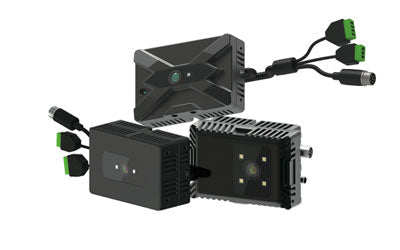
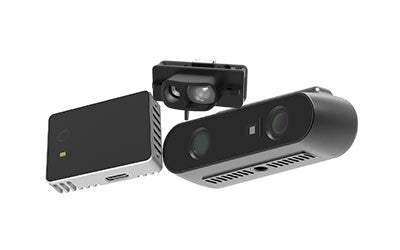
Synexens Industrial Outdoor 4m TOF Sensor Depth 3D Camera Rangefinder_CS40
After-sales Support:
Our professional technical team specializing in 3D camera ranging is ready to assist you at any time. Whether you encounter any issues with your TOF camera after purchase or need clarification on TOF technology, feel free to contact us anytime. We are committed to providing high-quality technical after-sales service and user experience, ensuring your peace of mind in both shopping and using our products