

What Is the Best Laser Sensor for Non-Contact Height Measurement?
- por LidarSensor
How Does a Laser Height Sensor Measure Human and Object Height Without Contact?
With the rapid development of industrial automation, smart manufacturing, artificial intelligence (AI), and intelligent sensing technology, accurate height measurement has become increasingly important in many industries.
Traditional measurement methods often require physical contact with the target, which can cause measurement errors, mechanical wear, and slower inspection processes. To overcome these limitations, modern industries are increasingly adopting non-contact measurement technology based on advanced optical sensors.
A laser height sensor is one of the most effective solutions for accurate and fast height detection. By using laser technology, these sensors can measure the height of humans, objects, products, and industrial components without physical contact.
From human height measurement systems and automatic object measurement to industrial automation inspection, laser height sensors provide high accuracy, fast response, and reliable performance.
This article explains how a laser height sensor works, its advantages, applications, and why it has become an important technology for modern measurement systems.
What Is a Laser Height Sensor?
A laser height sensor is a non-contact measurement device that uses laser light to detect the height, distance, or position of an object.
Unlike traditional measuring tools that require direct contact, a laser height sensor projects a laser beam toward a target and calculates the height based on the reflected signal.
Depending on the technology used, laser height sensors can operate through different principles, including:
- Time of Flight (TOF)
- Phase shift measurement
- Laser triangulation
- LiDAR measurement technology
These technologies allow the sensor to accurately measure object height, human height, material thickness, and surface position.
A modern laser measurement sensor can provide:
- High measurement accuracy
- Fast detection speed
- Long measurement distance
- Stable performance
- Automatic measurement capability
Because of these advantages, laser height sensors are widely used in factories, logistics centers, healthcare systems, smart buildings, and robotics applications.

How Does a Laser Height Sensor Work?
Understanding how a laser height sensor works helps explain why it has become a popular solution for non-contact measurement.
The basic working process includes three steps:
1. Laser Emission
The sensor emits a focused laser beam toward the target object.
The laser travels through the air and reaches the surface being measured.
2. Reflection Detection
When the laser reaches the target, part of the light is reflected back to the sensor.
The sensor detects the reflected signal through an optical receiver.
3. Distance Calculation
The internal processor calculates the distance between the sensor and the target.
Based on the reference position, the system determines the object's height.
Advanced laser height measurement systems combine sensors with software algorithms to provide real-time height data for automated applications.
Laser Height Sensor Technologies
Different laser measurement technologies are used depending on accuracy requirements and application environments.
1. TOF Laser Height Sensor
A TOF sensor (Time of Flight sensor) calculates distance by measuring how long laser light takes to travel to the object and return.
Advantages:
- Long measurement range
- Fast response speed
- Suitable for dynamic objects
- Strong environmental adaptability
TOF-based laser sensors are widely used in:
- Robot navigation
- Smart warehouses
- Autonomous systems
- Human detection applications
2. Laser Triangulation Height Sensor
A laser triangulation sensor uses optical geometry to calculate distance.
It provides extremely high accuracy and is commonly used for:
- Precision manufacturing
- Surface inspection
- Small component measurement
- Industrial quality control
Compared with TOF sensors, triangulation sensors usually provide higher precision but shorter measurement ranges.
3. LiDAR-Based Height Measurement Sensor
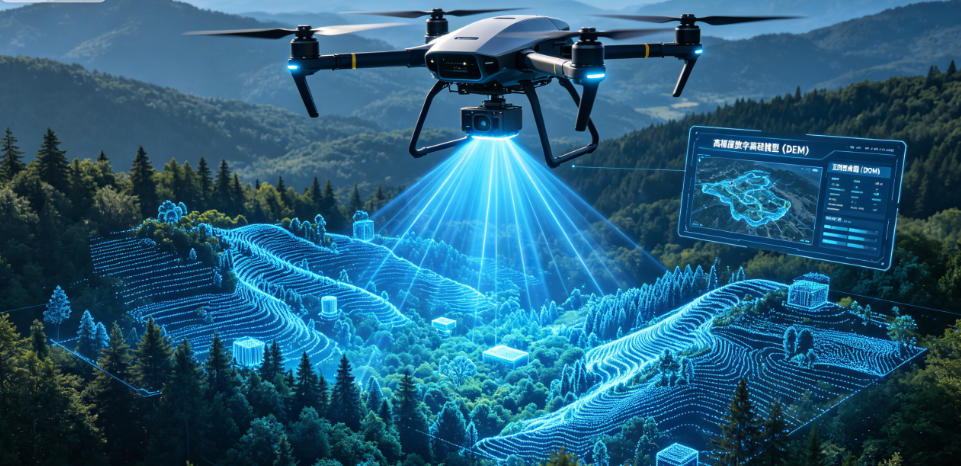
A LiDAR sensor uses laser pulses to measure distance and create accurate spatial information.
LiDAR technology is commonly applied in:
- 3D measurement systems
- Autonomous robots
- Smart transportation
- Building measurement
Advantages of Non-Contact Laser Height Measurement
Compared with traditional contact measurement methods, non-contact laser measurement technology provides many benefits.
High Measurement Accuracy
Laser height sensors can achieve high precision measurement without touching the object.
This makes them suitable for:
- Industrial inspection
- Product quality control
- Automated measurement systems
Fast Measurement Speed
Laser sensors can collect measurement data within milliseconds.
This allows real-time monitoring in:
- Production lines
- Packaging systems
- Automated factories
No Physical Contact
Because the sensor does not touch the target:
- No mechanical damage
- No surface contamination
- No measurement tool wear
This is especially important for fragile products and sensitive materials.
Easy Automation Integration
Modern laser height sensors can connect with:
- PLC systems
- Industrial robots
- Machine vision systems
- AI inspection platforms
They support the development of intelligent manufacturing systems.
Human Height Measurement Using Laser Sensors
One important application of laser height sensors is automatic human height measurement.
Traditional height measurement requires manual operation, while laser-based systems can automatically detect human height without contact.
A human height measurement system based on laser sensors can be used in:
- Healthcare facilities
- Smart fitness equipment
- Security systems
- Public service areas
- Digital health platforms
Benefits include:
- Fast measurement
- Contactless operation
- Improved hygiene
- Automatic data recording
By combining laser sensors with AI algorithms, modern systems can recognize human posture and improve measurement accuracy.

Object Height Measurement Applications
A laser sensor for object height detection is widely used in industrial and commercial applications.
Smart Manufacturing
Factories use laser height measurement systems for:
- Product inspection
- Component positioning
- Assembly verification
- Automated quality control
Warehouse Automation
In smart logistics environments, laser height sensors help measure:
- Package dimensions
- Cargo height
- Storage space utilization
They support automated warehouse systems and robotic operations.
Packaging Industry
Laser height measurement helps detect:
- Product size
- Package height
- Filling levels
This improves production efficiency and reduces errors.
Robotics and Automation
Robots require accurate environmental information.
Laser height sensors provide data for:
- Object recognition
- Robot positioning
- Collision avoidance
- Automated handling
Laser Height Sensor vs Traditional Measurement Methods
| Feature | Laser Height Sensor | Traditional Measurement |
|---|---|---|
| Contact required | No | Usually yes |
| Measurement speed | Very fast | Slower |
| Automation support | Excellent | Limited |
| Accuracy | High | Depends on operation |
| Object damage risk | None | Possible |
| Remote measurement | Yes | Limited |
For modern industrial environments, laser measurement technology provides better flexibility and efficiency.
How to Choose the Best Laser Height Sensor?
When selecting a laser height measurement sensor, several factors should be considered.
Measurement Range
Different applications require different ranges.
Short-range sensors are suitable for precision inspection, while long-range laser sensors are better for large objects and outdoor applications.
Accuracy Requirements
For industrial inspection, choose a high precision laser sensor with suitable resolution.
Applications requiring micron-level accuracy may need laser triangulation technology.
Environmental Conditions
Consider:
- Lighting conditions
- Dust
- Temperature changes
- Object surface characteristics
Industrial environments may require rugged laser sensors with stronger protection.
Integration Capability
A good industrial laser sensor should support:
- PLC communication
- Robot systems
- Industrial networks
- Machine vision platforms
Future Trends of Laser Height Measurement Technology
With the growth of Industry 4.0, AI vision, robotics, and smart factories, laser height measurement technology continues to evolve.
Future developments include:
- AI-powered measurement algorithms
- 3D laser scanning
- Multi-sensor fusion
- Intelligent inspection systems
- Cloud-based data analysis
The combination of laser sensors, AI, and automation technology will enable more accurate and efficient measurement solutions across industries.
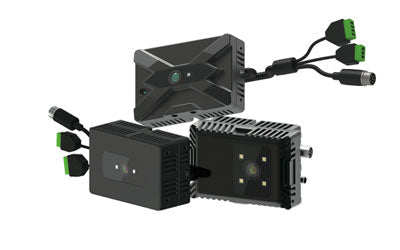
Synexens Industrial Outdoor 4m TOF Sensor Depth 3D Camera Rangefinder_CS40p

Conclusion
A laser height sensor is an advanced solution for accurate, fast, and contactless height measurement.
By using technologies such as TOF, laser triangulation, and LiDAR, these sensors can measure human height, object dimensions, and industrial components with high reliability.
From smart manufacturing and warehouse automation to healthcare and robotics, laser height measurement systems are helping industries improve efficiency, accuracy, and automation levels.
As demand grows for intelligent sensing solutions, non-contact laser measurement technology will continue playing a critical role in the future of industrial automation and smart measurement systems.
