



Intelligent Pallet Recognition System for Smart Logistics Automation
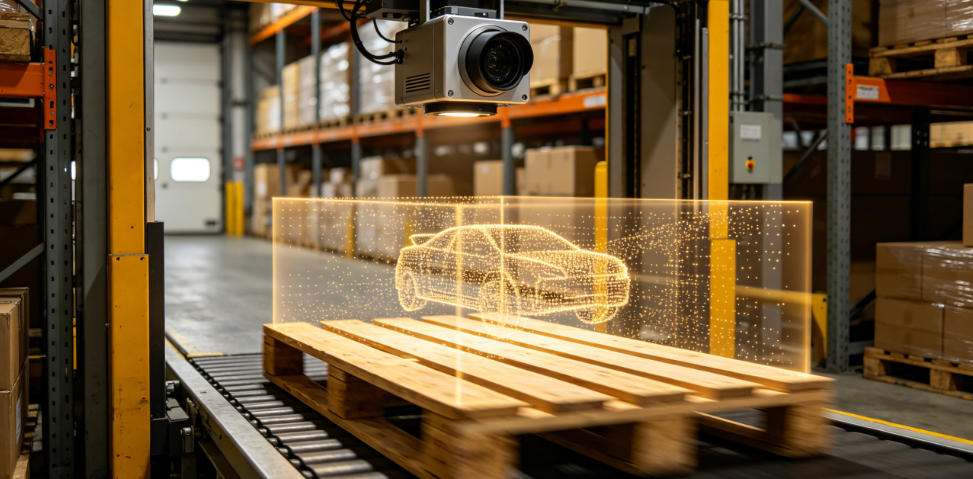
What Is an Intelligent Pallet Recognition System and How Does It Improve Modern Logistics Operations?
With the rapid digital transformation of warehousing and logistics, traditional pallet management is facing challenges such as low efficiency, high error rates, and lack of data visibility. Modern enterprises are increasingly relying on logistic systems for pallets to achieve automated pallet recognition, intelligent handling, and precise management, significantly improving operational efficiency and reliability.
Through advanced pallet recognition technology and AI-driven vision systems, companies can quickly identify pallet types, dimensions, and positions in high-speed warehouse environments, enabling full-process automation. This reduces manual intervention while optimizing warehouse space utilization and transportation efficiency.
What Is an Intelligent Pallet Recognition System?
An intelligent pallet recognition system is an automated identification and management solution based on 3D vision technology, depth sensors, and AI algorithms, designed to recognize, classify, and track pallets and their loads in warehousing and logistics operations in real time.
In modern logistic systems for pallets, this system has become a core component of intelligent warehousing and automated logistics, significantly improving warehouse efficiency, reducing manual operations, and enabling full-process visibility.
Core Function Enhancements
1. Automated Pallet Recognition
The system uses 3D cameras or laser scanning devices to quickly scan and model pallets, automatically identifying:
- Pallet dimensions (e.g., 1200×1000 / 1200×800 standard sizes)
- Pallet types (wood, plastic, metal, etc.)
- Structural conditions (damage, deformation, or abnormalities)
With AI models, the system can also recognize non-standard pallets, expanding the applicability of logistic systems for pallets.

2. Cargo Detection & Dynamic Tracking
When pallets are loaded, the system further analyzes:
- Cargo volume
- Item quantity
- Stacking patterns and structural stability
- Center of gravity and safety risks
Through 3D point cloud modeling, it creates a complete digital representation of the 'pallet + cargo' structure, providing essential data for intelligent warehouse operations.
3. Real-Time Data Integration
All recognition results are automatically synchronized with enterprise systems, including:
- WMS (Warehouse Management System)
- ERP (Enterprise Resource Planning)
- TMS (Transportation Management System)
This enables a full data closed loop from inbound to outbound logistics, making logistic systems for pallets truly data-driven.
4. Intelligent Exception Detection & Safety Alerts
The system can automatically detect and trigger alerts for:
- Over-height or overweight pallets
- Unstable stacking structures
- Damaged or non-compliant pallets
- Load imbalance risks
By analyzing historical data with AI, it can also predict potential risks and reduce warehouse accidents, improving overall logistics safety.
Technical Advantages
The intelligent pallet recognition system integrates AI vision technology, deep learning algorithms, and high-precision 3D scanning, offering significant advantages in modern logistic systems for pallets, especially in high-speed and complex warehouse environments:
- High-Precision Recognition: Millimeter-level accuracy in detecting pallet and cargo structures, supporting multiple materials and non-standard pallets
- Real-Time Processing: Millisecond-level scanning and data generation for high-throughput operations
- Multi-Scenario Adaptability: Suitable for inbound, outbound, sorting, robotic handling, and cold chain logistics
- Reduced Labor Costs: Automates repetitive tasks and minimizes human errors
- Traceable Data System: Fully synchronized with WMS/ERP/TMS for analytics and decision-making
- Intelligent Risk Alerts: Real-time monitoring of stacking height, weight distribution, and stability
These capabilities make the system a key pillar of next-generation logistic systems for pallets, enabling automation, digitalization, and intelligent logistics.
Warehouse & Logistics Applications
In modern warehousing and logistics operations, pallet recognition systems are widely used in:
-
Inbound Automation
Automatic pallet identification and inventory registration using 3D scanning upon warehouse entry. -
Automated Sorting & Handling
Integration with AGVs and robots for intelligent pallet transportation and sorting. -
Outbound & Delivery Optimization
AI-based route planning and loading optimization to reduce errors and improve efficiency. -
Inventory Management & Analytics
Historical data analysis for warehouse optimization and logistics decision-making.
These applications significantly enhance warehouse efficiency and reduce human errors, forming the foundation of smart logistics and Industry 4.0 transformation.

Technical Advantages
The system delivers strong performance advantages in modern logistic systems for pallets environments:
- High Precision Recognition: Millimeter-level 3D scanning for accurate structure detection
- Full Automation: No manual intervention required for scanning or recording
- Real-Time Processing: Suitable for high-throughput warehouse operations
- Multi-Scenario Deployment: Works in e-commerce, manufacturing, and cold chain logistics
- Data-Driven Decision Making: Supports inventory optimization and logistics planning
Future Development Trends
As global logistics continues to evolve toward digitalization and intelligence, intelligent pallet recognition systems are transforming into centralized logistics intelligence hubs within logistic systems for pallets.
Key trends include:
- Full Warehouse Automation: Integration with AGVs, AMRs, and automated storage systems for unmanned operations
- Cloud-Based AI Analytics: Real-time data upload for intelligent optimization of inventory and transportation
- System Integration: Fusion with volume measurement, weight detection, barcode/RFID, and packaging inspection systems
- Environmental Adaptability: Stable performance in cold storage, high-bay warehouses, and cross-border logistics
- Predictive Intelligence: AI-driven forecasting of demand, congestion, and warehouse optimization
These trends are driving logistics toward fully digital, automated, and intelligent ecosystems.
3D Safe Guarding Privacy RGBD Camera Synexens CS30

Conclusion
Intelligent pallet recognition systems are a key component of modern logistics digital transformation. Through logistic systems for pallets, enterprises can achieve automated recognition, precise tracking, and full-process management of pallets and cargo, improving efficiency while reducing costs.
As technology continues to evolve, these systems will become essential infrastructure for warehouse management, logistics operations, and supply chain optimization, accelerating the global shift toward intelligent logistics and Industry 4.0.
