

ToF Sensor: 3D Depth Sensing, Camera & Robot Vision Guide

What Is a ToF Sensor and How Does It Enable 3D Depth Sensing?
As smartphones, robotics, extended reality (XR), artificial intelligence, and smart home technologies continue to develop, traditional RGB imaging can no longer meet every spatial perception requirement. Machines need to do more than simply “see” an object. They also need to understand how far the object is from the camera, where it is located, and how the surrounding environment changes in three-dimensional space. In this context, Time-of-Flight (ToF) technology has become an important technology for 3D vision and depth sensing.
So, what is a ToF Sensor? Simply put, a ToF sensor measures the time or phase change of infrared light traveling from the sensor to an object and back to calculate the distance between the camera and the target. Compared with a conventional RGB camera that mainly records color, brightness, and texture, a ToF sensor can provide Depth Data, allowing devices to better understand spatial relationships in the real world. Samsung Semiconductor positions its ToF Sensor technology for 3D object measurement and highlights applications such as AR/VR and facial recognition for advanced 3D experiences.
What Is a ToF Sensor and How Does It Enable 3D Vision?
ToF stands for Time-of-Flight, referring to the travel time of light. The basic principle is relatively straightforward: a sensor actively emits infrared light toward an object, the light reflects from the object's surface, and the system calculates distance based on the travel time or phase information of the returning signal.
If a ToF system measures only a single point, it can function as a distance sensor. When many pixels perform distance measurements simultaneously, however, the system can generate a complete depth map. Each pixel corresponds to a distance value, creating a Depth Map that can then be combined with RGB images to generate RGB-D data and even a 3D Point Cloud.
This is one of the key differences between tof 3d sensing and conventional 2D imaging.
A standard camera mainly answers the question, 'What am I seeing?' A ToF system goes one step further and answers, “Where is it?” This spatial information is highly valuable for robotics, AR/VR devices, smart home systems, and other 3D vision applications.
What Is a ToF Camera Sensor?
A tof camera sensor can be understood as a core component that combines ToF-based depth measurement with image sensing. It can capture image information while also helping a system obtain the distance and spatial structure of objects.
A typical ToF Camera system may include:
-
Infrared light source
-
ToF Image Sensor
-
Optical lens
-
Infrared receiver
-
Signal processing circuitry
-
Depth calculation algorithms
-
ISP or other image processing units
When infrared light reaches a target object, the reflected signal is captured by the sensor. The system analyzes the returned signal and calculates depth values for individual pixels.
Therefore, the tof image sensor is an important component of a complete 3D vision system. It extends conventional 2D imaging into three-dimensional space and provides devices with richer environmental information.
For smartphones, this technology can support portrait effects, autofocus, and spatial awareness. For robots, ToF can help detect obstacles, understand environments, and determine spatial positions. For XR devices, depth information can help virtual content interact more accurately with the physical environment.

How Does ToF 3D Sensing Work?
The basic operation of ToF 3D Sensing can be summarized as “emit, reflect, receive, and calculate.”
First, an infrared emitter sends modulated infrared light toward the target area.
Next, the infrared light reaches the surface of an object and is reflected.
The ToF Image Sensor receives the returning optical signal and analyzes the time or phase difference between the emitted and received signals.
Finally, the processing system calculates the distance corresponding to each pixel and generates a Depth Map.
When the depth data is combined with RGB images, the device can obtain more complete three-dimensional environmental information.
This tof 3d depth sensing technology can be used to identify the distance, contours, position, and spatial relationships of objects, making it particularly useful for robot vision, spatial mapping, XR, smart devices, and industrial 3D applications.
What Is the Difference Between iToF and dToF?
ToF technology can generally be divided into Direct ToF (dToF) and Indirect ToF (iToF).
dToF calculates distance by directly measuring the round-trip flight time of a light pulse. It is commonly used for rapid ranging and certain long-distance sensing applications.
iToF, on the other hand, uses continuously modulated light and calculates distance based on the phase difference between the emitted and returned signals. This approach is well suited to 3D cameras that need to capture depth information across a large number of pixels simultaneously.
Samsung's ISOCELL Vizion 63D is an example of an indirect ToF sensor. According to Samsung's official information, 63d integrates an ISP that can perform image processing and depth calculation inside the chip, helping reduce latency and improve data-processing efficiency.
When researching ToF technology, users may encounter terms such as iToF, dToF, Indirect ToF, Direct ToF, ToF Image Sensor, and 3D Depth Sensor. These terms describe different implementation methods and product architectures within the broader ToF depth-sensing technology.
What Are the Key Features of ISOCELL Vizion 63D?
ISOCELL Vizion 63D is an important example in the development of ToF sensor technology. Samsung describes it as an indirect ToF sensor with an integrated ISP and has positioned it for applications including mobile imaging, robotics, gaming, and XR devices.
One of its notable features is the integration of the ISP directly into the sensor chip. In a conventional system, image processing and depth calculation may rely on an external processor. With 63d, some of these processing functions are integrated into the sensor, helping reduce latency in the data-processing pipeline.
According to Samsung's published specifications, ISOCELL Vizion 63D can measure distances of up to 10 meters and supports both Flood and Spot illumination modes. These options allow the sensor to acquire 3D information according to different application requirements.
This demonstrates how ToF technology is expanding beyond short-range smartphone functions toward more advanced 3D perception applications such as robotics, XR, and spatial computing.
How Does 63D Improve 3D Depth Sensing?
ISOCELL Vizion 63D uses 3.5 μm pixels and provides VGA-level output. Samsung states that its pixel size was relatively small for ToF sensors at the time, helping provide higher spatial resolution within a compact sensor design.
For tof 3d depth sensing, pixel size, resolution, depth accuracy, and frame rate can all influence the final spatial perception performance.
For example, in robotics, insufficient depth detail may make it difficult for a robot to accurately determine the position of small objects. In XR applications, richer depth information can help the system create more detailed spatial maps.
The 63D also uses a four-tap pixel structure, allowing each pixel to acquire data from different phases within a single frame. Samsung indicates that this design can help reduce motion artifacts and improve applications such as autofocus, low-light imaging, portrait effects, and spatial mapping.
How Is a ToF Camera Sensor Used in Robotics?
Robots need to continuously understand distances, positions, and obstacles in real-world environments, making 3D vision an important part of modern robotic perception systems. Through a tof camera sensor, robots can obtain both image and depth information. For example, when a service robot moves through an indoor environment, it needs to recognize walls, tables, chairs, and people while also determining how far these objects are from the robot.
ToF depth data can support obstacle detection, people detection, spatial positioning, 3D environment modeling, robot navigation, grasping target positioning, distance measurement, and safety-zone monitoring.
For robotic arms, ToF can help determine the three-dimensional position of workpieces. Combined with AI algorithms, robots can further perform object recognition, pose estimation, and automated grasping.
Samsung has also positioned the ISOCELL Vizion series for advanced machine-vision applications such as robotics, demonstrating how ToF Image Sensor technology is expanding from consumer electronics into robotics and industrial vision.
How Is ToF 3D Sensing Used in AR, VR, and XR?
AR, VR, and XR devices need to understand the spatial relationship between users and their surrounding environments in real time. This makes ToF an important technology for immersive computing and spatial interaction.
A conventional RGB camera can recognize colors and textures in an environment, but it cannot directly determine the distance of every region. By adding ToF, a device can obtain depth maps and use the information for spatial mapping.
For example, an XR device can use ToF data to determine:
-
How far the user is from the device
-
Where walls are located in a room
-
The height difference between a table and the floor
-
Where physical objects are positioned in three-dimensional space
-
How virtual content should interact with the physical environment
Samsung's official ToF Sensor information identifies AR/VR and facial recognition among the potential applications of ToF technology and highlights 3D measurement as an important foundation for next-generation 3D experiences.
Therefore, tof 3d sensing is not simply a distance-measurement technology. It can also serve as an important source of spatial data for spatial computing and immersive interaction.
How Does a ToF Image Sensor Help Smartphones with Depth Sensing?
Smartphones are one of the important application areas for ToF technology.
In smartphone photography, a conventional RGB Camera mainly records color, texture, and brightness, while a ToF Image Sensor provides additional depth information. By combining the two, the system can better understand the spatial relationship between a subject and its background.
For example, in portrait mode, depth data can help algorithms distinguish the subject from the background based on their spatial relationship, producing more natural background-blur effects.
ToF can also support:
-
Autofocus
-
3D photography
-
Portrait background blur
-
Spatial measurement
-
AR applications
-
3D scanning
-
Gesture recognition
As a result, the tof image sensor can be viewed as an important technology for extending traditional smartphone imaging from 2D image capture toward 3D perception.
How Can ToF Sensors Enable Lower-Latency 3D Processing?
For robotics and XR devices, latency is a critical consideration.
If depth data is updated too slowly, a robot may not respond quickly enough to a moving target. Similarly, if an XR device experiences significant delays in spatial data, virtual content may appear misaligned with the physical environment.
ISOCELL Vizion 63D integrates an ISP into the sensor chip to perform image processing and depth calculation and transfer data more efficiently to the system. Samsung's published information states that this architecture can reduce system latency and, under specific test configurations, reduce system power requirements by up to 40%.
This illustrates an important development direction for modern ToF Sensor technology: it is not enough to obtain accurate Depth Data; the system must also process that information quickly.
How Does ToF Avoid Signal Interference When Multiple Devices Operate Together?
When multiple robots, XR devices, or other ToF systems operate simultaneously, infrared signals emitted by different devices can interfere with one another and potentially affect depth measurement accuracy.
To address this challenge, ISOCELL Vizion 63D incorporates Multi-User Interference Cancellation (MUIC) technology. Samsung states that this technology can help multiple VR devices, robots, and gaming devices operate within the same space while reducing signal interference.
This capability can be particularly useful in smart factories and robotic warehouses.
For example, a large warehouse may contain multiple AMRs operating simultaneously. If each robot uses ToF for environmental perception, interference between infrared signals must be considered. Improved interference cancellation can help these systems obtain more stable depth information.
What Is the Difference Between ToF and LiDAR?
ToF and LiDAR can both use the time-of-flight principle for distance measurement, which is why the two technologies are often compared.
However, they can differ in system architecture and application methods.
A ToF Camera generally uses a two-dimensional sensor array to capture depth information from many pixels simultaneously and can directly generate a Depth Map. This makes it suitable for short-range 3D vision, robot vision, smart devices, and XR applications.
LiDAR generally uses lasers for scanning or ranging and can generate larger-scale spatial point clouds. It is therefore commonly used for autonomous driving, robot navigation, surveying, mapping, and large-area environmental perception.
For an actual project, the appropriate 3D sensing technology should be selected according to measurement range, FOV, resolution, accuracy, frame rate, power consumption, device size, and other system requirements.

What Is the Relationship Between Sensor Samsung and ToF Technology?
When users search for sensor samsung, Samsung ToF Sensor, or Samsung 3D Sensor, they are often looking for ToF and image-sensor technologies developed within Samsung Semiconductor.
Samsung Semiconductor places ToF Sensor technology within its Image Sensor portfolio and has explored 3D depth-sensing applications through the ISOCELL Vizion product family.
ISOCELL Vizion 63D is an important product example for ToF depth sensing. Samsung's official information indicates that it is designed not only for mobile imaging but also for applications involving robotics, gaming, and XR devices.
Therefore, when researching sensor samsung products, users should not focus exclusively on conventional RGB Image Sensors. It is also useful to explore ToF Sensors, 3D Depth Sensing technologies, and the ISOCELL Vizion family.
How Do You Choose a ToF 3D Sensor?
When selecting a ToF 3D Sensor, it is important to evaluate the complete application rather than focusing only on the sensor model.
The first consideration is measurement range. Different ToF products can have significantly different operating distances. A sensor for short-range smartphone functions or gesture recognition may have very different requirements from one designed for robotics or industrial vision.
Resolution is another important factor. Higher depth resolution can provide more detailed spatial information, which is particularly valuable for robotic grasping, 3D modeling, and spatial mapping.
Frame Rate is also important. For fast-moving robots and dynamic human detection, a higher frame rate can reduce depth-data update latency.
FOV determines how much of the environment the ToF camera can observe. A wide FOV can be useful for robot navigation and environmental perception, while a narrower FOV can provide more focused observation of a specific target.
Other parameters to consider include:
-
Ambient-light resistance
-
Depth Accuracy
-
Pixel Size
-
Power Consumption
-
ISP processing capability
-
SDK and software support
-
RGB-D integration
-
Sensor size
-
Processing capabilities of the target device
Together, these factors determine whether a particular ToF Camera Sensor is suitable for a specific application.
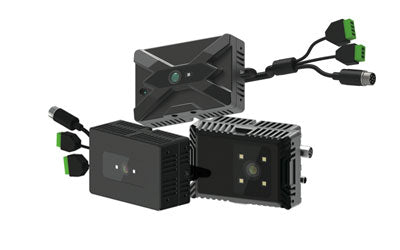
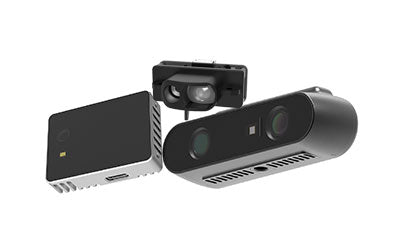
Applicable products:CS20, CS30 , CS20-P, CS40,CS40p

What Is the Future of ToF 3D Sensing?
As AI, robotics, XR, smart homes, and spatial computing continue to develop, ToF technology is evolving from simple distance measurement toward complete 3D environmental perception.
Future tof 3d sensing solutions are expected to focus on higher resolution, lower latency, lower power consumption, longer measurement ranges, and stronger environmental adaptability.
At the same time, ToF Image Sensors will increasingly work together with RGB Cameras, AI processors, LiDAR, Radar, and other sensors. This will allow devices to move beyond simply generating Depth Maps and begin understanding objects, people, and movement within an environment.
From smartphones to robots, and from AR/VR to industrial automation, ToF technology is helping machines move from 'seeing images' toward 'understanding space.'
New-generation ToF sensors represented by 63d demonstrate this direction through features such as integrated ISP processing, compact pixels, depth-data processing, and multi-device interference cancellation. Samsung's official information also shows that related technologies are being developed for robotics, XR, and next-generation machine-vision applications.
In the future, whether implemented as a tof camera sensor, tof image sensor, or complete tof 3d depth sensing system, the core value of ToF technology will be its ability to provide machines with richer spatial information. As AI algorithms become better at interpreting depth data, ToF will go beyond simply telling a device “how far away the target is.” It can help machines understand “what the target is, where it is, and how it relates to the surrounding environment.”
