How Far Is a League, and How Can ToF Technology Measure It Accurately?
In historical and literary contexts, a league has often been used as a unit of distance—but do you know exactly how long it is? This article combines TOF (Time-of-Flight)depth measurement technology to provide a comprehensive explanation of how a league is measured, its unit conversions, and practical applications, helping you accurately understand distances in scientific research, navigation, and surveying.
What is a League? Definition as a Unit of Distance
A league is an ancient unit of distance that originated in Europe and was historically used in navigation, walking, and map measurements. Many people ask, 'what is a league measurement?' or 'what is a league in measurement?' In fact, a league refers to a unit of measuring distance, sometimes called a league distance or league unit of distance.
Traditionally, 1 league is approximately equal to 3 miles (about 4.828 kilometers). This explains the common conversions like 'league to miles' or 'league in miles': if you want to know 'how many miles in a league' or '1 league in miles,' the answer is usually around 3 miles. In addition, 1 league is approximately 15,840 feet, providing an answer to questions such as 'how many feet in a league.'
Due to variations in historical standards or regional definitions, the exact value of a league may differ slightly. However, with these conversion formulas, a league can be conveniently translated into modern units such as miles, kilometers, or feet, enabling precise calculations in daily use, cartography, and professional surveying.
The Relationship Between League Length and Modern Measurement
Although league as a distance unit has historical roots, modern engineering and scientific measurement require precise quantification. Common questions include:
how far is a league / how long is a league / a league is how long / how much is a league / what distance is a league
distance of league / leagues distance / distance league / league distance
At this point, ToF (Time-of-Flight) technology provides a scientific basis for high-precision measurement. By measuring the time it takes for light or laser signals to travel from the sensor to an object and back, ToF can quickly calculate the distance between the sensor and the object. By combining this measurement with the league conversion formula, it is possible to achieve precise modern quantification of this historical unit.
What is a Time-of-Flight (ToF) Sensor?
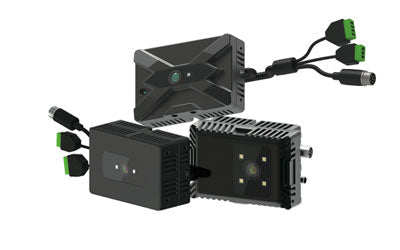
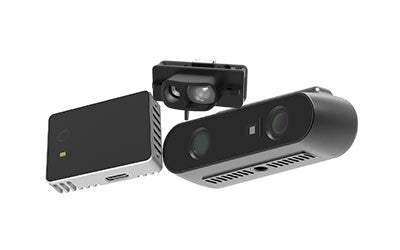
A ToF (Time-of-Flight) sensor is a device used for distance measurement and 3D depth perception. It works by emitting infrared light toward a target and measuring the time it takes for the light to travel to the object, reflect, and return to the sensor, allowing the distance to be calculated.
ToF sensors typically integrate an infrared emitter, receiver, and dedicated processing chip, producing per-pixel depth information (depth maps) directly. Because the distance is derived from the flight time of light, ToF sensors provide fast response, real-time performance, low computational load, and strong resistance to ambient light, making them ideal for dynamic scenes and outdoor applications.
Today, ToF sensors are widely used in RGBD cameras, robotic navigation and obstacle avoidance, industrial automation measurement, face and gesture recognition, AR/VR spatial perception, smart security, and autonomous driving systems, serving as a core component of modern 3D vision and depth-sensing technology.
How ToF Technology Helps Measure League Distances Accurately
Traditionally, measuring a league relied on walking time, nautical experience, or map estimation, which often caused questions like “league how far,” “how long is a league,” or “what distance is a league” to have significant errors. With modern measurement technology, Time-of-Flight (ToF) depth sensors provide a new solution for accurately measuring league distance.
1. High Precision: Converting a League from Concept to Exact Value
ToF technology emits modulated infrared light or laser pulses and calculates the round-trip travel time of the light signal to determine the distance. Since the speed of light is constant, ToF can perform measurements at nanosecond-level resolution, allowing accurate calculation of even 1 league in miles (approximately 3 miles) or longer league distances.
This means that when people ask 'how many miles is a league' or 'league in miles,' a ToF system can provide a measurement based on actual distance, rather than relying on historical definitions or estimates.
2. Real-Time Measurement: Dynamic League Length and Distance
Unlike traditional map measurement or manual estimation, ToF depth sensors support millisecond-level real-time updates. In applications such as drone surveying, autonomous vehicles, or robotic navigation, the system can continuously track distance changes, dynamically calculating distance of a league or multiple leagues distance.
This real-time capability is particularly important for:
Long-distance terrain surveying
Autonomous driving path planning
Cross-region robotic navigation
Large-scale industrial spatial measurement
When determining 'a league is how long' or 'how far is a league,' ToF sensors can continuously output precise distance data during movement, greatly reducing measurement errors.
3. Resistance to Environmental Interference: Suitable for Outdoor League Measurements
Traditional measurement methods are easily affected by strong sunlight, fog, rain, or snow. ToF technology, using an active light source, is much more robust against changes in ambient light. This makes it ideal for outdoor league measurement, such as:
Maritime distance measurement
Long-distance planning for roads or railways
Outdoor drone inspections
Geographic surveying and remote sensing
Compared to historical vague definitions like 'one league equals one hour of walking,' ToF allows the league unit of distance to achieve engineering-level reliability in modern environments.
4. 3D Spatial Measurement: From a Single League to 3D Distance Modeling
ToF depth sensors can measure not only distances in a single direction but also capture depth information for thousands of pixels simultaneously, generating complete 3D point cloud data. This enables systems to create three-dimensional spatial models of areas spanning multiple leagues.
In practice, this allows:
Accurate measurement of spatial spans covering multiple leagues
Simultaneous calculation of horizontal distances, elevation differences, and spatial volumes
Upgrading the traditional concept of 'league length' into a real 3D distance model
This capability is extremely valuable in urban planning, terrain analysis, and large-scale industrial inspections.
5. Bridging Historical Units to Modern Engineering Distances
With ToF technology, league measurement is no longer a vague concept from historical texts or literature but can be precisely quantified as a modern distance unit. When users search for 'what is the measurement of a league' or 'how big is a league,' ToF distance measurement provides scientific and verifiable answers.
How to Convert League to Modern Units
When understanding league as a unit of distance, users often focus not just on its definition but on how far a league actually is. Common searches include: 'how many miles is a league,' 'league in miles,' or 'league how far.' By combining modern measurement methods, especially ToF technology, these questions can be answered clearly and accurately.
Based on historical standards and ToF measurements, the most commonly used conversions are:
Unit
Conversion
1 league
≈ 3 miles (~4.828 km)
1 league
≈ 15,840 feet
Multiple leagues
Number of leagues × 3 miles or × 4.828 km
From a measurement perspective, when people ask 'what is the measurement of a league,' they are seeking a value that can be validated in modern units. By using ToF depth sensing, real spatial distances can be directly measured and then converted into league lengths, avoiding errors from traditional estimations.
For queries like 'how big is a league' or 'distance in a league,' ToF technology also offers clear advantages. Whether in outdoor terrain surveying, drone mapping, or autonomous vehicle path planning, systems can measure target distances in real time and accurately map them to single or multiple league distances, seamlessly translating historical units into modern engineering measurements.
By combining ToF distance data with standard conversion formulas, league distance is no longer a vague concept but a precisely calculable, verifiable, and applicable modern distance expression, restoring its practical value in education, historical research, geographic analysis, and technical measurement.
Practical Applications of League Measurement
Maritime and Long-Distance Measurement Using ToF radar and laser ranging at sea, distances spanning multiple leagues can be accurately calculated, improving navigation safety.
Cartography and Geographic Research In historical geography, the league was an important unit. With ToF measurements, old maps can be accurately converted into modern units.
3D Modeling and Industrial Measurement In large factories or construction sites, when measuring long distances, ToF technology can measure league-level spans to ensure precise spatial layouts.
Conclusion
Although league as a historical unit of distance is ancient, it still holds value in modern science and technology. Combined with ToF depth measurement technology, we can:
Precisely measure single or multiple league distances
Convert to modern units (miles, kilometers, feet)
Support applications in navigation, surveying, 3D modeling, and robotic navigation
Common user searches include:
what is a league measurement / how long is a league / how far is a league / league to miles / 1 league in miles / feet in a league
With this knowledge, you can clearly understand the length, conversion, and applications of a league, and see how ToF technology enables precise measurement.
If you are wondering how far is a league, how long is a league, what is a league distance, or what is a league in measurement, understanding the historical meaning of this traditional distance unit can help explain its use in different cultures and measurement systems. Questions such as how long is a league in miles, what is a league in miles, and how much is a league in distance are also common when converting a league into modern units.
As a traditional leagues unit of measure, the league unit of measure can be understood as a historical league in distance rather than a fixed modern metric value. Learning about the measurement of a league, league to mile conversion, leagues unit of measure, league as a unit of measurement, and the league definition distance can provide useful context when comparing historical distance measurements with modern ToF and other precision distance measurement technologies.
Synexens 3D Of RGBD ToF Depth Sensor_CS30
After-sales Support: Our professional technical team specializing in 3D camera ranging is ready to assist you at any time. Whether you encounter any issues with your TOF camera after purchase or need clarification on TOF technology, feel free to contact us anytime. We are committed to providing high-quality technical after-sales service and user experience, ensuring your peace of mind in both shopping and using our products.