


Forklift Positioning Systems for Warehouse Automation Efficiency
- por LidarSensor
Why Is Forklift Positioning Critical for Smart Warehouse Automation?
In today’s rapidly evolving logistics industry, warehouse automation has become a key strategy for companies to reduce costs and improve efficiency. Within the entire automation ecosystem, one often overlooked but critically important component is the precision and reliability of forklift positioning systems.
With the widespread adoption of smart warehousing, AGV autonomous forklift systems, and automated material handling equipment, forklift positioning is no longer just an auxiliary function—it directly impacts warehouse automation efficiency, inventory accuracy, and operational safety. Especially in European and North American markets, 'lagerautomation' is developing rapidly, demanding higher levels of forklift positioning precision.
1. What Is a Forklift Positioning System and Why Is It Important?
A forklift positioning system is an intelligent system that uses GPS, LiDAR (laser radar), UWB ultra-wideband, RFID, and computer vision technologies to obtain real-time, precise location data of forklifts within a warehouse. It not only tracks the forklift’s current location but also records its movement trajectory, speed, and operational status, providing critical data for warehouse management.
In modern smart warehousing and warehouse automation solutions, the importance of forklift positioning systems includes:
-
Real-time tracking of forklift movement to enhance logistics automation
High-precision positioning allows warehouse managers to monitor every forklift’s path and operations. Data analysis can identify bottlenecks, idle travel, and inefficiencies, optimizing warehouse logistics workflows and improving overall logistics automation technologies. -
Optimizing warehouse material flow and increasing throughput
Accurate positioning enables intelligent route planning for forklifts, reducing redundant movements and interference, minimizing wait times and empty runs, and maximizing warehouse throughput, especially during peak periods. -
Deep integration with WMS or automated warehouse management systems
By integrating forklift positioning data with Warehouse Management Systems (WMS), Transportation Management Systems (TMS), or automated warehouse management systems, operations can be dynamically scheduled, tasks automatically assigned, and routes optimized, making warehouse operations more efficient and intelligent. -
Reducing human errors and collision risks
Accurate positioning not only improves operational efficiency but also reduces human errors, prevents forklift collisions, and minimizes cargo damage through real-time monitoring and alert systems. -
Supporting high-efficiency lagerautomation systems
In fully automated and unmanned lagerautomation environments, forklift positioning is a core infrastructure. Whether for AGV autonomous forklifts, automated shelving, or complex multi-device operations, high-precision positioning is essential.
Without an accurate forklift positioning system, even advanced automated equipment and smart warehousing solutions cannot reach their full potential. Warehouses lacking such systems may experience inventory inaccuracies, low operational efficiency, misplaced or damaged goods, and reduced effectiveness of warehouse automation initiatives.

2. Core Value of Forklift Positioning in Lagerautomation (Warehouse Automation)
In advanced lagerautomation systems, forklift positioning is a core execution-level technology, serving as a foundation for efficient and intelligent warehousing. Precise positioning not only affects forklift operational efficiency but also determines inventory accuracy, logistics scheduling capability, and warehouse safety. Its key values include:
1. Improving Logistics Path Planning Efficiency
Using high-precision indoor positioning systems, warehouse managers can track forklift trajectories in real time and dynamically plan optimal routes using intelligent algorithms.
- Prevents cross-interference and congestion between forklifts
- Reduces redundant travel and empty runs, improving individual forklift efficiency
- Supports fast inbound and outbound operations during peak periods
For example, in large multi-level automated warehouses, route optimization with positioning data can increase forklift efficiency by 20–30%, significantly boosting warehouse throughput.
2. Supporting Intelligent Warehouse Scheduling Systems
Modern WMS and TMS rely on real-time forklift positioning data for smart task assignment and dynamic scheduling.
- Accurate positioning ensures proper task sequencing
- Improves operational coordination and reduces waiting times
- Integrates with automated shelving, conveyor systems, and AGV systems
Integrating positioning systems with smart warehouse scheduling enables “unmanned” operations, making intelligent warehousing solutions more effective and reliable.
3. Enhancing AGV Autonomous Forklift Coordination
In mixed environments with human-operated forklifts and AGV autonomous forklifts, high-precision positioning ensures safe collaboration:
- Automatically plans forklift and AGV paths to avoid collisions
- Provides real-time alerts to improve warehouse safety
- Supports multi-device simultaneous operation, reducing delays and conflicts
This capability is crucial for large-scale or multi-warehouse logistics centers, significantly reducing accidents and cargo damage.
4. Reducing Warehouse Operating Costs
Accurate forklift positioning not only improves efficiency but also lowers operating costs:
- Reduces labor costs for scheduling and monitoring
- Minimizes empty runs and unnecessary repeated transport
- Reduces cargo damage and increases equipment utilization
Optimizing warehouse logistics workflows helps enterprises accelerate digital transformation of warehouses and maximize the ROI of lagerautomation, ensuring smart warehousing solutions are fully realized.
3. Main Forklift Positioning Technologies
1. UWB Ultra-Wideband Positioning
- Accuracy of 10–30 cm
- Strong anti-interference capability, suitable for large automated warehouses
- Commonly used in high-end warehouse automation systems
2. LiDAR SLAM Positioning
- Constructs environmental maps using laser radar
- No additional base stations required, suitable for dynamic warehouses
- Supports navigation of mobile devices in smart warehouse solutions
3. RFID Positioning Systems
- Lower cost, suitable for basic digital warehouse upgrades
- Accuracy is limited, mainly for inventory tracking
4. Vision + AI Positioning
- Uses cameras and AI algorithms to detect obstacles
- Enhances safety of automated material handling
- Supports coordination between AGV autonomous forklifts and human-operated forklifts
4. Risks of Inaccurate Forklift Positioning
Warehouses lacking high-precision positioning may face:
- Inaccurate inventory data
- Misplaced or lost goods
- Frequent forklift collisions
- Low operational efficiency
- Unstable performance of automation systems
For companies pursuing lagerautomation upgrades, these issues directly affect return on investment.

5. How to Optimize Forklift Positioning in Warehouse Automation
✔ Implement High-Precision Positioning Technology
Prioritize UWB or LiDAR SLAM systems for centimeter-level high-precision indoor positioning.
✔ Deep Integration with WMS
Ensure forklift positioning data is synchronized in real time with automated warehouse management systems to improve scheduling intelligence.
✔ Build a Digital Twin Warehouse Model
Use digital modeling to visualize warehouse operations and support intelligent analysis.
✔ Use AI Path Optimization Algorithms
Dynamically adjust forklift routes, reduce idle travel, and optimize AGV system efficiency.
6. Future Trends: Intelligent Warehouses and Full Automation
As the logistics industry accelerates digital transformation, warehouses are evolving from “automated” to truly intelligent and unmanned. In this process, warehouse automation and lagerautomation systems will increasingly integrate AI, IoT, and high-precision positioning technologies, forming a highly coordinated intelligent warehouse ecosystem.
Future warehouse development will focus on the following key areas:
1. Fully Automated Forklift Systems with AGV Collaboration
- AGV autonomous forklifts and automated forklifts will become standard equipment, gradually replacing human-operated forklifts
- Unmanned forklifts will autonomously handle picking, transportation, and shelving
- AGVs and human forklifts will operate in a unified dispatch system
- Forklift positioning systems will provide centimeter-level data, ensuring safe and efficient multi-device operations
2. AI-Driven Warehouse and Logistics Scheduling
- AI will predict inbound/outbound peaks based on historical data
- Automatically optimize inventory layout and replenishment strategies
- Dynamically assign tasks to forklifts and AGVs
- Improve overall logistics automation
Forklift positioning data serves as a core input for AI decision-making, enabling warehouse automation systems to self-learn and self-optimize.
3. Real-Time 3D Warehouse Maps and Digital Twins
- Every forklift, AGV, and shelf is mapped in a virtual system in real time
- Managers can monitor warehouse operations through a 3D interface
- The system can simulate different scheduling scenarios in advance
This real-time visualization greatly enhances management efficiency in lagerautomation, making complex warehouse systems transparent and controllable.
4. Multi-Device Collaborative Positioning Networks
- Future warehouses will deploy hybrid positioning networks: UWB + LiDAR + vision + RFID
- Achieves full warehouse coverage without blind spots
- Supports unified management of forklifts, robots, and personnel
- Improves stability and fault tolerance in complex environments
Such multi-layer positioning networks will become the foundation for high-end intelligent warehouse solutions.
5. Cloud-Based Warehouse Management and Remote Control
- Unified cross-warehouse scheduling and management
- Remote monitoring and real-time decision-making
- Enhanced data analysis and operational transparency
- Deep integration with the supply chain
Cloud platforms accelerate warehouse digital transformation and improve overall supply chain collaboration.
Core Trend Summary
Under these trends, forklift positioning systems will serve as the 'nervous system' of lagerautomation, connecting AI scheduling, AGV systems, digital twins, and cloud management platforms.
Future smart warehouses will no longer be just a collection of devices—they will form a data-driven, self-deciding, real-time collaborative intelligent ecosystem, with forklift positioning as the fundamental sensing layer.
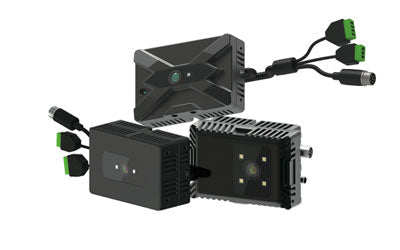
Synexens Industrial Outdoor 4m TOF Sensor Depth 3D Camera Rangefinder_CS40

7. Conclusion
Forklift positioning systems are not merely operational support tools in modern logistics—they are a core enabling technology for warehouse automation (warehouse automation) and the broader lagerautomation ecosystem.
As the logistics industry continues moving toward intelligent, data-driven, and unmanned operations, high-precision positioning systems will become a fundamental requirement for maintaining competitiveness, reducing operational costs, and enabling scalable smart warehousing solutions.
Investing early in advanced forklift positioning technologies is therefore a strategic step for companies aiming to achieve warehouse digital transformation, improve logistics efficiency, and fully unlock the potential of next-generation intelligent warehouse automation systems.
