

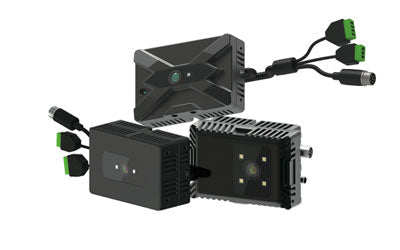
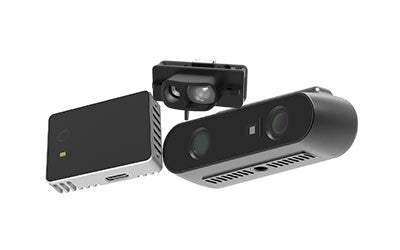
ToF 3D People Counting for Smart Security & Retail Systems

How Do ToF Depth Cameras Improve 3D People Counting and Intelligent Security Systems?
With the rapid development of smart cities and digital retail, 3D people counting has become a core requirement for commercial real estate, transportation hubs, and security systems. Depth Cameras based on Time-of-Flight (ToF) technology are increasingly replacing traditional CCTV people counting systems.
3D People Counter: Technical Principles
Modern 3D people counter systems leverage depth sensors and cameras with depth to capture precise three-dimensional spatial data. These systems can accurately identify human contours and movement trajectories, avoiding the errors common in traditional RGB cameras / people counting cameras caused by occlusion, lighting changes, or strong backlight conditions. Compared to conventional 2D counting methods, 3D technology provides higher accuracy and reliability, allowing both indoor people counting sensors and outdoor people counting systems to operate stably in diverse environments.
Advantages of ToF Solutions
3D people counting systems based on Time-of-Flight (ToF) technology offer significant advantages:
-
Higher statistical accuracy: Depth sensing allows precise distinction between humans and background, maintaining accurate counts even in dense crowds.
-
Strong backlight resistance: ToF cameras actively emit infrared light for distance measurement, unaffected by strong sunlight or backlighting, ensuring stable counting results.
-
Operation in low or no-light environments: Unlike traditional RGB cameras, 3D depth cameras work without external lighting, enabling 24/7 monitoring.
-
Support for multiple scenarios: Applicable to indoor people counting sensors (shopping malls, office buildings, subway entrances) and extendable to outdoor people counting (public squares, transportation hubs, event venues), suitable for complex indoor and outdoor environments.
-
Robust occlusion handling: 3D data can distinguish front and back layers, preventing missed or duplicate counts even in crowded conditions.
-
Dynamic behavior analysis: By combining depth point clouds and trajectory algorithms, the system can analyze movement direction, dwell time, and area density, providing actionable insights for smart retail operations and security management.

System Components and Key Technologies
A complete 3D people counting system typically includes:
-
Depth sensor / ToF camera: Provides real-time depth maps and 3D point cloud data.
-
Camera with depth: Integrates with RGB cameras to form an RGBD camera setup, capturing both color and depth for improved recognition accuracy.
-
Image processing and analysis algorithms: Perform object detection, tracking, and counting based on depth data, ensuring reliable statistics in crowded environments.
-
Data interfaces and system integration: Supports CCTV people counting systems or building management platforms, enabling data visualization and historical analysis.
Application Scenarios
-
Retail and commercial spaces: Monitor customer entry/exit, hotspot areas, and dwell times to inform store layout optimization.
-
Public transportation hubs: Real-time monitoring at subway entrances, bus stations, or train stations.
-
Smart campuses and office buildings: Track occupancy in meeting rooms, lobbies, and elevators, improving building management efficiency.
-
Events and exhibitions: Control attendee numbers, ensure safety, and provide flow analysis.
By combining depth sensor cameras, stereo 3D cameras, RGBD cameras, and ToF depth sensing technology, 3D people counter systems deliver superior accuracy, stability, and environmental adaptability compared to traditional 2D counting methods, providing reliable data for smart retail, intelligent security, and public safety applications.
Human Counting and Intelligent Retail Analysis
Human counting technology has become essential in smart retail, public transportation management, and security monitoring. Using depth sensor cameras or cameras with depth, these systems capture real-time 3D spatial data, enabling highly accurate people counting and behavior analysis, far surpassing the limitations of traditional RGB cameras in varying light, occlusion, or nighttime environments.
Core Application Scenarios
-
Retail traffic analysis
Human counting systems monitor customer entry and exit, analyze peak periods, dwell areas, and movement paths, supporting store layout optimization, marketing activities, and staff allocation. -
Transportation hubs and stations
In subways, train stations, and bus terminals, indoor people counting sensors and outdoor people counting technologies monitor crowd density, optimize waiting areas, and enhance safety. -
Security and controlled area management
In sensitive or restricted zones, human counting integrated with CCTV people counting systems provides real-time occupancy tracking, prevents overcrowding, and supports area security analysis and event tracking.
System Components and Key Technologies
A complete intelligent human counting system typically includes the following core modules:
-
Cam DS / Camera DS Data Output
Provides real-time depth data and 3D point cloud information, ensuring counting accuracy and adaptability to different environments. -
Camera Connection and Network Integration
Supports wired or wireless connectivity, enabling seamless transmission of data to cloud platforms or local servers for processing. -
Connect the Camera / How to Connect a Camera / To Get Started Connect a Camera
During deployment, proper camera installation, calibration, and network configuration are essential. Standard interfaces allow integration with automation cameras or AMR cameras, enabling synchronized data collection and real-time monitoring. -
Image Processing and Analysis Algorithms
Utilize depth maps and 3D point clouds for object detection, tracking, and counting. Combined with pixel filtering, optimized Exposure Time, and coordinate transformations (image space coordinate system / world matrix computer vision definition), these algorithms improve statistical precision and stability.

Technical Advantages
-
All-Weather Counting: ToF and RGBD cameras operate reliably in daylight, nighttime, and strong backlight conditions.
-
Robust Occlusion Handling: 3D data distinguishes front and back layers, preventing missed or duplicate counts.
-
High Precision and Accuracy: Calibration of camera matrix intrinsic and FOV optimization ensures precise counts even in dense crowds.
-
Multi-Scenario Adaptability: Applicable to indoor people counting sensors, outdoor people counting, retail stores, transportation hubs, office buildings, and event venues.
Practical Application Examples
-
Smart Retail Analytics
The system can monitor real-time traffic at entrances, display areas, checkout counters, and high-traffic zones. By analyzing 3D people counter and human counting data, retailers gain insights into dwell time, movement patterns, and crowd density. This enables optimized shelf layout, marketing campaign timing, peak-hour forecasting, and data-driven customer experience improvements, ultimately increasing sales conversion rates. -
Public Transportation and Hub Management
In subways, train stations, or bus terminals, human counting systems provide real-time monitoring of entry/exit flow, area density, and crowd movement direction. Coupled with depth sensor cameras and stereo 3D cameras, the system delivers high-precision data for guiding peak-hour traffic, adjusting ticket gates, improving evacuation efficiency, and enabling rapid safety decisions during emergencies. -
Events and Exhibitions
At large exhibitions or events, deploying camera ds / AMR camera systems allows real-time monitoring of crowd size, dwell hotspots, and movement patterns. Behavioral analysis algorithms can detect overcrowding, ensure on-site safety, optimize booth layouts, and provide attendee behavior reports for post-event marketing strategies and performance evaluation.
By integrating depth sensor cameras, stereo 3D cameras, camera ds, and AMR camera technology, human counting systems deliver high-precision, all-weather people counting while providing multi-dimensional analytics. This supports intelligent decision-making for smart retail operations, public safety management, and commercial space optimization. Their occlusion handling and indoor/outdoor adaptability ensure stable performance in complex environments, meeting the modern demands for real-time, precise data in industrial and commercial applications.
ToF vs Binocular Systems
Comparison between Stereo Camera / Binocular Camera and ToF Depth Cameras:
| Feature | Binocular Camera | ToF Depth Camera |
|---|---|---|
| Environmental Adaptability | Depends on texture | Independent of texture |
| Night Performance | Requires additional lighting | Active illumination |
| Computational Complexity | High | Lower |
| Cost | Medium | Gradually decreasing |
Common solutions include:
-
RGBD cameras
-
RealSense 3D cameras
-
Stereo 3D cameras
Accuracy in People Counting Systems
From a statistical perspective, systems must balance:
-
Precision vs Accuracy Statistics
-
What is Accuracy Precision
Ensuring both precision and accuracy is critical to avoid miscounts or missed counts.
Future Trends in 3D People Counting
Future development directions include:
-
AI-driven behavioral analytics
-
Integration with AMR cameras
-
Fusion with industrial automation systems in the Electronics Industry
-
Deep learning combined with 3D point cloud recognition
Time-of-Flight (ToF) and iToF technologies will continue expanding in smart retail, intelligent campuses, public safety, and other applications.
Synexens 3D Of RGBD ToF Depth Sensor_CS30

Our professional technical team specializing in 3D camera ranging is ready to assist you at any time. Whether you encounter any issues with your TOF camera after purchase or need clarification on TOF technology, feel free to contact us anytime. We are committed to providing high-quality technical after-sales service and user experience, ensuring your peace of mind in both shopping and using our products.
