

How TOF Cameras Are Transforming Smartphone Photography in 2026
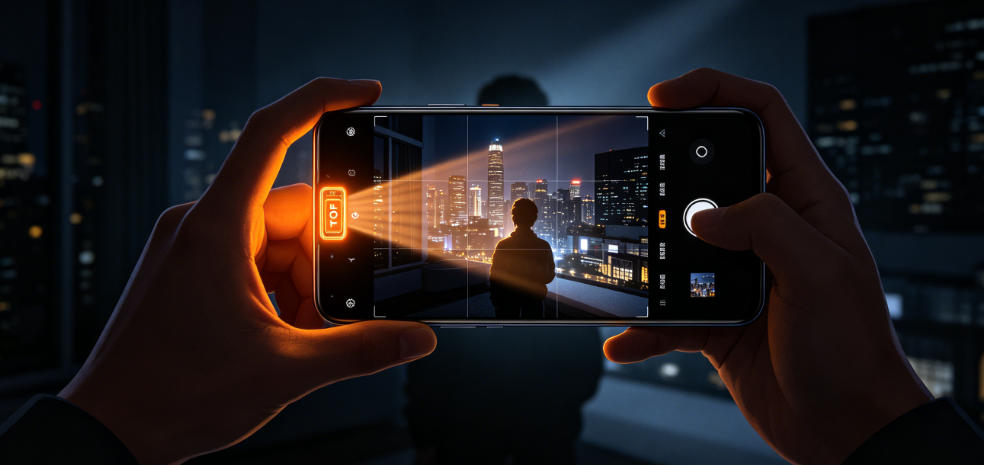
Why Are TOF Cameras Becoming Essential in High-End Smartphones in 2026?
With the rapid evolution of smartphone camera technology, mobile devices are no longer limited to capturing traditional 2D images. In 2026, high-end smartphones are entering a new era driven by AI imaging, 3D depth sensing, augmented reality (AR), and intelligent interaction. Among these emerging technologies, TOF cameras (Time-of-Flight cameras) are becoming one of the most important components for next-generation smartphones.
A smartphone TOF camera can measure the distance between the device and surrounding objects by calculating the flight time of infrared light signals. Unlike conventional RGB cameras that only capture color and brightness information, TOF cameras generate accurate 3D depth maps, allowing smartphones to understand the real-world environment with greater precision.
For users searching for the best TOF camera smartphone in 2026, depth accuracy, low-light performance, facial recognition capability, and AR compatibility are becoming important factors when evaluating flagship mobile devices.
As smartphone manufacturers continue integrating AI-powered camera systems, computational photography, and 3D sensing technologies, TOF cameras are expected to become a standard feature in premium smartphones.
What Is a TOF Camera in a Smartphone?
A TOF camera (Time-of-Flight camera) is an advanced depth sensing sensor that uses infrared light to measure distance. The working principle is based on measuring the time required for emitted light to travel from the sensor to an object and return.
The basic process includes:
- The TOF sensor emits infrared light pulses toward the target area.
- The infrared light reflects from objects in the environment.
- The sensor captures the returning signal.
- The system calculates the travel time of light.
- The smartphone generates a high-precision 3D depth map.
Because light travels at a constant speed, TOF technology can achieve extremely fast distance measurement and provide real-time spatial information.
Compared with traditional smartphone cameras, a TOF depth camera does not rely only on image recognition algorithms. Instead, it directly measures depth information for each pixel, allowing smartphones to better understand object distance, shape, and position.
This capability makes TOF cameras valuable for:
- Professional portrait photography
- AI camera optimization
- 3D facial recognition
- Augmented reality applications
- Gesture control
- Smart device interaction
- Low-light autofocus improvement

Why Are TOF Cameras Important for High-End Smartphones in 2026?
1. Professional Portrait Photography with Accurate Depth Detection
One of the biggest advantages of a smartphone TOF camera is improving portrait photography.
Traditional portrait modes often use software algorithms to separate the subject from the background. However, these methods may struggle with complex scenes such as:
- Hair edges
- Transparent objects
- Moving subjects
- Low-light environments
A TOF camera provides real-time depth information, allowing AI image processing systems to accurately distinguish foreground and background areas.
With precise depth data, smartphones can achieve:
- More natural background blur effects
- Better edge detection
- Improved portrait segmentation
- More realistic DSLR-like photography
This makes TOF technology a key element in AI computational photography.
2. Enhanced Augmented Reality (AR) Experiences
The growth of AR applications is another major reason why TOF cameras are becoming essential in smartphones.
Modern AR experiences require smartphones to understand:
- Object distance
- Room dimensions
- Surface locations
- Human movement
- Environmental geometry
A 3D depth camera for smartphones provides the spatial awareness needed for realistic AR interaction.
Applications include:
Virtual Furniture Placement
Users can place virtual furniture inside their homes and accurately preview size, position, and appearance.
AR Shopping and Virtual Try-On
TOF depth sensing helps smartphones analyze body shape, facial structure, and spatial relationships for more realistic virtual fitting experiences.
AR Gaming
TOF cameras allow mobile games to interact with real-world environments, creating immersive gameplay experiences.
As AR technology continues developing, TOF camera sensors for mobile devices will become increasingly important.
3. More Secure Facial Recognition and Smartphone Unlocking
Security is another major application of TOF technology.
Traditional 2D facial recognition systems rely mainly on RGB images, which can be affected by:
- Lighting conditions
- Camera angles
- Image quality
A TOF camera adds depth information by creating a 3D facial map.
This allows smartphones to:
- Recognize facial structures more accurately
- Improve biometric security
- Reduce false recognition
- Perform better in dark environments
For flagship smartphones, 3D facial recognition using TOF sensors provides a more reliable authentication solution compared with standard camera-based recognition systems.
4. Gesture Recognition and Contactless Interaction
Future smartphones are expected to become more intelligent and interactive.
With TOF cameras, devices can recognize:
- Hand movements
- Finger gestures
- Body motion
- User distance
This enables new interaction methods, including:
- Air gesture control
- Touchless screen operation
- Smart home control
- AR interaction
By combining TOF sensors with AI algorithms, smartphones can understand human actions more naturally.
This technology also creates opportunities for next-generation human-machine interaction systems.
5. Improved Low-Light Photography and Autofocus Performance
Low-light photography remains one of the biggest challenges for smartphone cameras.
In dark environments, traditional autofocus systems may struggle because image details become limited.
A TOF camera solves this problem by providing independent depth measurement.
Even in challenging lighting conditions, TOF sensors can help smartphones:
- Quickly calculate subject distance
- Improve autofocus speed
- Enhance night portrait photography
- Reduce focusing errors
This makes TOF technology especially valuable for flagship smartphones designed for professional mobile photography.

TOF Camera Market Trends: Why More Smartphones Will Adopt 3D Depth Sensors
By 2026, smartphone manufacturers are increasingly focusing on intelligent sensing technologies rather than only improving camera megapixels.
The future competition among flagship smartphones will depend on:
- AI image processing capability
- 3D perception technology
- Spatial computing features
- AR ecosystem support
- Intelligent interaction
A TOF camera smartphone provides the hardware foundation needed for these advanced functions.
As TOF sensor technology becomes smaller, more energy-efficient, and more affordable, it is expected to expand from premium flagship devices into more mid-range smartphones.
Future smartphones may use TOF cameras together with:
- AI processors
- LiDAR sensors
- RGB cameras
- Neural processing units (NPU)
- Edge AI computing platforms
to create more powerful intelligent imaging systems.
How to Choose the Best TOF Camera Smartphone in 2026?
When selecting a smartphone with a high-quality TOF camera, users should consider several factors.
1. TOF Sensor Performance
Important specifications include:
- Depth measurement accuracy
- Detection range
- Resolution
- Frame rate
- Infrared sensing capability
A high-performance TOF sensor can provide better 3D depth information.
2. AI Camera Software Optimization
Hardware alone is not enough.
The best TOF camera smartphone should combine:
- Advanced AI algorithms
- Computational photography
- Real-time depth processing
- Intelligent scene recognition
Software optimization determines how effectively the TOF sensor improves image quality and user experience.
3. Real-World Applications
Users should evaluate practical functions, including:
- Portrait photography
- Night photography
- AR applications
- Face recognition
- Gesture control
A powerful TOF camera should provide benefits beyond simple specifications.
Future Development of TOF Cameras in Smartphones
The future of Time-of-Flight camera technology will focus on higher accuracy, lower power consumption, and deeper integration with artificial intelligence.
Multi-Sensor Fusion
Future smartphones will combine TOF cameras with:
- RGB cameras
- LiDAR sensors
- Structured light systems
to create more accurate 3D perception capabilities.
AI-Enhanced Depth Understanding
AI algorithms will analyze TOF depth data to improve:
- Smart photography
- Object recognition
- Human tracking
- Scene understanding
Expansion into Spatial Computing
With the growth of AR glasses, virtual reality, and spatial computing, TOF cameras will become an important sensing technology for intelligent devices.
Beyond smartphones, TOF technology will continue expanding into:
- Smart glasses
- Robots
- Drones
- Smart homes
- Autonomous devices
3D Safe Guarding Privacy RGBD Camera Synexens CS30

Conclusion: TOF Cameras Are the Future of Smartphone Intelligence
TOF cameras are transforming smartphones from simple imaging devices into intelligent sensing platforms.
By providing accurate 3D depth sensing, TOF technology improves portrait photography, AR experiences, facial recognition, gesture interaction, and low-light performance.
In 2026 and beyond, the best TOF camera smartphones will not only capture better photos but also understand users and their environments more intelligently.
As AI, 3D vision, and spatial computing continue developing, TOF cameras will become a core technology driving the future of smartphone innovation.
