

Embodied Intelligence: How ToF Depth Perception Powers Robots

How Does ToF Depth Perception Enable Embodied Intelligence in Robots?
As artificial intelligence and robotics enter a more advanced stage of development, Embodied Intelligence has emerged as one of the most promising directions in intelligent robotics. Unlike traditional robots that merely execute predefined programs, embodied intelligence emphasizes that robots must rely on a real physical body—perceiving the environment, understanding space, continuously learning, and making autonomous decisions in order to accomplish complex tasks. In this process, ToF (Time-of-Flight) depth perception technology is becoming an indispensable foundational component.
At its core, embodied intelligence aims to build a complete perception–cognition–action loop. Robots must not only 'see' the world, but also understand spatial structures, object relationships, and human intent—placing extremely high demands on distance perception and 3D spatial information acquisition. Against this backdrop, ToF cameras and ToF camera sensors have been widely adopted in intelligent robots, service robots, industrial automation, and spatial computing.
What Does a ToF Camera Do?
A ToF (Time-of-Flight) camera measures the real distance between the camera and objects by emitting light and calculating the time it takes for the light to travel to the object and back, generating a real-time depth map for every pixel in a single frame. Unlike conventional RGB cameras, a ToF camera does not rely on ambient light or surface texture, allowing it to operate reliably in low-light or complex environments while directly capturing 3D spatial structures such as distance, height, and shape. As a result, ToF cameras are widely used in human–machine interaction, robotic navigation and obstacle avoidance, gesture and body tracking, 3D scanning, industrial inspection, and embodied intelligence systems, enabling machines to perceive and understand the three-dimensional world.

ToF Depth Perception: The Spatial Foundation of Embodied Intelligence
Time of Flight (ToF) is an active ranging technology that calculates the distance to a target by measuring the time taken by light to travel from emission to reflection and back. Based on this principle, a ToF camera can output the true distance value for every pixel within a single frame, directly generating high-resolution, low-latency depth maps and enabling instant perception of scene geometry.
Unlike traditional 2D vision systems that rely on texture features, ToF-based distance perception is independent of environmental texture, color distribution, and ambient lighting conditions. Even in low-light, backlit, low-contrast, highly reflective, or structurally complex environments, ToF can still deliver stable, continuous, and quantifiable depth information. This makes it particularly well suited for indoor environments, industrial settings, nighttime operations, and human–robot shared spaces.
Within embodied intelligence systems, ToF is far more than an auxiliary distance measurement module—it is a critical infrastructure for building an agent’s spatial cognition, functioning as an efficient, real-time 3D spatial perception engine.
Compared with traditional vision systems that provide only 2D pixel information, ToF depth perception grants robots a genuine geometric understanding of the world. Robots no longer merely “see” objects; they can directly understand:
-
Distance relationships between objects and themselves
-
Height and spatial hierarchy within a scene
-
Volume and occupancy of objects or regions
-
Reachability and traversability, such as whether an area can be approached, grasped, crossed, or avoided
This depth-centered representation transforms space from a “2D image” into a computable 3D entity, providing embodied intelligence with data that is far closer to the physical nature of the real world.
More importantly, the value of ToF depth data in embodied intelligence extends beyond perception and permeates the entire perception–cognition–decision–execution pipeline:
-
At the perception layer, ToF provides stable, real-time geometric input, reducing reliance on complex visual feature extraction
-
At the cognition layer, depth data supports spatial modeling, environmental understanding, and scene segmentation, enabling 3D semantic reasoning
-
At the decision layer, robots can perform path planning, action selection, and risk assessment based on real distances and spatial constraints
-
At the execution layer, precise depth feedback enables accurate grasping, obstacle avoidance, and real-time adjustment during dynamic interaction
When combined with SLAM, point cloud processing, motion planning, and reinforcement learning, ToF depth perception significantly enhances the robustness and generalization capability of embodied intelligence systems in real-world environments.
From a broader perspective, ToF is enabling a critical paradigm shift in embodied intelligence:
from image-based intelligence to intelligence grounded in space and physical constraints.
This ability to directly, continuously, and computationally perceive three-dimensional space makes ToF an indispensable foundational sensing technology for service robots, industrial robots, mobile robots, AR/VR spatial computing, and next-generation embodied AI systems.
The Role of ToF in Multimodal Perception
Embodied intelligence robots typically rely on multimodal perception systems, integrating vision, audition, touch, and force feedback. Among these modalities, ToF depth cameras are commonly paired with RGB cameras to form RGB-D perception systems, simultaneously providing color information and spatial distance data.
In practical applications, this fusion enables robots to more accurately identify the spatial relationships between people, objects, and obstacles in complex environments. For example, in service robotics and human–robot collaboration scenarios, ToF depth perception allows robots to continuously estimate safe distances to humans and dynamically adjust motion trajectories, enhancing both interaction naturalness and operational safety.

From Spatial Perception to High-Level Cognition
Embodied intelligence depends not only on sensing accuracy, but also on the robot’s ability to understand its environment. Using 3D depth data acquired via ToF, robots can construct structural models of real-world spaces and, when combined with semantic recognition algorithms, achieve meaningful scene understanding.
For instance, when a robot enters a room, ToF depth information enables rapid differentiation between floors, walls, furniture, and movable objects, as well as judgments about which areas are traversable and which objects are graspable. This depth-driven spatial understanding is a fundamental prerequisite for complex task planning and higher-level cognitive reasoning.
The Value of ToF in Autonomous Learning and Real-Time Decision-Making
In reinforcement learning and embodied learning paradigms, robots must continuously receive feedback from their environment. ToF depth perception provides stable, real-time 3D data inputs, allowing robots to constantly refine their behavior during motion and interaction.
In mobile robotics, indoor navigation, and warehouse logistics, ToF cameras are frequently integrated with SLAM systems to enable real-time localization and mapping. With depth data, robots can perform more accurate path planning, obstacle avoidance, and dynamic environmental adaptation, steadily improving efficiency and stability through continuous interaction with the real world.
A Fast Closed Loop Between Perception and Action
Embodied intelligence emphasizes the tight coupling between perception and action. Compared with scanning-based sensors, ToF cameras feature high frame rates and low latency, and can directly output full-frame depth maps, making them especially suitable for dynamic scenarios that require rapid responses.
In industrial robotic grasping, mobile robot obstacle avoidance, and short-range perception for unmanned systems, ToF enables robots to perceive environmental changes within milliseconds and immediately adjust their actions. This real-time capability is essential for achieving natural interaction and fine-grained control, and is one of the key characteristics that distinguishes embodied intelligence from traditional automation systems.

The Role of ToF in Human–Robot Interaction
As embodied intelligence systems gradually move beyond laboratories into service industries, medical environments, and public spaces, human–robot interaction (HRI) is evolving from merely 'functional' to natural, trustworthy, and safe. In this transition, ToF (Time-of-Flight) depth perception has become a crucial technological bridge between human behavior and machine understanding.
From 'Detecting Humans' to 'Understanding Humans'
Traditional RGB-based visual interaction often relies on complex texture features and lighting conditions, making it vulnerable to occlusion, background interference, and illumination changes in real-world environments. ToF depth perception, by contrast, directly provides stable three-dimensional spatial information, allowing interaction logic to move beyond 2D imagery to the level of spatial geometry.
With ToF, embodied intelligence systems can go beyond simply determining whether a person is present, and instead understand:
-
Human spatial position: real distance, height differences, and relative orientation between humans and robots
-
Human posture states: standing, walking, bending, sitting, or lying down
-
Motion trends and intent: approaching, avoiding, pointing, waving, handing over objects
-
Human–robot safety boundaries: dynamic safety distances, reachable zones, and potential collision risks
This capability allows robots to move beyond merely “seeing a human-shaped target” and toward continuous understanding of human presence and behavioral semantics in 3D space.
The Unique Value of ToF in Pose and Gesture Recognition
ToF offers distinct advantages in body pose estimation and gesture interaction:
-
Depth-based skeletal extraction: ToF depth maps can assist or directly support human keypoint detection, improving robustness under low light, occlusion, and complex backgrounds
-
Natural foreground–background separation: simple distance thresholds enable fast human segmentation, reducing algorithmic complexity
-
Low-latency interaction feedback: high-frame-rate depth output supports real-time gesture recognition and immediate response, improving interaction smoothness
-
Privacy-friendly sensing: depth data suppresses facial texture and identity details, making it well suited for privacy-sensitive scenarios such as healthcare and public services
In practical systems, ToF is often combined with RGB-D perception, deep learning–based pose models, and temporal action recognition algorithms, enabling interaction to evolve from command-based control to natural, motion-driven interaction.
Spatial Understanding for Human–Robot Collaboration
In human–robot collaboration (HRC) scenarios, ToF depth perception provides embodied intelligence systems with dynamic spatial collaboration capabilities:
-
Robots can detect when a human enters the workspace and adjust motion trajectories in real time
-
During cooperative tasks, robots can anticipate human actions based on body position and movement
-
When humans approach or change direction suddenly, depth variations can immediately trigger deceleration or avoidance behaviors
This space-centered interaction mechanism is a critical foundation for the safety and usability of collaborative robots (cobots).
Typical Application Scenarios Accelerating Deployment
ToF-enabled human–robot interaction is rapidly being adopted across multiple embodied intelligence domains:
-
Smart healthcare: ward patrol, patient posture monitoring, fall detection, contactless interaction terminals
-
Intelligent customer service and public services: reception robots, guide robots, touchless gesture interfaces
-
Service robots: home services, elderly care, hospitality, and commercial environments
-
Industrial collaborative robots: human–robot mixed production lines, safe collaboration, and motion coordination
-
AR and spatial computing devices: immersive interaction based on natural gestures and body movements
From Interaction Technology to 'Embodied Understanding'
More importantly, ToF does not merely improve interaction accuracy—it drives a fundamental cognitive upgrade in embodied intelligence:
from instruction-based interaction to collaboration grounded in spatial understanding and behavioral intent.
Through ToF depth perception, machines begin to understand how humans move, how they are likely to move next, and how they might interact, enabling safer, more natural, and continuous human–robot collaboration.
In future embodied intelligence systems, ToF + multimodal perception + behavior modeling will form the core technological pathway for human–robot interaction, with ToF serving as the most critical and physically grounded spatial sensing foundation.
Why ToF Is a Key Enabler of Embodied Intelligence
Among distance sensing technologies, ToF cameras stand out as one of the most practical sensors for embodied intelligence due to their simple structure, controllable cost, and strong real-time performance. Rather than replacing long-range sensors such as LiDAR, ToF provides the optimal balance for short-to-medium range perception, high responsiveness, and large-scale deployment.
By integrating ToF depth perception with RGB vision, SLAM algorithms, and learning-based models, embodied intelligence systems can form a complete closed loop from perception to understanding and action—gaining the ability to learn and adapt in the real physical world.
Conclusion
Embodied intelligence is transforming robots from “execution tools” into true intelligent agents, and ToF depth perception is a critical foundation of this transformation. From multimodal perception and spatial understanding to autonomous learning and human–robot collaboration, ToF provides robots with stable and realistic 3D input of the physical world.
As ToF technology, algorithms, and hardware platforms continue to evolve, embodied intelligence will move beyond laboratory concepts toward large-scale real-world deployment—becoming a vital bridge between the physical world and intelligent decision-making.
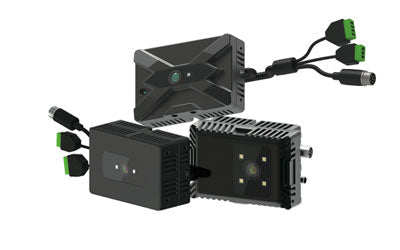
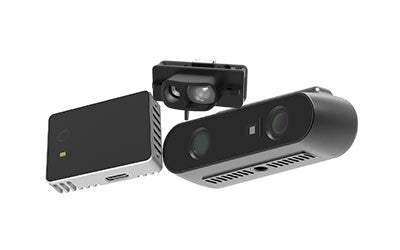
Synexens 3D Camera Of ToF Sensor Soild-State Lidar_CS20

After-sales Support:
Our professional technical team specializing in 3D camera ranging is ready to assist you at any time. Whether you encounter any issues with your TOF camera after purchase or need clarification on TOF technology, feel free to contact us anytime. We are committed to providing high-quality technical after-sales service and user experience, ensuring your peace of mind in both shopping and using our products
-
Posted in
CS20
