

Smart Warehouse Upgrade: ACRs Powered by ToF 3D Vision Automation
- Posted by TofSensor

Why is ToF 3D vision a core technology for efficient ACR operations in smart warehouses?
With the rapid growth of e-commerce, manufacturing, and logistics, the warehousing industry is undergoing a profound transformation toward automation and intelligence. Autonomous Case-handling Robots (ACRs) have become core equipment in smart warehouses, capable of autonomously performing case handling, sorting, and storage based on operational commands. At the same time, ACR functions are expanding to higher levels, including case condition detection, size measurement, and dynamic inventory management. One of the key technologies enabling this intelligent upgrade is ToF (Time-of-Flight) 3D vision, which provides ACRs with fast and high-precision visual perception.
Powered by ToF 3D vision, ACRs can rapidly recognize cases, accurately locate their positions, and process detailed information of single or stacked cases, driving warehouse operations from traditional planar workflows toward truly three-dimensional intelligent automation.
What Is a Time-of-Flight (ToF) Sensor?
A ToF (Time-of-Flight) sensor is a device that measures distance by calculating the time it takes for emitted light or signals to travel to an object and return. It typically emits modulated infrared light, and when the light is reflected back from an object, the sensor computes the true distance based on the measured flight time, generating depth information or 3D point cloud data.
Unlike traditional 2D cameras, ToF sensors can directly perceive an object’s height, volume, and spatial position without relying on environmental texture or lighting conditions. With advantages such as strong resistance to ambient light, low latency, and real-time performance, ToF sensors are widely used in robot navigation and obstacle avoidance, smart warehousing, autonomous driving, industrial automation, AR/VR, and 3D vision systems, making them a core sensing technology for spatial perception and intelligent decision-making.

Evolution of Case Recognition and Positioning Technologies
Limitations of Traditional QR Code and Barcode Solutions
Early warehouse case recognition relied on QR codes or barcodes—2D identification methods that perform well in standardized and structured environments. However, in scenarios involving multiple case sizes, stacked occlusions, and dynamic conditions, these approaches show clear limitations:
-
Inability to obtain true height and volume information
-
Strict requirements on case orientation and placement
-
Low automation levels and limited flexibility
The Rise of AI and ToF 3D Vision
With the deep integration of artificial intelligence and ToF 3D vision technology, ACRs have achieved high-precision, dynamic, and fully automated operations in complex and ever-changing warehouse and logistics environments—fundamentally transforming traditional manual or rule-driven workflows. Through real-time perception and intelligent decision-making, ACRs can not only accurately recognize and handle cases, but also optimize routes, improve operational efficiency, and maintain safety and stability in multi-robot collaboration scenarios.
Key enabling technologies include:
-
Deep learning for point cloud processing
Using convolutional neural networks (CNNs) and PointNet-based models to extract features from ToF-generated 3D point clouds, enabling accurate recognition and classification of cases with different sizes and orientations. -
Point cloud processing and 3D spatial reconstruction
Through filtering, denoising, clustering, and mesh reconstruction, discrete 3D depth data is transformed into complete and actionable spatial models, providing reliable input for path planning and grasping. -
SLAM (Simultaneous Localization and Mapping)
By leveraging real-time depth data from ToF sensors, SLAM enables autonomous localization and dynamic path planning, allowing ACRs to navigate freely in unknown or complex environments without relying on barcodes, magnetic strips, or fixed markers.
Multi-Sensor Fusion for Intelligent ACR Systems
In terms of hardware, ACRs are typically equipped with ToF depth cameras, LiDAR systems, RGB-D sensors, and inertial measurement units (IMUs) to build a comprehensive multi-sensor 3D perception system. This configuration enables robots to:
-
Achieve full-scene environmental awareness by perceiving both case locations and surrounding obstacles and structures
-
Dynamically adjust operational strategies by optimizing handling paths and stacking sequences based on real-time data
-
Support multi-robot collaboration through shared 3D spatial information for efficient and safe parallel operations
-
Enhance environmental adaptability by maintaining high recognition accuracy and handling precision in low-light conditions, complex stacking scenarios, and mixed case sizes
Through the integration of AI + ToF 3D vision + multi-sensor fusion, ACRs are evolving from rule-driven handling machines into intelligent, fully automated core components of modern warehouse systems—capable of advanced perception, dynamic decision-making, and efficient execution. This transformation lays a solid foundation for the future of smart logistics and unmanned warehousing.

Key Applications of ToF 3D Vision in ACR Operations
Dynamic Inventory and Location Management
ACRs equipped with ToF 3D vision systems can acquire real-time three-dimensional spatial information of the warehouse environment, accurately evaluating storage location occupancy, case orientation, stacking height, and available free space. This data can be seamlessly integrated with Warehouse Management Systems (WMS) and Warehouse Control Systems (WCS) to enable intelligent management. Through 3D perception, ACRs can dynamically adjust operational strategies, delivering the following benefits:
-
Automatic optimization of inventory layout: Storage locations are planned automatically based on actual space conditions and case dimensions
-
Higher inventory density: Vertical and horizontal space is fully utilized to achieve high-density storage
-
Improved operational efficiency: Real-time dynamic scheduling reduces redundant handling and empty travel, accelerating inbound and outbound processes
-
Support for mixed multi-SKU management: Cases of different sizes, materials, and placement methods can all be quickly recognized and handled
-
Reduced manual intervention: Less reliance on manual inventory checks, handling, and adjustments, enabling higher levels of automation
Automated Storage, Retrieval, and Handling
Leveraging ToF point cloud data and 3D reconstruction technologies, ACRs can precisely measure a case’s length, width, height, stacking layers, and actual placement position, enabling automatic error correction and efficient handling. Typical application scenarios include high-bay warehouses, automated racking systems, and parcel sorting centers. Key advantages include:
-
High-density, orderly storage: Prevents space waste caused by tilted or unevenly stacked cases
-
Minimized stacking errors: Real-time 3D correction ensures stable and secure stacking
-
Maximized space utilization: Available space is dynamically calculated and access paths are optimized to maximize warehouse capacity
-
Higher handling accuracy: Precise picking and placement reduce the risk of damage
-
Support for multi-task collaboration: Multiple ACRs can share 3D spatial data to enable parallel operations and intelligent scheduling
Through the deep integration of ToF 3D vision + AI algorithms + SLAM, ACRs achieve not only precise case recognition and positioning, but also fully automated operation in dynamic, multi-size, and multi-layer warehouse environments—significantly enhancing the intelligence level and operational efficiency of warehousing systems.
3D Vision Workflow: Enabling Intelligent ACR Operations
-
Data Acquisition
ToF 3D cameras scan cases to generate detailed point cloud data, capturing spatial dimensions and geometric information. -
Feature Extraction
Algorithms automatically identify key features such as edges, handles, and corners, providing a solid data foundation for recognition and localization. -
Recognition and Precise Localization
Deep learning models combine point cloud features to achieve high-accuracy case recognition and reliable positioning, even in complex stacking or occlusion scenarios. -
Real-Time Adjustment and Optimization
The system dynamically corrects case offsets and optimizes handling paths, improving operational success rates and stability. -
Execution and Coordination
3D vision processing results directly drive robotic arms or handling systems, enabling efficient multi-case picking, stacking, and outbound operations.
Typical Application Scenarios
Smart High-Bay Warehouses
With high-density vertical storage and diverse case specifications, ToF 3D vision provides precise spatial information, allowing ACRs to determine case height, volume, and occupied space, ensuring safe and reliable automated storage and retrieval. Using real-time point clouds and voxel maps, inventory management can be dynamically adjusted, significantly improving warehouse efficiency.
E-commerce and Retail Logistics
Facing high SKU counts and mixed case sizes, ToF 3D perception enables ACRs to achieve fast recognition and high-precision handling without relying on QR codes or fixed templates. Even with stacked or partially occluded cases, recognition remains stable, meeting the demands of rapid outbound processing during peak order periods.
Intralogistics in Manufacturing
In 3C electronics, pharmaceutical, and automotive parts factories, production rhythms change frequently and layouts are complex. ToF 3D vision–enabled ACRs can continuously perceive the environment and case status, enabling flexible line feeding and automated replenishment, reducing labor costs while ensuring production stability.
Intelligent Logistics Centers
Large-scale intelligent logistics centers feature complex environments, long operating hours, and high stability requirements. ToF 3D perception allows ACRs to operate unmanned around the clock, with real-time 3D mapping and obstacle detection supporting multi-robot collaboration, route optimization, and reduced congestion and waiting times.

Future Outlook: ToF as the 'Spatial Eye' of ACRs
As ToF (Time-of-Flight) sensor costs continue to decline, resolution improves, and power consumption decreases, their application in smart warehousing, logistics automation, and ACR systems will become increasingly widespread, establishing ToF as a core technology for efficient and intelligent warehouses. Future trends include:
Deep Integration of ToF + AI + SLAM
By deeply integrating with artificial intelligence and Simultaneous Localization and Mapping (SLAM) algorithms, ACRs will be able to build real-time 3D environmental maps, autonomously plan optimal paths, and achieve dynamic obstacle avoidance and efficient handling. This fusion will drive robots from “passive execution” toward active perception and intelligent decision-making.
Multi-Sensor Fusion (ToF + LiDAR + RGB)
In complex warehouse environments, a single sensor is often insufficient to cope with lighting variations, occlusions, and high-density stacking. In the future, ToF will work collaboratively with LiDAR, RGB cameras, and inertial measurement units (IMUs) to achieve multimodal data fusion, improving perception accuracy, stability, and robustness, and providing ACRs with comprehensive spatial understanding.
From Rule-Based Control to Intelligent Decision-Making
Traditional warehouse systems rely heavily on fixed rules or templates, limiting flexibility. With ToF 3D vision, ACRs can autonomously assess graspability, stacking safety, and optimal handling paths, enabling intelligent scheduling and dynamic task allocation, thereby significantly improving warehouse operational efficiency.
From 2D Warehousing to 3D Intelligent Storage
As ToF technology matures, warehouse management will evolve from planar, 2D-centric layouts to 3D intelligent storage management. ACRs will be able to perceive case height, volume, stacking methods, and aisle space, enabling high-density storage, dynamic location management, and spatial optimization, laying a solid foundation for fully unmanned and automated warehouses.
Additional Trends
-
High-precision real-time monitoring: ToF enables continuous 3D spatial monitoring to improve warehouse safety
-
Multi-robot collaboration: Multiple ACRs can share 3D maps and path data for efficient cooperative operations
-
Intelligent predictive scheduling: Combined with AI, systems can predict task conflicts and optimal handling strategies in advance
-
Expansion to outdoor and flexible environments: ToF can adapt to complex lighting and unstructured environments, extending applications beyond traditional warehouses
Conclusion
ToF 3D vision technology is redefining ACR case recognition and positioning capabilities, providing stable, real-time, and high-precision 3D spatial perception for smart warehousing and logistics automation. Through the integration of ACR + ToF 3D vision + AI, the warehousing industry can achieve:
-
High-precision case recognition and localization
-
Marker-free automated operations
-
Intelligent, efficient, and scalable 3D warehouse management
Looking ahead, ToF will become a core enabling technology for smart warehouses and fully unmanned logistics systems.
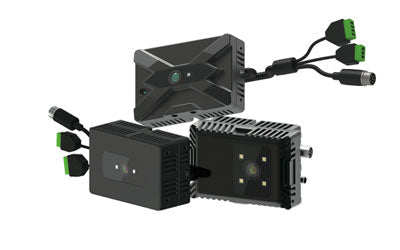
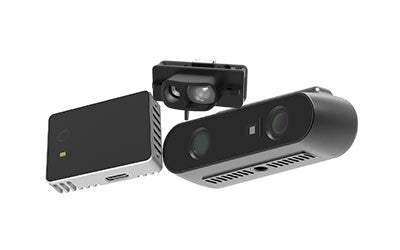
Synexens 3D Camera Of ToF Sensor Soild-State Lidar_CS20

After-sales Support:
Our professional technical team specializing in 3D camera ranging is ready to assist you at any time. Whether you encounter any issues with your TOF camera after purchase or need clarification on TOF technology, feel free to contact us anytime. We are committed to providing high-quality technical after-sales service and user experience, ensuring your peace of mind in both shopping and using our products
