

Machine Vision Industry History: Evolution of Computer Vision
How Did Machine Vision Evolve? A Complete Guide to the Machine Vision Industry and Computer Vision History
In the context of rapid development in artificial intelligence and industrial automation, the machine vision industry is quickly becoming a core component of intelligent manufacturing. From early image processing theories to modern vision systems integrated with deep learning, its evolution is closely linked with the history of computer vision, jointly driving the upgrade of modern intelligent industries.
This article systematically reviews the development of machine vision and, combined with technological trends, helps you fully understand this field.
How does the history of computer vision influence machine vision development?
The history of computer vision provides the fundamental algorithmic foundation for machine vision. From early image processing to the development of deep learning models, computer vision technologies have continuously driven the upgrade of machine vision technology, enabling it to evolve from simple inspection tasks into intelligent recognition systems.
1. Basic Concept of Machine Vision
Machine vision is a comprehensive technology system that enables machines to “see, recognize, and make decisions” through image acquisition devices, optical systems, and algorithmic models. With the continuous maturity of machine vision technology, it not only simulates human vision but also surpasses it in speed, accuracy, and stability, becoming an essential infrastructure in modern industrial automation.
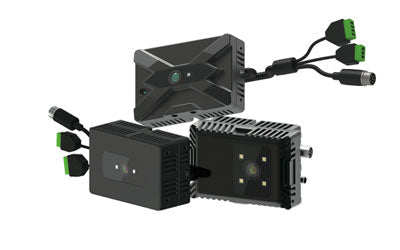
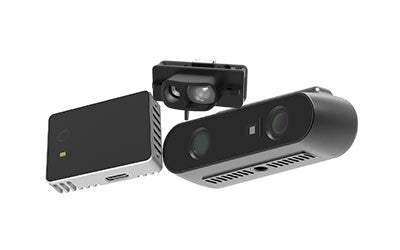
A complete machine vision system typically consists of light sources, industrial cameras, lenses, image acquisition cards, and image processing software. These components work together to capture, analyze, and interpret images of objects, enabling real-time monitoring and optimization of production processes.
In practical applications, industrial machine vision is widely used in manufacturing, including defect detection, dimensional measurement, assembly positioning, and barcode recognition. Compared with manual inspection, automated vision inspection systems can operate 24/7, significantly reducing false detection rates and improving production efficiency and product quality.
With the advancement of AI, AI vision inspection systems based on deep learning can adapt to complex environments and identify irregular defects more effectively.
Beyond traditional manufacturing, machine vision is also expanding into logistics, retail, and healthcare. For example, in smart warehouses, vision systems enable automated sorting and path planning; in medical applications, they assist in image analysis and diagnosis. This cross-industry expansion is continuously increasing the scale of the machine vision industry.
At the same time, computer vision provides the core algorithmic support for machine vision, covering image recognition, object detection, and deep learning models. In general, machine vision focuses more on engineering implementation, while computer vision emphasizes algorithmic innovation. Together, they form the foundation of modern intelligent vision systems.

2. Early Development Stage (1950s–1960s)
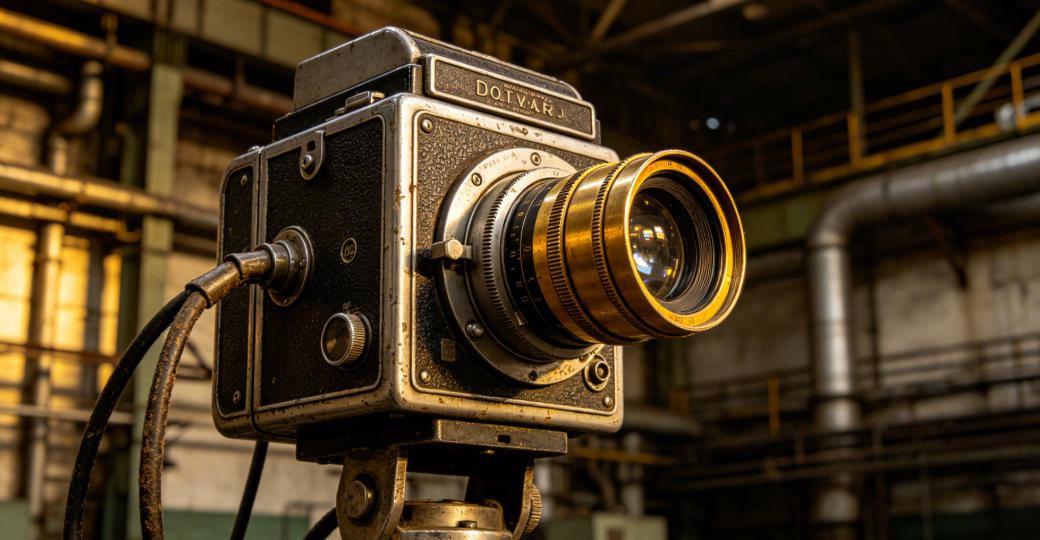
Looking back at the history of computer vision, the origins of machine vision can be traced to the mid-20th century, when research focused on theoretical exploration.
In the 1950s, researchers began studying motion information in images, introducing concepts such as optical flow to describe object movement. Early pattern recognition research also emerged during this time.
In the 1960s, with improvements in computing power, image processing became possible. Researchers began digitizing real-world images and analyzing them algorithmically, extracting edges, contours, and simple geometric structures. Early image scanning devices also appeared, enabling machines to acquire visual data.
Although machine vision technology at this stage was still limited in speed and accuracy, it established a key idea: visual information can be computed, laying the theoretical foundation for future breakthroughs.
3. Establishment of Theoretical Systems (1970s)
The 1970s marked a turning point in vision technology. With improved computing capabilities, more advanced computer vision algorithms began to emerge.
Key developments included:
- Image segmentation
- Edge detection
- Feature extraction
- Pattern recognition
These methods enabled computers not only to capture images but also to understand structural relationships within them.
This transition from low-level processing to semantic understanding became a major milestone in the history of computer vision, providing essential support for future industrial applications of machine vision.
4. Rise of Industrial Applications (1980s–Early 2000s)
In the 1980s, with improved hardware and software, the machine vision industry began to take shape commercially.
Industrial cameras, image acquisition cards, and specialized software enabled stable deployment of machine vision systems in production lines. Applications expanded rapidly in electronics and semiconductor manufacturing, where vision systems were used to detect micro-defects such as soldering issues and surface scratches.
OCR (Optical Character Recognition) technology also emerged, enabling automatic reading of text and numbers in logistics and packaging.
The key advantage of industrial machine vision became clear: higher speed, greater accuracy, and lower long-term costs compared to manual inspection. As a result, more industries adopted automated vision inspection systems.
This stage marked the transition of machine vision from laboratory research to industrial deployment.
5. AI-Driven Rapid Development (21st Century – Present)
In the 21st century, the machine vision industry experienced explosive growth driven by artificial intelligence, especially deep learning.
Traditional systems relied on manually designed features, which struggled in complex environments. In contrast, deep learning computer vision allows systems to automatically learn features from large datasets, significantly improving accuracy and generalization.
Technologies such as object detection, image classification, and semantic segmentation have enabled machines to perform complex tasks like multi-object recognition and defect classification.
Machine vision is now widely used in:
- Smart manufacturing
- Autonomous driving
- Medical imaging
- Smart retail
In addition, edge AI vision enables real-time processing directly on devices, reducing latency and improving data security, especially in industrial automation scenarios.
This era represents a shift from rule-based systems to data-driven intelligence.
6. Development of the Machine Vision Industry in China
China has become one of the fastest-growing markets in the machine vision industry.
Initially dependent on foreign technologies, China has rapidly developed its own capabilities in recent years. Driven by demand in electronics, new energy, and semiconductor industries, the industrial machine vision ecosystem has expanded significantly.
Key advancements include:
- Industrial cameras and optical components
- Vision algorithms and software
- System integration solutions
In particular, 3D machine vision systems using structured light and stereo vision have improved spatial recognition accuracy. Robotics vision systems are also widely used in automated assembly and logistics.
With the integration of AI and edge computing, China is also gaining advantages in edge AI vision applications, offering efficient and flexible industrial solutions.

7. Relationship Between Machine Vision and Computer Vision
Although closely related, machine vision and computer vision serve different purposes.
- Computer vision focuses on algorithms and data-driven image understanding.
- Machine vision focuses on engineering systems and industrial deployment.
In simple terms:
- Computer vision answers: 'How to understand images?'
- Machine vision answers: 'How to apply vision in industry?'
Their integration forms the foundation of modern intelligent vision systems.
8. Future Trends
The future of the machine vision industry will continue to evolve rapidly in both technology and application.
AI Integration
Future systems will go beyond detection and move toward decision-making and predictive analysis.
3D Machine Vision Systems
3D vision will play a critical role in robotics, assembly, and complex environment perception.
Edge AI Vision
More processing will occur at the edge, enabling real-time responses and improved efficiency.
Multimodal Fusion
Vision combined with voice and sensor data will enable more comprehensive intelligence.
Expanded Applications
Machine vision will expand into agriculture, transportation, smart cities, and healthcare.
9. Conclusion
From early theoretical exploration to today’s advanced AI systems, the machine vision industry has become a vital part of modern industrial infrastructure. The continuous development of the history of computer vision has driven innovation and expansion across the field.
With the rise of deep learning computer vision and intelligent vision systems, machine vision will continue to play a key role in advancing global industrial intelligence.

