

Obstacle Detection Sensors Explained: Types, AI & Applications
How Do Obstacle Detection Sensors Work and What Technologies Are Used in Modern Systems?
With the rapid development of robotics and unmanned systems, obstacle detection systems have become one of the core technologies in fields such as autonomous driving, drones, and intelligent robotics. From basic sensors to AI-integrated systems, obstacle recognition capability directly determines the safety and intelligence level of devices.
In modern intelligent devices, obstacle avoidance and obstacle detection usually work together, enabling robots to achieve autonomous navigation and real-time decision-making in complex environments.
1. What Is an Obstacle Detection Sensor?
An obstacle detection sensor is a key sensing device used to detect whether objects exist in the surrounding environment and determine their distance, position, and motion state. It is the core component of modern obstacle detection systems and forms thechengshiqiu foundation for safe operation in robots, drones, and autonomous driving systems.
Essentially, its core task is not only to 'detect obstacles' but also to continuously scan and update environmental information, enabling devices to respond instantly in complex and changing real-world scenarios. Therefore, it is considered the “perception layer” of intelligent robotic systems.
In engineering applications, obstacle detection sensors often combine multiple sensing technologies such as infrared ranging, ultrasonic ranging, LiDAR (laser radar), and vision-based camera systems. Each type has its own advantages—for example, ultrasonic sensors are suitable for short-range detection, LiDAR is ideal for high-precision 3D mapping, and vision systems excel in semantic understanding. This multi-sensor fusion approach has become the mainstream architecture of obstacle detection systems.
Main functions include:
- Real-time detection of obstacles and continuous environmental updates
- Accurate measurement of distance, relative speed, and spatial position
- Sending warning signals when an obstacle is detected
- Supporting obstacle avoidance actions such as slowing down, rerouting, or stopping
- Providing environmental data for path planning and decision-making systems
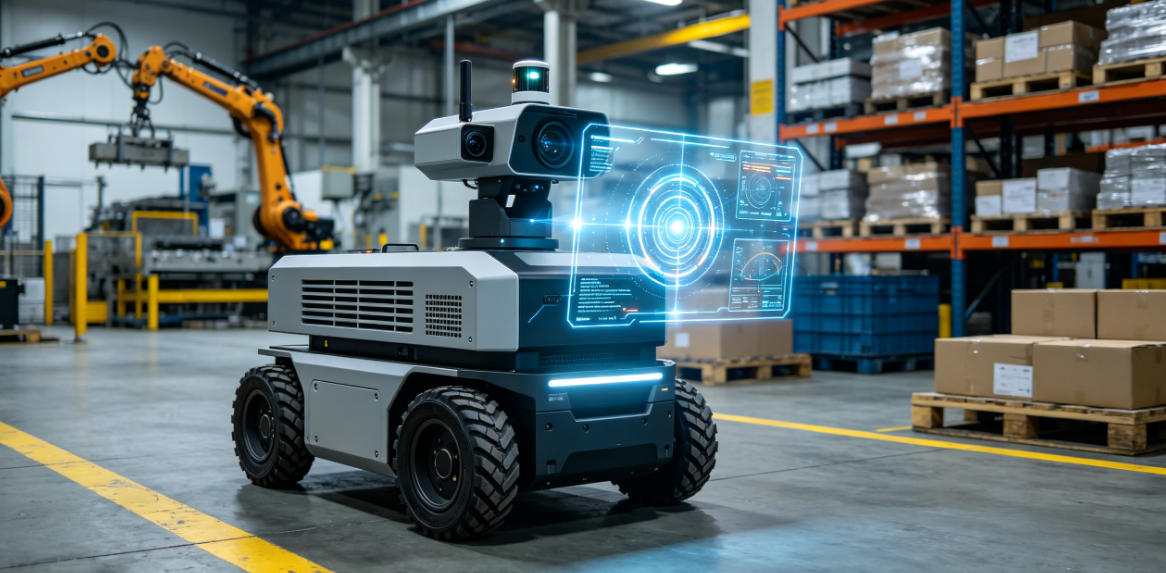
In robotic systems, these sensors are not just hardware modules but the starting point of autonomous navigation. Whether in warehouse robots or drones operating in complex airspace, obstacle detection sensors provide essential real-time perception.
Moreover, modern systems often combine AI algorithms, allowing robots not only to 'see' obstacles but also to predict their movement. This enables more advanced path planning and reduces collision risks.

2. Common Types of Obstacle Detection Technologies
Modern obstacle detection systems rarely rely on a single technology. Instead, they use multi-sensor fusion depending on application scenarios to achieve higher reliability and stability.
1. LiDAR (Laser Radar System)
LiDAR is one of the most accurate obstacle detection technologies. It emits laser beams and calculates distance based on reflected signals to build high-precision 3D environmental models.
Advantages:
- Centimeter or even millimeter-level accuracy
- Ability to generate 3D point clouds
- Stable performance under varying lighting conditions
It is widely used in autonomous vehicles, industrial robots, and high-precision mapping systems. In these applications, LiDAR plays a central role in both obstacle detection and path planning.
2. Ultrasonic Sensors
Ultrasonic sensors use high-frequency sound waves and measure distance based on echo signals. They are one of the most widely used low-cost obstacle avoidance sensors.
Characteristics:
- Low cost and easy integration
- Fast response time
- Limited detection of transparent or reflective objects
They are commonly used in short-range applications such as cleaning robots, service robots, and AGVs. They provide close-range alerts and trigger immediate obstacle avoidance actions when obstacles are detected.
3. Infrared Sensors
Infrared sensors detect obstacles based on infrared light reflection and are especially useful in low-light or completely dark environments.
In drone object avoidance scenarios, they are often used for detecting nearby obstacles such as walls, branches, or wires.
Advantages:
- Simple structure and low power consumption
- Fast response
- Limited detection range and sensitivity to ambient light
They are usually used as auxiliary components in combination with vision or LiDAR systems.
4. Vision-Based Camera Systems
Vision-based systems are one of the fastest-growing technologies in obstacle detection systems. They use image capture and AI algorithms to analyze environmental information and identify objects.
Modern systems integrate deep learning models, enabling:
- Dynamic object detection and tracking
- Semantic understanding of environments
- Multi-object recognition
- Decision-making integration with path planning
With AI machine vision, systems can not only detect obstacles but also classify them (pedestrians, vehicles, static objects) and predict movement trajectories.
Overall, obstacle detection technology is evolving from single sensors to multi-modal fusion systems. LiDAR provides precise spatial data, ultrasonic sensors handle short-range alerts, infrared sensors support special environments, and vision systems enable semantic understanding. Together, they form a robust obstacle detection system.
3. Difference Between Obstacle Detection and Obstacle Avoidance
These two concepts are often confused but are fundamentally different:
- Obstacle detection: Identifying whether an obstacle exists
- Obstacle avoidance: Deciding how to avoid it
In simple terms:
👉 Detection = 'seeing'
👉 Avoidance = 'acting'
Modern intelligent systems combine both to form a complete obstacle detection system.

4. Applications in Drones
In the drone industry, obstacle avoidance sensors are critical for flight safety.
Drones must constantly perceive their surroundings to avoid collisions with buildings, trees, and wires.
Common technologies include:
- Multi-directional infrared sensors
- Ultrasonic short-range detection
- LiDAR 3D scanning
- AI-based visual recognition
Drone object avoidance systems typically use sensor fusion to improve accuracy and adaptability.
5. Collision Detection in Robots and Autonomous Vehicles
In autonomous robots and vehicles, the best sensors for collision detection typically include:
- 2D/3D LiDAR
- Depth cameras
- Ultrasonic arrays
- Touch sensors
These components work together to form a complete obstacle detection system, enabling real-time navigation and path adjustment.
6. AI-Driven Intelligent Obstacle Avoidance Trends
With AI development, traditional obstacle detection is evolving into intelligent systems with:
- Automatic obstacle classification
- Deep learning-based path optimization
- Real-time dynamic obstacle avoidance
- Multi-target recognition in complex environments
7. Future Development: Multi-Sensor Fusion Systems
Future obstacle detection systems will increasingly rely on fusion:
- LiDAR + cameras + AI algorithms
- Edge AI for real-time processing
- High-precision 3D environment modeling
- Low-latency obstacle avoidance sensor responses
Multi-sensor fusion will become a standard in drones and autonomous robots.
8. Conclusion
From basic ultrasonic sensors to AI vision systems, obstacle detection and obstacle avoidance technologies continue to evolve.
Modern intelligent systems use obstacle detection systems for environmental perception and obstacle avoidance sensors for decision-making, enabling safer and smarter drones, robots, and autonomous vehicles.
In the future, with AI and sensor fusion advancements, drone object avoidance and autonomous robot collision detection will become even more precise and reliable.
Synexens 3D Camera Of ToF Sensor Soild-State Lidar_CS20

After-sales Support:
Our professional technical team specializing in 3D camera ranging is ready to assist you at any time. Whether you encounter any issues with your TOF camera after purchase or need clarification on TOF technology, feel free to contact us anytime. We are committed to providing high-quality technical after-sales service and user experience, ensuring your peace of mind in both shopping and using our products
