

ToF Tech in Smart Retail: Non-Contact Sensing for Unmanned Stores
- Posted by TofSensor
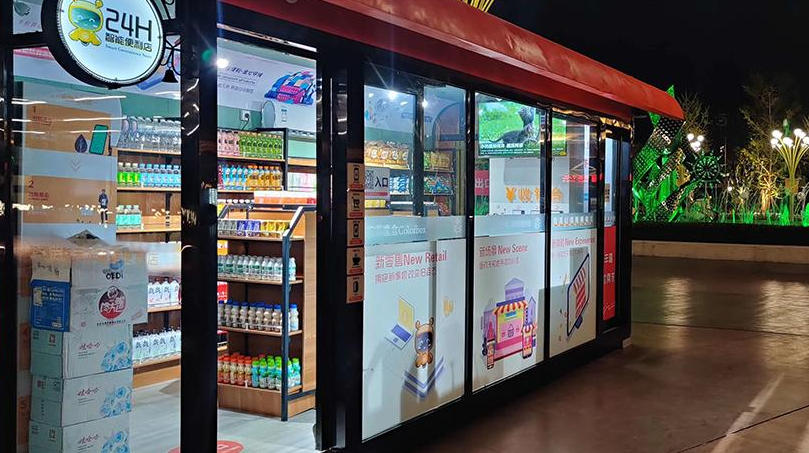
How Does ToF Technology Transform Smart Retail and Unmanned Convenience Stores?
As digital transformation accelerates across the retail industry, smart retail and unmanned convenience stores have become major trends shaping the future of commerce. With consumers demanding more efficient, convenient, and personalized shopping experiences, traditional manual management models can no longer meet the growing expectations for operational efficiency and precision. Leveraging its high accuracy and real-time 3D depth-sensing capabilities, TOF (Time-of-Flight)sensor technology brings innovative solutions to unmanned stores and smart retail, enhancing both customer experience and operational performance.
What is a ToF (Time-of-Flight) Sensor?
A ToF (Time-of-Flight) sensor measures the time it takes for light or electromagnetic waves to travel from the emitter to an object and back, enabling it to calculate distances and capture three-dimensional spatial data.
The basic working principle involves three key steps:
-
Emission of light signals: The ToF sensor emits short light pulses, usually infrared.
-
Reception of reflected signals: The light reflects off the target object and returns to the sensor.
-
Flight-time measurement: By calculating how long the light takes to return, the sensor determines the distance to the object.
Key Features and Advantages
-
High-precision depth measurement: Generates millimeter-level 3D point cloud data.
-
Non-contact operation: Ideal for dynamic environments and human monitoring.
-
High-speed response: Captures fast movements in real time, perfect for gesture and motion recognition.
-
Strong environmental adaptability: Performs well under changing light conditions and reflective surfaces compared to regular cameras.

Core Applications of ToF in Unmanned Convenience Stores
ToF (Time-of-Flight) sensors are becoming a key enabler in unmanned convenience stores. By providing accurate 3D spatial perception, they support real-time monitoring, automation, and data-driven decision-making. Compared with traditional cameras or infrared sensors, ToF delivers far more precise depth information, empowering smarter retail environments.
Below are the core application areas:
1. Customer Counting and Behavior Analysis
ToF sensors enable contactless customer counting and behavioral analytics without relying on traditional cameras or infrared detectors. They can:
-
Accurately count store traffic: Monitor customer entries and exits in real time to inform operational management.
-
Track dwell time: Measure how long shoppers stay in specific areas to identify popular zones.
-
Analyze shopping paths: Map customer movement trajectories to discover which zones or products attract more attention.
By generating heatmaps, retailers gain a clear visual understanding of customer focus areas, allowing them to optimize store layout and product displays to improve conversion rates.
2. Shelf Monitoring and Dynamic Inventory Management
ToF sensors continuously monitor shelf height, product volume, and arrangement, enabling dynamic inventory control that improves shelf management efficiency:
-
Automatic restocking alerts: The system triggers notifications when product levels drop or items are misplaced.
-
Real-time inventory visualization: Constant shelf tracking reduces stockouts and minimizes losses.
-
AI-driven data analysis: Combined with AI algorithms, the system can identify product types, analyze sales trends, and recognize consumer preferences, supporting precise inventory optimization.
With these capabilities, unmanned stores achieve efficient stock management, optimized shelf layouts, and intelligent operations, minimizing human intervention while boosting performance.
3. Automated Checkout and Seamless Payment
In unmanned convenience stores, ToF technology works together with AI-based vision systems to enable automated product recognition and checkout:
-
Accurate product detection: 3D point cloud data identifies each item in the shopping basket—even overlapping products—overcoming the limitations of traditional barcode or RFID scanning.
-
Automatic billing: Once customers finish shopping and exit, the system generates an instant bill that supports linked digital or QR code payments.
-
Enhanced shopping experience: Enables quick, touch-free checkout with no waiting in line.
This system not only improves operational efficiency but also delivers a truly intelligent, frictionless shopping experience.

4. Advanced Data Analytics and Intelligent Optimization
Beyond monitoring, ToF technology provides in-depth data analytics that optimize store operations:
-
Customer behavior analysis: Detects peak hours, repeat visit rates, and purchasing patterns to support targeted marketing.
-
Shelf layout optimization: Uses heatmap data to refine product placement and maximize sales potential.
-
Operational efficiency improvement: Tracks staff and delivery robots to optimize restocking paths and workflows, reducing costs.
By integrating ToF sensing, AI algorithms, and cloud-based analytics, unmanned convenience stores evolve from simple automation to data-driven intelligent retail systems, unlocking a new era of retail innovation.
Advantages of ToF Technology
In unmanned convenience stores and smart retail scenarios, ToF (Time-of-Flight) sensors serve as a core technology for intelligent management, thanks to their precise depth sensing and real-time data processing capabilities. The main advantages are as follows:
1. High-Precision 3D Spatial Perception
ToF sensors can generate real-time 3D point cloud data, accurately mapping the store environment and customer behavior to enable refined management:
-
Customer positioning and behavior tracking: Capture customers’ locations, movement paths, and dwell times in real time, helping retailers analyze shopping behavior and identify hot zones.
-
Shelf and product recognition: Precisely measure shelf heights, product volumes, and placement status, quickly detecting out-of-stock or misaligned items.
-
Dynamic spatial monitoring: Generate complete 3D spatial maps for multi-angle, multi-view analysis, providing a foundation for intelligent layout and operational optimization.
High-precision 3D perception enables real-time monitoring and intelligent decision-making, enhancing both operational efficiency and customer experience.

2. Dynamic Inventory Management
By combining AI algorithms with ToF data, retailers can achieve end-to-end dynamic inventory management:
-
Real-time inventory monitoring: Track every item’s quantity and location instantly, preventing stockouts or cluttered displays.
-
Sales trend prediction: Analyze historical and real-time data to forecast popular products and proactively adjust stock or displays.
-
Automated management workflows: Trigger alerts or restocking plans automatically when shortages or placement anomalies are detected, improving inventory turnover.
Intelligent inventory management reduces labor costs while lowering inventory pressure and optimizing the supply chain.
3. All-Weather Stability
ToF modules are highly adaptable, providing stable performance under varying lighting conditions:
-
Adaptation to strong and low light: Maintains high-precision depth measurement even in direct sunlight or dim environments.
-
Stability with reflective surfaces and complex scenes: Active infrared measurement and algorithm optimization minimize interference from glass, metal, or mirrors.
-
24/7 monitoring capability: Supports continuous operation of unmanned stores without concerns over changing lighting conditions.
This environmental robustness ensures continuous and reliable operation, providing dependable data and operational support.
4. Support for Multi-Scenario Smart Applications
Beyond basic monitoring and inventory management, ToF technology enables advanced applications in unmanned stores:
-
Customer behavior analytics: Use AI to analyze dwell hotspots and purchasing habits, supporting targeted marketing.
-
Automated checkout and seamless payment: Recognize products in shopping baskets using 3D point clouds and AI for touch-free billing.
-
Intelligent layout optimization: Analyze customer paths and dwell behavior to optimize shelf placement, increasing product exposure and conversion rates.
These advantages make ToF technology a key enabler for improving operational efficiency, management precision, and customer engagement in smart retail.
Technical Challenges
-
Complex environment recognition: Diverse products and complex displays require advanced AI algorithms combined with ToF data for accurate recognition.
-
Lighting variations: Frequent changes in indoor lighting can affect depth measurement accuracy, requiring multi-frequency modulation, optical filtering, and intelligent calibration.
-
Occlusion issues: Customers or objects may block sensors, preventing full data capture; multi-sensor integration and data compensation techniques are needed to ensure completeness.
Vendor Recommendations
-
AI + ToF data analysis: Integrate deep learning with point cloud processing to optimize customer behavior analysis, shelf monitoring, and checkout system accuracy.
-
Integration with smart shelves and payment systems: Seamlessly connect ToF modules with intelligent shelving and unmanned checkout systems for closed-loop management.
-
Multi-sensor deployment: Optimize sensor placement according to store layout to ensure full coverage and reduce occlusion and measurement errors.
Future Outlook: ToF + AI + Cloud Data for a Smart Retail Ecosystem
With the deeper integration of ToF sensors, AI algorithms, and cloud-based data, unmanned convenience stores and smart retail will achieve fully digital, intelligent management:
-
Real-time inventory and sales analysis: Cloud-based aggregation and predictive analytics enable precise restocking and optimized marketing strategies.
-
Smart customer experiences: Leverage behavior analytics for personalized recommendations, dynamic promotions, and fully automated shopping services.
-
Operational cost optimization: Reduce manual management costs, improve operational efficiency, and deliver high ROI in smart retail systems.
Through ToF technology, smart retail and unmanned convenience stores can not only enhance customer experience but also achieve digitalized operations, intelligent inventory management, and automated checkout, creating a complete closed-loop ecosystem for the future of intelligent retail.
Synexens 3D Camera Of ToF Sensor Soild-State Lidar_CS20

After-sales Support:
Our professional technical team specializing in 3D camera ranging is ready to assist you at any time. Whether you encounter any issues with your TOF camera after purchase or need clarification on TOF technology, feel free to contact us anytime. We are committed to providing high-quality technical after-sales service and user experience, ensuring your peace of mind in both shopping and using our products
-
Posted in
CS20
